 Atlas of China
Xiaogan 孝感Xiàogǎn
A city named for a filial son, with Li Bai's mountain and hot springs
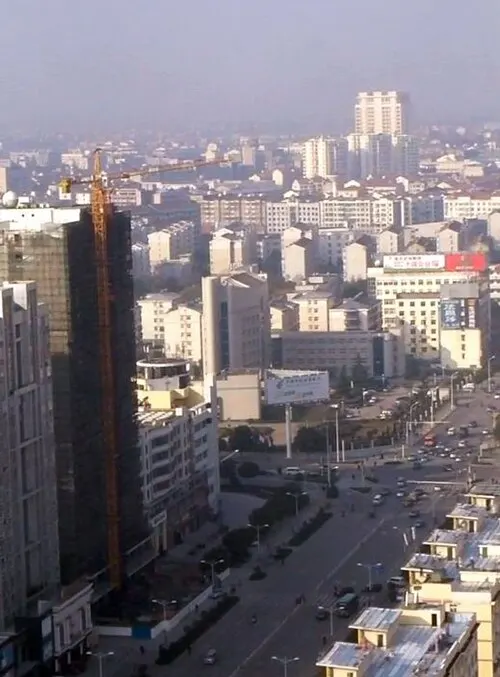
About Xiaogan
Xiaogan takes its name, 'filial piety moves heaven', from the legend of Dong Yong, who sold himself to pay for his father's funeral. The city lies on the plain just north-west of Wuhan and rises to the Dabie foothills in the north. In Anlu, where the Tang poet Li Bai is said to have lived for about ten years, Baizhao Mountain has a memorial hall to him, and Yingcheng's Tangchi is a long-established hot-spring town.
What to eat in Xiaogan
- Xiaogan rice wine (孝感米酒)
- Xiaogan sesame candy (孝感麻糖)
Listed sites in Xiaogan
15 sites in Xiaogan are on the official lists. Those with a page of their own link to it; the rest open as cards on the map.
- Baizhao Mountain (Li Bai Cultural Area), Anlu 白兆山 4A scenic area · on the map
A mountain scenic area in Yandian town, Anlu, linked to the Tang poet Li Bai, who local tradition says lived in the Baizhao Mountain area for about ten years and married a local woman. - Beishan Red Leaf Area, Dawu 北山红叶 4A scenic area · on the map
An autumn-colour area around Beishan village in Sigu town, in the hills of south-eastern Dawu County, known for stands of Chinese tallow trees whose leaves turn red from late October into November. - Guanyin Lake, Xiaochang 观音湖 4A scenic area · on the map
A lake-and-hills leisure district in the north of Xiaochang County, organised around Guanyin Lake, a reservoir, with the nearby hill called Dawu Mountain, which has Buddhist heritage. - Jinhui Manor, Xiaonan 金卉庄园 4A scenic area · on the map
A flower-viewing and picking estate in Pengxing township, just north of Xiaogan city, best known for its spring tulips. - New Fourth Army Fifth Division Headquarters and Memorial Hall, Baiguoshuwan 新四军五师司令部旧址 4A scenic area · National heritage site · on the map
The village of Baiguoshuwan was the headquarters of the New Fourth Army's Fifth Division from 1942 to 1945, when the Communist-led force operated behind Japanese lines in central China. - Qianchong Ancient Ginkgo Area, Anlu 钱冲古银杏 4A scenic area · on the map
A village area in Wangyizhen town, Anlu, noted for its old ginkgo trees, whose leaves turn gold in autumn. - Shengshi Wenying Cherry Blossom Park, Anlu 盛世闻樱 4A scenic area · on the map
A flower park in the countryside of Lidian town, Anlu, best known for its cherry blossom in spring. - Shibatan (Eighteen Pools) Gorge, Dawu 大悟十八潭 4A scenic area · on the map
A mountain gorge in Sanli town, in the north of Dawu County, with a string of green pools and small waterfalls along a mountain stream. - Shuangfeng Mountain, Xiaochang 双峰山 4A scenic area · on the map
A hill resort and national forest park in Xiaochang County, in the foothills of the Dabie Mountains, centred on its twin-summit main peak, Shuangru Peak, which at 888 m is billed as the highest peak in Xiaogan. - Tangchi Hot Spring, Yingcheng 汤池温泉 4A scenic area · on the map
A hot-spring resort area in Tangchi town, in the west of Yingcheng, a town that takes its name from its springs. - Tianyu Lake, Hanchuan 天屿湖 4A scenic area · on the map
A lakeside leisure area on Tianyu Lake beside Makou town in Hanchuan. - Tianzi Lake Eco-Resort, Xiaonan 天紫湖 4A scenic area · on the map
A lakeside leisure resort on Tianzi Lake in Xiaogang town, north of Xiaogan city, with a hotel, hot-spring pools and water-play areas. - Xiangyunwan, Yunmeng 祥云湾 4A scenic area · on the map
A recently built cultural-tourism complex in Yunmeng County in traditional Chinese architectural styles, arranged as Yunmeng Old Street (a dry street and a water street) plus a series of gardens. - Yingcheng National Mine Park 应城国家矿山公园 4A scenic area · on the map
A former gypsum and rock-salt mining area in Yingcheng, a city known for gypsum, brine and hot springs, now landscaped as a national mine park. - Zhongyuan Military Region Site, Xuanhuadian 中原军区旧址 4A scenic area · National heritage site · on the map
A group of historic buildings in the small town of Xuanhuadian where the Communist Party's Central Plains Bureau and the Central Plains Military Region were headquartered from January to June 1946.
On the map
Open Xiaogan on the illustrated map to see its outline, its places and listed sites together, and to add them to a trip.
Open Xiaogan on the map