 Atlas of China
Yingkou 营口Yíngkǒu
An old treaty port at the Liao River mouth, with beaches to the south
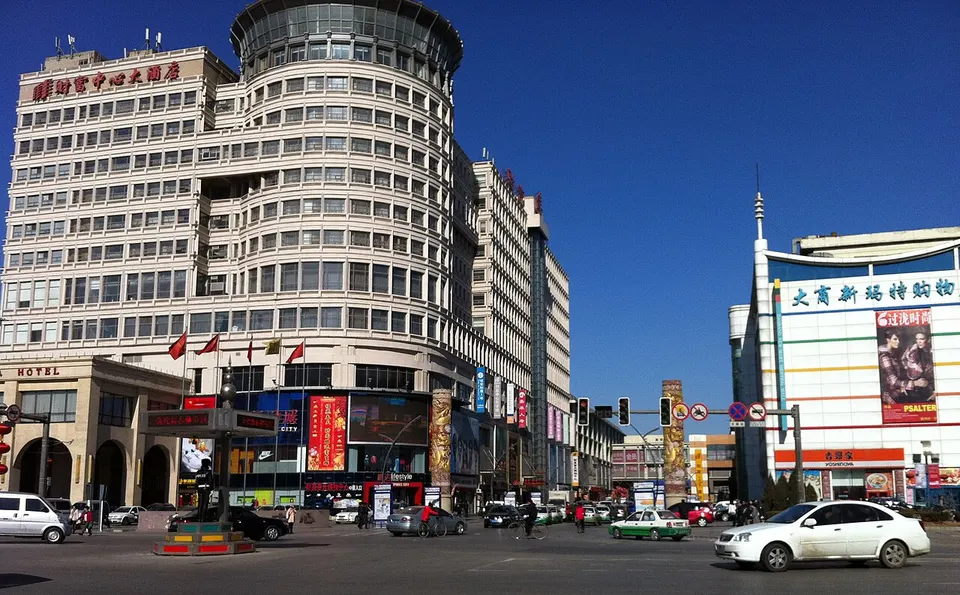
About Yingkou
Yingkou, at the mouth of the Liao River, became the north-east's first treaty port after the Treaties of Tianjin of 1858, and the Xipaotai Fort of the 1880s and a former Russian consulate of 1900 survive from those years. Southward along Liaodong Bay lie the sands of Baishawan, hot-spring resorts and Wang'er Mountain, a small hill named for a legend of a mother watching for her son. Inland, the Jinniushan Site yielded bones of an early human about 260,000 years old.
Listed sites in Yingkou
13 sites in Yingkou are on the official lists. Those with a page of their own link to it; the rest open as cards on the map.
- Baishawan Golden Coast 白沙湾黄金海岸 4A scenic area · on the map
Baishawan is a 14.7 km stretch of sandy Liaodong Bay coast in Guizhou town, Gaizhou, with a coastal road running along it and a reputation as a summer retreat. - Chishan Scenic Area, Wanfu 万福赤山 4A scenic area · on the map
Chishan ('Red Mountain') is a mountain national forest park in Wanfu town, south-east of Gaizhou, lying between Buyun Mountain to the east and the Yushi Reservoir to the north. - Hongxigu Hot Spring Resort 虹溪谷旅游度假区 4A scenic area · on the map
Hongxigu is a hot-spring and leisure resort in Shuangtai town, Gaizhou, close to the Bayuquan district of Yingkou, with a planned area of about 12 sq km. - Moon Lake Park 月亮湖公园 4A scenic area · on the map
Moon Lake Park is a 91-hectare park around a seawater lake where two rivers reach the sea, in the south of the Yingkou Economic and Technological Development Zone at Bayuquan. - Tuanshan National Marine Park 团山国家级海洋公园 4A scenic area · on the map
Tuanshan is a stretch of Liaodong Bay shoreline on the western seafront of Yingkou's Beihai New Area in Gaizhou, developed as a coastal leisure and holiday area with sightseeing, entertainment and fitness facilities. - Wang'er Mountain 望儿山 4A scenic area · on the map
Wang'er Shan ('Mountain of Watching for the Son') is a small lone hill of about 82 m beside Xiongyue town, topped by a Tibetan-style brick pagoda of the late Ming or early Qing and named for a legend of a mother waiting for her son's return. - Former Russian Consulate, Yingkou 营口俄国领事馆旧址 National heritage site · on the map
Built in 1900 after Russian forces occupied Yingkou, this single-storey brick, stone and timber building was first the Russian civil administration office and later a consulate, until consular status ended in 1920. - Former Xiongyue Agricultural Experiment Station and Arboretum 满铁农事试验场熊岳城分场旧址 National heritage site · on the map
Founded in 1909 as a South Manchuria Railway Company tree nursery beside Xiongyue station, the site became an agricultural experiment station in 1913 and was among the earliest modern agricultural research institutions in northern China. - Gaolicheng Mountain Fortress 高丽城山城 National heritage site · on the map
Gaolicheng, also known as Qingshiling Mountain Fortress, is a Goguryeo-period hill fortress with a wall circuit of about 6.5 km on the hills north-east of Gaizhou, identified with Jian'an, a fortress fought over in the Tang–Goguryeo wars of the seventh century. - Jinniushan Site 金牛山遗址 National heritage site · on the map
Jinniushan is a low, isolated hill of about 69 m in Yong'an town, where excavations from the 1970s found Palaeolithic stone tools and fossils of 42 mammal species. - Shipengshan Dolmen 石棚山石棚 National heritage site · on the map
Shipengshan Dolmen is a Bronze Age stone chamber more than 3,000 years old, standing on a low mound in farmland near the village of Dashipeng. - Xipaotai Fort 西炮台遗址 National heritage site · on the map
Xipaotai ('West Fort') is a coastal artillery fort built in the 1880s at the mouth of the Liao River, made up of three earthen batteries, a moat, a rammed-earth wall and gates; Liaoning's heritage office calls it the largest well-preserved earth-built structure in north-east China. - Xuanzhen Temple, Gaizhou 玄贞观 National heritage site · on the map
Xuanzhen Temple, known locally as Shangdi Temple, is a Daoist temple in the old town of Gaizhou, founded in 1382 and dedicated to Xuanwu, the Daoist god of the north; of the original complex only the main hall, the gate and a few ancillary buildings remain.
On the map
Open Yingkou on the illustrated map to see its outline, its places and listed sites together, and to add them to a trip.
Open Yingkou on the map