 Atlas of China
Qinghai Lake 青海湖Qīnghǎi Hú
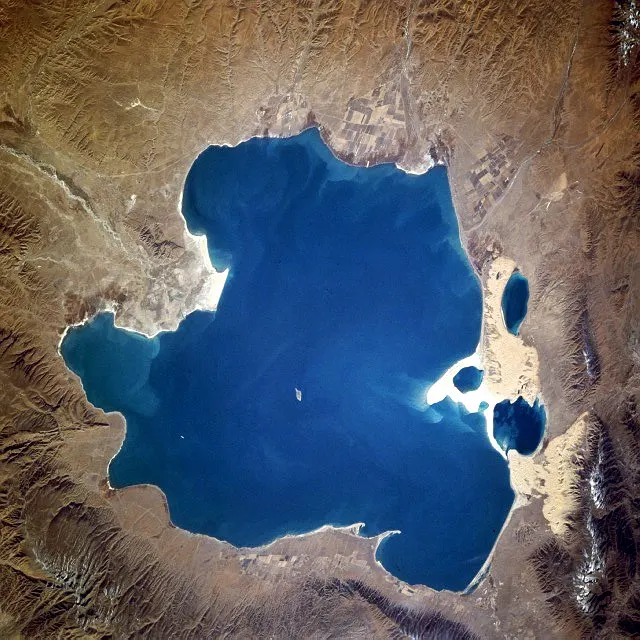
China's largest lake: a high-altitude inland sea edged with yellow rapeseed
- Best time
- Jun–Sep (rapeseed in Jul)
- Time needed
- 1–2 days
- Days to budget
- 1½ days
- Stay in
- Xining
- Region
- Qinghai
- Type
- Nature
- Listed as
- 5A scenic area
Why go to Qinghai Lake
At about 3,200 metres, Qinghai Lake is China's largest lake, a salty, sky-blue expanse ringed by grassland where Tibetan herders graze yaks and sheep. In July the shores glow yellow with rapeseed and cyclists ride the loop road, while migratory birds nest here in spring and summer (Bird Island itself is closed to visitors).
The story
Its Mongolian name, Kokonor, and its Tibetan name, Tso Ngonpo, both mean 'blue lake'. Tibetan Buddhist pilgrims walk the long circuit around its shores as an act of devotion, above all in the Year of the Horse.
What to see at Qinghai Lake
- Erlangjian 二郎剑: The main scenic area on the south shore, with boat trips on the lake. It is the most crowded stretch from July to September.
- Heimahe 黑马河: A small town on the south-western shore, known for lake sunrises and as a base for overnight stays.
- Lakeside road and cycling 环湖公路: A paved road of roughly 350–360 km rings the lake through grassland with prayer flags and rapeseed fields in summer. Cyclists usually split the loop into three or four days; the north stretch runs along a busy national road with heavy lorries.
How to visit Qinghai Lake
Most visitors see the lake on a long day trip or an overnight loop from Xining, stopping at Erlangjian for the boats, then pushing on to Heimahe or the quieter western shores. Plan on a night by the lake to catch sunrise and avoid the afternoon wind. Bird Island is reported closed to visitors, so don't plan around it. Check the scenic area's current booking arrangements before you go.
How to get to Qinghai Lake
The nearest shore, at Erlangjian, is about two hours' drive west of Xining; most travellers hire a car and driver or join a tour that continues to Chaka Salt Lake.
Where to stay
Heimahe and the small towns near Erlangjian have guesthouses, handy for sunrise, but Xining has far more choice and is a gentler spot to acclimatise first.
What to eat
- Hand-grabbed mutton 手抓羊肉: Boiled mutton on the bone, eaten by hand, available in Hui restaurants in Xining and at stops along the way.
- Yoghurt 酸奶: Thick, lightly sweet local yoghurt, often made from yak or cow milk, found in Xining and roadside shops.
- Tibetan milk tea 奶茶: Hot salty-or-sweet milky tea served at stalls and in Tibetan homes around the lake.
Tips for visiting Qinghai Lake
- Spend a night in Xining first to adjust to the altitude.
- It's cold and windy by the water even in summer, so bring warm layers and strong sun protection.
- For quieter shores, push on past Erlangjian to the north and west sides of the lake.
Nearby
- Chaka Salt Lake 茶卡盐湖 100 km
A salt flat so still it turns into a mirror for the sky
On the map
Open Qinghai Lake on the illustrated map to see the terrain around it, what else is close, and to add it to a trip and plan the days.
Open Qinghai Lake on the map