 Atlas of China
Weifang 潍坊Wéifāng
Kite capital with woodblock prints, buried Buddhas and dinosaur bones
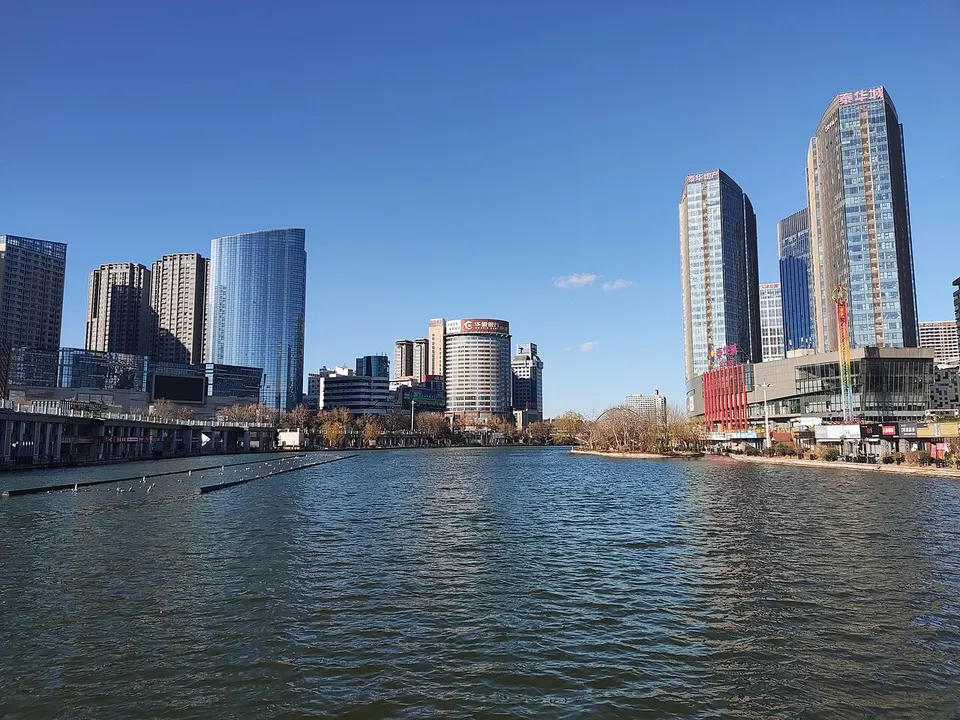
About Weifang
Weifang bills itself as the kite capital of the world, and its international kite festival, first held in 1984, takes place every April, while Yangjiabu village is famous for its woodblock New Year prints. In Qingzhou, some of the 400-odd Buddhist statues found buried at the Longxing Temple site in 1996 are shown in the Qingzhou Museum. Shouguang is a vegetable-growing centre, Zhucheng has dinosaur fossils, and the Weixian Internment Camp Site Museum recalls the camp where the Olympic champion Eric Liddell died in 1945.
What to eat in Weifang
- Chaotian pot, an open pot of stewed pork (朝天锅)
- Chenghuang Temple meat huoshao (城隍庙肉火烧)
Listed sites in Weifang
32 sites in Weifang are on the official lists. Those with a page of their own link to it; the rest open as cards on the map.
- Qingzhou Ancient City 青州古城 5A scenic area · National heritage site
A restored Ming and Qing-style old town in the centre of Qingzhou, on the site of several successive walled cities, with the open section mostly in the old Nanyang city. - Bailang Oasis Wetland Park 白浪绿洲湿地公园 4A scenic area · on the map
A long riverside wetland park on the upper Bailang River, running about 6.7 km from the Bailang River reservoir in the south to Baotong Street in the north on the western side of Weifang's urban area. - Changshan Culture Museum Park 常山文化博物苑 4A scenic area · on the map
This museum park lies on the northern slope of Changshan, the hill south of Zhucheng where the Song poet Su Shi came to pray for rain in 1075 while serving as the local magistrate. - China Gem City, Changle 中国宝石城 4A scenic area · on the map
A large gem and jewellery trading centre in Changle, the county known for its sapphires, laid out as a tourist area that includes the China Sapphire Museum. - Happy Sea Beach, Weifang 欢乐海沙滩 4A scenic area · on the map
An artificial sand beach about 1,600 m long on the Bohai Bay coast in Weifang's Binhai district, opened in 2012 as the city's first sea-side beach. - Jinbao Paradise, Weifang 金宝乐园 4A scenic area · on the map
A combined zoo, amusement park and botanical garden in the southern part of Weifang's urban area, opened in the 1990s on the site of a former swamp. - Jingzhi Liquor City, Anqiu 景芝酒之城 4A scenic area · on the map
A liquor-culture visitor area built around the Jingzhi distillery in Jingzhi town, south-east of Anqiu. - Jiulongyu, Qingzhou 九龙峪 4A scenic area · on the map
A hill resort and amusement area on the southern edge of Qingzhou, with seasonal flower fields (cherry and rape blossom in spring, sunflowers and lavender in summer, chrysanthemums in autumn), rides such as a roller coaster and carousel, a small zoo, a high-level walkway and a winter snow-and-ice park. - Judian Lake, Shouguang 水上王城·巨淀湖 4A scenic area · on the map
A lake and wetland scenic area in north-west Shouguang on the remains of the ancient Judian marsh, now about 12,000 mu (some 800 hectares) of shallow water fed by four rivers and described locally as Weifang's largest natural wetland. - Lancui Lake Hot Spring Resort, Linqu 揽翠湖天沐温泉度假村 4A scenic area · on the map
A hot-spring and leisure resort on the eastern edge of Linqu, with a hotel, indoor and outdoor hot-spring pools, meeting rooms and restaurants. - Linhai Ecological Expo Park, Shouguang 林海生态博览园 4A scenic area · on the map
A large wetland park built on saline-alkali land near the Bohai coast in north Shouguang, with lotus ponds, a long wetland water channel and lakes. - Qingshan Xiushui, Changyi 青山秀水 4A scenic area · on the map
A leisure park made from an abandoned quarry in Changyi, developed by the Jinbao group and opened to the public in July 2015, described locally as Weifang's first scenic area built on a reclaimed mine. - Qingyun Mountain Folk Park, Anqiu 青云山民俗游乐园 4A scenic area · on the map
A hillside theme park on Qingyun Mountain in south-east Anqiu, billed locally as the first folk-custom park of Shandong. - Red Sorghum Town, Gaomi 红高粱小镇 4A scenic area · on the map
Red Sorghum Town is a tourism complex in the Dongbei Township area of Gaomi, the home district of the Nobel laureate Mo Yan, whose novel Red Sorghum Family was adapted as a Zhang Yimou film and as a TV series that began shooting in Gaomi in 2013. - Shihu Garden 十笏园 4A scenic area · National heritage site
A small private garden built in 1885 in the old Weicheng district, covering about 2,000 square metres and named 'Ten Tablets' after its modest size. - Shimenfang Scenic Area, Linqu 石门坊 4A scenic area · on the map
A hill scenic area west of Linqu county town, known for its autumn colour: more than 3,000 mu (about 200 hectares) of natural woodland of smoke trees and maples turn red among pines and cypresses in October. - Shouguang Polar Ocean World 寿光极地海洋世界 4A scenic area · on the map
A marine-themed aquarium and leisure complex in Shouguang, with displays of sea and polar animals and scenery, an underwater tunnel and a children's play area. - Shouguang Vegetable High-tech Demonstration Park 寿光蔬菜高科技示范园 4A scenic area · on the map
A national-level agricultural science and technology park on the east side of Shouguang, established in 2000 as the home of the Shouguang International Vegetable Sci-tech Fair, which is held every spring. - Taihe Mountain, Qingzhou 泰和山 4A scenic area · on the map
A mountain scenic area of about 20 square kilometres in the south-western hills of Qingzhou, combining forest, valley scenery and religious sites. - World Kite Park, Anqiu 世界风筝公园 4A scenic area · on the map
A kite park in Anqiu, part of the Qilu Jiudi tourist area, which received the title 'World Kite Park' from the international kite federation in March 2024. - Yangjiabu Folk Art Grand View Garden 杨家埠民间艺术大观园 4A scenic area · on the map
A folk-art park in Hanting district, built on the site of the old Ming and Qing village of Yangjiabu, whose woodblock New Year prints and kites are both national intangible cultural heritage. - Yangtianshan National Forest Park, Qingzhou 仰天山国家森林公园 4A scenic area · on the map
A forested mountain park in the hills of south-west Qingzhou, known as a summer retreat and for its spring locust-blossom season. - Zhucheng Dinosaur Gully and Dinosaur Halls 诸城恐龙文化旅游区 4A scenic area · on the map
Dinosaur Gully is the fossil site south-west of Zhucheng where giant hadrosaur bones were recognised in 1964, and it is now protected under shelters; its fossil corridor is about 500 m long and 30 m deep, with nearly 10,000 bones exposed in the slope. - Zhucheng Dinosaur Museum 诸城恐龙博物馆 4A scenic area · on the map
Zhucheng Dinosaur Museum stands in Dinosaur Park on the north-western side of the city, in a pyramid-like building beside a lake. - Zhucheng Zoo 诸城动物园 4A scenic area · on the map
Zhucheng Zoo is a municipal zoo on the south-eastern side of the city, with animals such as giraffes, zebras and ostriches and a petting area where visitors can feed alpacas. - Dongjiazhuang Han Pictorial Stone Tomb, Anqiu 安丘董家庄汉画像石墓 National heritage site · on the map
A large Eastern Han tomb built from 224 stone blocks, 103 of them carved, found in 1959 and later re-erected in Anqiu town. - Dongzhen Temple 东镇庙 National heritage site · on the map
Dongzhen Temple stands at the foot of Mount Yi (Yishan), the 'Eastern Guardian' among China's five guardian mountains, where emperors and officials sent sacrifices; a shrine to the mountain was ordered in 594, in the Sui dynasty, and the temple moved to this site in the Song. - Fangzi German and Japanese Buildings (Fangci Town) 坊子德日建筑群 National heritage site
Fangci Town in Weifang's Fangzi district grew from 1898 as a railway and coal-mining town under German and then Japanese control. - Former Residence of Wang Jinmei 王尽美故居 National heritage site · on the map
This is the former home of Wang Jinmei (1898–1925), a founder of the Chinese Communist Party and an early organiser of its Shandong branch, in the village where he was born. - Longxing Temple Site, Qingzhou 青州龙兴寺遗址 National heritage site
Longxing Temple was a Buddhist temple in Qingzhou, founded in the Northern and Southern Dynasties period and later lost. - Tuoshan Grottoes 驼山石窟 National heritage site
Tuoshan, or Camel Mountain, rises south-west of Qingzhou and carries five main grottoes with 638 Buddhist statues, carved from the Northern Zhou to the Tang along the mountain's eastern edge near the summit. - Weixian Internment Camp Site Museum 潍县西方侨民集中营旧址博物馆 National heritage site
The site is an American Presbyterian mission compound founded in 1882, which the Japanese turned into an internment camp during the Second World War, holding more than 2,000 foreign civilians, including 327 children.
On the map
Open Weifang on the illustrated map to see its outline, its places and listed sites together, and to add them to a trip.
Open Weifang on the map