 Atlas of China
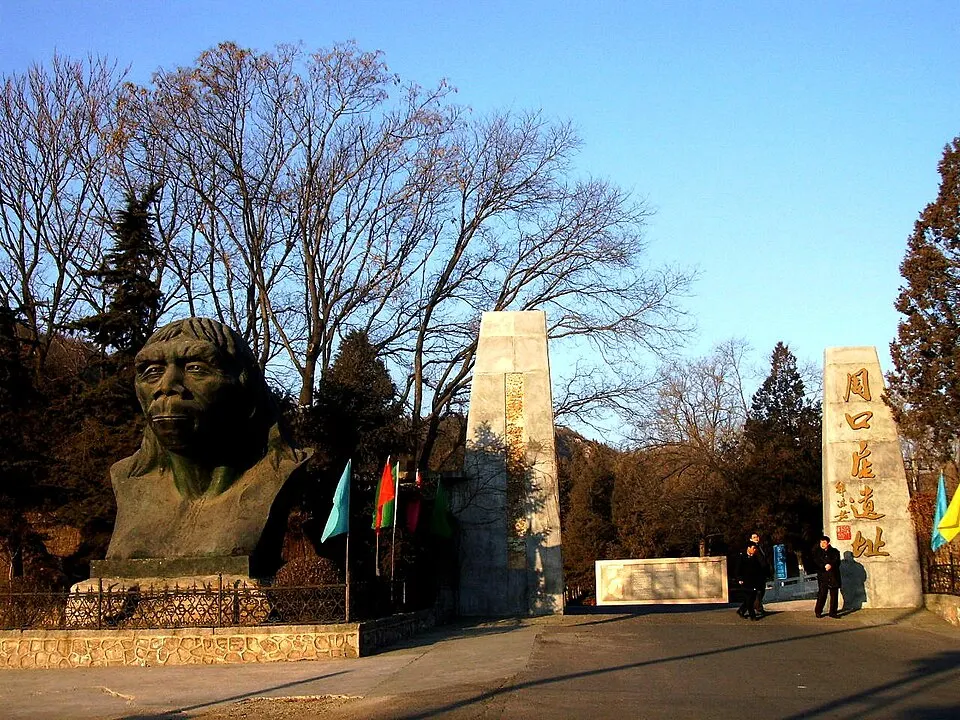
Zhoukoudian Peking Man Site 周口店北京人遗址Zhōukǒudiàn Běijīngrén Yízhǐ
Limestone caves on Dragon Bone Hill where the fossils of Peking Man were found
- Best time
- Apr–May, Sep–Oct
- Time needed
- Half a day
- Days to budget
- Half a day
- Stay in
- Beijing
- Region
- Beijing
- Type
- Heritage
- Listed as
- 4A scenic area, National heritage site, UNESCO World Heritage
Why go to Zhoukoudian Peking Man Site
In Fangshan District, about 50 km south-west of central Beijing, the limestone caves of Dragon Bone Hill yielded the fossils of Peking Man, an early human (Homo erectus) who lived here hundreds of thousands of years ago, and the site is a UNESCO World Heritage Site. Start at the site museum, with skull casts, stone tools and the story of the excavations, then walk up the hill to Locality 1, the main fossil cave, and the Upper Cave, where much later modern humans lived.
The story
Excavations between 1927 and 1937 recovered fossils of more than 40 individuals, including five nearly complete skullcaps. In December 1941 the originals, packed for shipment to the United States for safekeeping, disappeared and have never been found, so researchers still rely on the casts and records made before the loss.
What to see at Zhoukoudian Peking Man Site
- Site museum 周口店北京人遗址博物馆: The exhibition hall at the foot of Dragon Bone Hill, with casts of the skullcaps, stone tools, fossils of other animals and the story of the excavations.
- Locality 1: Peking Man Cave 第一地点(猿人洞): The main fossil site, an old limestone cave whose roof collapsed long ago; ash layers there show Peking Man's use of fire.
- Upper Cave 山顶洞: A smaller cave higher on the hill where Homo sapiens lived and buried their dead roughly 36,000 to 39,000 years ago, much later than Peking Man.
How to visit Zhoukoudian Peking Man Site
Start at the museum, then walk up Dragon Bone Hill to Locality 1 and on to the Upper Cave. The caves are open to the sky, their roofs long gone. The museum's hours differ in summer and winter, and there is a weekly closure day. Half a day covers both; add the museum for context first.
How to get to Zhoukoudian Peking Man Site
Take the Fangshan line to Yancundong, change to the Yanfang line for Raolefu and take bus F80 to the Yuanren Yizhi stop by the site, or allow 1–1.5 hours by taxi from central Beijing.
Where to stay
Zhoukoudian is a day trip from central Beijing, so most visitors stay in the city. The villages around Pofengling and Huangshandian nearby have homestays if you want to combine the site with an autumn leaf walk.
What to eat
- Mopan persimmon 磨盘柿: Flat, ring-shaped persimmons that ripen on Fangshan's hillsides in autumn and can be picked in the villages around Zhoukoudian.
- Stewed whole goat 炖全羊: A feast from Shijiaying village in Fangshan: local mountain goat slow-stewed in an iron pot over a wood fire.
Tips for visiting Zhoukoudian Peking Man Site
- The museum is closed on Mondays except public holidays.
- See the museum before the caves: the cave roofs collapsed long ago, and the exhibits explain what was found in each excavated pit.
Nearby
- Tanzhe Temple 潭柘寺 30 km
Terraced temple courtyards in the western hills, shaded by ancient ginkgos and cypresses - Marco Polo Bridge 卢沟桥 30 km
An 800-year-old stone bridge lined with hundreds of carved lions, by a walled Ming fort - Fragrant Hills Park 香山公园 40 km
Wooded former imperial hills that turn red with smoke-tree leaves each autumn - Cuandixia Village 爨底下村 40 km
Ming and Qing courtyard houses stacked in tiers up a hillside in the western mountains - Summer Palace 颐和园 50 km
An imperial lakeside garden of painted corridors, temple-topped hills and a marble boat - Qianmen Street and Dashilar 前门大街·大栅栏 50 km
A pedestrian avenue below Qianmen gate and a lane of shops trading since Qing times
Also within 30 km: Cross Temple 十字寺遗址 (under 10 km), Jin Dynasty Imperial Tombs 金陵 (under 10 km), Shihua Cave 石花洞 (10 km), Wanfotang and Kongshui Cave 万佛堂、孔水洞 (10 km), Liulihe Bridge 琉璃河大桥 (10 km), Liulihe Yan Capital Site 琉璃河遗址 (10 km).
On the map
Open Zhoukoudian Peking Man Site on the illustrated map to see the terrain around it, what else is close, and to add it to a trip and plan the days.
Open Zhoukoudian Peking Man Site on the map