 Atlas of China
Chengde 承德Chéngdé
A miniature Potala, a 22-metre wooden Guanyin and an imperial garden
About Chengde
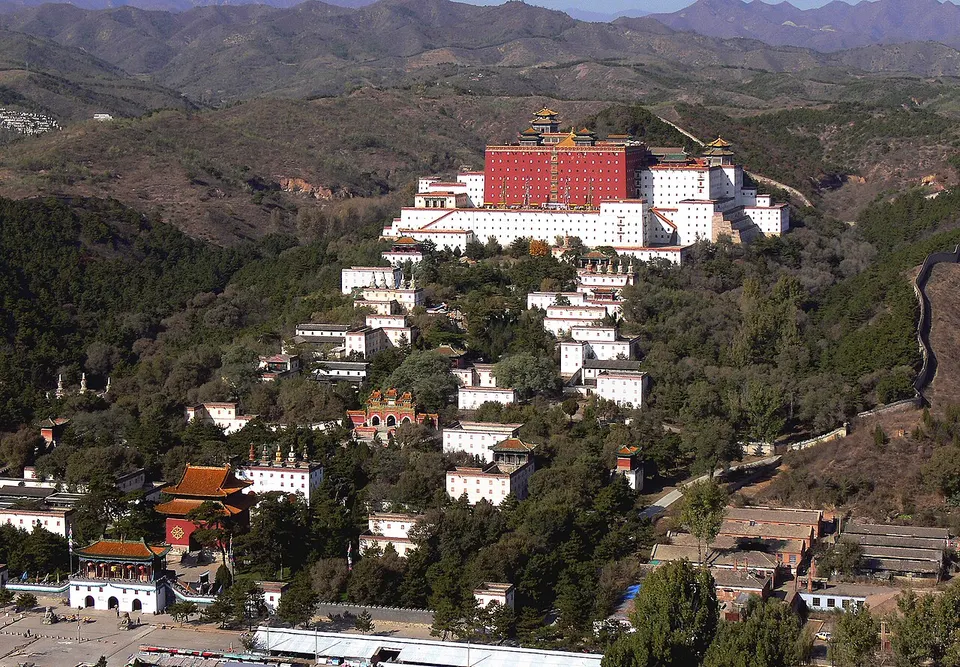
From 1703 the Qing emperors spent their summers at Chengde, escaping Beijing's heat and receiving envoys and minority leaders. The Chengde Mountain Resort, a walled park of lakes, pavilions and hills, is a World Heritage site with its outlying temples, several modelled on Tibetan originals: Putuo Zongcheng Temple echoes the Potala Palace, and Puning Temple holds a wooden Guanyin about 22 metres tall. Farther out are Jinshanling Great Wall and Saihanba National Forest Park, planted since 1962 on land stripped by logging.
What to eat in Chengde
- Almond drink (杏仁露)
Featured places in Chengde
-
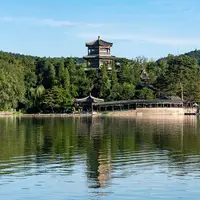
Chengde Mountain Resort 承德避暑山庄
The Qing emperors' summer capital, ringed by temples, some modelled on Tibet's
-
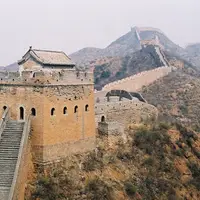
Jinshanling Great Wall 金山岭长城
A Ming ridge-top wall of 67 towers, restored at one end and wild towards Simatai
Listed sites in Chengde
26 sites in Chengde are on the official lists. Those with a page of their own link to it; the rest open as cards on the map.
- Bancheng Liquor Museum Park, Chengde County 板城酒博园 4A scenic area · on the map
A distillery-based tourist park run by the Bancheng liquor company in Xiabancheng, the seat of Chengde County. - China Horse Town (Mazhen), Fengning 中国马镇 4A scenic area · on the map
A modern resort town on the Bashang plateau in northern Fengning, themed on horse culture and built around staged performances. - Dingsheng Cultural Industry Park 鼎盛文化产业园 4A scenic area · on the map
A modern cultural-tourism complex at the foot of Yuanbao Hill in Shuangluan District, built around an evening outdoor drama and an old-style shopping street. - Dong Cunrui Martyrs' Cemetery and Memorial Hall 董存瑞烈士陵园 4A scenic area · on the map
A memorial park in the town of Longhua for Dong Cunrui, a People's Liberation Army soldier who died in May 1948 detonating an explosive charge at a Nationalist bunker during the fighting at Longhua, and who was later widely publicised as a model soldier. - Great Khan's Palace, Fengning 大汗行宫 4A scenic area · on the map
A modern themed complex on the Bashang grassland in northern Fengning that sets out to recreate a Mongol-Yuan court, with palace-style halls and yurt-style buildings laid out across the plain. - Panlong Lake, Kuancheng 蟠龙湖 4A scenic area · on the map
A large lake in the hills of Kuancheng Manchu Autonomous County where the Great Wall runs down into the water, so that stretches of wall can be seen under the surface in clear conditions. - Qicai Forest, Fengning 七彩森林 4A scenic area · on the map
A forest holiday park on the Bashang plateau in northern Fengning, built on state forest-farm land around a lake, white-birch woods and wooden boardwalks. - Qingchui Peak National Forest Park 磬锤峰国家森林公园 4A scenic area · on the map
A forest park on the hills east of Chengde's centre, named for Qingchui Peak, a tall hammer-shaped rock pillar (also called Bangchui Mountain, 'club mountain') above the Wulie River. - Rehe Chinese Herbal Flower Town 热河中药花海小镇 4A scenic area · on the map
A herb-growing farm and ecological study park on terraced hillsides in Xiayingzi village, Jingoutun town, in the Yan Mountains of Luanping County. - Saihanba National Forest Park 塞罕坝国家森林公园 4A scenic area
A planted-forest park on the high Saihanba plateau in northern Weichang County, once part of the Qing dynasty's Mulan imperial hunting ground. - Shanzhuang Laojiu Liquor Culture Park, Pingquan 山庄老酒文化产业园 4A scenic area · on the map
A working distillery estate on the edge of Pingquan city that is open as a tourist site, centred on the China Royal Liquor Culture Plaza. - Shuangta Mountain 双塔山 4A scenic area · on the map
Two tall rock pillars rise side by side beside the Luan River on the western edge of Chengde city, in Shuangluan District. - Tangjiawan Scenic Area, Chengde County 唐家湾 4A scenic area · on the map
A resort area in Cangzi township, Chengde County, built around red Danxia sandstone peaks, Tianmen Lake and a hot spring. - Xinglong Karst Cave 兴隆溶洞 4A scenic area · on the map
A show cave in the Yan Mountains of Xinglong County, in Taojiatai village in the foothills south of Wuling Mountain. - Xinglong Mountain Scenic Area 兴隆山 4A scenic area · on the map
A hill-country scenic area in the Yan Mountains of Xinglong County, with steep rock peaks, dense forest, streams and cliff-side plank walkways, plus a vertical lift up one cliff face. - Yudaokou Grassland and Forest Scenic Area 御道口草原森林风景区 4A scenic area · on the map
A large state-farm landscape on the Bashang plateau in northern Weichang County, once part of the Qing imperial Mulan hunting ground, where the Kangxi Emperor drilled troops at the mouth of the Ruyi River. - Anyuan Temple 安远庙 National heritage site
A Qing temple of 1764 on a hill east of the Wulie River, built for the Dashidawa, an Oirat Mongol group resettled at Rehe, and modelled on the Gurzha Temple beside the Ili River in Xinjiang, which gave it the nickname Yili Temple. - City God Temple, Chengde 承德城隍庙 National heritage site · on the map
A Qing-dynasty temple to the city god in the old Erdao Pailou quarter of Chengde, a short way west of the Mountain Resort, listed as a national heritage site in 2006. - Guandi Temple, Fengshan 凤山关帝庙 National heritage site · on the map
A Qing-dynasty temple to Guan Yu, the god of war and loyalty, in the old town of Fengshan, the former county seat of Fengning, listed as a national heritage site in 2013. - Imperial Steles and Cliff Inscription of the Mulan Hunting Ground 木兰围场御制碑、摩崖石刻 National heritage site · on the map
Seven Qing imperial steles (six by the Qianlong Emperor and one by the Jiaqing Emperor) and a cliff inscription recording a tiger killed in the 1752 hunt, all tied to the Mulan autumn hunt in the imperial hunting ground centred on today's Weichang County. - Pule Temple 普乐寺 National heritage site
A Qing temple built in 1766–67 on a rise east of the Wulie River, with a Chinese-style front half and a Tibetan-style rear half. - Puning Temple 普宁寺 National heritage site
A Qing imperial temple built in 1755–59 after the Qing campaign against the Dzungar Mongols, nicknamed the Big Buddha Temple. - Puren Temple 溥仁寺 National heritage site
Built in 1713 at the request of Mongol princes who came to celebrate the Kangxi Emperor's 60th birthday, this is the earliest of the Eight Outer Temples and the only surviving temple at Chengde from Kangxi's reign. - Putuo Zongcheng Temple 普陀宗乘之庙 National heritage site
A vast Qing imperial temple built in 1767–71 on a mountain slope and modelled on the Potala Palace in Lhasa, which earned it the nickname Little Potala; it is the largest of the Eight Outer Temples. - Shuxiang Temple, Chengde 殊像寺 National heritage site · on the map
A Qing temple built in 1774–75 on the slope north of the Mountain Resort, dedicated to Manjusri and modelled on the Shuxiang Temple at Mount Wutai in Shanxi. - Xumi Fushou Temple 须弥福寿之庙 National heritage site
A Qing temple built in 1780 as a residence for the 6th Panchen Lama, who came to Chengde for the Qianlong Emperor's 70th birthday, and modelled on Tashilunpo Monastery in Shigatse.
Getting to Chengde
Train, flight and driving times from the cities most visitors come from, with stations, fares and how many run a day; each opens the full comparison.
On the map
Open Chengde on the illustrated map to see its outline, its places and listed sites together, and to add them to a trip.
Open Chengde on the map