 Atlas of China
Jiyuan 济源Jìyuán
The Foolish Old Man's mountain and the source of a river that vanished
- Type
- County-level Cityadministered directly by Henan
- Region
- Henan
- Listed sites
- 115 rated 4A · 9 national heritage
About Jiyuan
Jiyuan, a county-level city governed directly by the province, is named after the source of the Ji, which ancient China counted with the Yangtze, Yellow and Huai among its Four Rivers before its lower course vanished. Jidu Temple, first built in 582, is the largest surviving temple to the Four Rivers. In the north-west rises Mount Wangwu, a Taoist mountain where the fable of the Foolish Old Man who moved mountains is set, and the Xiaolangdi Dam spans the Yellow River to the south.
Listed sites in Jiyuan
11 sites in Jiyuan are on the official lists. Those with a page of their own link to it; the rest open as cards on the map.
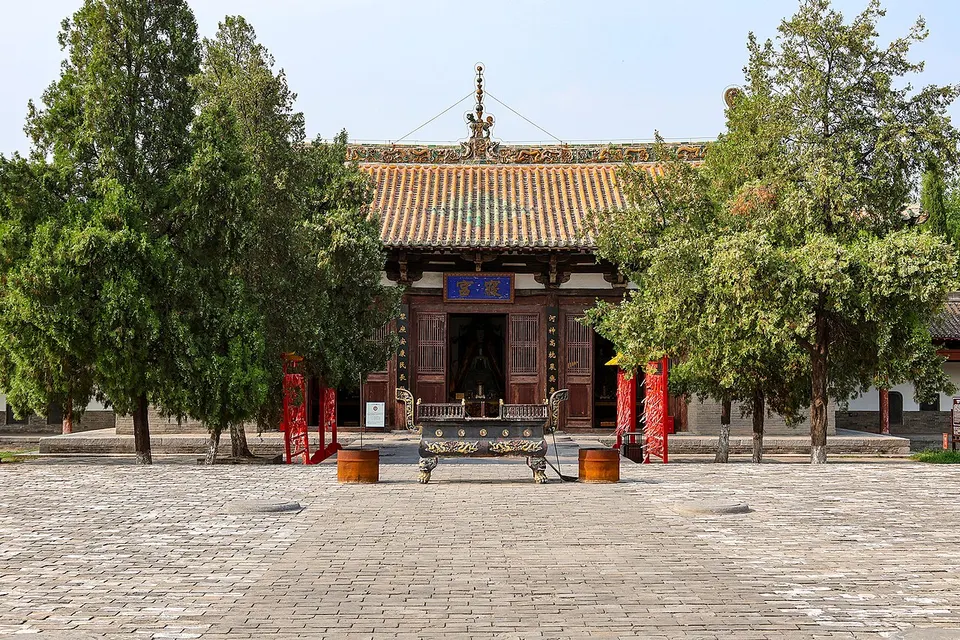
- Jidu Temple 济渎庙 4A scenic area · National heritage site
The temple of the god of the Ji, one of the four great rivers of ancient China, founded in 582 at the river's eastern spring and the largest and most complete of the temples to the Four Rivers. - Mount Wangwu 王屋山 4A scenic area · National heritage site
A Taoist mountain north-west of Jiyuan, ranked first of the Ten Grotto-Heavens of Taoism and the setting of the fable of the Foolish Old Man who moved the mountains. - Wulongkou Scenic Area 五龙口 4A scenic area · National heritage site
The gorge where the Qin River breaks out of the Taihang Mountains north-east of Jiyuan, home to a national nature reserve for Taihang macaques and to some of China's oldest irrigation works. - Xiaogoubei–Yinhe Gorge Scenic Area 小沟背·银河峡 4A scenic area · on the map
A forested valley at Shaoyuan in the far west of Jiyuan, known for volcanic-rock scenery: a streambed full of multicoloured boulders, a long ridge said to look like a giant turtle and a cliff of pale rock shapes nicknamed 'baby cliff'. - Yellow River Three Gorges 黄河三峡 4A scenic area · on the map
A stretch of the Yellow River at Xiaye in south-western Jiyuan, where the reservoir upstream of the Xiaolangdi Dam fills three gorges, Gushan, Longfeng and Bali, between steep peaks. - Ancient City of Zhi 轵国故城 National heritage site · on the map
The walled town of Zhi, founded in the Spring and Autumn period and later the seat of Han and Northern dynasties lords, whose rammed-earth ramparts enclose the modern town of Zhicheng south of Jiyuan. - Daming Temple, Jiyuan 大明寺 National heritage site
A Buddhist temple at Zhicheng, south of Jiyuan, on the site of an ancestral shrine of the Western Han lords of Zhi; it became a monastery in 1040 and was rebuilt over thirty years from 1276. - Erxian Temple, Jiyuan 济源二仙庙 National heritage site · on the map
A Ming and Qing temple at Daxu village in Lilin, north-east of Jiyuan, dedicated to Wei Huacun, a Western Jin Taoist woman venerated as the Lady of the Purple Void. - Fengxian Taoist Temple 奉仙观 National heritage site
A Taoist temple in central Jiyuan founded in 685, whose Sanqing Hall, rebuilt in 1184 under the Jin dynasty, is one of the three oldest wooden buildings in Henan. - Guandi Temple, Zhicheng 轵城关帝庙 National heritage site · on the map
A temple to Guan Yu, the deified Three Kingdoms general, in Zhicheng town south of Jiyuan. - Yanqing Temple Pagoda 延庆寺塔 National heritage site · on the map
A Northern Song brick pagoda on the north-western edge of Jiyuan, built in 1034–1036 on the site of Yanqing Temple beside the Longtan spring, the western source of the ancient Ji River.
On the map
Open Jiyuan on the illustrated map to see its outline, its places and listed sites together, and to add them to a trip.
Open Jiyuan on the map