 Atlas of China
Sanmenxia 三门峡Sānménxiá
Swans wintering on a Yellow River reservoir and courtyards sunk in the loess
About Sanmenxia
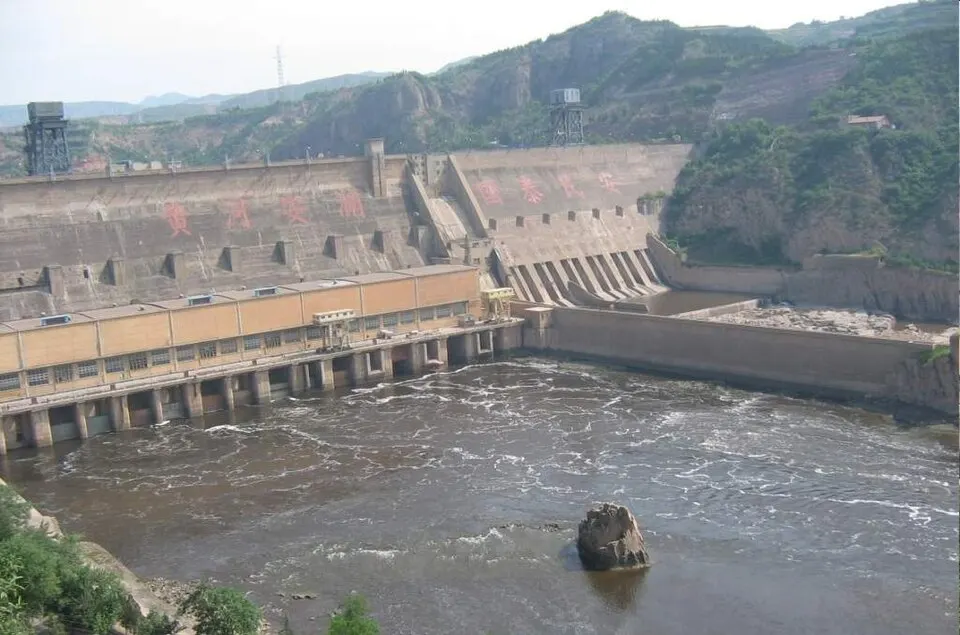
Sanmenxia rose as a new city with the Sanmenxia Dam, begun in 1957 as the first major dam on the Yellow River, and each winter large flocks of swans gather at its Swan Lake wetland. Yangshao Village in Mianchi, where a Neolithic site was found in 1921, gave its name to the Yangshao culture, and the Guo State Museum stands on the cemetery of a Zhou-era state. In Shaanzhou, sunken courtyard houses are dug down into the loess.
What to eat in Sanmenxia
- Yangshao baijiu (仰韶酒)
Listed sites in Sanmenxia
25 sites in Sanmenxia are on the official lists. Those with a page of their own link to it; the rest open as cards on the map.
- Ganshan National Forest Park 甘山国家森林公园 4A scenic area · on the map
A national forest park in the mountains about 20 km south of Sanmenxia, rising to Ganlu Peak at about 1,885 m, with forest walks, autumn red-leaf areas, a water play area and a butterfly valley. - Guo State Museum 虢国博物馆 4A scenic area · National heritage site
A museum built over the cemetery of the Western Zhou state of Guo on Shangcunling in northern Sanmenxia, where hundreds of burials, chariot pits and sacrificial pits were excavated from 1956 onwards. - Hangu Pass 函谷关 4A scenic area
The site of the ancient pass that guarded the narrow corridor between the Central Plain and the Wei valley, fortified by the state of Qin in the Warring States period and fought over for centuries afterwards. - Hanshan Mountain, Lingbao 汉山 4A scenic area · on the map
A high, thickly wooded mountain in Guxian town, Lingbao, next to the Xiaoqinling nature reserve, whose Jinding summit rises to about 2,200 m. - Miaodigou Archaeological Site Park and Museum 庙底沟考古遗址公园 4A scenic area · National heritage site · on the map
The site of a Neolithic village of the Yangshao culture's Miaodigou phase (about 4000–3500 BC), with a later Miaodigou II layer, excavated in 1956–57 ahead of the Sanmenxia Dam and again in 2002. - Niangniang Mountain, Lingbao 娘娘山 4A scenic area · on the map
A granite mountain and national geopark about 13 km west-south-west of Lingbao, known for its 'stone waterfalls', dark streaks running down bare granite slabs that look like ink paintings. - Shanzhou Sunken Courtyard Scenic Area 陕州地坑院 4A scenic area · on the map
A village of sunken courtyard houses at Beiying, south of Sanmenxia, opened as a scenic area: square pits are dug into the loess and cave rooms cut into their walls, hiding the village below ground level, a building craft listed as national intangible heritage in 2011. - Shuanglongwan Scenic Area 双龙湾 4A scenic area · on the map
A river-valley scenic area near the source of the Luo River in western Lushi County, named after the peaks Dalongtou and Xiaolongtou, around which the river winds in an S-shaped loop. - Swan Lake National Urban Wetland Park 天鹅湖国家城市湿地公园 4A scenic area · on the map
A large wetland park on the Yellow River flats between the eastern and western halves of Sanmenxia, known for the large flocks of wild swans that winter on its lakes from October. - Wengcheng Waterfall 瓮城瀑布 4A scenic area · on the map
A small valley in Shiziping township, Lushi County, with five waterfalls in succession, the highest being the 61 m Wengcheng Waterfall, which freezes in winter. - Xianmen Mountain, Mianchi 仰韶仙门山 4A scenic area · on the map
A mountain valley scenic area in Duancun township, about 30 km from Mianchi town, developed by the Yangshao liquor company as part of its tourism estate; it held its opening ceremony and 4A plaque unveiling in April 2023. - Yangshao Liquor Estate 仰韶酒庄 4A scenic area · on the map
The factory tourism area of the Yangshao liquor group in Mianchi, built around its distillery with brewing workshops, a cellar of liquor stored in caves, a museum of world liquor history, company exhibition halls and a pedestrian culture street. - Yangshao Village Site and Yangshao Culture Museum 仰韶村遗址 4A scenic area · National heritage site · on the map
The village where the Swedish geologist Johan Gunnar Andersson found Neolithic painted pottery in 1921, giving its name to the Yangshao culture; the site was settled roughly 7,000 to 6,000 years ago and also has Longshan remains. - Yanzishan National Forest Park 燕子山 4A scenic area · on the map
A national forest park in the hills of Chuankou township, Lingbao, with stands of pagoda trees and dawn redwoods, several reservoirs and a cluster of waterfalls. - Yellow River Danxia Gorges 黄河丹峡 4A scenic area · on the map
A scenic area on the south bank of the Yellow River in Potou township, north of Mianchi, where red-rock cliffs and gorges run down to the river above the Xiaolangdi reservoir. - Yellow River Park, Sanmenxia 黄河公园 4A scenic area · on the map
A riverside park about 5 km long on the terraces above the Yellow River along the northern edge of Sanmenxia, running from the Maojin ferry west to the Yellow River bridge. - Yuxi Grand Canyon 豫西大峡谷 4A scenic area · on the map
A narrow river gorge more than 30 km long in the mountains of northern Lushi County, with a chain of waterfalls and plunge pools, the best known being the Dacongtan Waterfall. - Yuxi Herb Garden 豫西百草园 4A scenic area · on the map
A rural tourism park next to the Yuxi Grand Canyon that combines fields of Chinese medicinal herbs and flowers with fruit picking, a recreated western Henan village and local food. - Zhongliu Dizhu Scenic Area (Sanmenxia Dam) 中流砥柱 4A scenic area
A riverside scenic area built around the Sanmenxia Dam, begun in 1957 and brought into use in 1960–61 as the first major dam on the Yellow River, and the Dizhu rock just downstream, the 'pillar in midstream' that has withstood the current for millennia and gave Chinese a proverb for steadfastness. - Anguo Temple, Shanzhou 安国寺 National heritage site · on the map
A hillside Buddhist temple founded in the Sui dynasty, nicknamed the Glazed-Tile Temple for the glazed tiles on its halls, with buildings mostly of the Ming and Qing. - Baolun Temple Pagoda 宝轮寺塔 National heritage site · on the map
A square brick pagoda with closely set eaves, built in 1176–77 under the Jin dynasty, standing in Shanzhou Park on the site of the old Shanzhou city in western Sanmenxia. - Hongqingsi Grottoes 鸿庆寺石窟 National heritage site · on the map
A small group of Buddhist cave shrines cut in the Northern Wei into an east-facing hillside at Shifo ('Stone Buddha') village, east of Yima: five caves hold 46 niches and more than 120 carved figures. - Lushi City God Temple 卢氏城隍庙 National heritage site · on the map
A temple to the city god, the town's protective deity, in the county town of Lushi. - Miaoshang Village Sunken Courtyards 庙上村地坑窑院 National heritage site · on the map
A farming village on the loess tableland south of Sanmenxia whose homes are dug into the ground: each courtyard is a square pit with cave rooms cut into its walls, so the village stays hidden from view until the pit edges. - Shihao Section of the Xiaohan Ancient Road 崤函古道石壕段 National heritage site · on the map
A surviving stretch of the Xiaohan road, the ancient route between Chang'an and Luoyang through the Xiao Mountains and the Hangu pass, where a limestone road surface and roadside water-storage features can still be seen on the hillside.
On the map
Open Sanmenxia on the illustrated map to see its outline, its places and listed sites together, and to add them to a trip.
Open Sanmenxia on the map