 Atlas of China
Zhumadian 驻马店Zhùmǎdiàn
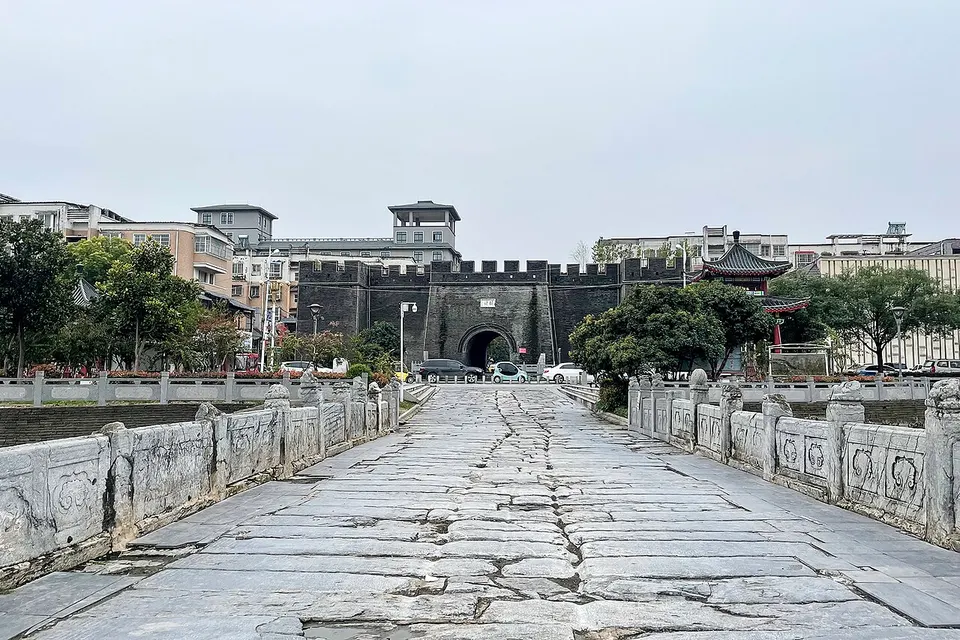
Strange rocks on Chaya Mountain and Ming stone bridges at old Runan
About Zhumadian
Zhumadian, where the western Henan hills meet the eastern plain, takes its name, roughly 'inn where horses halt', from a relay station set up here in 1474. Its counties were the heart of the ancient state of Cai, whose capital at Shangcai stood for about 500 years. Chaya Mountain in Suiping rises in a jumble of strangely weathered rocks, and at Runan, once the seat of Yu prefecture, two Ming stone bridges lead to the old town gates.
Listed sites in Zhumadian
17 sites in Zhumadian are on the official lists. Those with a page of their own link to it; the rest open as cards on the map.
- Mount Chaya 嵖岈山 5A scenic area
A granite massif on the eastern edge of the Funiu Mountains, a national geopark whose main scenic area of about 50 km² is crowded with weathered rock pinnacles, caves and small lakes carved from granite about 140–120 million years old. - Caihongfang Liquor Culture Park 蔡洪坊酒文化园 4A scenic area · on the map
A working baijiu distillery and visitor park on the south bank of the Hong River in Xincai county town, built on the former state-run Xincai distillery and covering more than 600 mu. - Jinding Mountain 金顶山 4A scenic area · on the map
A national forest park in Yifeng town where the Funiu and Tongbai ranges meet, on the climatic border between the subtropical and warm-temperate zones, with six peaks, dense mixed forest and rock formations. - Laole Mountain 老乐山 4A scenic area · on the map
A forested range of nine linked peaks at the eastern end of the Funiu and Tongbai mountains, the mountain scenery nearest to Zhumadian city, rising to 813 m at Yuhuang Peak. - Nanhai Chan Temple 南海禅寺 4A scenic area · on the map
A large working Buddhist monastery on the south-eastern edge of Runan town, enclosed on three sides by the Ru River and rebuilt from 1992 to 2007 under the monk Mingcheng on the site of the old Xiaonanhai temple. - Royal Post Station (Huangjia Yizhan) 皇家驿站 4A scenic area · on the map
A modern culture-and-leisure town in Ming–Qing style in Zhumadian's Yicheng district, themed on the area's long history as a stop on the imperial courier-station network. - Tongshan Scenic Area 铜山 4A scenic area · on the map
A provincial scenic area in Biyang County made up of Tongshan mountain, the Tongshan Lake reservoir and Yunwu Peak, with forested hills, caves, waterfalls, temples and Taoist halls. - Zhugou Revolutionary Memorial Hall 竹沟革命纪念馆 4A scenic area · National heritage site · on the map
The former seat of the CPC Central Plains Bureau and the Henan provincial party committee in 1938–39 in Zhugou town, known at the time as 'Little Yan'an', where Liu Shaoqi and Li Xiannian worked. - Baoyan Temple Pagoda 宝严寺塔 National heritage site
A Northern Song brick pagoda of seven storeys on a hexagonal plan, 28.8 m tall, in Xiping county town and the only remnant of Baoyan Temple. - Cai State Capital Ruins 蔡国故城 National heritage site · on the map
The capital of the Zhou-dynasty state of Cai, first granted to King Wu's brother Shu Du and the seat of its rulers for about 500 years, around present-day Shangcai county town. - Dongqiao Site (Leizu's Hometown) 董桥遗址 National heritage site · on the map
A Neolithic settlement site of about 48 ha at Dongqiao village, mainly of the Yangshao culture with later Longshan, Erlitou, Zhou and Han layers, which local tradition identifies with the Xiling clan of Leizu, the Yellow Emperor's consort credited with inventing silk-making. - Former Site of the Chayashan Weixing People's Commune 嵖岈山卫星人民公社旧址 National heritage site · on the map
The headquarters of China's first people's commune, formed on 20 April 1958 by merging some twenty farming cooperatives west of Suiping, whose reports of record grain yields made the front page of the People's Daily that summer during the Great Leap Forward; Mao Zedong visited it in November 1958. - Jiudian Iron Works Site 酒店冶铁遗址 National heritage site · on the map
An ironworking site of the Warring States to Jin periods on both sides of the Tanshan reservoir south of Chushan town, linked in ancient texts with the famous Tangxi and Longquan swords. - Pagoda of Monk Xiugong (Puzhao Temple Pagoda) 秀公戒师和尚塔 National heritage site · on the map
A 14 m brick funerary pagoda built in 1194, under the Jin dynasty, by the disciples of Xiugong, abbot of Puzhao Temple, who had died the year before; the temple itself has gone. - Runing Stone Bridges 汝宁石桥 National heritage site
Two Ming-dynasty stone bridges over the Ru River at Runan, the old seat of Runing prefecture: the Jimin Bridge at the east gate, first made of stone in 1483, and the Hongji Bridge at the north gate, built in 1505, each with five arches and about 55 m long. - Wuying Pagoda 悟颖塔 National heritage site
A nine-storey hexagonal brick pagoda in pavilion style, more than 20 m tall, in the south of Runan town, popularly called the Shadowless Pagoda from the saying that it casts no shadow at noon on the winter solstice. - Zhengyang Stone Que 正阳石阙 National heritage site · on the map
An Eastern Han stone que, the kind of ceremonial gate pillar once set before tombs and shrines, standing in the north-east of Zhengyang county town.
On the map
Open Zhumadian on the illustrated map to see its outline, its places and listed sites together, and to add them to a trip.
Open Zhumadian on the map