 Atlas of China
Hengyang 衡阳Héngyáng
The southern peak of the Five Mountains, where the wild geese turn back
About Hengyang
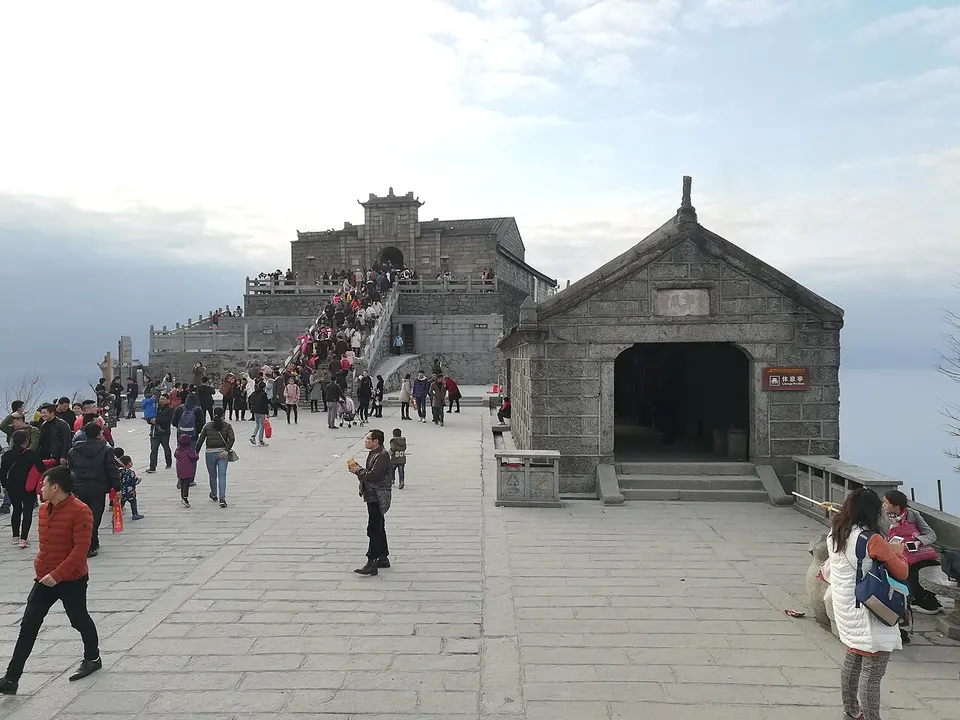
Hengyang lies south of Mount Heng, the southern peak of China's Five Great Mountains, a range of 72 peaks topped by Zhurong Peak at about 1,300 metres. At its foot in Nanyue, the Grand Temple of Mount Heng brings Buddhist, Taoist and Confucian worship together in one great complex. The city is known as the Wild Goose City, after the geese that once stopped here on their way south, and Leiyang honours Cai Lun, the Han court official remembered for improving papermaking.
What to eat in Hengyang
- Yulin xiangyao banquet platter (玉麟香腰)
Listed sites in Hengyang
22 sites in Hengyang are on the official lists. Those with a page of their own link to it; the rest open as cards on the map.
- Mount Heng 南岳衡山 5A scenic area · National heritage site
Mount Heng, the Southern Peak among China's Five Great Mountains, is a granite range counted as 72 peaks, whose highest point, Zhurong Peak, stands at about 1,300 m above Nanyue town. - Cai Lun Memorial Park 蔡伦纪念园 4A scenic area · National heritage site · on the map
A memorial park in central Leiyang, home town of Cai Lun, the Eastern Han court official credited with improving papermaking around AD 105. - Cailun Bamboo Sea 蔡伦竹海 4A scenic area · on the map
A large area of bamboo forest in Huangshi Town in south-eastern Leiyang, the home district of the papermaking pioneer Cai Lun. - China Seal Mountain 中国印山 4A scenic area · on the map
A limestone hillside in Miaoqian Town, Changning, known locally as Yanbeiling, on which thousands of designs of historic Chinese seals have been carved into the rocks since 2003. - Dongzhou Island 东洲岛 4A scenic area
An island about 2 km long in the Xiang River in central Hengyang, whose peach blossom ('Dongzhou peach waves') was one of the city's eight traditional views. - Former Residence of Luo Ronghuan 罗荣桓故居 4A scenic area · National heritage site · on the map
The birthplace of Luo Ronghuan (1902–1963), a Communist commander who led political work in the Red Army and was made a marshal of the People's Liberation Army in 1955, in Nanwan Village, Ronghuan Town, Hengdong County. - Former Residence of Wang Fuzhi (Xiangxi Caotang) 王船山故居 4A scenic area · National heritage site · on the map
Xiangxi Caotang is the thatched retreat where the Ming loyalist philosopher Wang Fuzhi (Wang Chuanshan, 1619–1692) spent his final years writing, in Qulan Town, Hengyang County. - Former Residence of Xia Minghan 夏明翰故居 4A scenic area · on the map
The ancestral home of Xia Minghan (1900–1928), an early Communist organiser executed in Hankou in 1928 and remembered for the poem he wrote before his death, in Lizi Village, Hongshi Town, Hengyang County. - Former Site of the Xiangnan Student Union 湘南学联旧址 4A scenic area · National heritage site · on the map
The former premises of the Xiangnan (Southern Hunan) Student Union, a student federation active in Hengyang from the May Fourth period of 1919, on the east bank of the Xiang River. - Goulou Peak 岣嵝峰 4A scenic area · on the map
Goulou Peak is one of the main summits of the Hengshan range, rising in the north-east of Hengyang County on the border with Hengshan County, inside a national forest park set up in 1995 that covers about 2,070 ha, takes in five of Mount Heng's 72 peaks and rises to 1,143 m. - Hengyang Ornamental Stone Museum 衡阳奇石文化博物馆 4A scenic area · on the map
A private museum of ornamental stones in Zhengxiang District, the first private museum approved by Hunan's cultural relics bureau, run by the collector Liu Xuanling. - Huiyan Peak 回雁峰 4A scenic area
A 97 m hill in Yanfeng District, traditionally counted as the first of Mount Heng's 72 peaks and the source of Hengyang's nickname 'Wild Goose City', from the old belief that geese flying south turned back here. - Nanhu Park 南湖公园 4A scenic area · on the map
A wetland park around a former reservoir on the south-western side of central Hengyang, opened in 2014 and the city's largest urban wetland park. - Qishan Forest Park 岐山 4A scenic area · on the map
Qishan, formerly called Fenghuang Shan and counted among the 72 peaks of Mount Heng, is a hill in the west of Hengnan County rising to 741 m, protected as a provincial forest park since 1998. - Shigu Academy 石鼓书院 4A scenic area · on the map
Shigu Academy stands on Shigu Hill, where the Zheng and Lei rivers join the Xiang in the north of Hengyang city. - Shuikoushan Lead-Zinc Mining Heritage & Labour Movement Memorial 水口山铅锌矿冶遗址 4A scenic area · National heritage site · on the map
Mining in the Shuikoushan area of Changning goes back more than a thousand years, and the Qing government set up a mining bureau here in 1896; the listed industrial site has 19 features above and below ground, including old shafts, smelting halls and workers' housing. - Siming Mountain 四明山 4A scenic area · on the map
A forested mountain on the western edge of Qidong County, said to take its name from the four neighbouring counties it looks out over; it became a provincial forest park in 2004 and a national forest park in 2014. - Zijin Mountain 紫金山 4A scenic area · on the map
A forested hill beside Kaiyun, the county town of Hengshan County, counted in the Mount Heng range as Jinzi Peak. - Grand Temple of Mount Heng 南岳大庙 National heritage site · on the map
The largest temple on Mount Heng, at the northern end of Nanyue old town at the foot of the mountain, dedicated to the god of the Southern Peak. - Nanyue Martyrs' Shrine 南岳忠烈祠 National heritage site
A memorial shrine below Xianglu Peak on the lower slopes of Mount Heng, planned in 1938 and completed in 1943 by the Nationalist government for soldiers killed in the War of Resistance against Japan, and regarded as one of the earliest and largest such memorials in China. - Wang Ancestral Hall, Dayu Village 大渔村王氏宗祠 National heritage site · on the map
An ancestral hall of the Wang clan in Dayu Village, Lijiang Town, in southern Hengnan County, founded under the Northern Song, restored in the Yongle reign of the Ming and repaired several times under the Qing; it has been a national heritage site since 2013. - Zhongtian Village Historic Buildings 中田村古建筑群 National heritage site · on the map
A village of the Li clan in Miaoqian Town, Changning, settled in 1404 by descendants of Ming-dynasty soldier households from the Chaling garrison.
On the map
Open Hengyang on the illustrated map to see its outline, its places and listed sites together, and to add them to a trip.
Open Hengyang on the map