
 An illustrated travel map
Mosques and Islamic heritage in China
Islam came to China by sea, to ports such as Quanzhou and Guangzhou, and by land along the Silk Road. The mosques of the Hui people often look like Chinese temples, with tiled roofs and courtyards, while those of the Uyghurs in Xinjiang have domes and minarets; there are also Sufi shrines in the north-west and the Muslim quarters of cities such as Xi'an.
- Places
- 58
- Regions
- 22
- Featured
- 7
- Group
- Belief and thought
Show them on the interactive map
Featured places
-
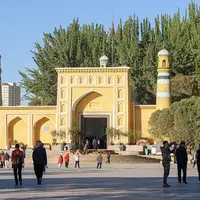
Kashgar Old City 喀什古城
A Silk Road crossroads of mud-brick lanes, bazaars and the Id Kah Mosque
-

Quanzhou Maritime Museum 泉州海外交通史博物馆
A museum of medieval Zayton, built like a sailing ship, with a 13th-century wreck
-
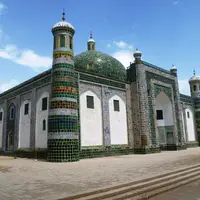
Afaq Khoja Mausoleum 阿巴和加麻扎
Kashgar's tiled Sufi shrine of green domes, minarets and a famous legend
-
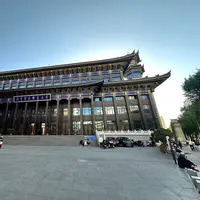
Dongguan Mosque 东关清真大寺
Qinghai's largest mosque, at the heart of Xining's Hui quarter
-
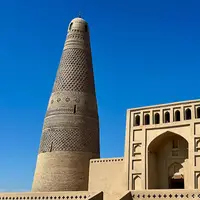
Emin Minaret 苏公塔
A tapering mud-brick minaret wrapped in brick patterns, in the vines
-
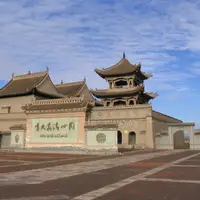
Tongxin Great Mosque 同心清真大寺
Ningxia's oldest and largest mosque, Chinese-style halls on a brick platform
-

Muslim Quarter 回民街
Halal street food and a temple-style mosque in the lanes north of the Drum Tower
By region
Xinjiang (17) · Henan (6) · Qinghai (5) · Taiwan (4) · Hebei (2) · Inner Mongolia (2) · Heilongjiang (2) · Jiangsu (2) · Anhui (2) · Guangdong (2) · Gansu (2) · Ningxia (2) · Beijing (1) · Shanxi (1) · Zhejiang (1) · Fujian (1) · Shandong (1) · Sichuan (1) · Yunnan (1) · Shaanxi (1) · Hong Kong (1) · Macau (1)
Xinjiang 17 places
- Kashgar Old City 喀什古城 5A scenic area · National heritage site
A Silk Road crossroads of mud-brick lanes, bazaars and the Id Kah Mosque - Afaq Khoja Mausoleum 阿巴和加麻扎 4A scenic area · National heritage site
Kashgar's tiled Sufi shrine of green domes, minarets and a famous legend - Emin Minaret 苏公塔 National heritage site
A tapering mud-brick minaret wrapped in brick patterns, in the vines - Aibifu Aijiemu Mazar, Upper Artux 艾比甫·艾洁木麻扎 National heritage site · on the map
A domed shrine-tomb in Upper Artux, rebuilt between 1889 and 1899 by local merchant brothers on a site venerated since the Karakhanid period; local tradition says it honours a merchant from Persia who cancelled the villagers' debts. - Aitika Mosque, Yutian 于田艾提卡清真寺 National heritage site · on the map
A mosque in Yutian (Keriya) town, also known as the Yutian Grand Mosque, whose origins are traced to the 13th century. - Baitulla Mosque Minaret 拜吐拉清真寺宣礼塔 National heritage site · on the map
The Qing-era minaret of Yining's Baitulla Mosque (now the Jiefang South Road Mosque), completed in 1773 with Qing court funds and built by craftsmen from inner China. - Hami Kings' Mausoleum 哈密回王墓 4A scenic area · National heritage site · on the map
For more than two centuries Hami was ruled under the Qing by a line of nine local Uyghur princes, and their burial ground in the south of the city mixes Islamic, Chinese and Mongol architecture. - Hanaka and Seyitqamal Mosque Minarets 哈纳喀及赛提喀玛勒清真寺宣礼塔 National heritage site · on the map
Two red-brick minarets in Shuangta (Twin Towers) Park in central Tacheng, the surviving parts of the Seyitqamal mosque, founded in 1885 by the Uzbek mullah Seyitqamal, and the Hanaka mosque, built from 1910 by Uzbek Muslims, whose minaret was begun in 1928. - Ili Old Town (Kazanqi) 伊犁老城 4A scenic area · on the map
The old quarter of Yining, about 3.5 km² of lanes with more than 300 traditional buildings and many courtyard houses in blue and white, where about 120,000 people still live. - Jame Mosque, Yarkand 莎车加满清真寺 National heritage site · on the map
The oldest and largest mosque in Yarkand, whose founding is dated variously from 1409 to the 17th century, when it was enlarged and named Jame under Abdullah Khan, and which was repaired several times in later centuries. - Kuqa Grand Mosque 库车大寺 National heritage site
Kuqa's main mosque stands on a mound on the north-western side of the old town; tradition dates its founding to the 16th century, and the present prayer hall, gatehouse and court building come from a rebuilding completed in 1932 after a fire. - Mausoleum of Sultan Vais Khan 速檀·歪思汗麻扎 National heritage site · on the map
The tomb of Vais Khan, a 15th-century ruler of the Eastern Chagatai Khanate (Moghulistan), on the north side of the Abrel hills in Yining County. - Molana Arshidin Mazar 默拉纳额什丁麻扎 National heritage site · on the map
The shrine complex of Arshidin, the 14th-century Sufi teacher credited with bringing the Moghul khan Tughlugh Timur to Islam, lies between Kuqa's old and new towns. - Shaanxi Grand Mosque 陕西大寺 National heritage site
Ürümqi's largest Hui mosque, founded in 1883 by Muslims from the Wei River valley of Shaanxi, rebuilt between 1902 and 1906 and long counted first among the city's historic Hui congregations. - Shaanxi Great Mosque, Yining 伊宁陕西大寺 National heritage site
The largest mosque among the nine Qing-era towns of Ili, founded in the mid-18th century by Hui settlers from Shaanxi and Gansu and brought to its present size by 1781. - Tughlugh Timur Mausoleum 吐虎鲁克·铁木尔汗麻扎 National heritage site
The tomb of Tughlugh Timur, a descendant of Chinggis Khan's son Chagatai and the first Mongol khan in the region to adopt Islam, built between 1363 and 1369 north-east of Huocheng. - Yarkand Khanate Royal Tombs 叶尔羌汗国王陵 National heritage site
The burial ground of the khans of the Yarkand Khanate, which ruled from Yarkand in the 16th and 17th centuries, lying behind the Altyn Mosque in the old town.
Henan 6 places
- Arabic Stele at Shuinanguan Mosque 水南关清真寺阿文碑 National heritage site · on the map
A bluestone stele of the Yuan dynasty or earlier, 1.8 m tall, carved with the Islamic declaration of faith in archaic Arabic script inside a circle, with lotus and peony borders on the back; it was found more than 3 m underground when the Shuinanguan Mosque in Qinyang was rebuilt. - Beida Mosque 沁阳北大寺 National heritage site
One of the largest and best-preserved historic mosque complexes in Henan, rebuilt in 1580 and enlarged under the Qing in Chinese palace style, facing east in three courtyards. - Dongda Mosque, Kaifeng 开封东大寺 National heritage site
The principal mosque of Kaifeng's Hui Muslim community, first of the city's 'thirteen mosques' and historically called the leading mosque of Henan. - Xiguan Mosque, Bo'ai 西关清真寺 National heritage site · on the map
A mosque in Chinese palace style in the western quarter of Bo'ai county town, enlarged in 1405, whose surviving buildings date from the Qing. - Zhengzhou Mosque 郑州清真寺 National heritage site
Zhengzhou's oldest and largest mosque, also called the Beida Mosque after nearby North Street, with origins no later than the Ming and traditional Chinese-style buildings dating from the mid-Qing onwards. - Zhuxian Mosque 朱仙镇清真寺 National heritage site
A mosque founded in the Ming and rebuilt in 1738, a reminder that Zhuxian's Ming and Qing trade drew Hui merchants who built several mosques in the town.
Qinghai 5 places
- Dongguan Mosque 东关清真大寺 National heritage site
Qinghai's largest mosque, at the heart of Xining's Hui quarter - Ahetan Mosque 阿河滩清真寺 National heritage site · on the map
A Qing-period mosque in the Salar village of Ahetan in Ganduo town, Hualong, listed nationally in 2013 after provincial protection from 1988. - Hongshuiquan Mosque 洪水泉清真寺 National heritage site · on the map
A mosque in Hongshuiquan village, Ping'an District, listed nationally in 2013 as a Ming-to-Qing building. - Jiezi Gongbei 街子拱北 National heritage site · on the map
A Muslim tomb shrine (gongbei) in Jiezi town, Xunhua, listed nationally in 2013 as a Qing-period tomb. - Salar Mosques of Xunhua 撒拉族清真寺古建筑群 National heritage site · on the map
A national heritage group of five Qing-period mosques of the Salar community in Xunhua County, at Mengda, Qingshui (Hedong), Tashapo, Zhang'ga and Kewa, listed together in 2013.
Taiwan 4 places
- Longgang Mosque 龙冈清真寺 on the map
One of about ten mosques in Taiwan, in the Longgang area of Zhongli. - Taichung Mosque 台中清真寺 on the map
A mosque on Dadun South Road in Nantun District, built between 1988 and the early 1990s and fully refitted in 2020. - Taipei Grand Mosque 台北清真寺
Often described as the largest and oldest mosque in Taiwan, completed in 1960 to a design by the architect Yang Cho-cheng and listed as a city monument in 1999. - Xizhi Gongbei Temple 拱北殿 on the map
A Taoist temple on Sanxiu Mountain in Xizhi, founded in 1906 and dedicated mainly to Lü Dongbin, with Sakyamuni and Confucius also enshrined.
Hebei 2 places
- Botou Mosque 泊头清真寺 National heritage site · on the map
A mosque founded in 1404 under the Ming and enlarged in the Chongzhen era (1628–44), with more than twenty timber buildings in Chinese rather than domed style, split into a main mosque and a separate women's mosque. - Dingzhou Mosque 定州清真寺 National heritage site · on the map
A mosque on Zhongshan Road in the old town, facing west, with buildings dating from the Yuan to the Qing dynasties.
Inner Mongolia 2 places
- Chifeng North Great Mosque 赤峰清真北大寺 National heritage site
Founded in 1739 and rebuilt between 1742 and 1747, this is regarded as the largest and oldest mosque in the Chifeng area, and it was listed nationally in 2013. - Great Mosque of Hohhot 呼和浩特清真大寺 National heritage site
The Great Mosque of Hohhot, founded in 1693 by Hui Muslims, is regarded as the oldest and largest mosque in Inner Mongolia and is an active place of worship.
Heilongjiang 2 places
- Acheng Mosque 阿城清真寺 National heritage site · on the map
A mosque in central Acheng, west of Qingzhen Square, whose compound dates from the late Qing dynasty. - Bukui Mosque 卜奎清真寺 National heritage site
Described by Xinhua as the largest and oldest mosque in Heilongjiang, Bukui Mosque is still used for worship in the old centre of Qiqihar.
Jiangsu 2 places
- Crane Mosque 仙鹤寺 National heritage site
One of the oldest mosques in China, founded in 1275 by Puhaddin, an Arab missionary said to descend from the Prophet Muhammad, and rebuilt in 1390 and again in 1523. - Tomb of Puhaddin 普哈丁墓 National heritage site
The walled cemetery of Puhaddin, an Arab missionary said to be a 16th-generation descendant of the Prophet Muhammad, who came to Yangzhou in the late Southern Song and died in 1275.
Anhui 2 places
- Nanguan Mosque, Anqing 安庆南关清真寺 National heritage site · on the map
A mosque in the southern part of Anqing's old city, near the Yangtze riverfront, whose Qing-dynasty buildings were listed as a national heritage site in 2013. - Shou County Mosque 寿县清真寺 National heritage site · on the map
A mosque in Qingzhensi ('Mosque') Lane inside the walled old town of Shou County, whose surviving buildings date from the Ming and Qing dynasties.
Guangdong 2 places
- Huaisheng Mosque and Guangta Minaret 怀圣寺光塔 National heritage site
Traditionally said to have been founded in 627 by Sa'd ibn Abi Waqqas, a companion of the Prophet, the Huaisheng Mosque is the main mosque of Guangzhou and one of the oldest in China, although historians place its origins later in the Tang or Song period. - Xianxian Mosque and Tomb of Sa'd ibn Abi Waqqas 清真先贤古墓 National heritage site
Chinese Muslim tradition holds that this walled cemetery contains the tomb of Sa'd ibn Abi Waqqas, a companion of the Prophet said to have come to China to spread Islam in the seventh century, and it has long been a place of pilgrimage.
Gansu 2 places
- Bafang Thirteen Lanes 八坊十三巷 4A scenic area · on the map
The old Hui Muslim quarter of Linxia, the historic Hezhou, where eight mosque communities (fang) grew up around their mosques and thirteen lanes took shape from the early Qing; some 2,000 households still live here, more than 98 percent of them Hui. - Houjie Mosque 后街清真寺 National heritage site · on the map
A working mosque of Tianshui's Hui community in Qinzhou District, whose buildings date from the Ming and Qing dynasties.
Ningxia 2 places
- Tongxin Great Mosque 同心清真大寺 4A scenic area · National heritage site
Ningxia's oldest and largest mosque, Chinese-style halls on a brick platform - Yongning Najiahu Mosque 纳家户清真寺 National heritage site · on the map
A Hui mosque in Najiahu village, Yongning County, founded in 1524 by members of the Na clan, who trace their descent from the Yuan-dynasty statesman Sayyid Ajall Shams al-Din.
Beijing 1 place
- Niujie Mosque 牛街礼拜寺 National heritage site
Regarded as Beijing's oldest and largest mosque, it is the centre of the Muslim neighbourhood along Niujie (Ox Street); it is said to have been founded in 996 under the Liao, was rebuilt in 1443 and enlarged in 1696.
Shanxi 1 place
- Taiyuan Ancient Mosque 太原清真古寺 National heritage site
A working mosque in the old city, laid out as two courtyards on an east-west axis in Chinese timber style.
Zhejiang 1 place
- Phoenix Mosque 凤凰寺 National heritage site
One of the four great old mosques of China's south-east coast, on Zhongshan Middle Road in central Hangzhou, first built in the Tang or Song and rebuilt in 1281 with funds from Ala al-Din, a Persian Muslim settler.
Fujian 1 place
- Quanzhou Maritime Museum 泉州海外交通史博物馆 First-grade museum
A museum of medieval Zayton, built like a sailing ship, with a 13th-century wreck
Shandong 1 place
- East Great Mosque, Jining 济宁东大寺 National heritage site
A mosque first built in the early Ming dynasty and later enlarged and restored, on the west bank of Jining's old canal.
Sichuan 1 place
- Baba Mosque 巴巴寺 National heritage site
A mosque and Sufi shrine of the Qadiriyya order on Panlong Mountain, just north of Langzhong old town.
Yunnan 1 place
- Tomb of Sayyid Ajjal Shams al-Din 赛典赤·赡思丁墓 National heritage site
The tomb of Sayyid Ajjal Shams al-Din Omar (1211–1279), a Muslim official from Bukhara whom Kublai Khan sent to Yunnan in 1274 as the Yuan dynasty's first provincial governor; he founded a new city on the site of modern Kunming, where he had a Confucian temple, a Buddhist temple and mosques built, and the admiral Zheng He was descended from him.
Shaanxi 1 place
- Muslim Quarter 回民街 National heritage site
Halal street food and a temple-style mosque in the lanes north of the Drum Tower
Hong Kong 1 place
- Jamia Mosque 些利街清真寺 Declared monument
Jamia Mosque on Shelley Street is the oldest mosque in Hong Kong.
Macau 1 place
- Macau Mosque and Cemetery 澳门清真寺及坟场 on the map
Macau's only mosque (Mesquita de Macau), built in the early 1980s in the Mong-Há district, with a historic cemetery beside it.
Who is in: Mosques, shrines and Muslim quarters on the atlas, most of them on the national heritage list. A first list was drawn up by rules on each place's name, description and official class, then checked by hand; updated 2026-11-05. More in belief and thought: Buddhist · Taoist · Confucian · Churches. All themes.
Cite this page
- APA
- Atlas of China. (2026, November 5). Mosques and Islamic heritage in China: 58 places on a map. https://www.atlasofchina.com/themes/islam/
- MLA
- “Mosques and Islamic heritage in China: 58 places on a map.” Atlas of China, 5 Nov. 2026, www.atlasofchina.com/themes/islam/.