
 An illustrated travel map
Buddhist temples, grottoes and sacred mountains in China
Buddhism reached China along the Silk Road about two thousand years ago and left cave temples on its way, from Dunhuang to Yungang and Longmen. It also left thousands of temples and pagodas, the four sacred mountains of Wutai, Emei, Jiuhua and Putuo, and in Tibet and the lands around it the great monasteries of Tibetan Buddhism; in the far south-west, Theravada temples like those of South-East Asia.
- Places
- 843
- Regions
- 32
- Featured
- 76
- Group
- Belief and thought
Show them on the interactive map
Featured places
-
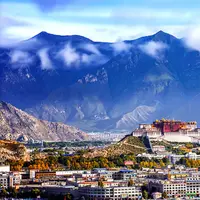
Potala Palace 布达拉宫
The red and white palace of the Dalai Lamas, rising in tiers above Lhasa
-
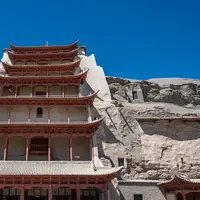
Mogao Caves 莫高窟
A thousand years of Buddhist murals in desert cliff caves on the Silk Road
-
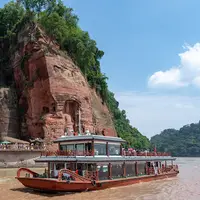
Leshan Giant Buddha 乐山大佛
A 71-metre Buddha carved from a riverside cliff where three rivers meet
-
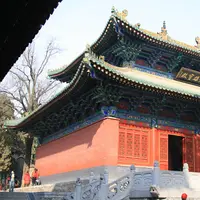
Shaolin Temple 少林寺
The cradle of Chan Buddhism and kung fu, at the foot of Mount Song
-
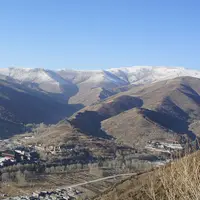
Mount Wutai 五台山
Temples, a towering white stupa and yellow-tiled roofs below five flat-topped holy peaks
-
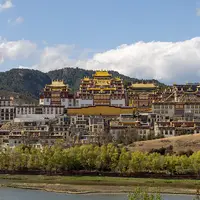
Shangri-La & Songzanlin Monastery 香格里拉松赞林寺
A golden-roofed Tibetan monastery stacked up a hillside, nicknamed 'Little Potala'
-
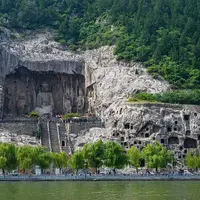
Longmen Grottoes 龙门石窟
Some 100,000 Buddhas carved into riverside cliffs, watched over by a serene giant
-
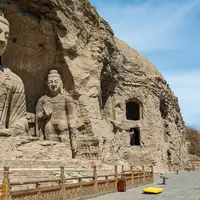
Yungang Grottoes 云冈石窟
Giant Buddhas carved into a sandstone cliff some 1,500 years ago
-
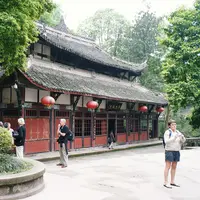
Dazu Rock Carvings 大足石刻
A cliffside storybook of Buddhist hells, mothers and thousand-armed Guanyin
-
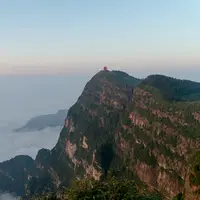
Mount Emei 峨眉山
A sacred Buddhist mountain of mist, monasteries and a golden summit above the clouds
-
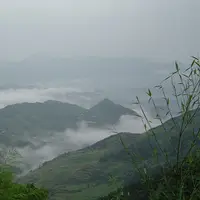
Mount Jiuhua 九华山
A Buddhist sacred mountain where 99 temples cling to granite peaks and mist
-
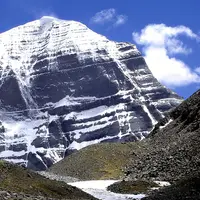
Mount Kailash and Lake Manasarovar 冈仁波齐—玛旁雍错
A holy mountain and lake sacred to four faiths, walked round on a three-day pilgrim kora
-
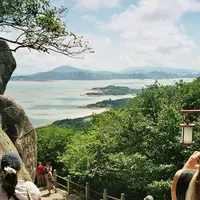
Mount Putuo 普陀山
A Buddhist island in the East China Sea, home of Guanyin, the bodhisattva of compassion
-
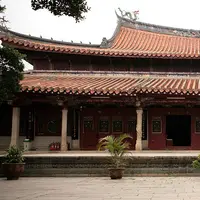
Quanzhou Old City: Kaiyuan Temple & Qingjing Mosque 泉州古城:开元寺与清净寺
Medieval Zayton: twin stone pagodas, an Arab-style mosque and a sea-goddess temple
-
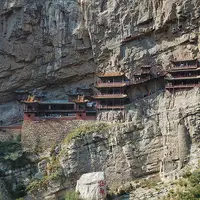
Hanging Temple 悬空寺
A wooden temple pinned to a sheer cliff, seemingly propped up on stilts
-
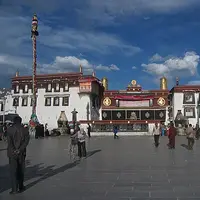
Jokhang Temple & Barkhor 大昭寺与八廓街
Tibet's holiest temple, ringed by the pilgrim circuit of the Barkhor
-
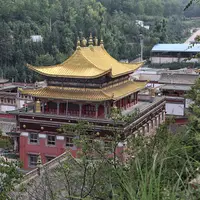
Kumbum Monastery 塔尔寺
Golden roofs and butter sculptures at the birthplace of Tsongkhapa
-
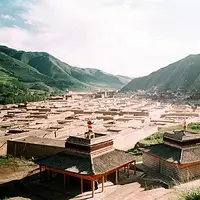
Labrang Monastery 拉卜楞寺
A living Tibetan Buddhist monastery town, ringed by a long corridor of prayer wheels
-
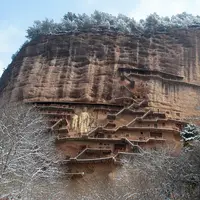
Maijishan Grottoes 麦积山石窟
Painted clay Buddhas in caves hung high on a haystack-shaped cliff
-
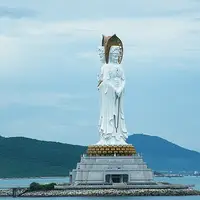
Nanshan Cultural Tourism Zone 南山文化旅游区
A 108-metre three-faced Guanyin stands on the sea beside Sanya's Buddhist park
-
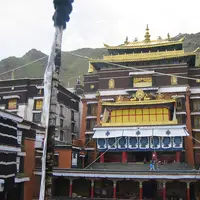
Tashilhunpo Monastery 扎什伦布寺
The seat of the Panchen Lamas, with a 26-metre gilded Maitreya and a giant thangka wall
-
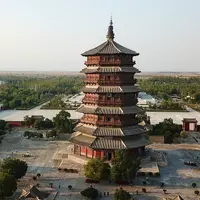
Yingxian Wooden Pagoda 应县木塔
A Liao-dynasty timber pagoda of 1056, five storeys outside and nine within
-
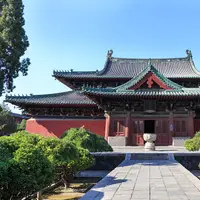
Zhengding: Longxing Temple & the Old Town 正定隆兴寺与古城
A walled Song-dynasty town of pagodas, led by the Longxing Temple's bronze Guanyin
-
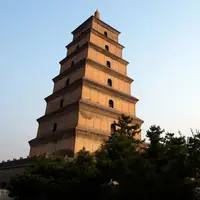
Big Wild Goose Pagoda 大雁塔
A Tang-dynasty pagoda built for scriptures a monk carried home from India
-
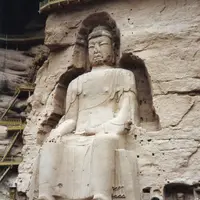
Bingling Temple Grottoes 炳灵寺石窟
Cliff-side Buddhist caves reached by boat across the green Liujiaxia reservoir
-
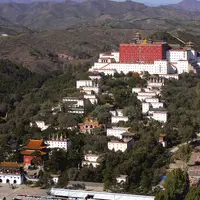
Chengde Eight Outer Temples 承德外八庙
Qing imperial temples in Tibetan and Chinese styles, led by the 'Little Potala'
-
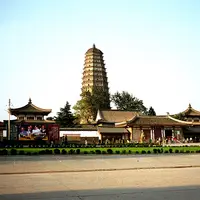
Famen Temple 法门寺
A Tang relic temple, the treasures of its sealed crypt and a 148-metre modern stupa
-
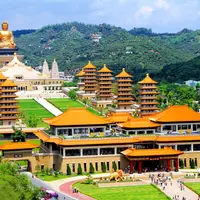
Fo Guang Shan 佛光山
A great Buddhist monastery, eight pagodas and a vast seated Buddha near Kaohsiung
-
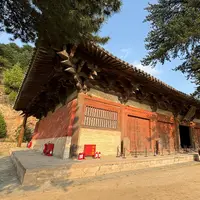
Foguang Temple 佛光寺
A Tang timber hall of 857 on a quiet hillside, still filled with its Tang clay statues
-
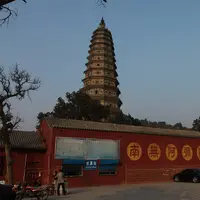
Guangsheng Temple 广胜寺
A 13-storey glazed-tile pagoda above Yuan halls and murals, among them a theatre scene
-
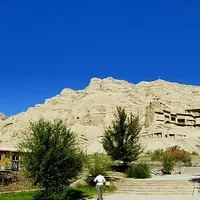
Kizil Caves 克孜尔千佛洞
Among China's earliest Buddhist cave complexes, painted in the lapis-blue Kucha style
-
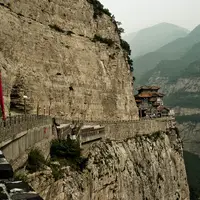
Mount Mian 绵山
Cliff temples, plank walkways and gorges on the mountain of the Cold Food legend
-
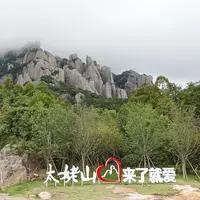
Mount Taimu 太姥山
Granite pinnacles, cave passages and sea mist above Fujian's north coast
-
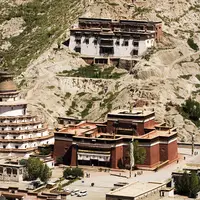
Palcho Monastery and the Kumbum 白居寺
A nine-tier stupa of chapels and murals beneath Gyantse's hilltop fort
-
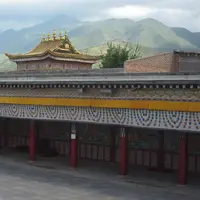
Rongwo Monastery and Rebgong Old Town 隆务寺
A working Gelug monastery and the painters' villages of the Rebgong valley
-
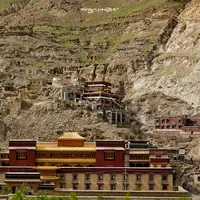
Sakya Monastery 萨迦寺
The grey-walled fortress-monastery of the Sakya school, with a wall of scriptures
-
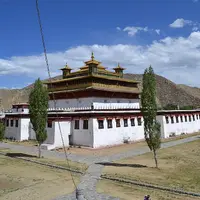
Samye Monastery 桑耶寺
Tibet's first monastery, laid out as a mandala of the Buddhist universe
-
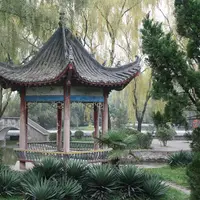
White Horse Temple 白马寺
China's first Buddhist temple, with Thai, Indian and Burmese halls beside it
-
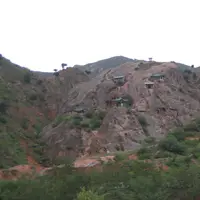
Xumishan Grottoes 须弥山石窟
Buddhist cave temples in red sandstone, with a 20-metre Tang Maitreya
-
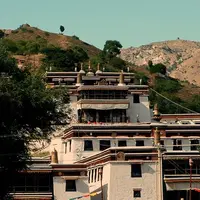
Badekar Monastery (Wudangzhao) 五当召
Inner Mongolia's largest Tibetan Buddhist monastery, white halls climbing a hillside
-
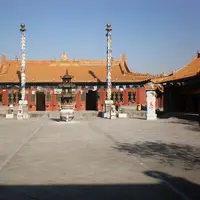
Dazhao & Xilitu Zhao Temples 大召与席力图召
Hohhot's two oldest Tibetan Buddhist temples, facing each other across the old town
-
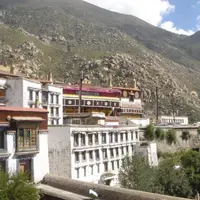
Drepung Monastery 哲蚌寺
Once Tibet's largest monastery, a whitewashed hillside town above Lhasa
-
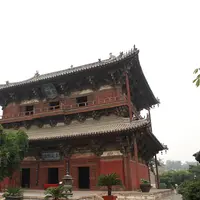
Dule Temple 独乐寺
A Liao-dynasty timber gate and pavilion from 984, with a 16-metre clay Guanyin
-
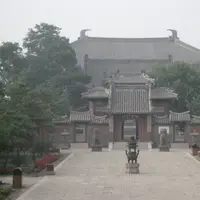
Fengguo Temple 奉国寺
A Liao-dynasty hall from 1020 holding seven towering painted Buddhas
-
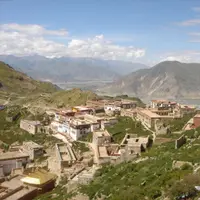
Ganden Monastery 甘丹寺
The first great Gelug monastery, high above the Lhasa valley with a hilltop kora
-
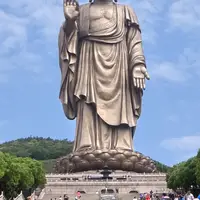
Grand Buddha at Ling Shan 灵山大佛
An 88-metre bronze Buddha beside Lake Tai, with a lavish Brahma Palace next door
-
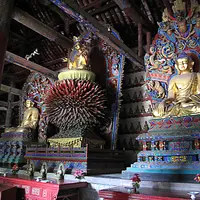
Lingyan Temple 灵岩寺
A hidden valley monastery with Song-era clay arhats and a forest of 167 stupas
-
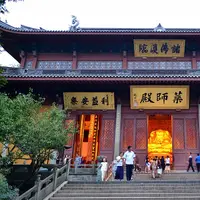
Lingyin Temple & Feilai Feng 灵隐寺
A working Chan monastery beside a hillside of 1,000-year-old rock carvings
-
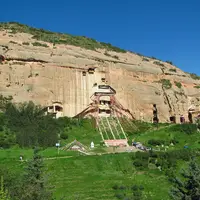
Mati Temple Grottoes 马蹄寺石窟群
Cave temples cut into a sandstone cliff in the Qilian foothills, among Yugur pastures
-
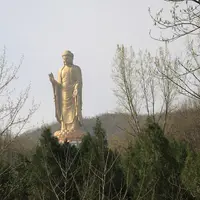
Mount Yao and Spring Temple Buddha 尧山-中原大佛
Granite pinnacles on one side, a 128 m copper Buddha on the other
-
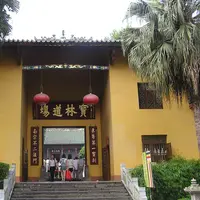
Nanhua Temple 南华寺
The ancestral seat of Southern Chan, where the Sixth Patriarch Huineng taught
-
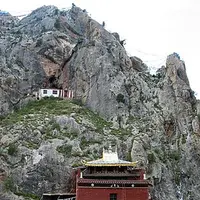
Princess Wencheng Temple and Lebagou Rock Carvings 勒巴沟文成公主庙
A cliffside temple with a giant Vairocana relief from Tibet's imperial age
-
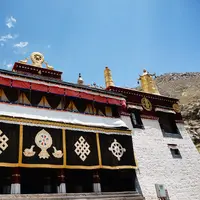
Sera Monastery 色拉寺
Lhasa's lively monastery, best known for its afternoon monk debates
-
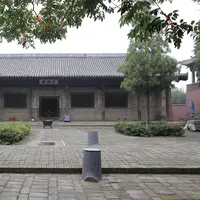
Shuanglin Temple 双林寺
Some 2,000 painted clay Buddhas, saints and guardians crowded into ten temple halls
-
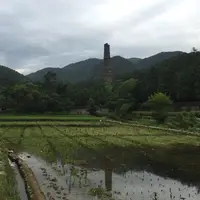
Tiantai Mountain 天台山
Cradle of Tiantai Buddhism: a Sui-dynasty temple, a stone-beam waterfall, a high peak
-
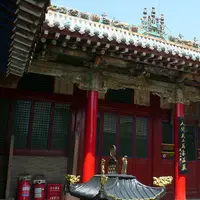
Xiaoxitian Temple 小西天
A small hilltop hall crowded with nearly 2,000 painted clay Buddhist figures
-
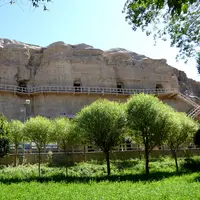
Yulin Caves 榆林窟
Mogao's quiet sister: painted cave temples in a green gorge, visited by guided tour
-
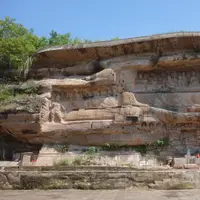
Anyue Rock Carvings 安岳石刻
Tang and Song Buddhas carved into quiet hillsides, led by a 23-metre Buddha at rest
-
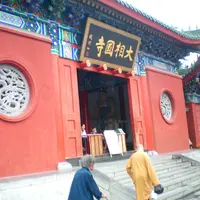
Daxiangguo Temple 大相国寺
The Song capital's great monastery and marketplace, still active in the old city
-
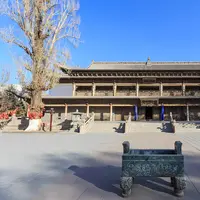
Great Buddha Temple, Zhangye 张掖大佛寺
A 12th-century Buddhist temple in Zhangye's old centre with a clay reclining Buddha
-
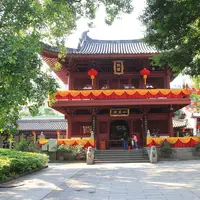
Guangxiao Temple 光孝寺
Guangzhou's oldest Buddhist temple, where the Sixth Patriarch took his vows
-
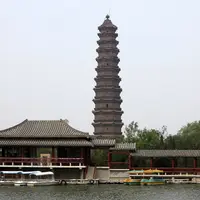
Iron Pagoda 开封铁塔
A 56-metre glazed-brick pagoda of 1049 that has outlasted floods and earthquakes
-
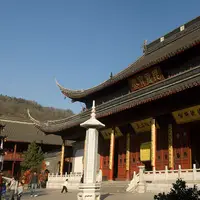
Qixia Mountain & Qixia Temple 栖霞山·栖霞寺
A 1,500-year-old Buddhist monastery and cliff of carved Buddhas under red autumn maples
-
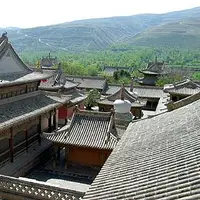
Qutan Temple 瞿昙寺
A Ming imperial monastery with painted corridors, tucked in a quiet valley
-
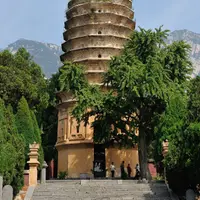
Songyue Pagoda 嵩岳寺塔
China's oldest standing brick pagoda, a twelve-sided tower from the 520s
-
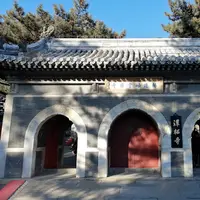
Tanzhe Temple 潭柘寺
Terraced temple courtyards in the western hills, shaded by ancient ginkgos and cypresses
-
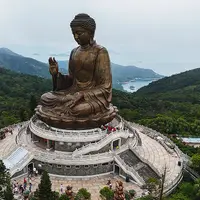
Tian Tan Buddha & Ngong Ping 天坛大佛与昂坪
A giant bronze Buddha on Lantau, reached by a 25-minute cable car ride
-
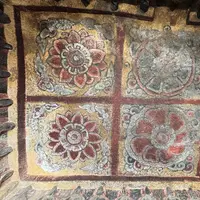
Xiangtangshan Caves 响堂山石窟
Royal Northern Qi cave temples, with the caves around their central pillars
-
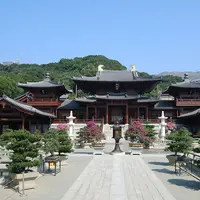
Chi Lin Nunnery and Nan Lian Garden 志莲净苑及南莲园池
A Tang-style Buddhist nunnery and garden behind a Kowloon tower-block skyline
-
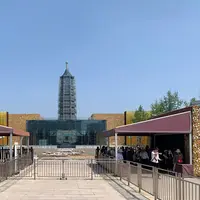
Great Bao'en Temple Heritage Park 大报恩寺遗址公园
The site of the lost Porcelain Tower, under a modern glass pagoda over the ruins
-
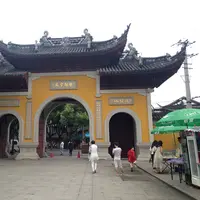
Hanshan Temple 寒山寺
The temple whose midnight bell a Tang poet made famous across East Asia
-
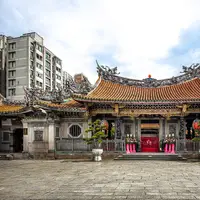
Longshan Temple 台北龙山寺
Taipei's most lived-in temple, set among the old streets of Bangka
-
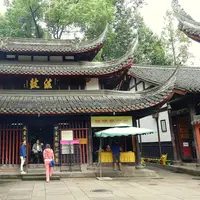
Wenshu Monastery 文殊院
An active Buddhist monastery of incense-filled courtyards, a teahouse and vegetarian food
-
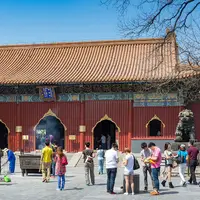
Lama Temple 雍和宫
Incense-filled courtyards and an 18-metre sandalwood Buddha in a working monastery
-
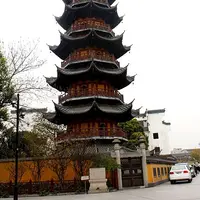
Longhua Temple and Pagoda 龙华寺与龙华塔
Shanghai's largest old temple, with a 977 pagoda and a New Year's Eve bell ceremony
-
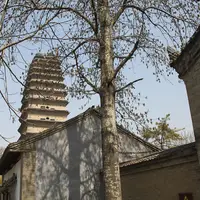
Small Wild Goose Pagoda 小雁塔
A slender Tang brick pagoda, cracked by earthquakes, in the grounds of the Xi'an Museum
By region
Shanxi (170) · Sichuan (83) · Henan (76) · Hebei (57) · Shaanxi (45) · Gansu (38) · Zhejiang (35) · Tibet (35) · Beijing (29) · Inner Mongolia (27) · Shandong (26) · Yunnan (23) · Xinjiang (21) · Jiangsu (20) · Liaoning (18) · Fujian (18) · Qinghai (16) · Anhui (15) · Taiwan (14) · Hubei (12) · Jiangxi (10) · Guangdong (10) · Chongqing (10) · Hunan (9) · Ningxia (7) · Hong Kong (5) · Shanghai (3) · Guangxi (3) · Tianjin (2) · Hainan (2) · Guizhou (2) · Macau (2)
Shanxi 170 places
- Mount Wutai 五台山 5A scenic area · National heritage site · UNESCO World Heritage
Temples, a towering white stupa and yellow-tiled roofs below five flat-topped holy peaks - Yungang Grottoes 云冈石窟 5A scenic area · National heritage site · UNESCO World Heritage
Giant Buddhas carved into a sandstone cliff some 1,500 years ago - Hanging Temple 悬空寺 4A scenic area · National heritage site
A wooden temple pinned to a sheer cliff, seemingly propped up on stilts - Yingxian Wooden Pagoda 应县木塔 4A scenic area · National heritage site
A Liao-dynasty timber pagoda of 1056, five storeys outside and nine within - Foguang Temple 佛光寺 National heritage site · UNESCO World Heritage
A Tang timber hall of 857 on a quiet hillside, still filled with its Tang clay statues - Guangsheng Temple 广胜寺 4A scenic area · National heritage site
A 13-storey glazed-tile pagoda above Yuan halls and murals, among them a theatre scene - Mount Mian 绵山 5A scenic area · National heritage site
Cliff temples, plank walkways and gorges on the mountain of the Cold Food legend - Shuanglin Temple 双林寺 4A scenic area · National heritage site · UNESCO World Heritage
Some 2,000 painted clay Buddhas, saints and guardians crowded into ten temple halls - Xiaoxitian Temple 小西天 4A scenic area · National heritage site
A small hilltop hall crowded with nearly 2,000 painted clay Buddhist figures - Anchan Temple 安禅寺 National heritage site · on the map
A temple in the old town of Taigu, founded in 857 under the Tang, of which two buildings survive. - Anguo Temple, Lishi 安国寺 National heritage site · on the map
A hillside temple compound in a forested valley of Wuya Mountain, west of central Lüliang, founded in 637 under the Tang as Anji Temple and renamed in the Song dynasty. - Ayuwang Pagoda 阿育王塔 National heritage site
A bottle-shaped brick stupa of about 40 m in the Tibetan Buddhist style, built in 1275 on a round base carved with lotus petals and topped by thirteen rings and a copper gourd-shaped finial. - Baitai Temple, Xinjiang County 白台寺 National heritage site · on the map
A Buddhist temple compound near Guangma village, named for the white lotus base of its Shakyamuni image and also called Shanhua Temple. - Baiyun Temple, Liangjiatan 梁家滩白云寺 National heritage site
A hillside temple on Baofeng Mountain west of Liangjiatan village, founded in the Tang dynasty and anciently called Xiyu Temple, built along the slope and cliff over about 7,800 sq m. - Balong Temple Pagoda, Zhonglizhuang 中里庄八龙寺塔 National heritage site · on the map
A square, seven-storey Song-dynasty brick pagoda about 24 m tall, in Zhonglizhuang village, Ronghe town, and the only part left of the Balong (Eight Dragons) Temple. - Baofeng Temple, Tunliu 宝峰寺 National heritage site · on the map
A temple in Jicun village, Lucun township, Tunliu District, now reduced to a single courtyard of about 960 square metres, where it once had three. - Baoning Temple, Youyu 宝宁寺 National heritage site · on the map
A Ming-dynasty temple in Youwei, an old garrison town in north-west Shanxi, founded in 1460 and added to the national list in 2019. - Biluo Temple 碧落寺 National heritage site
Biluo Temple is a Buddhist temple built into the hillside at the foot of Biluo Mountain, founded in the Northern Qi and laid out in east, middle and west courtyards. - Biyun Temple, Xiaozhang 小张碧云寺 National heritage site · on the map
A temple of three courtyards in Xiaozhang village whose main hall is a Song-dynasty building, three bays wide, with a single-eave hip-and-gable roof, deep eaves and widely spaced brackets. - Buer Temple 不二寺 National heritage site · on the map
A Buddhist hall dismantled and re-erected in 1987–89 in Yangqu county town from Xiaozhiyu village, where it first stood. - Chanfang Temple Pagoda 禅房寺塔 National heritage site · on the map
A Liao-dynasty brick pagoda of seven tiers and eight sides on the summit of Ta'er Mountain (Zhangren Peak) south-west of Datong, beside the site of the Tang-founded Chanfang Temple. - Chong'an Temple, Lingchuan 崇安寺 National heritage site
A Buddhist temple in the middle of Lingchuan county town, given its present name by imperial order in the 970s. - Chongfu Temple, Shuozhou 崇福寺 4A scenic area · National heritage site
A large Buddhist monastery in the middle of Shuozhou, founded in the Tang dynasty and best known for its two Jin-dynasty halls, the Mituo Hall of 1143 and the Guanyin Hall. - Chongjiao Temple, Machang 马厂崇教寺 National heritage site · on the map
A temple in Guyi village, Machang town, in Luzhou District north of central Changzhi, with buildings from the Yuan to the Qing. - Chongjiao Temple, Xiyang 昔阳崇教寺 National heritage site · on the map
A small temple in the north of Xiyang county town, founded in 1069 under the Northern Song and grouped with Shousheng Temple as the "North Temples" by 1381. - Chongming Temple, Gaoping 崇明寺 National heritage site
A Buddhist temple in a hill valley, laid out in two courtyards, whose central hall was begun in 971 in the early Northern Song. - Chongqing Temple, Zhangzi 崇庆寺 National heritage site · on the map
Chongqing Temple is a small Buddhist temple on the slope of Ziyun Mountain, with hills on three sides and a tributary of the Zhuozhang River to the south. - Chongshan Temple 崇善寺 National heritage site
A royal temple built by Zhu Gang, Prince of Jin, in memory of his mother and completed in 1391, which was almost wholly burnt down in 1864 and now covers about a forty-sixth of its original area. - Chongsheng Temple 崇圣寺 National heritage site · on the map
A Buddhist temple on Chanyin Mountain in Shangchiyu village, founded in the Tang dynasty, renamed Chongsheng in the Northern Song and rebuilt under the Jin. - Chongshou Temple, Zezhou 崇寿寺 National heritage site · on the map
Chongshou Temple is a Buddhist temple in Xigao village, Bagong township, recorded as a Northern Song-dynasty building. - Chuandi Buddhist Hall 川底佛堂 National heritage site · on the map
Chuandi Buddhist Hall is a tiny one-courtyard temple of about 233 sq m in Chuandi village, with a main hall, a gate and two side rooms. - Chunhua Temple, Pingshun 淳化寺 National heritage site · on the map
Only the Jin-dynasty main hall of this temple survives, standing in Yanggao village where the cleared temple grounds now form the village square. - Cisheng Temple, Xiangyuan 襄垣慈胜寺 National heritage site · on the map
A village temple in Xiangyuan with two courtyards, an opera stage and the main hall on its central axis, and meditation courtyards on either side. - Cisheng Temple, Xiaoyi 孝义慈胜寺 National heritage site · on the map
A Buddhist temple in Suzhuang village, now part of Xiaoyi's built-up area, founded in the Jin dynasty and expanded and repaired in the Ming and Qing periods. - Cixiang Temple 慈相寺 National heritage site
A Buddhist temple in Jiguo village whose three courtyards run north from the gate through a Guandi shrine and bell and drum towers to the main hall and the Lutai Pagoda. - Ciyun Temple, Tianzhen 慈云寺 National heritage site
A Ming-dynasty Buddhist temple in the middle of Tianzhen, laid out in three courtyards on about 5,600 m², which took its present name when the Xuande emperor (1426–35) granted it. - Dayun Temple, Jingzhuang 荆庄大云寺 National heritage site · on the map
The surviving main hall of Dayun Temple, which the 1763 county gazetteer records as a Northern Wei foundation, in the village of Jingzhuang south-west of Hunyuan. - Dayun Temple, Wuxiang 武乡大云寺 National heritage site · on the map
A temple on a terrace in Gucheng town, on the site of the Eastern Han county seat of Nieshi, renamed Dayun Temple in 1064 under the Northern Song. - Dazhou Village Temples 大周村古寺庙建筑群 National heritage site · on the map
A group of six buildings spread through Dazhou village, dating from the Song to the Qing and listed as a national heritage unit in 2013: Zisheng Temple, Tangwang (King Tang) Temple, Yuandi (Zhenwu) Pavilion, Wuhu Temple, Baizi Bridge and a brick pagoda. - Dinglin Temple 定林寺 National heritage site
A Buddhist temple halfway up a wooded hillside, with a two-storey gate pavilion, Leiyin Hall and Qifo Hall on its main axis. - Duofu Temple 多福寺 National heritage site
A hill temple near the top of Mount Jueweishan, founded in 786 in the Tang dynasty and rebuilt in the early Ming. - Fan'an Temple Pagoda, Shangxian 上贤梵安寺塔 National heritage site · on the map
A seven-storey octagonal brick pagoda about 40 m high at Shangxian village, also called the Shangxian Pagoda, hollow inside with an arched doorway on each floor. - Faxing Temple, Zhangzi 法兴寺 National heritage site
Faxing Temple rises in steps up the slope of Cuiyun Mountain, from the gate through a Tang stone pagoda to the Song-dynasty Yuanjue Hall. - Fotou Temple 佛头寺 National heritage site · on the map
A small temple in Chedang village, Yanggao township, named for the hill behind it, whose outline resembles a Buddha's head. - Fusheng Temple, Xinjiang County 福胜寺 National heritage site · on the map
A Buddhist temple in Guang village with a gate, Mituo Hall and a rear hall, known for its Yuan and Ming painted sculpture, of which more than 30 figures and reliefs survive. - Futian Temple 福田寺 National heritage site · on the map
A compact Buddhist temple of about 800 sq m in Heishui village, Pingtou town, founded in the Tang dynasty and rebuilt in 1333 under the Yuan. - Fuxiang Temple, Yushe 福祥寺 National heritage site · on the map
A temple founded in 946 under the Later Jin on the north shore of Yunzhu Reservoir, with water on three sides. - Gaodu Jingde Temple 高都景德寺 National heritage site
Jingde Temple is a two-courtyard Buddhist temple of about 3,400 sq m in Nanjie village, founded in 572 and long counted among the four great old temples of Zezhou. - Gongzhu Temple 公主寺 National heritage site
A three-courtyard temple covering about 4,300 m², named for Princess Chengxin, a daughter of the Northern Wei emperor Wencheng, who is credited with founding it; the present buildings date from a rebuilding in 1503 and from the Qing. - Guajiashan Cliffside Sculptures 挂甲山摩崖造像 National heritage site · on the map
Figure carvings on the cliffs of Guajia Hill, on the southern edge of Ji County town, which the national list dates from the Northern Dynasties to the Ming dynasty. - Guanghua Temple 光化寺 National heritage site · on the map
A Buddhist temple in Baicheng village, founded in the Tang dynasty as Longxing Temple and given its present name by imperial decree in 999. - Guangji Temple, Wutai 五台广济寺 National heritage site · on the map
A Yuan-dynasty temple in Taicheng, the county town of Wutai, whose five-bay Mahavira Hall holds Yuan clay statues of a Buddha with two bodhisattvas, three great bodhisattvas and eighteen arhats. - Guanyin Hall, Datong 大同观音堂 National heritage site
A small Buddhist temple on a low hill west of Datong, first founded under the Liao dynasty and rebuilt in 1651 under the Qing. - Guashan Tianning Temple 卦山天宁寺 4A scenic area · National heritage site · on the map
A Buddhist temple complex on Gua Mountain, 3 km from Jiaocheng, which the county government dates to 627 and describes as a major Huayan temple of the Tang dynasty. - Haihui Temple and Academy 海会寺 4A scenic area · National heritage site
Haihui Temple, at the foot of Dongfan Mountain, is known for its pair of brick pagodas: an early-10th-century pagoda that leans to the west and a Ming pagoda of 1565 with a glazed-tile balcony on its tenth level. - Hongfu Temple, Beishe 洪福寺 National heritage site · on the map
A walled temple in Beishe village that stands on a raised platform inside a fortress-like wall, with the gate hall doubling as the wall gate. - Hongfu Temple, Liangcun 梁村洪福寺 National heritage site · on the map
A Buddhist temple in Liangcun village founded in 713 under the Tang and repaired repeatedly in the Ming, Qing and Republican periods. - Hongfu Temple, Liuhui 留晖洪福寺 National heritage site · on the map
A temple of Ming and Qing date in Liuhui village, in Nanwang township of Dingxiang County. - Huayan Temple, Datong 华严寺 4A scenic area · National heritage site
A large Buddhist temple in the west of Datong's old city, founded in 1038 as a royal temple of the Liao dynasty and divided into an upper and a lower temple under the Ming. - Huiji Temple, Yuanping 惠济寺 National heritage site · on the map
A Buddhist temple in Lianjiagang village, north-east of Yuanping, whose gate, Manjusri Hall, bell tower and Galan Hall stand around a five-bay Great Buddha Hall. - Huilong Temple, Pingshun 回龙寺 National heritage site · on the map
A small temple beside the Zhuozhang River in Houbi village, of which only the main hall survives. - Huiluan Temple 回銮寺 National heritage site · on the map
A Buddhist temple in Xingdi village at the foot of Mount Mian, founded in the Tang dynasty and rebuilt in 1133 under the Jin. - Jiaxiang Temple, Gaoping 嘉祥寺 National heritage site · on the map
Jiaxiang Temple is a two-courtyard Buddhist temple about 50 m west of Chixiang village, with a Jin-dynasty front hall, a Yuan-dynasty middle hall (the Vairocana Hall) and later side buildings. - Jindeng Temple 金灯寺石窟 National heritage site
A temple of seven courtyards built along a cliff in the Taihang Mountains on the Henan border, with 16 caves carved mainly between 1504 and 1565, which the Changzhi government calls the largest surviving group of Ming-dynasty grottoes in China. - Jindong Temple 金洞寺 National heritage site · on the map
A small Buddhist temple founded in 1093 in Xihuyan village, west of Xinzhou, whose corner hall is original Northern Song timberwork with bracketed eaves. - Jingju Temple Grottoes 静居寺石窟 National heritage site · on the map
A group of Tang-dynasty rock-cut caves in a cliff beside Fengrun village, south of Jingle. - Jingtu Temple, Yingxian 净土寺 National heritage site
A Buddhist temple in the north-east corner of Ying County town, known locally as the North Temple and founded in 1124 under the Jin dynasty; only its main hall survives. - Jingxin Temple 净信寺 National heritage site · on the map
A Buddhist temple in Yangyi village beside the S319 provincial road, founded in the Tang dynasty and now made up of Ming and Qing buildings on two courtyards. - Jingyin Temple 净因寺 National heritage site
A Buddhist temple below Mount Jueweishan whose founding date is uncertain; a plaque of 930 is recorded, and it was rebuilt in 1205 under the Jin and repaired several times in the Ming and Qing. - Jinlong Mountain Scenic Area 金龙山风景区 4A scenic area · on the map
A hillside complex of Buddhist and Daoist shrines at Xiatujing village, west of Xiaoyi, built around the site of an old Dragon King temple on the hilltop. - Jishan Giant Buddha 稷山大佛 National heritage site · on the map
A seated clay Buddha 16.68 m tall stands in the main hall of Dafo Temple, formerly Qingliang Monastery, in Jishan; it was modelled against a loess cliff, with a carved earth lower body and a clay-modelled upper body, and its colours have faded with age. - Jueshan Temple 觉山寺 National heritage site · on the map
A temple founded in 483 as a Northern Wei imperial temple and rebuilt in the 1880s, whose Liao-dynasty brick pagoda survived the 1626 earthquake that brought down the rest of the compound. - Kaifu Temple, Yangcheng 开福寺 National heritage site · on the map
Kaifu Temple is an old Buddhist temple in Yangcheng county town, where a Jin-style scripture pavilion, a Yuan-style main hall and a Ming-style stage survive. - Kaihe Temple Grottoes 开河寺石窟 National heritage site · on the map
A group of Buddhist rock carvings and inscribed tablets cut into the cliff of Kuitou Hill beside Luanliu village in Pingding County. - Kaihua Temple, Gaoping 开化寺 National heritage site · on the map
A Buddhist temple on the wooded slope of Sheli Mountain, whose main hall (Daxiong Hall) was begun in 1073. - Kaihua Temple, Xinzhuang 辛庄开化寺 National heritage site · on the map
A village temple in Xinzhuang in the hills of Gaocun township, laid out from a gate hall and a Heavenly Kings hall to the main hall, with a Thousand Buddha hall and Guanyin and Ksitigarbha halls on either side. - Lingguang Temple Glazed Pagoda 灵光寺琉璃塔 National heritage site · on the map
A seven-storey octagonal brick pagoda more than 20 m high, built in imitation of timber construction, standing in the fields west of Beiliang village. - Lixiang Temple, Xiyang 昔阳离相寺 National heritage site · on the map
A village temple in Chuankou, Zhaobi township, whose buildings range in date from the Song to the Qing dynasty. - Longfu Temple, Nanzheng 南政隆福寺 National heritage site · on the map
A Buddhist temple in Nanzheng village founded in 1298 under the Yuan, repaired in the Ming and again in 1800, on two courtyards of about 2,900 sq m. - Longmen Temple, Pingshun 龙门寺 National heritage site · on the map
A hillside temple of about 5,070 sq m at the foot of Longmen Mountain, also called Huiri Yuan, that keeps timber buildings from every period from the Five Dynasties to the Qing. - Longquan Temple, Nanlinjiao 南林交龙泉寺 National heritage site · on the map
A village temple in Nanlinjiao, Beidong township, whose buildings are dated by the national listing to between the Yuan and Qing dynasties. - Longquan Temple, Taishan 太山龙泉寺 National heritage site · on the map
A mountain temple on Mount Tai (Taishan) in the Fengyu valley, founded in 710 under the Tang and rebuilt in the Ming and Qing, of which only the lower of its three original courtyards survives. - Longxing Temple, Xinjiang 新绛龙兴寺 National heritage site · on the map
A temple on a high mound at the north end of the main street of Xinjiang, where the Tang-era Biluo Stele was carved. - Longyan Temple, Lingchuan 龙岩寺 National heritage site · on the map
A Buddhist temple in Liangquan village, laid out in an upper and a lower courtyard on a plot of about 1,900 sq m. - Luohou Temple 罗睺寺 National heritage site
A Tibetan Buddhist temple of the Gelug school in Taihuai, beside Xiantong and Tayuan temples and named for Rahula, the Buddha's son. - Machiyan Temple 马齿岩寺 National heritage site · on the map
A small mountain temple in Mashan village in the far east of Pingding County, on the Taihang Number One tourist road. - Mayi Temple Brick Pagoda 麻衣寺砖塔 National heritage site · on the map
A Jin-dynasty dense-eaved brick pagoda on the Nanshan ridge in the hills north of Anze, about 2 km west of Lingnan village. - Mengjiagou Longquan Temple 孟家沟龙泉寺 National heritage site · on the map
A hillside temple of about 2,400 sq m at Mengjiagou village, begun in the Tianqi period of the Ming dynasty. - Mengshan Giant Buddha 蒙山大佛 4A scenic area · National heritage site
A giant seated Buddha carved into a cliff on Mount Meng from 551 under the Northern Qi, which Taiyuan's heritage pages describe as the largest cliff Buddha of the Northern Dynasties period. - Miaojue Temple, Xincun 新村妙觉寺 National heritage site · on the map
A Buddhist temple in Xincun village built in the Ming and Qing dynasties, with its Qianfo (Thousand Buddhas) Hall of the Qing and other buildings in Ming style. - Mimi Temple 秘密寺 National heritage site · on the map
A temple on Weiping Mountain, named after Mimi Rock, and one of the temples around Mount Wutai that lie outside the central Taihuai area. - Mingxiu Temple 明秀寺 National heritage site · on the map
A small village temple in Wangguo village, Jinyuan district, nicknamed the glazed-tile temple for its green glazed roofs. - Nanchan Temple 南禅寺 National heritage site
A small temple whose main hall, dated by a beam inscription to 782, is the oldest surviving timber building in China. - Nanshan Temple, Mount Wutai 南山寺 National heritage site · on the map
A large temple complex climbing the hillside south of Taihuai, assembled from three older temples, Jile Temple, Shande Hall and Youguo Temple, in works that began in 1875 and continued into the Republican period, and arranged in seven tiers. - Nanshen Temple, Gankeng 干坑南神庙 National heritage site
A temple dedicated to the Bodhisattva of Light in Gankeng village, rebuilt in the Ming dynasty and known in turn as Yeshu Furen Temple, Nanshen Temple and today Yuanxiang Temple. - Puguang Temple 普光寺 National heritage site · on the map
A small Buddhist temple of about 1,100 sq m in Baidao village, Xiluo town. - Pujing Temple, Xiangfen 普净寺 National heritage site · on the map
A temple compound of about 5,600 square metres in the fields near Shiwei village, with a gate, a Heavenly Kings Hall, an arhat hall, a Guandi hall, a Great Buddha Hall, a Medicine King hall, a pavilion and a bell tower. - Pujiu Temple 普救寺 4A scenic area · National heritage site
Pujiu Temple is the setting of the love story in The Story of the Western Wing, in which the scholar Zhang Sheng and Cui Yingying meet, and its brick pagoda is nicknamed the Yingying Pagoda after the heroine. - Puming Temple, Changze 长则普明寺 National heritage site · on the map
A village temple in Changze, repaired in the Ming dynasty. - Puzhao Temple, Qin County 沁县普照寺 National heritage site · on the map
A Buddhist temple in Kaicun village which the Qianlong-era Qinzhou gazetteer records as founded in 488 under the Northern Wei and repaired under the Jin, Ming and Qing. - Puzhao Temple, Siping 寺坪普照寺 National heritage site · on the map
The surviving main hall of a temple founded in the Later Jin dynasty and repaired in the Ming and Qing, in Siping village. - Qianfo Temple, Gujiao 古交千佛寺 National heritage site · on the map
A Buddhist temple in Gujiao named for the more than a thousand small stone Buddhas of Tang date set into the rear wall of its main hall, on 79 panels, each figure about 8 cm high. - Qilijiao Thousand Buddha Grottoes, Xixian 七里脚千佛洞石窟 National heritage site · on the map
A group of rock-cut Buddhist grottoes, also called the Xixian Thousand Buddha Caves, on the east bank of the Chengchuan River at Qilijiao village north of Xi county town. - Qinghua Temple, Tuandong 团东清化寺 National heritage site · on the map
A Buddhist temple in the middle of Tuandong village, founded in the Tang dynasty according to surviving fragments of stelae and repaired under the Yuan, Ming and Qing. - Qinglian Temple 青莲寺 National heritage site
Qinglian Temple, founded in the Northern Qi dynasty, stands on the lower slope of Xiashi Mountain in two courts, the lower and upper temples, joined by a mountain path of about 500 m. - Qingliang Temple, Pingyao 平遥清凉寺 National heritage site · on the map
A Buddhist temple in Yongcheng village, founded in 1342 under the Yuan and repaired in the Ming and Qing. - Qingliang Temple, Ruicheng 清凉寺 National heritage site · on the map
A hillside temple near Potou village, also called Potou Temple, of which only the Great Hall survives. - Qinglong Temple, Jishan 青龙寺 National heritage site · on the map
A small temple in Ma village, founded in 662 under the Tang and kept in Yuan style through later repairs. - Qiyan Temple Pagoda Forest 栖岩寺塔林 National heritage site · on the map
A pagoda forest of memorial and relic pagodas, in brick and stone, at the site of the Upper Qiyan Temple in the Zhongtiao Mountains. - Quhui Temple Stone Sculptures 曲回寺石像冢 National heritage site · on the map
A mound-like heap of stone blocks beside the ruined Quhui Temple, carved with Buddha figures in the style of the late Tang and partly covered by sand and gravel, in the village of Quhuisi on the Duyu river. - Sanjiao Hall, Sirun 寺润三教堂 National heritage site · on the map
A small temple to the "three teachings" of Buddhism, Daoism and Confucianism in Sirun village, of which only the main hall survives. - Sanjiao Hall, Yihe 义合三教堂 National heritage site · on the map
Yihe Sanjiao Hall is a village temple whose name means Three Teachings Hall; Changzhi Daily describes it as a folk-deity temple that brings Confucianism, Buddhism and Daoism together. - Sansheng Temple Main Hall, Yu County 西关三圣寺大殿 National heritage site · on the map
The surviving main hall of Sansheng Temple, founded in 1064 to honour the Three Sages of the Huayan school: Shakyamuni, Manjusri and Samantabhadra. - Sansheng Temple, Fanshi 三圣寺 National heritage site · on the map
A two-courtyard temple whose Mahavira Hall dates from the Jin dynasty, while the gate, bell and drum towers and side halls are Qing and the Ksitigarbha hall was rebuilt in 1495. - Shanhua Temple 善化寺 4A scenic area · National heritage site
A Buddhist temple just inside the south gate of Datong's old city, popularly known as the South Temple, which keeps buildings from both the Liao and Jin dynasties. - Shanqing Temple 善庆寺 National heritage site · on the map
A small Buddhist temple at Fudi village in Dayu township, south of Linxian town, founded in 583 and rebuilt in 1269 under the Yuan dynasty. - Shanshenyu Thousand Buddha Grotto 山神峪千佛洞石窟 National heritage site · on the map
A temple built around a grotto cut into the sandstone hillside at Shanshenyu village, which the county government dates to the Yuan dynasty. - Sheng'an Temple Pagoda, Zhangcun 张村圣庵寺塔 National heritage site · on the map
A Song-dynasty brick pagoda in Zhangcun village, in the north of Linyi County, and the only part left of Sheng'an Temple, which was demolished in 1958. - Shengshou Temple, Lingkongshan 灵空山圣寿寺 National heritage site · on the map
A small temple among old pines in the Lingkongshan forest reserve, founded under the Tang and laid out in five courtyards. - Shima Temple Grottoes 石马寺石窟 National heritage site · on the map
A group of rock-cut Buddhist carvings at Shima village, with more than a thousand surviving stone images dating from the Northern and Southern Dynasties to the Tang. - Shousheng Temple and Glazed Pagoda, Yangcheng 寿圣寺及琉璃塔 National heritage site · on the map
Shousheng Temple is a Buddhist temple in Yangling village, Qinchi township, known for its glazed brick pagoda, recorded as built in 1608. - Shousheng Temple Brick Pagoda, Ruicheng 巷口寿圣寺砖塔 National heritage site · on the map
A 13-storey octagonal brick pagoda, 46 m tall, which survived the destruction of its temple in 1941 and is a landmark in the north-east of Ruicheng town. - Shousheng Temple Pagoda, Nanyang 南阳村寿圣寺塔 National heritage site · on the map
A Song-dynasty brick pagoda from the former Shousheng Temple in Nanyang village, Liwang township, Wanrong County. - Shousheng Temple, Beisu Village 新绛寿圣寺大殿 National heritage site · on the map
Only the main hall survives of a temple founded in 961, in the middle of Beisu village in Xinjiang County. - Shousheng Temple, Weize 苇则寿圣寺 National heritage site · on the map
A Yuan-dynasty temple in Weize village, Tongyu town, standing in front of the village primary school. - Shousheng Temple, Xiangning 乡宁寿圣寺 National heritage site · on the map
A Buddhist temple in the county town of Xiangning, founded in 1049 and repaired under the Yuan, Ming and Qing dynasties. - Shuishen Temple, Guangling 水神堂 National heritage site · on the map
A temple complex on a small hill beside the Huquan spring in the middle of Guangling, whose name covers a water-god shrine and a Buddhist hall, Dashi'an. - Shushifo Cliff Carvings 竖石佛摩崖造像 National heritage site · on the map
A group of Buddhist rock carvings on a cliff near Shushifo village in the northern hills of Jiaocheng county, which the national list dates from the Northern Qi to the Tang dynasty. - South and North Jixiang Temples 南、北吉祥寺 National heritage site · on the map
Two Buddhist temples about 2 km apart in Liyi township, listed together as a single national monument. - Taipingxingguo Temple Pagoda (Anyi Pagoda) 太平兴国寺塔 National heritage site · on the map
This octagonal brick pagoda in the Anyi district is built in Song style and is taken by scholars to be the tomb pagoda of a monk of Taiping Xingguo Temple, which no longer stands. - Taiyin Temple 太阴寺 National heritage site · on the map
A Buddhist temple beside Zhangshang village, founded in the Northern Wei period and rebuilt several times since, including in 1180 under the monk Ciyun. - Tianlongshan Grottoes 天龙山石窟 National heritage site
A group of Buddhist cave temples cut into two peaks of Mount Tianlong, begun in the Eastern Wei dynasty in the 6th century and extended through the Northern Qi, Sui and Tang. - Tianning Temple Twin Pagodas 天宁寺双塔 National heritage site · on the map
Two octagonal, three-storey brick pagodas standing in a small park in the middle of Pingding town, the survivors of Tianning Temple, which was founded in the Northern Song. - Tiantai An, Pingshun 天台庵 National heritage site
A small hall on high ground in Wangqu village that was long counted among China's four surviving Tang timber buildings, until repairs in 2014 turned up ink inscriptions dating it to the Later Tang (Five Dynasties) period, about 929–933. - Tianwang Temple, Zhangzi 天王寺 National heritage site · on the map
Tianwang Temple (Heavenly King Temple) stands in Zhangzi county town, where only its middle hall and rear hall survive, both of the Jin dynasty. - Tiefo Temple (Dayun Temple), Linfen 铁佛寺 National heritage site
A temple in the south-west of Linfen's old town, founded in 632 and now run as a museum, with a gate, an entrance hall, a sutra library and a brick pagoda that was begun in 1715 and finished in 1728. - Tiefo Temple, Gaoping 铁佛寺 National heritage site · on the map
Tiefo (Iron Buddha) Temple is a one-courtyard temple in Mixi village, known for the Ming-dynasty painted clay figures in its main hall: a Buddha with two bodhisattvas, the Twenty-Four Devas ranged along the side walls and a hanging sculpture of scenes from Journey to the West behind. - Twin Pagoda Temple 永祚寺 National heritage site
Yongzuo Temple, popularly called the Twin Pagoda Temple, is a Ming-dynasty Buddhist complex in the south-east of Taiyuan whose two octagonal brick pagodas, each of 13 storeys and more than 50 m high, were built between the 1590s and 1612 and appear on the city's emblem. - Twin Pagodas of Miaodao Temple 妙道寺双塔 National heritage site · on the map
Two square brick pagodas face each other about 80 m apart in Linyi County town, all that survives of the former Miaodao Temple, once also called Yanta or Shuangta Temple; the east pagoda stood just outside the temple. - Wangu Temple, Yongji 万固寺 National heritage site · on the map
Wangu Temple is a Buddhist temple of Northern Wei origin at the foot of the Zhongtiao Mountains in Puzhou town, and the national listing dates its surviving buildings to the Ming dynasty. - Wubian Temple 无边寺 National heritage site
A walled temple in the old town of Taigu, best known for its White Pagoda, a hollow octagonal brick pagoda built in 1090 under the Northern Song. - Xiangyan Temple, Liulin 香严寺 National heritage site · on the map
A Buddhist temple in the north of Liulin county town, founded in the Tang dynasty, whose surviving buildings are of several dynasties, mainly Jin, Yuan and Ming. - Xiantang Mountain 仙堂山 4A scenic area · on the map
Xiantang Mountain is a scenic area in the hills north-east of Xiangyuan, centred on Xiantang Temple, a Buddhist temple traced to the Eastern Jin whose group of Ming and Qing buildings has been a provincial-level protected monument since 1996. - Xingfan Temple 兴梵寺 National heritage site · on the map
A Song-dynasty hall, all that remains of a temple founded in 1025 at Xiguan village and moved to its present site in 1687. - Xingguo Temple, Pingcheng 平城兴国寺 National heritage site · on the map
A former Buddhist temple in the southern part of central Datong, founded in 1619 under the Ming and repaired in 1667 and 1765. - Xingtangsi Scenic Area, Mount Huo 兴唐寺景区 4A scenic area · on the map
A mountain scenic area on the Hongtong side of Mount Huo, named after Xingtangsi village. - Xiyan Temple Pagoda, Shangdang 上党西岩寺塔 National heritage site · on the map
A Tang-dynasty brick pagoda in Sangzi village, Yincheng town, also known as the Zhangba Temple Pagoda. - Xuanquan Temple 悬泉寺 National heritage site · on the map
A temple built into a cliff on Guanshan beside the Fenhe Second Reservoir, once a family temple of the Ming princes of Jin. - Xuanzhong Temple 玄中寺 4A scenic area · National heritage site · on the map
A Buddhist temple in the Shibi valley that Chinese and Japanese Buddhists regard as the ancestral temple of the Pure Land school, founded in 472 in the Northern Wei period according to the Lüliang government. - Yanqing Temple 延庆寺 National heritage site
A small temple in Shanwen village whose Jin-dynasty main hall, the Great Buddha Hall, is the only original building left; the other halls were rebuilt in recent years. - Yanshan Temple 岩山寺 National heritage site
A small temple on the northern side of Mount Wutai, founded in 1158 in the Jin dynasty and formerly called Lingyan Temple, best known for the Jin murals in its Manjusri Hall. - Yiju Temple 义居寺 4A scenic area · National heritage site · on the map
A Buddhist temple at Zaogeda village in Sanjiao town, on a hillside beside a river, which was formerly called the Fotang Temple and served as a branch of the Tiangong Temple; the county government gives its area as 56,000 sq m. - Yingli Thousand Buddha Grottoes 营里千佛洞石窟 National heritage site · on the map
A group of Buddhist rock-cut grottoes on a cliff above Yingli village, just east of Xiangning county town, carved between the Northern Qi and the Tang dynasty. - Yong'an Temple, Hunyuan 浑源永安寺 National heritage site
A Yuan-dynasty temple compound in the old town of Hunyuan, begun under the Jin, burned down and rebuilt in the early Yuan, with extensions and repairs under the Ming and Qing. - Yongfu Temple, Beiyijian 北依涧永福寺 National heritage site · on the map
A village temple in Beiyijian whose through-hall, between the Heavenly King hall and the main hall, was rebuilt in 1469 and is the listed building. - Yongxing Temple Pagoda, Lüyuantou 闾原头永兴寺塔 National heritage site · on the map
A square brick pagoda of the Northern Song, dated by its form, stands in fields about 200 m north-east of Lüyuantou village, just south of Linyi. - Yongxing Temple, Songcun 宋村永兴寺 National heritage site · on the map
A village temple, also called Chongxing Temple, at the south-east corner of Songcun in Huafeng township, in the hills of south-east Yuanqu County. - Youxian Temple 游仙寺 National heritage site · on the map
A Buddhist temple laid out in three courtyards up a hillside, with a gate, the Chunqiu Tower, and Pilu, Sanfo and Qifo halls on its axis. - Yuanjue Temple Pagoda, Hunyuan 圆觉寺塔 National heritage site
A nine-storey octagonal brick pagoda of 1158, over 30 m high, in the old town of Hunyuan, known locally as the Little Temple Pagoda. - Yuanqi Temple 原起寺 National heritage site
Yuanqi Temple is a small hilltop temple on Phoenix Hill, above the west bank of the Zhuozhang River near Xin'an village. - Yuanzhi Temple, Fancun 范村圆智寺 National heritage site · on the map
A Buddhist temple in Fancun town. - Yunlin Temple, Yanggao 云林寺 National heritage site · on the map
A Ming-dynasty temple built by imperial decree in the south-west of Yanggao old town, locally called the West Temple, of which the main hall, the Heavenly Kings Hall and side halls survive. - Zhengjue Temple 正觉寺 National heritage site · on the map
A Buddhist temple in Kansi village, founded in the Tang dynasty (827–835) and rebuilt in 1070 under the Song. - Zhengjue Temple, Fanshi 繁峙正觉寺 National heritage site · on the map
The Mahavira Hall of Zhengjue Temple, a Jin-dynasty hall standing in the town of Fanshi. - Zhenguo Temple 镇国寺 4A scenic area · National heritage site
A Buddhist temple in Haodong village, listed with Pingyao Ancient City and Shuanglin Temple as part of the 1997 World Heritage site. - Zhenru Temple, Wuxiang 武乡真如寺 National heritage site · on the map
A village temple in Tuhe village, Hanbei township, whose inscriptions record its founding in 1323 under the Yuan and repairs in 1534 and 1738. - Zhensheng Temple 真圣寺 National heritage site · on the map
A small Buddhist temple in Pifu village. - Zhusheng Temple, Huozhou 霍州祝圣寺 National heritage site · on the map
A temple in the old centre of Huozhou, on Qianjin Street, with buildings from the Yuan to the Qing dynasties. - Zishou Temple 资寿寺 National heritage site
A Buddhist temple in Suxi village, founded in the Tang, burned at the end of the Jin, rebuilt in 1467 after lying derelict in the early Ming and brought to its present scale in 1622. - Zunsheng Temple 尊胜寺 National heritage site
A hillside temple of seven courtyards on the old southern route to Mount Wutai, founded in the Tang dynasty and given its present layout in the Republican period.
Sichuan 83 places
- Leshan Giant Buddha 乐山大佛 5A scenic area · National heritage site · UNESCO World Heritage
A 71-metre Buddha carved from a riverside cliff where three rivers meet - Mount Emei 峨眉山 5A scenic area · National heritage site · UNESCO World Heritage
A sacred Buddhist mountain of mist, monasteries and a golden summit above the clouds - Anyue Rock Carvings 安岳石刻 4A scenic area · National heritage site
Tang and Song Buddhas carved into quiet hillsides, led by a 23-metre Buddha at rest - Wenshu Monastery 文殊院
An active Buddhist monastery of incense-filled courtyards, a teahouse and vegetarian food - Bage Mani Wall 巴格嘛呢墙 4A scenic area · National heritage site · on the map
The Bage Mani Wall is a long wall built entirely of stones carved with Buddhist mantras and images, running across the grassland of Shiqu County. - Bairuxi Grottoes 白乳溪石窟 National heritage site · on the map
Bairuxi is a group of Tang-dynasty Buddhist niches carved into the rock in southern Tongjiang county. - Bangtuo Monastery 棒托寺 National heritage site · on the map
A Nyingma monastery in northern Zamtang County, founded in the Yuan period and known for its 39 stupas built between the Ming dynasty and the Republic. - Banyueshan Giant Buddha 半月山大佛 National heritage site
A Maitreya Buddha about 20 metres tall carved into the hillside of Banyue Mountain south of Ziyang, the largest of six niches at the site. - Bao'en Temple, Meishan 报恩寺 National heritage site · on the map
A village temple south of Meishan founded in the Tang, of which only the main hall survives, built in 1327 under the Yuan and extensively repaired in 1761. - Bao'en Temple, Pingwu 报恩寺 4A scenic area · National heritage site · on the map
Built between 1440 and 1446 by the local chieftain Wang Xi, this Buddhist monastery in Pingwu town is a remarkably well-preserved Ming complex whose timber frames are all of nanmu wood. - Baofan Temple 宝梵寺 National heritage site · on the map
A small temple in Baofan village, Pengxi County, whose Ming and Qing buildings are a national heritage site. - Baoguang Temple & Gui Lake 宝光寺与桂湖 4A scenic area · National heritage site
Two neighbouring sights in Xindu, north of Chengdu. - Beri Monastery 白利寺 National heritage site
Beri Monastery stands on a hillside above the north bank of the Yalong River about 10 km west of Ganzi town, and its present buildings date from the Qing dynasty. - Bishui Temple Cliff Carvings 碧水寺摩崖造像 National heritage site · on the map
About 25 Tang-dynasty Buddhist niches carved into the rock at Bishui Temple, on the east bank of the Fu River in central Mianyang. - Chonglong Mountain, Zizhong 重龙山 4A scenic area · National heritage site · on the map
A hill on the north-eastern edge of Zizhong's old town whose cliffs, known as the North Cliff, carry 172 niches with more than 1,700 Buddhist figures carved from 783 through the late Tang, the Five Dynasties and the Song. - Chongxiang Temple Cliff Carvings 冲相寺摩崖造像 National heritage site · on the map
At Chongxiang Temple, in the hills north-east of Guang'an city, Buddhist figures and inscriptions were carved into the cliff over more than a thousand years, from the Sui dynasty to the Qing. - Cuo'erji (Chöje) Monastery and Rangbala 措尔机寺·壤巴拉 4A scenic area · National heritage site · on the map
Zamtang is a leading centre of the Jonang school of Tibetan Buddhism, and Cuo'erji (Chöje) Monastery at Zhongrangtang, whose national listing dates its buildings from the Yuan to the Qing, is one of its historic monasteries. - Dafo Chan Monastery, Emeishan 大佛禅院 4A scenic area · on the map
An active Buddhist monastery in Emeishan city, about 5 km east of Baoguo Temple at the foot of Mount Emei, run as a Buddhist cultural tourism area. - Daxiangshan Giant Buddha, Langzhong 大像山摩崖造像 National heritage site
A Buddha almost 10 m tall, carved in the Tang dynasty into Daxiang ('Great Image') Mountain across the Jialing River from Langzhong old town, at the site of the Dafo Si (Great Buddha Temple). - Dazha Monastery 达扎寺 National heritage site · on the map
A Gelug monastery founded in 1663 by the first Dazha Living Buddha, which gives its name to Dazhasi, the county town of Zoige. - Dhe-Tsang Monastery 大藏寺 National heritage site · on the map
Founded in 1414, Dhe-Tsang (Dazang) Monastery is the head monastery of the Gelug school in northern Sichuan, set in a remote valley of Dazang township north of Barkam. - Feixiange Cliff Carvings 飞仙阁摩崖造像 National heritage site
One of the two protected groups of the Pujiang Grottoes, near Chaoyang Lake, with Buddhist and Taoist niches carved from the Tang to the Qing, the earliest dated 689. - Ganquan Temple, Renshou 甘泉寺 National heritage site · on the map
A Ming-dynasty temple in the countryside of south-eastern Renshou County, protected as a national heritage site since 2013. - Gsumge Mani Stone Castle 松格嘛呢石经城 4A scenic area · National heritage site · on the map
The Gsumge (Songge) Mani Stone Castle is a rectangular mass of stacked mani stones, carved with mantras and Buddhist images, about 73 by 47 metres and 9 metres high, rising to 15 metres, on the Zachuka grassland of Shiqu County. - Guangde Temple, Suining 广德寺 4A scenic area · National heritage site
Guangde Temple is a working Buddhist monastery on Wolong Hill at the western edge of Suining, founded in the Tang dynasty and renamed several times by imperial order before receiving its present name in the Ming. - Guanyin Temple Main Hall, Nanbu 观音庵大殿 National heritage site · on the map
The listed main hall of Guanyin'an, a Buddhist temple in the countryside south of Nanbu county town, is a timber building of the Ming dynasty. - Guanyin Temple, Xinjin 观音寺 National heritage site · on the map
A temple in Yongshang, south of Xinjin, founded in 1181 and rebuilt many times; two Ming halls survive alongside a Qing gate and halls. - Guanyinqiao, Jinchuan 观音桥 4A scenic area · on the map
Guanyinqiao, in north-western Jinchuan County, is a Tibetan Buddhist pilgrimage centre built around its Guanyin (Avalokiteshvara) temple. - Heming Mountain Taoist Carvings, Jiange 鹤鸣山道教造像 National heritage site
A hill about 1 km east of Pu'an, the old county town of Jiange, with 21 niches and 88 carved figures, mainly Taoist, made between the Northern Wei and the Republican era. - Hualin Temple, Yanting 花林寺 National heritage site · on the map
The main hall of a former temple in Huoxing village, Fuyi town, in north-eastern Yanting County, originally called Doushuai Temple; ink inscriptions on its beams, read with infrared photography in 2015, date it to 1311 under the Yuan dynasty. - Huangze Temple 皇泽寺 4A scenic area · National heritage site
Huangze Temple, at the foot of Wulong Mountain on the west bank of the Jialing River, is described as the only temple in China dedicated to Wu Zetian, the Tang empress who by tradition was born in Guangyuan. - Huijian Temple 慧剑寺 National heritage site
A Buddhist temple at Huijian village in Huilan, just east of Shifang city, traditionally said to date back to the Tang. - Huiyan Temple Main Hall 慧严寺 National heritage site · on the map
The Ming-dynasty main hall of Huiyan Temple, a rural temple in the southern part of Pengxi County south-east of Suining, protected as a national heritage site since 2013. - Huiyuan Temple (Gata) 惠远寺 4A scenic area · National heritage site
Huiyuan Temple was founded in 1728 on the orders of the Qing Yongzheng Emperor in the Gata valley north of Bamei, and the 7th Dalai Lama lived here for seven years before returning to Tibet; the 11th Dalai Lama was born in a nearby village in 1838. - Jiajiang Thousand Buddha Cliff & Dongfeng Weir 千佛岩 4A scenic area · National heritage site · on the map
A sandstone cliff on the bank of the Qingyi River just outside Jiajiang town, carved with some 270 Buddhist niches; most date from the Tang dynasty, with later additions into the Qing. - Jinfeng Mountain & Jinfeng Temple 金凤山 4A scenic area · on the map
A wooded hill park on the edge of Ya'an city whose slopes hold Jinfeng Temple, a Buddhist temple protected as a Sichuan provincial heritage site. - Jinshan Scenic Area 金山 4A scenic area · on the map
Jinshan is a wooded hill in Pu'an town, a few kilometres west of Kaijiang county town, centred on Jinshan Temple, a Buddhist monastery. - Jinxian Temple, Pengxi 金仙寺 National heritage site · on the map
A village temple at Zhoujiadian, just north of Pengxi county town, whose main hall is dated by inscriptions on its beams to 1327, under the Yuan dynasty. - Jueyuan Temple 觉苑寺 National heritage site · on the map
A Buddhist temple on the west side of Wulian, a town on the old Shu Road in southern Jiange County, founded in the Tang and rebuilt in 1457 under the Ming. - Kaishan Temple, Yingjing 开善寺 National heritage site
A Buddhist temple in Yingjing county town, now home to the county museum, whose main hall, built in the Chenghua reign of the Ming in the late 15th century, is one of the few Ming timber buildings left in Sichuan. - Kaixi Temple 开禧寺 National heritage site · on the map
A Buddhist temple in Tashui, in Anzhou district west of Mianyang, whose surviving buildings date mainly from the Ming dynasty. - Kathok Monastery 嘎托寺 National heritage site · on the map
Kathok, founded in 1159, is one of the six great 'mother monasteries' of the Nyingma school of Tibetan Buddhism, perched at about 4,000 metres some 700 metres above the valley floor in Baiyu County. - Kunfo Temple Cliff Carvings 睏佛寺摩崖造像 National heritage site · on the map
A group of Buddhist cliff carvings at Kunfo ('Sleeping Buddha') Temple in the countryside of Lezhi County, begun in the Sui dynasty and added to up to the Song. - Lengyan Temple, Pingshan 楞严寺 National heritage site · on the map
A Buddhist temple at Zhongdu, in the mountains of western Pingshan County, with buildings dating from the Ming dynasty. - Lingshan Temple, Mianning 灵山寺 4A scenic area · on the map
Lingshan ('Spirit Mountain') is a forested mountain scenic area about 17 km east of Mianning town, centred on Lingshan Temple, a Buddhist temple whose halls are built up the hillside. - Lingyan Temple and Thousand Buddha Pagoda 灵岩寺 National heritage site
A temple on the southern slope of Lingyan Mountain just north of Dujiangyan city, rebuilt in the Ming and Qing; only its Qing main hall and bell tower survive. - Litang Monastery 理塘寺 National heritage site · on the map
Litang Monastery, begun in 1581 in the time of the Third Dalai Lama, is regarded as the largest Gelug monastery in Kham. - Longju Temple 龙居寺 National heritage site · on the map
Founded in the Tang and rebuilt under the Ming and Qing, Longju Temple keeps a Middle Hall built in 1447. - Ma'an Temple 马鞍寺 National heritage site
A Qing-dynasty temple in Liujia town, in rural eastern Youxian district, Mianyang, whose buildings line up along a single axis: a two-storey opera tower of 1867, the Hall of the Heavenly Kings of 1702, the main hall of 1750, and Guanyin and Jade Emperor halls behind. - Maoshui Village Cliff Carvings 冒水村摩崖造像 National heritage site · on the map
Six niches with 22 figures carved between the Song and Qing dynasties in a gully called Dafogou near Yucheng, Renshou County. - Mumen Temple 木门寺 National heritage site · on the map
A small Ming temple in the hills north of Anyue, built around the stupa of the Chan master Wuji (1380–1446). - Muri Mani Wall 穆日玛尼石经墙 National heritage site · on the map
The Muri Mani Wall is a long wall of stones carved with Buddhist mantras and images on the grasslands of Sêrxü (Shiqu) county in north-western Sichuan, built up by pilgrims over many centuries. - Nankan Grottoes 南龛石窟 4A scenic area · National heritage site
On Nankan Mountain, on the southern edge of central Bazhong, more than 170 niches holding about 2,700 painted Buddhist figures were cut into the cliffs, most of them in the Tang dynasty. - Nengren Temple Cliff Carvings 能仁寺摩崖造像 National heritage site · on the map
Buddhist cliff carvings from the Tang and Song dynasties at Nengren Temple in eastern Renshou County, protected as a national heritage site since 2013. - Northern Zhou Stele of King Wen 北周文王碑 National heritage site
A stele carved in 557 on a great boulder in the Longquan Mountains, recording the deeds of Yuwen Tai, honoured as King Wen of Northern Zhou, and dedicating a Buddhist and a Taoist image. - Oriental Buddha Park 东方佛都 4A scenic area · on the map
A privately run theme park beside the Leshan Giant Buddha, filled with reproductions of Buddhist statues and carvings in stone and other materials. - Palpung Monastery 八邦寺 National heritage site
Palpung, at Babang in Dêgê County, is the historic seat of the Tai Situ lamas and the mother monastery of the Karma Kagyu school in Kham; the present monastery was founded in 1727 by the 8th Tai Situ with the support of the king of Derge. - Qianfoyan Grottoes, Tongjiang 通江千佛岩 National heritage site · on the map
This cliff in Qianfo village, just west of Tongjiang town, holds 54 niches with more than 3,000 Buddhist figures, carved mainly in the Tang dynasty. - Qibao Temple 七宝寺 National heritage site · on the map
A hilltop complex above the Xixi river in western Jialing district, rebuilt as a Buddhist temple in 1518 and turned into the Nanchi Academy in 1742 by a local scholar. - Qingliang Cave Cliff Carvings 清凉洞摩崖造像 National heritage site · on the map
Ming-dynasty Buddhist cliff carvings at Qingliang Cave in Maling town, in the hills of Xuyong County. - Qionglai Cliff Carvings 邛崃石窟 National heritage site
Three groups of Tang-to-Song Buddhist cliff carvings around Qionglai are protected together: Pantuo Temple, Shisun Mountain and Huazhi Temple. - Raoyi Temple 饶益寺 National heritage site · on the map
A Ming and Qing temple in Tuopai, the Shehong town best known for its liquor distillery, protected as a national heritage site since 2013. - Renshou Giant Buddha 仁寿大佛 National heritage site · on the map
A large Tang-dynasty Buddha carved into the hillside at Niujiaozhai in northern Renshou County, surrounded by more than a hundred smaller niches. - Rongxian Giant Buddha 荣县大佛 4A scenic area · National heritage site
A 36.7-metre seated Buddha carved from a sandstone hill on the edge of Rong County town in the Tang dynasty, usually ranked second in size among China's ancient stone Buddhas after Leshan. - Sampeling Monastery 桑披寺 National heritage site · on the map
Sampeling, in full Ganden Sampel Norbu Ling, is the main Gelug monastery of Xiangcheng, first built in 1669. - Shengde Temple White Pagoda 圣德寺白塔 National heritage site · on the map
A multi-storey Song-dynasty pagoda in the south of Jianyang, known locally as the White Pagoda and listed as a national heritage site in 2006. - Shengshui Temple, Neijiang 圣水寺 National heritage site · on the map
An active Buddhist monastery on the western side of Neijiang, founded in the 860s–870s under the Tang and named after the spring that flows from the cliff behind it. - Shimen Temple Cliff Carvings 石门寺摩崖造像 National heritage site · on the map
A group of Tang-dynasty Buddhist niches cut into the rock at the Shimen Temple site in Bazhou District, east of central Bazhong, and listed as a national heritage site in 2019. - Stone Pagoda Temple 石塔寺 National heritage site
A temple in Gaohe, western Qionglai, centred on a 17.8-metre square pagoda of red sandstone carved between 1169 and 1172, with a double plinth, a colonnade and twelve tiers of close-set eaves. - Thousand-Buddha Cliff (Guangyuan) 千佛崖 4A scenic area · National heritage site
A cliff on the east bank of the Jialing River north of Guangyuan, honeycombed with Buddhist niches carved from the late Northern Wei to the Ming, most of them in the Tang. - Wolongshan Thousand Buddha Cliff 卧龙山千佛岩 National heritage site · on the map
A single boulder of white quartz sandstone carved on all four sides with Buddhist niches: rows of small 'thousand Buddha' niches on the south face and Buddha triads on the east and west faces. - Wuyou Temple & Lidui 乌尤寺 National heritage site
A Buddhist monastery more than a thousand years old on the summit of Wuyou Hill, next to the Leshan Giant Buddha; it is the oldest temple in the area and one of China's officially designated key Buddhist temples. - Xianglongshan Cliff Carvings 翔龙山摩崖造像 National heritage site · on the map
A cliff of Buddhist carvings on a small hill in central Neijiang, begun in the Tang dynasty and added to as late as the Republican era. - Yong'an Temple, Langzhong 永安寺 National heritage site
A rural temple in the hills east of Langzhong, founded in the Tang, whose main hall was built in 1333 under the Yuan and is one of Sichuan's rare Yuan-era timber buildings. - Yuantong Temple, Luxian 圆通寺 National heritage site · on the map
A Buddhist temple at Leiba village in Yusi town, in the countryside of northern Luxian, also known as Yuantong Chanlin; it was founded in 1506 and rebuilt in 1608 under the Ming dynasty. - Yuchan Mountain Cliff Carvings 玉蟾山摩崖造像 National heritage site · on the map
A wooded hill beside Luxian county town holding more than 400 Ming-dynasty cliff carvings, begun in the Yongle reign. - Yujishan Giant Buddha 禹迹山大佛 National heritage site · on the map
A Tang-dynasty standing Buddha about 17.5 m tall, carved almost entirely in the round from the rock of Yuji Mountain at Beiyuan, in eastern Nanbu County, and described as the largest round-carved standing stone Buddha in China. - Yuquan Temple 鱼泉寺 National heritage site · on the map
A rural temple in Dongxuan, in eastern Youxian district, Mianyang, whose main hall dates from the Ming dynasty and whose gate and other buildings, with carved timber bracket sets, are Qing. - Zhenfo Mountain Temples 真佛山 4A scenic area · National heritage site · on the map
Zhenfo Mountain, in Fushan town about 35 km from Dazhou city, is topped by a Qing-dynasty complex of temples, among them Dehua Temple and the Jade Emperor and Tianzi halls, where Confucian, Buddhist and Taoist worship share one hillside. - Zhengshan and Liuzui Cliff Carvings 郑山、刘嘴摩崖造像 National heritage site · on the map
Tang-dynasty Buddhist niches carved into large boulders at two neighbouring spots, Zhengshan and Liuzui, in the hills west of Danling town. - Zhenguo Temple White Pagoda and Pengzhou Pagodas 彭州佛塔 National heritage site · on the map
Three Northern Song brick pagodas around Pengzhou are protected together: the Zhenguo Temple White Pagoda at Danjingshan, the Yunju Yuan pagoda and the Zhengjue Temple pagoda. - Zhongyan Temple Cliff Carvings 中岩寺摩崖造像 National heritage site
Buddhist cliff carvings dating from the Tang to the Qing, some 48 niches spread among the upper, middle and lower temples of Zhongyan, a wooded hill on the east bank of the Min River south of Qingshen town. - Zunsheng Temple 尊胜寺 National heritage site · on the map
A Buddhist temple north-west of Santai town whose surviving buildings, centred on a timber main hall, date from the Ming and Qing dynasties.
Henan 76 places
- Shaolin Temple 少林寺 5A scenic area · National heritage site · UNESCO World Heritage
The cradle of Chan Buddhism and kung fu, at the foot of Mount Song - Longmen Grottoes 龙门石窟 5A scenic area · National heritage site · UNESCO World Heritage
Some 100,000 Buddhas carved into riverside cliffs, watched over by a serene giant - White Horse Temple 白马寺 4A scenic area · National heritage site
China's first Buddhist temple, with Thai, Indian and Burmese halls beside it - Mount Yao and Spring Temple Buddha 尧山-中原大佛 5A scenic area
Granite pinnacles on one side, a 128 m copper Buddha on the other - Daxiangguo Temple 大相国寺 4A scenic area · National heritage site
The Song capital's great monastery and marketplace, still active in the old city - Iron Pagoda 开封铁塔 4A scenic area · National heritage site
A 56-metre glazed-brick pagoda of 1049 that has outlasted floods and earthquakes - Songyue Pagoda 嵩岳寺塔 National heritage site · UNESCO World Heritage
China's oldest standing brick pagoda, a twelve-sided tower from the 520s - Anguo Temple, Shanzhou 安国寺 National heritage site · on the map
A hillside Buddhist temple founded in the Sui dynasty, nicknamed the Glazed-Tile Temple for the glazed tiles on its halls, with buildings mostly of the Ming and Qing. - Baijiayan Temple Pagoda 百家岩寺塔 National heritage site · on the map
A brick pagoda of the Jin dynasty (1115–1234) that belonged to the Baijiayan temple, at Baijiayan in the Yuntai Mountain area. - Baiyun Temple, Huixian 白云寺 National heritage site · on the map
A Buddhist temple founded in the Tang dynasty in the Baiyun Temple National Forest Park on the southern slopes of the Taihang Mountains; its main hall, with glazed dragon and lotus ridge decoration, is Ming, and most other buildings are Qing. - Baolun Temple Pagoda 宝轮寺塔 National heritage site · on the map
A square brick pagoda with closely set eaves, built in 1176–77 under the Jin dynasty, standing in Shanzhou Park on the site of the old Shanzhou city in western Sanmenxia. - Baoyan Temple Pagoda 宝严寺塔 National heritage site
A Northern Song brick pagoda of seven storeys on a hexagonal plan, 28.8 m tall, in Xiping county town and the only remnant of Baoyan Temple. - Bi'an Temple Stele 彼岸寺碑 National heritage site · on the map
A Northern Song stone pillar from the vanished Bi'an Temple, known locally as the 'Dragon Pagoda', made up of a carved image section, a panel of seal-script text and a base carried on eight openwork columns carved with coiling dragons. - Chongfa Temple Pagoda 崇法寺塔 National heritage site · on the map
An octagonal nine-storey brick pagoda 34.6 m tall, built in 1093–1098 under the Northern Song, standing in the martyrs' cemetery in the north-east corner of Yongcheng's old town; the temple itself has gone. - Cisheng Temple 慈胜寺 National heritage site · on the map
A Buddhist temple at Dawu village in the west of Wen County, first founded in the Tang, destroyed in the wars at the end of the Northern Song and rebuilt under the Yuan, from which most of its surviving buildings date. - Dajue Temple and Wanshou Pagoda, Yanjin 大觉寺万寿塔 National heritage site · on the map
A temple in the north-west of Yanjin town whose seven-storey Ming pagoda, the Wanshou Pagoda, gives its name to the square in front. - Daming Temple, Jiyuan 大明寺 National heritage site
A Buddhist temple at Zhicheng, south of Jiyuan, on the site of an ancestral shrine of the Western Han lords of Zhi; it became a monastery in 1040 and was rebuilt over thirty years from 1276. - Danxia Temple Pagoda Forest 丹霞寺塔林 National heritage site · on the map
Monks' funerary pagodas of the Yuan, Ming and Qing dynasties, in three groups lying 200–760 m from Danxia Temple, a Buddhist monastery at Liushan in Nanzhao County. - Daxing Temple Pagoda 大兴寺塔 National heritage site · on the map
A solid Song-dynasty brick pagoda of seven close-set storeys on an octagonal plan, more than 20 m high, standing alone on the site of Daxing Temple north-west of Peicun village and so locally called the Peicun Pagoda. - Dayun Temple Pagoda, Qi County 杞县大云寺塔 National heritage site
A seven-storey octagonal brick pagoda of the Ming dynasty at Wagang village, south of Qi County town, the surviving landmark of the former Dayun Temple. - Dharani Pillar, Xingyang 佛顶尊胜陀罗尼经幢 National heritage site · on the map
A Jin-dynasty stone pillar of 1203, about 7 m high, whose octagonal shaft is carved with the Usnisa Vijaya Dharani, a Buddhist protective incantation, and a second sutra on filial piety, above a base with relief figures of guardians. - Echeng Temple Pagoda 鄂城寺 National heritage site · on the map
A small temple at Shiqiao north of Nanyang, named after the Han county of Xi'e, with a six-sided brick pagoda founded in 617 under the Sui and rebuilt in the Song. - Fawang Temple 法王寺 National heritage site
A Buddhist temple at the foot of Taishi Mountain that by tradition was founded in AD 71, which would make it one of the earliest in China; its halls are Qing buildings and rebuilds made after 1987. - Faxing Temple Pagoda 法行寺塔 National heritage site
A brick multi-eaved pagoda about 30 m tall on Tasi Street in Ruzhou, standing on the site of the former Faxing Temple. - Fengtai Temple Pagoda 凤台寺塔 National heritage site
The only survivor of the long-vanished Fengtai Temple: a hollow, nine-tiered hexagonal brick pagoda with closely spaced eaves, 19.1 m high and built before 1081 in the Northern Song. - Fengxue Temple 风穴寺 4A scenic area · National heritage site
A hillside temple north-east of Ruzhou that keeps about 140 bays of buildings dating from the Tang to the Qing, laid out like a garden among streams and cliffs. - Five Dynasties Dharani Pillar, Weihui 陀罗尼经幢 National heritage site · on the map
A stone dharani pillar of the Five Dynasties period engraved with Buddhist incantations, rising from a plain shaft through several carved tiers to a jewel-shaped finial. - Fogou Cliff Carvings 佛沟摩崖造像 National heritage site · on the map
Song-dynasty Buddhist figures carved in niches on the slope of Xiangshan hill in eastern Fangcheng County, at a spot known locally as Foyegou ('Buddha gully'). - Fusheng Temple Pagoda 福胜寺塔 National heritage site
A brick pagoda in the centre of Dengzhou, built in 1032 under the Northern Song with thirteen storeys, cut to seven by war damage at the end of the Yuan and repaired in the early Ming. - Gongyi Grottoes 巩县石窟 National heritage site
A Buddhist cave temple cut into the foot of Mount Dali on the north bank of the Yiluo River, begun under the Northern Wei around AD 500 and added to until the Song. - Honggu Temple Pagoda and Qianfodong Grottoes 洪谷寺塔与千佛洞石窟 National heritage site · on the map
Remains of Honggu Temple on Honggu Mountain in the Linlü range south-west of Linzhou: a pagoda and the Qianfodong (Thousand Buddha Cave), whose carved Buddhas and engraved sutras include dated inscriptions of the early Tang. - Hongqingsi Grottoes 鸿庆寺石窟 National heritage site · on the map
A small group of Buddhist cave shrines cut in the Northern Wei into an east-facing hillside at Shifo ('Stone Buddha') village, east of Yima: five caves hold 46 niches and more than 120 carved figures. - Huishan Temple 会善寺 National heritage site
A Buddhist temple below Jicui Peak that began as a Northern Wei detached palace, became a temple in the 6th century and took its present name under the Sui; it counts as one of the four great monasteries of Mount Song. - Lingquan Temple Grottoes 灵泉寺石窟 National heritage site
Cliff carvings around Lingquan Temple, founded in 546 as Baoshan Temple, where the slopes of Baoshan and Lanfeng hills hold more than 200 niches and relief stupas from the Eastern Wei to the Song, many of them memorials to monks and nuns, so that the valley is known as the Ten-Thousand-Buddha Gully. - Lingshan Temple, Yiyang 灵山寺 National heritage site · on the map
A Buddhist temple founded in 1163 under the Jin dynasty at the northern foot of Lingshan hill, facing north across the Luo River, and rebuilt several times under the Ming and Qing; its Great Compassion Hall and main hall still keep Jin-period beams and columns. - Main Hall of Xingfu Temple, Yanshi 偃师兴福寺大殿 National heritage site
The one surviving hall of Xingfu Temple, founded in 1509 and repaired under the Kangxi emperor and again in the Republican era; the courtyard around it later served as the Gaoya village school. - Main Hall of Yang'an Temple 阳安寺大殿 National heritage site · on the map
A small Ming-dynasty Buddhist hall in Yantai village, about 20 km north-west of Zhenping town, on a temple site founded in 656. - Miaole Temple Pagoda 妙乐寺塔 National heritage site · on the map
A 13-storey square brick pagoda of the dense-eave type, 34 m tall and hollow inside, first built in the Tang and rebuilt in 955 under the Later Zhou. - Mingfu Temple Pagoda 明福寺塔 National heritage site · on the map
A seven-storey octagonal brick pagoda, about 40 m tall, in the Hua County seat and the only survivor of Mingfu Temple. - Nanhai Chan Temple 南海禅寺 4A scenic area · on the map
A large working Buddhist monastery on the south-eastern edge of Runan town, enclosed on three sides by the Ru River and rebuilt from 1992 to 2007 under the monk Mingcheng on the site of the old Xiaonanhai temple. - Pagoda of Guangtang Temple 广唐寺塔 National heritage site · on the map
A Song-period brick pagoda, the surviving structure of Guangtang Temple, standing in a village north of Yanjin town. - Puti Temple, Zhenping 菩提寺 National heritage site · on the map
A Buddhist temple on Xinghua Mountain at Laozhuang in north-eastern Zhenping County, founded in the 650s under the Tang; the buildings on its main axis are Ming and Qing. - Qianming Temple Pagoda, Yanling 乾明寺塔 National heritage site · on the map
A tall six-sided brick pagoda on Longxing ridge in the north-west of Yanling town, rebuilt in the Song dynasty for a temple first founded in 604; the temple itself has long gone. - Qianming Temple, Xiangcheng 乾明寺 National heritage site
A Buddhist temple on the north slope of Shoushan hill south of Xiangcheng, first founded on the summit in 934 and rebuilt several times since; because it faces north it is nicknamed the 'Back-Shadow Temple'. - Qingliang Temple, Dengfeng 清凉寺 National heritage site · on the map
A small mountain temple below Qingliang Peak on the southern side of Shaoshi Mountain, whose main hall was rebuilt in 1216 under the Jin dynasty and keeps its hip-and-gable roof of grey tiles trimmed with green glaze, bracket sets and stone column bases. - Qinglong Mountain and Ciyun Temple 青龙山·慈云寺 4A scenic area · National heritage site
A forested range of about 51 km² south-east of Gongyi city, a forest park since 1998, with waterfalls, pools and lakes linked by lakeside trails, red leaves in autumn and frozen falls in winter. - Qingtianhe Cliff Carvings 青天河摩崖 National heritage site · on the map
Buddhist carvings on the riverside cliffs of the Dan River north of Bo'ai, in two groups. - Sansheng Pagoda of Tianning Temple 天宁寺三圣塔 National heritage site · on the map
A 13-storey brick pagoda 32.76 m tall, built in 1171 under the Jin dynasty for the Tianning Temple, whose dense eaves taper in a smooth parabolic outline. - Sanzu Hermitage Pagoda 三祖庵塔 National heritage site · on the map
A seven-tiered square brick pagoda of 1223, about 10 m tall, with a curving outline and a carved lotus finial, standing at the site of the Sanzu Hermitage, once called Zhulin Temple, in a mountain valley north of the Songyue Pagoda. - Shanji Pagoda of Tianwang Temple 天王寺善济塔 National heritage site · on the map
A Yuan-dynasty brick pagoda, the surviving structure of the former Tianwang Temple in the town of Huixian. - Shengguo Temple Pagoda 胜果寺塔 National heritage site
A nine-storey octagonal brick pagoda about 27 m tall in Xiuwu county town, first built in the Tang and rebuilt in 1097 under the Northern Song. - Shengshou Temple Pagoda, Yanzhuang 阎庄圣寿寺塔 National heritage site · on the map
A six-sided, nine-storey brick pagoda of the dense-eave type, roughly 20 m tall, built under the Northern Song for the Shengshou Temple, which no longer exists, at Yanzhuang village. - Shousheng Temple Pagoda, Gaoxian 高贤寿圣寺塔 National heritage site
A hexagonal seven-storey brick pagoda, 28.5 m tall, first built in the Song and rebuilt in 1518, which leans visibly to the north-east, probably because of soft ground on that side. - Shousheng Temple Pagoda, Shangshui 商水寿圣寺塔 National heritage site
A hexagonal nine-storey brick pagoda, 41.5 m tall, begun in 1033 at the site of the vanished Shousheng Temple on the bank of the Sha River. - Shuiquan Grottoes 水泉石窟 National heritage site · on the map
A Buddhist cave on the cliffs of Wan'an Mountain, enlarged from a natural cavern in the Northern Wei, with two large standing Buddhas on either side of a natural fissure in the back wall and walls crowded with small carved niches. - Sizhou Temple Pagoda 泗洲寺塔 National heritage site
A Song-dynasty brick pagoda in Tanghe town, founded in 1095 as part of the Puti Temple of Tangzhou and rebuilt in 1377 under the Ming, with its top repaired after lightning strikes in the late sixteenth and early seventeenth centuries. - Taiping Temple Grottoes, Zhaijian Valley 窄涧谷太平寺石窟 National heritage site · on the map
Buddhist caves and niches cut along about 160 m of limestone cliff in Zhaijian Valley, west of the main peak of Shennong Mountain, begun in the Northern Wei and added to until the Qing, though mostly Sui and Tang. - Thousand Buddha Pavilion, Wuzhi 千佛阁 National heritage site
A temple group at the north end of South Street in Wuzhi county town, founded in 1557 under the Ming and repaired in 1856, of which the gate hall, the middle Buddha hall and the pavilion itself survive. - Tianning Wanshou Temple, Yuzhou 天宁万寿寺 National heritage site · on the map
A Buddhist temple in Yuzhou's old city whose surviving buildings, nationally listed in 2019, date from the Yuan to the Qing dynasties. - Twin Pagodas of Shousheng Temple 寿圣寺双塔 National heritage site · on the map
Two hexagonal brick pagodas of the late Northern Song, standing 20 m apart in Ranjia village, Huangdian town, south-east of Zhengzhou; the temple itself has gone. - Twin Stone Pagodas of Yangtai Temple 阳台寺双石塔 National heritage site · on the map
A pair of square stone pagodas with close-set eaves, built in 750 under the Tang, standing side by side at the site of Yangtai Temple on the north bank of the Qi River. - Wanfoshan Grottoes 万佛山石窟 National heritage site
A group of Northern Wei Buddhist caves cut into a hillside on the north bank of the Yellow River, in the part of Mengjin that was Jili District until 2021. - West Jiuhua Mountain 西九华山 4A scenic area · on the map
A hill scenic area in Chenlinzi town in southern Gushi County, near the Anhui border, built around Miaogao Temple, a Buddhist temple whose monks' stupas are a provincial heritage site. - Wuhua Temple Pagoda 五花寺塔 National heritage site · on the map
A nine-storey octagonal brick pagoda of the Song dynasty, the only survivor of the long-vanished Wuhua Temple, on the west bank of the Lianchang River north of Sanxiang town. - Xiangquan Temple Grottoes 香泉寺石窟 National heritage site · on the map
A mountain temple on Linluo Mountain whose cliff carvings date from the Northern Qi: a Thousand Buddha Cave with groups of Buddha and bodhisattva figures and, beside it, a carved passage of the Avatamsaka (Huayan) Sutra. - Xiangshan Temple, Pingdingshan 香山寺 4A scenic area · National heritage site · on the map
A Buddhist temple on Daxiang Shan north-west of Pingdingshan, revered as the place where, in a legend recorded here in the Song dynasty, the bodhisattva Guanyin attained enlightenment. - Xiangyan Temple 香严寺 4A scenic area · National heritage site
A Buddhist temple in the hills at Cangfang, founded in the Tang dynasty as the seat of the Chan master Nanyang Huizhong and long counted among the four great temples of the Central Plains. - Xiaonanhai Grottoes 小南海石窟 National heritage site
Three small Buddhist caves cut into the limestone cliff of Guigai Hill above the Xiaonanhai spring in the Northern Qi Tianbao era (550s). - Ximing Temple Buddhist Stele 西明寺造像碑 National heritage site · on the map
A large Northern Wei Buddhist stele carved with a triad of the Buddha Amitayus between the bodhisattvas Avalokiteshvara and Mahasthamaprapta, set against a backscreen decorated with lotus petals, seated Buddhas, flying apsaras and flame patterns. - Xingguo Temple Pagoda, Weishi 尉氏兴国寺塔 National heritage site · on the map
A hexagonal brick pagoda of eight storeys, about 30 m tall, first built in the Taiping Xingguo era of the early Northern Song as the relic pagoda of Xingguo Temple, known locally as the Dongguan (East Suburb) Pagoda. - Xingguo Temple Pagoda, Yanling 兴国寺塔 National heritage site · on the map
A brick pagoda, nationally listed as Song-dynasty work, standing in a village south of Yanling town as the only surviving part of Xingguo Temple. - Xingyang Temple Pagoda 兴阳禅寺塔 National heritage site · on the map
A Song-dynasty octagonal brick pagoda of seven close-set storeys, the only survivor of Xingyang Temple, founded under the Tang, at Lijiazhuang village south-west of Anyang. - Xiuding Temple Pagoda 修定寺塔 National heritage site · on the map
The only survivor of Xiuding Temple, founded in 494, a single-storey square pagoda of the Tang dynasty at the foot of Qingliang Mountain. - Yanqing Temple Pagoda 延庆寺塔 National heritage site · on the map
A Northern Song brick pagoda on the north-western edge of Jiyuan, built in 1034–1036 on the site of Yanqing Temple beside the Longtan spring, the western source of the ancient Ji River. - Yongtai Temple 永泰寺 National heritage site
A Buddhist nunnery on the western side of Mount Song, founded in 521 and, by local tradition, named after Princess Yongtai, a sister of the Northern Wei emperor who became a nun here; most of its halls are modern rebuilds. - Yuanrong Temple 圆融寺 4A scenic area · on the map
An active Buddhist temple in the foothills of the Taihang Mountains at Dangyangyu village, Xiuwu County, just north of Jiaozuo.
Hebei 57 places
- Zhengding: Longxing Temple & the Old Town 正定隆兴寺与古城 4A scenic area · National heritage site
A walled Song-dynasty town of pagodas, led by the Longxing Temple's bronze Guanyin - Chengde Eight Outer Temples 承德外八庙 National heritage site · UNESCO World Heritage
Qing imperial temples in Tibetan and Chinese styles, led by the 'Little Potala' - Xiangtangshan Caves 响堂山石窟 4A scenic area · National heritage site
Royal Northern Qi cave temples, with the caves around their central pillars - Bailin Temple, Xuanhua 宣化柏林寺 National heritage site
A small Buddhist temple in a mountain hollow about 1 km south-west of Bailinsi village in Guocun township, south of Xuanhua, with Ming and Qing buildings. - Chongtai Temple, Yuxian 蔚县重泰寺 National heritage site · on the map
A large Buddhist temple on a hillock by Yanjiazhai village, laid out along a north–south axis from an opera stage and gate hall through several halls to a rear building dedicated to the Three Teachings, with a group of pagodas to one side. - Daci Pavilion 大慈阁 National heritage site
A Buddhist temple in Baoding's old city whose main hall, a three-storey pavilion on a stone platform, is the tallest surviving historic building in the city. - Dharani Sutra Pillar, Lulong 大佛顶尊胜陀罗尼经幢 National heritage site · on the map
A Jin-dynasty stone sutra pillar in the old town of Lulong, about 10 metres tall and built in six tiers. - Fahuadong Grottoes, Wu'an 法华洞石窟 National heritage site · on the map
A small Song-dynasty cave temple in a hollow of Fahua Hill, north-east of Qingyansi village in the hills west of Wu'an, cut in 982 and added to in the Ming and Qing periods. - Fenghuang Mountain, Qianxi 凤凰山 4A scenic area · on the map
A limestone mountain about 400 m high in Xinji town, southern Qianxi, named for its resemblance to a phoenix with spread wings, with secondary forest and a Buddhist temple, Putuo Chan Temple, at its foot. - Fenglongshan Grottoes 封龙山石窟 National heritage site · on the map
A small group of Buddhist rock-cut caves on Fenglong Mountain, on the Yuanshi–Luquan border; the heritage listing dates the carving from the Northern and Southern Dynasties to the Ming, and a 1994 field survey placed one cave between the Northern Qi and the Sui. - Flower Pagoda of Qinghua Temple 庆化寺花塔 National heritage site · on the map
A Liao-dynasty brick pagoda, eight-sided and about 13 metres high, standing alone on the lower slope of Longgong Hill north of Beiluoping village; the rest of Qinghua Temple has disappeared. - Fozhen Sheli Pagoda 佛真猞猁迤逻尼塔 National heritage site · on the map
A Liao-dynasty (916–1125) brick relic pagoda with tightly stacked eaves, standing in Taer ('Pagoda') village west of Xuanhua. - Geyuan Temple 阁院寺 National heritage site
A Buddhist temple in the old town of Laiyuan whose Manjusri Hall, traditionally dated to 966, is counted among the 'eight great Liao structures' and is the earliest of them. - Gucheng Temple, Yuxian 故城寺 National heritage site · on the map
A Ming Buddhist temple founded in 1507 on the site of an older Liao-period town, which gives it its name; it is also called Xinfo ('Heart Buddha') Temple and Dongda ('East Great') Temple. - Huangfu Temple Pagoda 皇甫寺塔 National heritage site · on the map
A brick pagoda with closely stacked eaves standing in farmland beside Huangfusi village, mainly of Jin-dynasty date with possible later work. - Huayan Temple, Nuanquan 暖泉华严寺 National heritage site · on the map
A Ming Buddhist temple in the south-east of Nuanquan town, also called the Great Temple, whose front hall keeps a large set of water-and-land (shuilu) wall paintings of the Buddhist realms of existence, with the ten Wisdom Kings on the north wall. - Iron Buddha Temple, Dongguang 东光铁佛寺 4A scenic area · on the map
A Buddhist temple in a park on the southern edge of Dongguang town, built around a seated cast-iron Shakyamuni in the main hall that the county gives as over 8 m high and 48 tonnes, and that the city government describes as the largest seated iron Buddha in China. - Jingjue Temple, Yutian 净觉寺 National heritage site · on the map
A Buddhist temple in the countryside of Yutian County, traditionally said to date back to the Tang dynasty but mostly rebuilt in 1842–55 under the Qing. - Jingzhong Mountain, Qianxi 景忠山 4A scenic area · on the map
A temple mountain about 610 m high in Qianxi, where Buddhist, Taoist and Confucian shrines stand in three clusters at the foot, middle and summit, joined by a stairway of 1,872 steps through pines more than 200 years old. - Jinshan Temple Relic Pagoda 金山寺舍利塔 National heritage site · on the map
A stone relic pagoda of the Yuan dynasty with closely stacked eaves, standing on a wooded hillside near Donglongquan village in the mountains north of Laishui. - Kaihua Temple Pagoda 开化寺塔 National heritage site · on the map
A nine-tier, eight-sided pagoda of solid brick, about 25 m high, standing on a carved stone base in the old town of Yuanshi. - Kaishan Temple 开善寺 National heritage site
A small Buddhist temple in Xincheng town whose timber main hall was built under the Liao dynasty in the mid-11th century. - Kaiyuan Temple, Xingtai 邢台开元寺 National heritage site
A Buddhist temple in the north-east corner of Xingtai's old city, known as the East Temple, which takes its name from the Kaiyuan era (713–741) of the Tang dynasty and became an imperial temple under the Yuan. - Lingyan Temple, Yuxian 蔚州灵岩寺 National heritage site
A Ming Buddhist temple rebuilt in 1441 and probably founded with imperial approval by the eunuch Wang Zhen; its ceilings, caissons and screens resemble those of Zhihua Temple in Beijing. - Longyan Temple Pagoda, Laishui 涞水龙严寺塔 National heritage site · on the map
A Liao-dynasty pagoda on the east bank of the Qingshui River, just west of Zhongshuidong village and known locally as the Shuidong Pagoda. - Nan'an Temple Pagoda 南安寺塔 National heritage site
A Liao-dynasty brick pagoda with thirteen close-set eaves on an octagonal plan, solid inside, standing just inside the south gate of Yuxian's walled old town. - Pagoda of Bailin Temple 柏林寺塔 National heritage site
The memorial pagoda of the Tang Chan master Zhaozhou Congshen, rebuilt in 1330 under the Yuan dynasty and standing in the front courtyard of Bailin Chan Temple in Zhao County. - Pilu Temple, Shijiazhuang 毗卢寺 National heritage site · on the map
A small temple on the north-western edge of Shijiazhuang, founded in the Tang dynasty and rebuilt several times; its two main old halls, the Shijia Hall and the Pilu Hall, are of the Ming period. - Puli Temple Pagoda 普利寺塔 National heritage site · on the map
A square, eight-storey brick pagoda 33 m high, built in 1052 under the Northern Song in imitation of timber construction, with closely spaced eaves. - Puren Temple 溥仁寺 National heritage site
Built in 1713 at the request of Mongol princes who came to celebrate the Kangxi Emperor's 60th birthday, this is the earliest of the Eight Outer Temples and the only surviving temple at Chengde from Kangxi's reign. - Qianfodong Grottoes, Quli 曲里千佛洞石窟 National heritage site · on the map
A single Ming-dynasty cave temple cut into a mountainside in the uplands of Shexian, about 4 km north-west of Quli village. - Qinglin Temple Pagoda 庆林寺塔 National heritage site · on the map
A tall octagonal brick pagoda in pavilion style, built in the early Northern Song and about 35 m high, in Raoyangdian town in western Gucheng County. - Qinglong Mountain, Luanzhou 青龙山 4A scenic area · on the map
A forested mountain scenic area in the north-west of Luanzhou, a spur of the Yan Mountains, with Buddhist and Taoist temples and walking routes through pine and cypress woods. - Qingquan Temple, Shexian 涉县清泉寺 National heritage site · on the map
A Buddhist temple on a hillside south of Shigang village, south-east of Shexian town, said to have been founded in the Northern Qi dynasty during the Tiantong era (565–569) and named after a spring to the east of the temple. - Shien Temple 时恩寺 National heritage site
A Buddhist temple in the old town of Xuanhua whose main hall, completed in 1470 under the Ming dynasty, is the city's oldest surviving timber building and its only one with a hip roof. - Shijia Temple, Yuxian 释迦寺 National heritage site
The largest Buddhist temple of old Yuxian, known locally as the Great Temple, with front, middle and rear halls in a walled courtyard just outside the south gate. - Shuangta'an Twin Pagodas 双塔庵双塔 National heritage site · on the map
Shuangta'an Twin Pagodas are two dense-eaved brick pagodas, the east and west pagodas, standing north-west of Tainingsi village in Yi County and listed as a national heritage unit in 2013. - Shuiyusi Grottoes 水浴寺石窟 National heritage site · on the map
A small cave temple in the hills about 4 km east of the northern Xiangtangshan caves, known locally as Little Xiangtang because it is smaller than the northern and southern groups. - Shujiu Temple Pagoda 澍鹫寺塔 National heritage site · on the map
A brick-and-earth pagoda on Jiufeng Ridge in the hills south of Xiaoyanchang village, listed nationally as Jin to Yuan in date although local tradition traces the temple back to the Tang. - Shuxiang Temple, Chengde 殊像寺 National heritage site · on the map
A Qing temple built in 1774–75 on the slope north of the Mountain Resort, dedicated to Manjusri and modelled on the Shuxiang Temple at Mount Wutai in Shanxi. - Stone Pagoda of Zhiping Temple 治平寺石塔 National heritage site · on the map
The surviving remains of Zhiping Temple, a temple founded in the Sui dynasty and largely destroyed in the war against Japan: a four-storey octagonal stone pagoda dated to 749, two small stone pagodas and a dharani pillar, all of the Tang period. - Sutra Inscriptions at Bahui Temple 八会寺刻经 National heritage site · on the map
Sui-dynasty Buddhist inscriptions carved in a stone niche on the summit of a hill near Xiyangping village, south of Quyang. - Tiangong Temple Pagoda 天宫寺塔 National heritage site
A thirteen-tier octagonal pagoda of brick and stone from the Liao dynasty, about 24 m high on a 5 m platform, completed in 1062 and the only part left of the former Tiangong Temple. - Tianhu Dharani Pillar 天护陀罗尼经幢 National heritage site · on the map
A Tang-dynasty Buddhist sutra pillar dated by its inscription to 727, standing in the grounds of the former East Chan Temple in Tianhu village, on the site of the Tang town of Tianhu. - Tianning Temple, Xingtai 天宁寺 National heritage site · on the map
Tianning Temple, known locally as the West Temple, was founded in the Tang dynasty and rebuilt under the Yuan, and only its Yuan-era front hall survived the Cultural Revolution, when the work units that had taken the site over pulled down the other buildings. - Tianqing Temple, Wu'an 天青寺 National heritage site · on the map
A Buddhist temple among the houses of Cuilu village, whose main hall, built in the Ming dynasty, is the protected building. - Wanshou Temple Pagoda Forest 万寿寺塔林 National heritage site · on the map
A group of twelve brick tomb pagodas for the abbots of Wanshou Chan Temple, also called Linshan Temple, on the western foot of Donglin Mountain at Sanji in Pingshan County. - Wofo Temple Cliff Carvings 卧佛寺摩崖造像 National heritage site · on the map
The Wofo Temple Cliff Carvings are Northern Song figures cut into a limestone cliff face about 6 m high, facing west, at the Wofo Temple Reservoir in Baihe township, Tang County. - Xingguo Temple Pagoda, Jiecun 解村兴国寺塔 National heritage site · on the map
Xingguo Temple Pagoda is a Tang-dynasty stone pagoda in Jiecun village, Boye County, listed as a national heritage unit in 2006. - Xiude Temple Pagoda 修德寺塔 National heritage site
A tall octagonal brick pagoda about 32 metres high on the south-west side of Quyang town, the only part of Xiude Temple still standing. - Yong'an Temple Pagoda 永安寺塔 National heritage site · on the map
A Liao-dynasty pagoda on the edge of Tazhao village, the only part left of Yong'an Temple, whose other buildings were pulled down in 1952. - Youju Temple Pagoda 幽居寺塔 National heritage site · on the map
The only surviving building of Youju Temple, which was founded in the Northern Qi dynasty in the 6th century and destroyed in the Qing period: a seven-tier square brick pagoda of the Tang dynasty, about 23 m high, with tightly stacked eaves. - Yuanying Temple Pagoda 源影寺塔 National heritage site · on the map
A 13-storey octagonal pagoda of brick and timber with closely spaced eaves, built in the Jin dynasty and rebuilt several times since, standing in the north-west of Changli town and about 36 metres high. - Yujiashan Cliff Carvings 瑜伽山摩崖造像 National heritage site · on the map
A Song-dynasty seated Maitreya, 8 m high and carved in 1056 on a hill about 2 km west of Nanye village, which the national heritage authority calls the largest single Song stone image in Hebei. - Yuquan Temple, Bubeibao 卜北堡玉泉寺 National heritage site · on the map
A temple built in 1439 as the family temple of the powerful Ming eunuch Wang Zhen, who came from Yuxian, standing by the gate of the old fort at Bubeibao village. - Yuquan Temple, Shexian 涉县玉泉寺 National heritage site · on the map
A village temple in Shangwen, north-west of Shexian town, whose main hall dates from the Jin and Yuan dynasties. - Zhaohua Temple 昭化寺 National heritage site
A Ming-dynasty Buddhist temple in the old town of Huai'ancheng, founded in the late 14th century and rebuilt in the 1430s and 1440s, and a national heritage unit since 2001.
Shaanxi 45 places
- Big Wild Goose Pagoda 大雁塔 5A scenic area · National heritage site · UNESCO World Heritage
A Tang-dynasty pagoda built for scriptures a monk carried home from India - Famen Temple 法门寺 5A scenic area · National heritage site · First-grade museum
A Tang relic temple, the treasures of its sealed crypt and a 148-metre modern stupa - Small Wild Goose Pagoda 小雁塔 4A scenic area · National heritage site · UNESCO World Heritage
A slender Tang brick pagoda, cracked by earthquakes, in the grounds of the Xi'an Museum - Baishan Temple Pagoda 柏山寺塔 National heritage site · on the map
An octagonal brick pagoda of the early Northern Song dynasty on Bai Shan at Zhiluo, locally called the Zhiluo Pagoda; it is all that remains of Baishan Temple. - Baoben Temple Pagoda 报本寺塔 National heritage site · on the map
A seven-storey octagonal brick pagoda on the north side of Wugong town, on the site of the Baoben Temple that Emperor Taizong of Tang made out of a villa used by his mother, near the house where he was born. - Caotang Temple 草堂寺 National heritage site
Caotang Temple, at the north foot of Guifeng Peak, grew from the garden where the Later Qin ruler housed the Kuchean monk Kumārajīva from 401, and where he led the translation of Buddhist scriptures that laid the foundations of East Asian Madhyamaka thought. - Chongshou Temple Pagoda 崇寿寺塔 National heritage site · on the map
A 13-storey square brick pagoda with close-set eaves, 45 m tall, built in 1096 and known in Pucheng as the North Pagoda. - Chongxing Temple Pagoda 重兴寺塔 National heritage site · on the map
A seven-storey hexagonal brick pagoda about 16 m high, built in the Northern Song and the only surviving part of Chongxing Temple, known locally as the Tongchuan Pagoda. - Cishan Temple Grottoes 慈善寺石窟 National heritage site · on the map
A Buddhist cave temple about 5 km east of Linyou town, begun in the Renshou era of the Sui (early 600s), when the court summered at the nearby palace, and extended under the Tang. - Dafo Temple Grottoes 大佛寺石窟 4A scenic area · National heritage site · on the map
A cave temple cut into the cliff on the south bank of the Jing River west of Binzhou, listed in 2014 as part of the Silk Roads: Chang'an–Tianshan Corridor World Heritage Site. - Daxiang Temple Pagoda 大象寺塔 National heritage site · on the map
A solid Song-dynasty brick pagoda with 13 close-set eaves, 28 m tall, at Yangjiawa village south-east of Heyang town; locals also call it the Longwang Temple Pagoda. - Guangren Temple 广仁寺 4A scenic area
The only Tibetan Buddhist temple in Shaanxi, built on the Kangxi Emperor's orders in 1703–1705 just inside the north-west corner of Xi'an's city wall to lodge lamas travelling to and from the Qing court. - Hongmen Temple Pagoda 鸿门寺塔 National heritage site · on the map
An eleven-storey octagonal brick pagoda about 27 m tall, built in the Taiding era of the Yuan dynasty (1324–1328) at the Hongmen Temple south-west of Tawan town; the temple itself has long gone. - Huayan Temple Pagodas 华严寺塔 National heritage site
Two brick pagodas stand on the edge of the Shaoling plateau above the Fanchuan valley, all that survived when Huayan Temple, birthplace of the Huayan school of Buddhism, was destroyed by a landslide in the 18th century. - Huayan Temple, Mazhuang 马庄华严寺 National heritage site · on the map
A small Buddhist temple in Mazhuang village, Longmen town, rebuilt in the Ming and Qing and later used as a primary school. - Jingjin Temple Pagoda 精进寺塔 National heritage site · on the map
A nine-storey square brick pagoda, 33 m tall, in the courtyard of the county cultural centre on East Street in Chengcheng town. - Juehuang Hall, Liangma Temple 良马寺觉皇殿 National heritage site · on the map
The Juehuang Hall of Liangma Temple, a five-bay brick-and-timber hall with a hip-and-gable roof and double tiers of bracket sets, built in 1261 under the Yuan dynasty. - Kaiming Temple Pagoda 开明寺塔 National heritage site
A 13-storey brick pagoda about 27 m tall in Yang County town, built in the Tang dynasty in the early 8th century and repaired under the Southern Song, and regarded as the oldest brick pagoda in southern Shaanxi. - Kaiyuan Temple Pagoda, Binzhou 开元寺塔 National heritage site · on the map
A seven-storey octagonal brick-and-timber pagoda of 1053, from the Northern Song, in the centre of Binzhou, where it is known as the Bin County Pagoda. - Kaiyuan Temple Pagoda, Fu County 开元寺塔 National heritage site · on the map
A square Tang-dynasty brick pagoda, built in 740–741, standing halfway up the west hill above Fu County town, where it is known as the Xishan Pagoda; the temple around it has long gone. - Lingyan Temple, Lueyang 灵岩寺 National heritage site · on the map
A temple of Tang origin on Yuwen Hill above the east bank of the Jialing River just south of Lueyang town, with halls built into two natural caves, now a museum of more than 140 inscribed steles and cliff carvings. - Luoshan Temple Pagoda 罗山寺塔 National heritage site · on the map
A square brick pagoda on the eastern peak of Ruluo Hill above Dongma village, which its style places in the Tang dynasty. - Puzhao Temple, Hancheng 普照寺 National heritage site · on the map
A village Buddhist temple at the south corner of the old Wucun fort, founded in 1316 under the Yuan and restored in 1823. - Qing'an Temple Pagoda 庆安寺塔 National heritage site · on the map
A nine-storey square brick pagoda, 30 m tall, in Jiaoxie town north-east of Weinan, also called the Laihua Pagoda. - Qingfan Temple Pagoda 清梵寺塔 National heritage site · on the map
A Tang-dynasty brick pagoda, locally called the North Pagoda, on Beisi Lane in the old centre of Xingping. - Qingliang Mountain and Wanfo Caves 清凉山万佛洞 National heritage site · on the map
Qingliang Mountain, in central Yan'an across the Yan River from Fenghuang Hill and Pagoda Hill, holds the Wanfo Caves, four Buddhist grottoes with carvings from the Song, Yuan and Ming dynasties, and a glazed-tile pagoda. - Qinglong Temple 青龙寺 National heritage site
In Tang Chang'an, Qinglong Temple was where the master Huiguo taught esoteric Buddhism to the Japanese monk Kūkai, who took the teaching back to Japan in 806, so the temple is revered as a cradle of both Chinese and Japanese esoteric Buddhism. - Shende Temple Pagoda 神德寺塔 National heritage site · on the map
A nine-storey octagonal brick pagoda about 35 m tall below the Bushou plateau on the northern edge of Yaozhou town, built in the Song dynasty and repaired under the Ming and Qing. - Shengshou Temple Pagoda, Nanwutai 圣寿寺塔 National heritage site · on the map
Shengshou Temple stands on Nanwutai in the Zhongnan Mountains, and its square brick pagoda of seven storeys is said to date from the Sui and on stylistic grounds is no later than the early Tang. - Shihong Temple Grottoes 石泓寺石窟 National heritage site · on the map
A Buddhist cave temple on the north bank of the Chuanzi River at Han village in Zhiluo town, west of Fu County town, also called the Chuanzihe Grottoes. - Shuilu'an Temple 水陆庵 National heritage site · on the map
Shuilu'an began as the Water and Land Hall of the old Wuzhen Temple, the only building to outlast it, and in the Ming dynasty a Prince of Qin made it his family's Buddhist chapel and enlarged it into a small temple. - South Wutai Mountain 南五台 4A scenic area · on the map
A peak of the Zhongnan range south of Xi'an, named for its five summit terraces and long a centre of Buddhist retreat. - Taiping Temple Pagoda, Qishan 太平寺塔 National heritage site · on the map
A nine-storey octagonal brick pagoda built in 1088 under the Northern Song, about 28 m tall, the sole survivor of Taiping Temple in Qishan town. - Wan'an Temple Grottoes 万安禅院石窟 National heritage site · on the map
A Northern Song Buddhist cave temple on a hillside at Yu village in Shuanglong town, west of Huangling, carved between 1095 and 1115. - Wuling Temple Pagoda 武陵寺塔 National heritage site · on the map
A five-storey octagonal brick pagoda on the site of the vanished Wuling Temple, founded under the Northern Wei, south-west of Yongping, the old county town of Yongshou. - Xiangji Temple 香积寺 National heritage site
Xiangji Temple is regarded as the cradle of Pure Land Buddhism, founded by a disciple of the Tang master Shandao in his memory after his death in 681. - Xianyou Temple and Fawang Pagoda 仙游寺法王塔 National heritage site · on the map
Fawang Pagoda was raised in 601, when Emperor Wen of Sui sent Buddhist relics to be enshrined at Xianyou Temple at the mouth of the Heihe valley, and it is regarded as China's only surviving Sui-dynasty brick pagoda. - Xiaozai Temple 消灾寺 4A scenic area · on the map
A Buddhist temple complex on Douji Hill at Fengzhou, facing the old town of Fengzhou across the river. - Xingjiao Temple 兴教寺 National heritage site
A Buddhist temple on the Shaoling plateau south of Xi'an, founded in 669 to house the remains of Xuanzang, the monk whose pilgrimage to India inspired Journey to the West. - Yanchang Temple Pagoda 延昌寺塔 National heritage site · on the map
A hexagonal Song-dynasty brick pagoda with close-set eaves, the only building left standing at Yanchang Temple, which by legend was founded by a Northern Wei princess who modelled ten thousand Buddha figures here, hence its other name, Wanfo (Ten Thousand Buddhas) Temple. - Yijun Grottoes 宜君石窟群 National heritage site · on the map
A group of small Buddhist cave temples and cliff carvings from the Northern Dynasties to the Tang scattered across Yijun County, among them Huashiya, whose earliest caves were cut in the early 6th century, and the Fudi Grotto. - Yuhua Palace 玉华宫 4A scenic area · National heritage site · on the map
A forested valley in the north of Tongchuan where Emperor Taizong of Tang completed the Yuhua summer palace in 647; it was turned into a monastery in 651, and the pilgrim-monk Xuanzang spent his last years here translating Buddhist scriptures. - Zhaoren Temple 昭仁寺 National heritage site · on the map
A temple in Changwu town founded on the order of Emperor Taizong of Tang in 629 for the soldiers killed at the battle of Qianshuiyuan, where his army had defeated the warlord Xue Rengao. - Zhiguo Temple 智果寺 National heritage site · on the map
A temple west of Yang County town whose surviving building is a two-storey Ming sutra library roofed in yellow and green glazed tiles. - Zhongshan Grottoes 钟山石窟 4A scenic area · National heritage site · on the map
A Northern Song Buddhist cave temple at the foot of Zhong Shan west of Zichang, begun in 1067.
Gansu 38 places
- Mogao Caves 莫高窟 National heritage site · First-grade museum · UNESCO World Heritage
A thousand years of Buddhist murals in desert cliff caves on the Silk Road - Labrang Monastery 拉卜楞寺 4A scenic area · National heritage site
A living Tibetan Buddhist monastery town, ringed by a long corridor of prayer wheels - Maijishan Grottoes 麦积山石窟 5A scenic area · National heritage site · UNESCO World Heritage
Painted clay Buddhas in caves hung high on a haystack-shaped cliff - Bingling Temple Grottoes 炳灵寺石窟 5A scenic area · National heritage site · UNESCO World Heritage
Cliff-side Buddhist caves reached by boat across the green Liujiaxia reservoir - Mati Temple Grottoes 马蹄寺石窟群 4A scenic area · National heritage site
Cave temples cut into a sandstone cliff in the Qilian foothills, among Yugur pastures - Yulin Caves 榆林窟 National heritage site
Mogao's quiet sister: painted cave temples in a green gorge, visited by guided tour - Great Buddha Temple, Zhangye 张掖大佛寺 4A scenic area · National heritage site
A 12th-century Buddhist temple in Zhangye's old centre with a clay reclining Buddha - Baita Temple Site and Liangzhou Assembly Memorial Hall 凉州白塔寺 4A scenic area · National heritage site · on the map
The site of a Yuan-period Buddhist monastery at Wunan, south-east of Wuwei, where in 1247 Sakya Pandita, head of the Sakya school of Tibetan Buddhism, met the Mongol prince Köden (Godan), a grandson of Genghis Khan who held Liangzhou as his appanage. - Beihaizi Pagoda 北海子塔 National heritage site · on the map
A Ming–Qing brick Buddhist pagoda in Beihaizi Park, also called North Lake, the old temple grounds on the northern edge of Yongchang that grew from the Tang-founded Jinchuan Temple into the town's leading Chan Buddhist complex by the Qing. - Changma Grottoes 昌马石窟 National heritage site · on the map
Buddhist cave temples in the Changma basin south-west of Yumen, dated by their national listing (2019) to the Northern Wei through the Qing. - Dongda Monastery, Tianzhu 东大寺 National heritage site · on the map
A Tibetan Buddhist monastery at Saishisi in southern Tianzhu, nearly 400 years old, whose Tibetan name means 'great monastery of the Datong'; its buildings blend Han Chinese and Tibetan styles and it was once a leading monastery of the Tibetan Huarui area. - Fengshan Hill, Qin'an 凤山 4A scenic area · on the map
A hill on the eastern edge of Qin'an town covered by the Taishan Temple complex, 41 Ming and Qing halls, pavilions and cave shrines built on nine terraces, with Confucian, Buddhist and Taoist figures side by side. - Fujin Guangyan Temple 福津广严院 National heritage site · on the map
Fujin Guangyan Temple in Sanhe town, Wudu, is a Buddhist temple founded in the Song whose timber hall dates from the Southern Song, with Qing repairs. - Gan'en Temple, Hongcheng 红城感恩寺 National heritage site · on the map
A Tibetan Buddhist temple built in Chinese style in Hongcheng town, founded in 1492–1494 by the fifth Lu chieftain of Liancheng and named Gan'en ('Gratitude') by the Hongzhi Emperor in 1495. - Guanshan Lianhuatai Scenic Area 关山莲花台 4A scenic area · on the map
A forested mountain area in the Guanshan, the old Long Mountains on Huating's western border, rising to 2,748 m at Wutai Shan, with birch and pine forest over more than 90 percent of the land, meadows, rock pinnacles, waterfalls and old Buddhist and Taoist temples. - Haizang Temple 海藏寺 National heritage site · on the map
A Buddhist temple on the north-western edge of Wuwei whose surviving halls and painted beams date from the Ming to the Republican era, set among pines and cypresses several centuries old, many of them protected trees. - Longquan Temple, Chongxin 龙泉寺 4A scenic area · on the map
A wooded valley just north of Chongxin town, a provincial scenic area and geopark named after the temple at its heart, where the Guanzhu Spring feeds a waterfall and an ancient cypress coils along the cliff, a scene called the 'coiling dragon cypress'. - Mutisi Grottoes 木梯寺石窟 National heritage site · on the map
A cave temple high on the slopes of Bailin Mountain in Mali town, west of Wushan, named, legend says, after a wooden ladder that was once the only way up the cliff to it. - Nanguo Temple (Nanshan Scenic Area) 南郭寺 4A scenic area
A Buddhist temple in a fold of the hills about 2 km south of central Tianshui, already a sizeable monastery in the Tang dynasty and visited by the poet Du Fu in 759, who wrote verses about it. - Ningshou Temple Pagoda 凝寿寺塔 National heritage site · on the map
A square brick pagoda of five storeys in the pavilion style, 21.2 m high and 6 m wide at the base, built in the Five Dynasties to Northern Song period at Zhengping village on the north bank of the Jing River. - North Grotto Temple 北石窟寺 4A scenic area · National heritage site · on the map
A Buddhist cave temple cut into a sandstone cliff about 20 m high and 120 m long on the east bank of the Pu River where it meets the Ru, south-west of Xifeng, begun in 509 under the Northern Wei and extended under later dynasties into the Qing. - Shengrong Temple Pagodas 圣容寺塔 National heritage site · on the map
Two square Tang brick pagodas face each other across the Yushan gorge north of Yongchang, regarded as the oldest surviving pagodas in Gansu: the larger, 16.2 m tall and shaped like Xi'an's Small Wild Goose Pagoda, has murals inside with inscriptions naming the temple, and the smaller solid one is 4.9 m. - Shengrong Temple, Minqin 圣容寺 National heritage site · on the map
A Buddhist temple in Minqin whose surviving buildings date from the Ming dynasty to the Republican period, listed as a national heritage site in 2013. - Shengshou Temple, Wushan 武山圣寿寺 National heritage site · on the map
A temple in Wushan County whose surviving buildings date from the Yuan dynasty to the Republican era, listed as a national heritage site in 2019. - Shigong Temple Grottoes 石拱寺石窟 National heritage site · on the map
A small group of Buddhist cave shrines cut into a hillside near Shangguan in southern Huating, begun under the Northern Wei and carved on into the Sui; 14 caves and niches survive, known for their finely carved flying apsaras. - Shuangta Temple Sculpted Pagodas 双塔寺造像塔 National heritage site · on the map
Two red-sandstone pagodas carved all over with Buddhist figures, the only standing remains of a temple founded in 1156–89 under the Jin in Linzhen township and destroyed by an earthquake in the Qianlong era. - Shuiliandong Grottoes and Lashao Temple 水帘洞石窟 4A scenic area · National heritage site · on the map
A group of cave temples in a narrow gorge north-east of Wushan town, named after a natural cave about 50 m high whose overhang turns into a curtain of water when it rains. - South Grotto Temple 南石窟寺 National heritage site · on the map
A Buddhist cave temple on the north bank of the Jing River, begun in 510 by Xi Kangsheng, prefect of Jingzhou, and often paired in local accounts with the North Grotto Temple near Qingyang as the 'twin pearls' of eastern Gansu's cave art. - Ta'erwan Sculpted Pagoda 塔儿湾造像塔 National heritage site · on the map
A slender octagonal stone pagoda of thirteen tiers of close-set eaves, 10.93 m high, carved from local red sandstone in 1102–06 under the Northern Song and moved from Ta'erwan village in Taibai to the courtyard of the Heshui County Museum, also called the Longdong Ancient Stone Carving Art Museum. - Tiantishan Caves 天梯山石窟 4A scenic area · National heritage site
Among the earliest Buddhist cave temples in China, cut into cliffs above the Huangyang River in the Qilian foothills from the time of the Northern Liang ruler Juqu Mengxun in the early fifth century and reworked up to the Qing; 19 caves survive in three tiers. - Tongzi Temple Grottoes 童子寺石窟 National heritage site · on the map
A small cave-temple site on two cliff faces east of Minle, first cut in the Northern Wei: the southern caves have murals of Journey to the West stories, and the northern ones Bodhisattvas and a thousand-armed Guanyin. - Wangmu Palace and Dayun Temple, Jingchuan 王母宫·大云寺 4A scenic area · National heritage site · on the map
Jingchuan's Queen Mother of the West culture area joins two sites in the town. - Wenshushan Grottoes 文殊山石窟 4A scenic area · National heritage site · on the map
A cave-temple complex in the Wenshu Mountains south-west of Jiuquan, spread over a front and a back hill, with over 130 caves recorded, including about 30 from the Wei and Jin to the Qing that keep more than 500 statues and some 1,200 m² of murals. - Xilai Temple 西来寺 National heritage site
A working Chan (Zen) Buddhist temple in the lanes of Zhangye's old town, said to date back to the Tang and rebuilt under the Ming, which took the name Xilai Si after a Qing restoration in the Kangxi reign. - Xingguo Temple, Qin'an 兴国寺 National heritage site · on the map
A Yuan-dynasty Buddhist temple in the centre of Qin'an town whose main building, the Prajna Hall, is dated by an inscribed board of the Zhishun era (1330–1333) found inside its wall in 1974. - Yan'en Temple Pagoda 延恩寺塔 National heritage site · on the map
A seven-storey octagonal brick pagoda some 33 m tall on Baota Ridge in eastern Pingliang, built between 1535 and 1546 and long called the Daming Pagoda after the stone plaque reading 'Da Ming' over its arched south door. - Yuantong Temple Pagoda 圆通寺塔 National heritage site · on the map
A Tibetan-style stupa of brick and earth about 23 m tall at Liuba in Minle, said to have been founded in the Northern Song and restored several times under the Ming and Qing, when a Qianlong-era rebuilding raised it by more than 3 m. - Yunya Temple Grottoes 云崖寺 4A scenic area · National heritage site · on the map
A forested gorge in the Guanshan mountains of Zhuanglang where red sandstone cliffs hold Buddhist caves begun in the late Northern Wei and restored up to the Qing: on the main cliff, about 300 m long and 80 m high, 19 caves in three tiers keep stone and clay statues and fragments of murals, with well-preserved Ming clay figures in Caves 6 and 7.
Zhejiang 35 places
- Mount Putuo 普陀山 5A scenic area
A Buddhist island in the East China Sea, home of Guanyin, the bodhisattva of compassion - Lingyin Temple & Feilai Feng 灵隐寺 National heritage site
A working Chan monastery beside a hillside of 1,000-year-old rock carvings - Tiantai Mountain 天台山 5A scenic area · National heritage site
Cradle of Tiantai Buddhism: a Sui-dynasty temple, a stone-beam waterfall, a high peak - Anguo Temple Sutra Pillars 安国寺经幢 National heritage site
Three octagonal stone pillars inscribed with a Buddhist dharani sutra, carved in 842, 844 and 865, are the chief survivors of Anguo Temple, founded in 713, which declined after 1894 and was cleared in 1978. - Baoguo Temple 保国寺 4A scenic area · National heritage site
A hillside temple north-west of Ningbo whose main hall, built in 1013, is one of the few Northern Song timber buildings surviving south of the Yangtze. - Da'an Temple Pagoda, Yiwu 大安寺塔 National heritage site
A six-sided, five-storey brick pagoda beside Xiuhu Lake in central Yiwu, built in the 12th century for a temple that has since vanished and the oldest brick-and-timber structure in the city. - Dafo Temple, Xinchang 新昌大佛寺 4A scenic area · National heritage site
A Buddhist temple in the Shicheng hills on the edge of Xinchang town, founded in 345, whose great hall encloses a seated stone Maitreya carved into the cliff of Xianji Rock and completed in 516 after the work of three successive monks. - Daxianglin and Doushuaitian 大香林·兜率天 4A scenic area · on the map
A Buddhist-themed scenic area in Hutang, Keqiao, at the western end of the Kuaiji hills, known for more than 400 mu (about 27 hectares) of sweet osmanthus trees, among them one over 1,000 years old that is billed as the 'King of Chinese Osmanthus'. - East Huacheng Temple Pagoda, Fengqiao 东化城寺塔 National heritage site
A brick pagoda built in 1092 on the Ziwei hill ridge just south-east of Fengqiao, named after the East Huacheng Temple that once stood in front of it and also called the Yuanyou Pagoda after the reign in which it was built. - Falong Temple Dharani Pillar, Jinhua 法隆寺经幢 National heritage site · on the map
An octagonal stone pillar of 857, all that remains of Falong Temple, also called Jinqian Temple, south of the river in Jinhua. - Fantian Temple Dharani Pillars 梵天寺经幢 National heritage site · on the map
A pair of octagonal stone dharani pillars, each 15.76 m tall, put up in 965 by the Wuyue king Qian Chu in front of the vanished Fantian Temple at the eastern foot of Phoenix Hill. - Fayu Temple 法雨寺 National heritage site
The 'rear temple' and second-largest of Mount Putuo's three great temples, founded in 1580 as the Haichao Hermitage and renamed after the Kangxi Emperor granted the plaque 'Tianhua Fayu' ('heavenly flowers, Dharma rain') in 1699. - Feilai Feng Grottoes 飞来峰造像 National heritage site
Hundreds of Buddhist figures carved between the 10th and 14th centuries into the caves and cliffs of Feilai Feng, a limestone hill across a stream from Lingyin Temple. - Five Buddha Pagodas of Qizhen Temple 栖真寺五佛塔 National heritage site · on the map
A row of small hexagonal Song-dynasty stone pagodas from Qizhen Temple in Luoyang village near Aojiang, carved to imitate timber buildings with single eaves. - Hufa Temple Bridge and Pagoda 护法寺桥和塔 National heritage site · on the map
A Northern Song stone bridge and a small brick pagoda beside it in Hufasi village, Wangli town. - Huili Temple 惠力寺 National heritage site
A Buddhist temple on the southern slope of Xishan (Ziwei Hill) in central Haining, founded in the Eastern Jin period in about 373–375 and given its present name in 1009. - Jingshan & Jingshan Temple 径山 4A scenic area
Jingshan Temple, on the summit area of Mount Jing in north-western Yuhang, was founded in 745 and in the Southern Song ranked first among the 'Five Mountains', the leading Chan Buddhist monasteries. - Lingjiu Temple Stone Pagodas 灵鹫寺石塔 National heritage site
Four small stone stupas about 4 m high, carved in 1216 and 1218 under the Southern Song for Lingjiu Temple in Lishui's eastern outskirts, surviving from a set of seven that stood for the Seven Buddhas. - Longde Temple Pagoda, Pujiang 龙德寺塔 National heritage site · on the map
A seven-storey, six-sided brick pagoda of 1016 on Longfeng Hill in Tashan Park, Pujiang county town; the temple that gave it its name has gone. - Mahakala Carving at Baocheng Temple 宝成寺麻曷葛剌造像 National heritage site
A small temple on the south-eastern slope of Wu Hill, founded under the Wuyue kingdom, whose cliff niches hold a carving of Mahakala dated 1322, the only dated Mahakala image in China. - Main Hall of Tianning Temple, Jinhua 天宁寺大殿 National heritage site
The only surviving building of Tianning Temple in central Jinhua, founded in the early 11th century: a square, three-bay hall with a hip-and-gable roof, rebuilt in 1318. - Nanshan Cliff Carvings, Pingyao 南山造像 National heritage site
A row of Buddhist figures and one Taoist figure cut into an old quarry face on Nanshan hill at Pingyao, most of them seated Amitabha Buddhas from the Yuan dynasty, the largest almost 10 m tall. - Pagoda of Guo'an Temple 国安寺塔 National heritage site · on the map
A solid stone pagoda built in 1090–1093 at Huang'ao in Yaoxi, Longwan District, nine storeys high on a hexagonal plan and shaped like a timber pavilion tower. - Puji Temple 普济寺 National heritage site
The 'front temple' and principal Guanyin shrine of Mount Putuo, which grew out of the shrine founded for a Guanyin image that the Japanese monk Egaku left on the island, and took its present name from a plaque given by the Kangxi Emperor. - Shisi Temple 时思寺 National heritage site
A temple complex in the Daji basin whose oldest buildings date from the Yuan dynasty, with additions of the late Ming and early Qing. - Southern Hills Carvings (Ciyunling, Yanxia Cave, Tianlong Temple) 西湖南山造像 National heritage site · on the map
Three groups of 10th-century Buddhist carvings from the Wuyue kingdom in the hills south of West Lake, listed together with Feilai Feng. - Stone Pagoda of Guanyin Temple, Rui'an 观音寺石塔 National heritage site · on the map
A hexagonal stone pagoda of 1068, originally called the Thousand Buddha Pagoda, at the southern foot of Wansong Hill in Zhouhu village, Longshan, on the eastern edge of central Rui'an. - Stone Pagoda of Puqing Temple 普庆寺石塔 National heritage site · on the map
A small granite pagoda of six sides and seven storeys, about 7 m tall, carved in the early 1320s under the Yuan dynasty and the only thing left of Puqing Temple. - Stone Pagodas of Zhenru Temple 真如寺石塔 National heritage site · on the map
Four hexagonal stone pagodas in front of Zhenru Temple in Chongshi village, Panshi town, the survivors of seven that once stood here; only one is complete, the other three having lost their tops. - Sutra Pillar of Longxing Temple 龙兴寺经幢 National heritage site
An octagonal stone sutra pillar about 5 m tall, carved in 837 under the Tang dynasty and the oldest surviving structure in central Hangzhou. - Temple of King Ashoka 阿育王寺 National heritage site
A Buddhist monastery at the foot of Mount Mao east of Ningbo, traditionally founded in the Western Jin and named by Emperor Wu of Liang, and known for a relic said to come from the Buddha's skull. - Tianning Temple Pagoda 天宁寺塔 National heritage site
A square, multi-eaved brick pagoda about 12 m tall, dated by its inscribed bricks to the 860s, which is the only part of Tianning Temple (founded in 851) still standing. - Tiantong Temple 天童寺 National heritage site
A large Chan monastery in the forested Taibai Mountains east of Ningbo, traditionally founded in the Western Jin, ranked third of the Five Mountains under the Southern Song and regarded as the cradle of Japan's Sōtō Zen school. - Yanfu Temple 延福寺 National heritage site
A Buddhist temple in a hill hollow at Taocun village, Taoxi town, in southern Wuyi County, founded in the 10th century. - Yanqing Temple Pagoda 松阳延庆寺塔 National heritage site
A six-sided, seven-storey brick pagoda with timber eaves, built between 999 and 1002 to hold relics brought back by the monk Xingda, and the only surviving part of Yanqing Temple.
Tibet 35 places
- Potala Palace 布达拉宫 5A scenic area · National heritage site · UNESCO World Heritage
The red and white palace of the Dalai Lamas, rising in tiers above Lhasa - Mount Kailash and Lake Manasarovar 冈仁波齐—玛旁雍错 4A scenic area
A holy mountain and lake sacred to four faiths, walked round on a three-day pilgrim kora - Jokhang Temple & Barkhor 大昭寺与八廓街 5A scenic area · National heritage site · UNESCO World Heritage
Tibet's holiest temple, ringed by the pilgrim circuit of the Barkhor - Tashilhunpo Monastery 扎什伦布寺 5A scenic area · National heritage site
The seat of the Panchen Lamas, with a 26-metre gilded Maitreya and a giant thangka wall - Palcho Monastery and the Kumbum 白居寺 4A scenic area · National heritage site
A nine-tier stupa of chapels and murals beneath Gyantse's hilltop fort - Sakya Monastery 萨迦寺 4A scenic area · National heritage site
The grey-walled fortress-monastery of the Sakya school, with a wall of scriptures - Samye Monastery 桑耶寺 4A scenic area · National heritage site
Tibet's first monastery, laid out as a mandala of the Buddhist universe - Drepung Monastery 哲蚌寺 4A scenic area · National heritage site
Once Tibet's largest monastery, a whitewashed hillside town above Lhasa - Ganden Monastery 甘丹寺 National heritage site
The first great Gelug monastery, high above the Lhasa valley with a hilltop kora - Sera Monastery 色拉寺 National heritage site
Lhasa's lively monastery, best known for its afternoon monk debates - Aiwang (Iwang) Temple 艾旺寺 National heritage site · on the map
Aiwang Temple, in Samada township south of Kangmar, was founded in the 11th century, early in the revival of Buddhism in Tibet, and later passed to the Gelug school. - Bangna Monastery 邦纳寺 National heritage site · on the map
A Ming-period monastery west of Baxiu village in Xichang township. - Chöde Temple, Drolma Lhakhang and Tang Envoy Inscription 曲德寺、卓玛拉康、大唐天竺使出铭 National heritage site · on the map
Three listed relics stand in and near Zongga, the county town of Gyirong: Chöde Temple, a Gelug monastery destroyed in the 1960s with a small chapel rebuilt on its ruins, and next to it Drolma Lhakhang, a Nyingma hall with finely carved wooden pillars and lion brackets that probably belonged to the royal city of the Gungthang kings. - Dajielin Monastery (Chödegong) 达杰林寺 National heritage site · on the map
A Gelug monastery in Chödegong village in the Yartö valley, which began as the 11th-century residence of the translator Ra Lotsawa and reached its present size under the 13th Dalai Lama. - Drak Lhalupuk Cave Temple 查拉鲁普石窟 National heritage site · on the map
Regarded as Lhasa's only cave temple, it is set into the eastern foot of Chakpori hill opposite the Potala Palace and is traditionally counted among the shrines founded by King Songtsen Gampo in the 7th century. - Dratang Monastery 扎塘寺 National heritage site
A monastery founded in 1081 by the scholar and physician Drapa Ngönshé and finished in 1093, built as a mandala with three rings of walls; it passed to the Sakya school in the 13th century. - Galden Jampaling Monastery 强巴林寺 National heritage site
Galden Jampaling, regarded as Kham's largest Gelug monastery, stands on a terrace above the river confluence in the heart of Chamdo and was founded in the 1430s or 1440s by Jangsem Sherab Zangpo, a disciple of Tsongkhapa, as the first Gelug monastery in Kham. - Gongkar Chö Monastery 贡嘎曲德寺 National heritage site · on the map
A Sakya monastery founded in 1464 by Dorje Denpa Kunga Namgyal as the seat of the Dzongpa (Gongkar) branch of the Sakya school. - Khorzhak Monastery 科迦寺 National heritage site · on the map
A Sakya monastery in Khorzhak village on the Karnali (Peacock) River south-east of Burang town, founded in 996 and traditionally linked with the translator Rinchen Zangpo. - Lhalung Monastery, Lhozhag 拉隆寺 National heritage site
A monastery on a terrace above the north bank of the Lhozhag Nub Chu, founded as a Karma Kagyu seat in 1155 by Düsum Khyenpa and laid out as a mandala in the 16th century by Pawo Tsuglag Trengwa; the 5th Dalai Lama later made it Gelug. - Lin'en Cliff Carvings 林恩摩崖石刻 National heritage site · on the map
On a cliff at Sangga village in Ngamring County, 15th-century carvers cut Buddhist images and Tibetan inscriptions into the rock, among them the six-syllable mantra and a eulogy of a Shakyamuni image. - Mindrolling Monastery 敏珠林寺 National heritage site
One of the principal monasteries of the Nyingma school, founded in its present form in 1676 by Terdak Lingpa on the site of an earlier temple, and rebuilt after damage by Dzungar troops in 1718. - Nangba Langze Stone Sculptures 囊巴朗则石雕 National heritage site · on the map
Inside a small temple hall at Randui village, Bangda township, sit nine stone figures carved in the late 8th or early 9th century: Vairocana in the centre with the Eight Great Bodhisattvas, four on each side. - Nenying Monastery 乃宁曲德寺 National heritage site · on the map
Nenying Monastery, in the upper Nyang valley south of Gyantse, traces its founding to the Tibetan Empire and became a Gelug monastery in the 15th century; it is traditionally regarded as the birthplace of the Tibetan opera Nangsa Öbum. - Phagpa Temple, Gyirong 帕巴寺 National heritage site · on the map
Phagpa Temple in the centre of Gyirong town is a four-storey tower temple of stone and timber with tiered eaves, flame-shaped copper corner fittings and a copper roof, built in a style that shows strong Nepalese influence. - Phuntsokling Monastery 平措林寺 National heritage site · on the map
Phuntsokling Monastery, near the Yarlung Tsangpo in Lhatse County, was founded in 1614 by the scholar Tāranātha as a centre of the Jonang school, with the support of the Tsang rulers. - Piyang and Dungkar Cave Temples 皮央·东嘎遗址 National heritage site · on the map
The largest Buddhist cave site found so far in Tibet, spread across the cliffs above the villages of Piyang and Dungkar north of Zanda, with nearly a thousand caves once used for worship, meditation, living and storage. - Ramoche Temple 小昭寺 National heritage site
A 7th-century temple in Lhasa's old town, traditionally said to have been founded by Princess Wencheng and regarded as the city's most important temple after the Jokhang. - Renda Cliff Carvings 仁达摩崖造像 National heritage site · on the map
A Buddhist relief cut into the cliff at Renda in 804 by monks of the Tibetan Empire to honour the king. - Riwoche Monastery 类乌齐寺 National heritage site · on the map
A Taklung Kagyu monastery founded in the 1270s by Sangye Ön, which became the seat of the school's 'lower' branch in Kham and one of the largest monasteries of eastern Tibet. - Sekhar Guthok Monastery 色喀古托寺 National heritage site
Tradition says the nine-storey stone tower at the heart of this monastery was built in the 11th century by the yogi Milarepa as a trial set by his teacher Marpa; the top two floors were rebuilt in 1985. - Shalu Monastery 夏鲁寺 National heritage site
Shalu Monastery, founded in the 11th century in a side valley south-east of Shigatse, is the mother monastery of the small Shalu (or Butön) school, founded by its 14th-century abbot Butön Rinchen Drub, the scholar who edited the Tibetan Buddhist canon. - Tradruk Temple 昌珠寺 4A scenic area · National heritage site
One of the earliest Buddhist temples in Tibet, founded in the 7th century under King Songtsen Gampo in the Yarlung valley and enlarged in the 14th century; its main assembly hall is laid out like that of the Jokhang in Lhasa. - Zhongga Qude Monastery 仲嘎曲德寺 National heritage site · on the map
A Gelug monastery in Ritang town that began as a Bön temple in the imperial period, became a Kadam house in the 11th–13th centuries and turned Gelug after the 15th century. - Zizhu Monastery 孜珠寺 4A scenic area · on the map
Zizhu Monastery, regarded as one of the oldest and most important monasteries of the Bön religion, is spread across the six limestone peaks of Zizhu mountain, one of Bön's four sacred mountains, at about 4,800 metres.
Beijing 29 places
- Tanzhe Temple 潭柘寺 4A scenic area · National heritage site
Terraced temple courtyards in the western hills, shaded by ancient ginkgos and cypresses - Lama Temple 雍和宫 National heritage site
Incense-filled courtyards and an 18-metre sandalwood Buddha in a working monastery - Badachu 八大处 4A scenic area
Badachu, the 'Eight Great Sites', is a hillside park in the Western Hills linking eight Buddhist temples and nunneries founded between the Sui and Qing dynasties on three hills. - Bailin Temple 柏林寺 National heritage site
Founded in 1347 and rebuilt in the Ming, Bailin Temple was given a major overhaul in 1713 by Prince Yinzhen, the future Yongzheng Emperor, for his father the Kangxi Emperor's 60th birthday, and was counted among the eight great temples inside the old city. - Baoguo Temple 报国寺 National heritage site
A large temple of the southern city, rebuilt in 1466 as Ciren Temple and renamed in 1754, where the scholar Gu Yanwu lodged in 1668 and a shrine to him was added in the 1840s; it was the city's best-known book market in the late Ming and early Qing. - Big Bell Temple 大钟寺 National heritage site
Built in 1733 as the imperial Juesheng Temple, this Qing monastery took its popular name after the Yongle Bell, a huge bronze bell cast under the Ming Yongle Emperor, was moved here in 1743. - Changchun Temple 长椿寺 National heritage site · on the map
A Buddhist temple founded in 1592 by order of the Wanli Emperor's mother and once among the most prosperous in the capital, later used as housing before its restoration in the early 2000s. - Cheng'en Temple 承恩寺 National heritage site
Built in 1510–1513 for the Ming eunuch Wen Xiang on Moshikou's old caravan road, Cheng'en Temple keeps Ming halls, bell and drum towers flanking the Hall of Heavenly Kings with its murals, and four stone watchtowers at the corners of the compound. - Cross Temple 十字寺遗址 National heritage site
The ruins of a hillside temple that was Buddhist for most of its history but was used by Christians of the Church of the East during the Yuan dynasty, one of very few such places of worship known in China. - Dajue Temple 大觉寺 National heritage site
A temple at the foot of Yangtai Mountain in the Western Hills, founded in 1068 under the Liao as Qingshui Yuan and given its present name when it was rebuilt in 1428. - Fahai Temple 法海寺 National heritage site
Built between 1439 and 1443 with funds raised by a Ming court eunuch, Fahai Temple is known for the murals in its main hall, painted in the 1440s by court and local artists and among the oldest and best-preserved wall paintings in Beijing. - Fayuan Temple 法源寺 National heritage site
Regarded as the oldest surviving Buddhist temple in Beijing's old city, it was founded in the Tang dynasty in memory of soldiers killed in the Korean campaigns of the 640s and rebuilt many times since. - Guangji Temple 广济寺 National heritage site
A working Buddhist temple and headquarters of the Buddhist Association of China since 1953, rebuilt in the 1450s on a Jin-dynasty site and named Hongci Guangji Temple in 1466. - Hongluo Temple 红螺寺 4A scenic area
A large Buddhist temple at the southern foot of Hongluo Mountain, by tradition founded in 338 and rebuilt many times, which became a leading centre of Pure Land Buddhism in northern China under the Qing masters Jixing and Yinguang. - Jietai Temple 戒台寺 4A scenic area · National heritage site
A large Buddhist temple on the slopes of Ma'an Mountain in the Western Hills, known for its ordination altar, counted among the three great ordination platforms of Chinese Buddhism. - Lingyue Temple 灵岳寺 National heritage site · on the map
A remote Buddhist temple on Baitie Mountain above Zhaitang, first built in the Tang dynasty and rebuilt on a large scale under the Yuan; its main hall keeps a Yuan-period roof frame and bracket sets, rare in the Beijing area. - Pagoda of Cishou Temple 慈寿寺塔 National heritage site
A 13-storey octagonal brick pagoda about 50 m tall, built in 1576 by the Wanli Emperor for his mother, Empress Dowager Cisheng; the temple around it burned down in the late Qing, leaving the pagoda standing alone. - Pagoda of Tianning Temple 天宁寺塔 National heritage site
A solid octagonal brick pagoda of thirteen tiers from the Liao dynasty, dated to 1119 by a stele found in its top during repairs in 1992, which confirmed the earlier dating by the architectural historians Liang Sicheng and Lin Huiyin. - Pudu Temple 普度寺 National heritage site
Raised on a high brick terrace in the lanes east of the Forbidden City, Pudu Temple stands on the site of the mansion of Dorgon, the Manchu prince-regent of the early Qing, which was turned into a temple to the Tibetan Buddhist protector deity Mahakala in 1694. - Wanfotang and Kongshui Cave 万佛堂、孔水洞 National heritage site
A Buddhist site above a karst spring cave, founded as a temple in the Tang dynasty: a Ming-rebuilt brick hall stands on a platform over the mouth of the Kongshui Cave, and inside it is a long Tang marble relief of Manjushri and Samantabhadra with a host of bodhisattvas. - Wanshou Temple 万寿寺 National heritage site
Founded in 1577 under the Wanli Emperor to store Buddhist scriptures, Wanshou Temple became an imperial temple and was enlarged under the Qing into a complex of temple halls, a travelling palace and gardens. - White Dagoba of Miaoying Temple 妙应寺白塔 National heritage site
A huge whitewashed Tibetan-style stupa built between 1271 and 1279 for Kublai Khan under the Nepalese craftsman Araniko, regarded as the oldest and largest of its kind in China. - Xihuang Temple 西黄寺 National heritage site
A Tibetan Buddhist temple built in the early 1650s to house the Fifth Dalai Lama on his visit to the Qing court, and since 1987 the seat of the High-Level Tibetan Buddhist College of China. - Yao Guangxiao's Tomb Pagoda 姚广孝墓塔 National heritage site
The tomb pagoda of Yao Guangxiao (1335–1418), the Buddhist monk who advised the future Yongle Emperor during his seizure of the throne and later helped compile the Yongle Encyclopedia. - Yinshan Pagoda Forest 银山塔林 4A scenic area · National heritage site
A group of eighteen Buddhist pagodas in the hills of Yanshou town, the tomb pagodas of monks from temples that flourished below the dark cliffs of 'Iron Wall, Silver Mountain' from the Jin dynasty onwards. - Yunju Temple 云居寺 4A scenic area · National heritage site
A Buddhist temple at the foot of Shijing Shan ('Stone Sutra Mountain'), famous for the Buddhist scriptures that monks carved on thousands of stone slabs from the Sui dynasty to the Ming, begun by the monk Jingwan to protect the texts from destruction. - Zhenjue Temple 真觉寺 National heritage site
Better known as the Five Pagoda Temple, Zhenjue Temple keeps one of China's earliest surviving 'diamond throne' stupas, completed in 1473 and inspired by the Mahabodhi Temple at Bodh Gaya: a 7.7-metre stone platform carved with rows of Buddhas, with a chamber and stairs inside and five small pagodas on top. - Zhihua Temple 智化寺 National heritage site
Founded in 1443 by the powerful eunuch Wang Zhen, Zhihua Temple keeps one of the most complete groups of Ming-dynasty wooden buildings in central Beijing, roofed in unusual black glazed tiles. - Zhizhu Temple 智珠寺 National heritage site
A Tibetan Buddhist temple of the Qianlong era, Zhizhu Temple stands beside the larger Songzhu Temple in the lanes east of Jingshan Park.
Inner Mongolia 27 places
- Badekar Monastery (Wudangzhao) 五当召 4A scenic area · National heritage site
Inner Mongolia's largest Tibetan Buddhist monastery, white halls climbing a hillside - Dazhao & Xilitu Zhao Temples 大召与席力图召 4A scenic area · National heritage site
Hohhot's two oldest Tibetan Buddhist temples, facing each other across the old town - Alzhai Grottoes 阿尔寨石窟 National heritage site · on the map
The Alzhai Grottoes are a Buddhist cave temple on a hill in the steppe of Otog Banner, known in Chinese as Baiyanyao, 'Hundred-Eye Caves', and nicknamed the 'Dunhuang of the grassland'. - Beizi Temple (Chongshan Temple) 贝子庙 4A scenic area · National heritage site · on the map
Beizi Temple is a Gelug-school Tibetan Buddhist monastery in Chinese–Tibetan style, founded in 1743 below Erdun Aobao hill and given the name Chongshan Temple by the Qianlong emperor. - Falun Temple 法轮寺 National heritage site · on the map
Falun Temple is a Tibetan Buddhist temple built in 1745 in a mixed Mongol and Han style, and served as the banner temple of the Harqin Mongol princes. - Fanzong Temple 梵宗寺 National heritage site · on the map
Fanzong Temple is a Gelug Tibetan Buddhist monastery that served as the banner temple of the Ongniud princes; it was moved to its present hillside site in 1743, and the Qianlong emperor gave it its name. - Five Pagoda Temple, Hohhot 五塔寺 National heritage site
The Five Pagoda Temple, formally the Diamond Throne Relic Pagoda, is a Qing-dynasty brick pagoda about 16 m tall, begun in the Yongzheng reign (from 1727), with five small pagodas on a square base. - Fuhui Temple 福会寺 National heritage site · on the map
Fuhui Temple was the banner temple of Harqin and the family temple of the princes, built in the Kangxi period of the Qing dynasty. - Fuyin Temple (Beisi) 福因寺 4A scenic area · on the map
Fuyin Temple, known as Beisi (North Temple), is a Gelug-school Tibetan Buddhist monastery in a mountain valley of the Helan range, founded in 1804 and named by the Jiaqing Emperor in 1806. - Guangzong Temple (Nansi) 广宗寺 4A scenic area · on the map
Guangzong Temple, known as Nansi (South Temple), is a Gelug-school Tibetan Buddhist monastery in a pine-wooded valley on the western side of the Helan Mountains, built in the 1750s–1760s and named by the Qianlong Emperor in 1760. - Huifu Temple 荟福寺 National heritage site · on the map
Huifu Temple is a Gelug Tibetan Buddhist temple in the middle of Daban, built in 1706 under Prince Urgun of the Bairin Right Banner and Princess Rongxian, a daughter of the Kangxi emperor. - Huizong Temple 汇宗寺 National heritage site · on the map
Huizong Temple, called the Blue Temple in Mongolian, is a Gelug-school monastery built between 1691 and 1712 after the Kangxi emperor held an assembly of Mongol princes at Duolun Nor in 1691. - Kailu Pagoda (White Pagoda) 开鲁县佛塔 National heritage site · on the map
Kailu Pagoda, known locally as the White Pagoda, is a brick stupa of the Yuan dynasty standing in Baita Park in Kailu town. - Kundulun Zhao (Faxi Temple) 昆都仑召 National heritage site · on the map
Kundulun Zhao, given the name Faxi Temple under the Qing, is a Gelug-school Tibetan Buddhist monastery in the foothills on the northern edge of Baotou's Kundulun District. - Lamadong Zhao (Guanghua Temple) 喇嘛洞召 National heritage site · on the map
Lamadong Zhao, named Guanghua Temple by the Qing court in 1784, is a Gelug-school Buddhist temple built against the south slope of the Daqing Mountains, below the cave where its founding lama meditated. - Lingyue Temple 灵悦寺 National heritage site · on the map
Lingyue Temple stands in the middle of Jinshan town and was built in the Kangxi reign as the family temple of the emperor's fifth daughter, Princess Heshuo Duanjing, and her husband. - Longquan Temple, Jinshan 锦山龙泉寺 National heritage site · on the map
Longquan Temple is a small hillside temple about 3 km north-west of Jinshan, built in three terraces below Lion Rock beside a spring that gives it its name, Dragon Spring. - Meidaizhao Monastery 美岱召 4A scenic area · National heritage site
Meidaizhao is a walled monastery in Tumed Right Banner that began as a fortified town built by the Tumed Mongol leader Altan Khan in the 16th century and later became a Gelug-school Tibetan Buddhist temple. - Meilegen Scenic Area 梅力更 4A scenic area · on the map
Meilegen is a mountain valley on the south side of the Wula Mountains in Jiuyuan District, with a Gelug-school lamasery at its mouth and a stream, cypress woods and waterfalls further up; one waterfall drops about 60 metres. - Shartemtu Temple 沙日特莫图庙 National heritage site · on the map
Shartemtu is a Gelug-school Tibetan Buddhist monastery on the steppe of Hanggin Banner, also called Putiji'du Temple, first built in the early Ming and enlarged in 1862. - Shouyin Temple 寿因寺 National heritage site · on the map
Shouyin Temple, also called Maidar Gegen Temple, is a Gelug-school Tibetan Buddhist temple in the south-west of Hure Banner. - Three Great Temples of Kulun 库伦三大寺 4A scenic area · National heritage site · on the map
The Three Great Temples of Kulun are three Gelug-school Tibetan Buddhist temples side by side in Kulun town: Xingyuan Temple, begun in 1649, Xiangjiao Temple, built in 1670, and Fuyuan Temple, built in 1742. - Wulan Wutai (Red Wutai) 乌兰五台 4A scenic area · on the map
Wulan Wutai is a scenic area of Mongolian Buddhist culture in the grassland of West Ujimqin Banner; its name means Red Wutai in Mongolian. - Wusutu Zhao Monastery 乌素图召 National heritage site
Wusutu Zhao is a group of Tibetan Buddhist (Gelug) temples on the lower slope of the Daqing Mountains at the north-western edge of Hohhot, the largest temple complex outside the old city. - Zhenji Temple Grottoes (Zhaomiao) 真寂之寺石窟(召庙) 4A scenic area · National heritage site · on the map
The Zhenji Temple grottoes are three Liao-dynasty caves cut into a cliff face in a valley in the hills south of Lindong, with a Qing-dynasty lamasery, Shanfu Temple, built against them; locally the place is called Zhaomiao. - Zhunge'er Zhao (Baotang Temple) 准格尔召 4A scenic area · National heritage site · on the map
Zhunge'er Zhao, formally Baotang Temple, is a Gelug-school Tibetan Buddhist monastery founded in 1623 and enlarged in the Kangxi and Qianlong reigns.
Shandong 26 places
- Lingyan Temple 灵岩寺 4A scenic area · National heritage site
A hidden valley monastery with Song-era clay arhats and a forest of 167 stupas - Baifo Mountain and Grottoes 白佛山 4A scenic area · National heritage site
A 370 m hill on the western side of Dongping, the county seat, whose cliff grottoes are centred on a Shakyamuni statue about 6.7 m high, carved in 587 in the Sui dynasty and protected as a national unit. - Baoxiang Temple, Wenshang 宝相寺 4A scenic area · National heritage site · on the map
A Buddhist temple in the north-west of Wenshang town, renamed Baoxiang by a Song emperor. - Chaoyang Cave, Taoshan 陶山朝阳洞石刻造像 National heritage site · on the map
A natural limestone cave on the north-west cliff of the main peak of Taoshan in Hutun town, in three chambers whose walls hold Buddhist and Daoist statues and more than 80 carvings and inscriptions from the Song dynasty to the Republic. - Chishan Fahua Temple and Scenic Area 赤山 4A scenic area · on the map
Chishan Fahua Temple is a Tang-style Buddhist temple at the foot of Red Mountain near Shidao, rebuilt in the late 1980s on the site of a temple founded in 823 by the Silla general Jang Bogo, where the Japanese monk Ennin stayed in 839. - Dazeshan Stone Inscriptions and Zhizang Temple Tomb Pagodas 大泽山石刻及智藏寺墓塔林 National heritage site · on the map
Zhizang Temple is a Buddhist temple on the slopes of Dazeshan, a hill area in northern Pingdu better known for its grapes, and it is surrounded by more than 300 stone inscriptions and steles from the Northern Song to the late Qing, most of them Ming and Qing. - Duofo Pagoda, Cuiping Mountain 翠屏山多佛塔 National heritage site · on the map
A Buddhist pagoda of the Ming and Qing periods standing on the summit of Cuiping Mountain in Pingyin county; its name means 'many-Buddhas pagoda'. - Guangshan Temple Pagoda 光善寺塔 National heritage site · on the map
A nine-storey octagonal brick-and-stone pagoda 49 m high, also called the Wenfeng Pagoda, standing in Xinghu Park in the centre of Jinxiang. - Guanyin Temple Pagoda, Yuncheng 郓城观音寺塔 National heritage site · on the map
Yuncheng's Guanyin Temple Pagoda, also called the Tang Pagoda, is an octagonal storeyed brick pagoda built in 931 in the Five Dynasties period, when the Later Tang ruled. - Haidao Jinshan Temple, Qingyun 海岛金山寺 4A scenic area · on the map
Haidao Jinshan Temple is a large Buddhist temple complex on the northern edge of Qingyun, rebuilt from 2004 after an older temple that Dezhou's tourism bureau dates to the Sui dynasty was destroyed in the Ming. - Hongding Mountain Cliff Sutras 洪顶山摩崖刻经 National heritage site · on the map
Buddhist sutra texts carved in large characters on rock faces of Hongding Mountain, covering close to 1,400 square metres and including dedications dated 563–564 in the Northern Qi dynasty, regarded as the earliest cliff sutras in Shandong. - Iron Pagoda of Chongjue Temple, Jining 崇觉寺铁塔 National heritage site · on the map
A nine-storey octagonal pagoda with an iron shell over a brick core, 23.8 m tall, begun in 1105 under the Northern Song and completed in 1581 when the top two storeys and a gilded finial were added. - Iron Pagoda of Longxing Temple, Liaocheng 隆兴寺铁塔 National heritage site · on the map
This twelve-storey octagonal iron pagoda stands on a carved stone base beside the Grand Canal, in the old Longxing Temple precinct. - Jiliang Mountain Rock Carvings 棘梁山石刻 National heritage site · on the map
Buddhist rock-cut figures on Sili hill (also called Jiliang Mountain) in Daimiao town. - Laozhuang Great Buddha 老庄大佛 National heritage site · on the map
A large seated Buddha carved into the rock at the south foot of Qingtong Mountain, more than 9 m high and dated to the late Sui or early Tang, regarded as the largest rock-cut Buddha in Shandong. - Lianhua Cave Grotto, Changqing 莲花洞石窟 National heritage site · on the map
A small rock-cut Buddhist cave in the hills of Wufeng, near Shiwo village, dated by provincial records to the Northern Qi and Sui periods. - Longxing Temple Site, Qingzhou 青州龙兴寺遗址 National heritage site
Longxing Temple was a Buddhist temple in Qingzhou, founded in the Northern and Southern Dynasties period and later lost. - Qingshan Temple and Scenic Area, Jiaxiang 青山寺 4A scenic area · National heritage site
A hillside temple group on the western slope of Qingshan, south of Jiaxiang, which began as a shrine to the ruler of the Western Zhou state of Jiao and later became a joint Buddhist and Daoist temple. - Thousand Buddha Mountain 千佛山 4A scenic area
A wooded hill on the southern edge of Jinan, counted with Baotu Spring and Daming Lake as one of the city's three famous sights. - Thousand-Buddha Cliff 千佛崖 National heritage site
A cliff face of Buddhist rock carvings beside the ruins of Shentong Temple in the hills near Liubu, with more than 200 carved figures and dozens of inscriptions. - Tianning Temple, Kenli 天宁寺 4A scenic area · on the map
Tianning Temple is a large modern Buddhist temple complex in the west of Kenli district, built beside the Tianning Lake wetland park; its main hall was consecrated in 2013 and the area was rated 4A in 2014. - Tieshan and Gangshan Rock Carvings 铁山、岗山摩崖石刻 National heritage site · on the map
Buddhist scripture and a dedicatory eulogy are carved in very large characters across a sloping granite face of Tieshan on the north-western edge of Zoucheng, dated by its own text to 579, in the Northern Zhou period. - Tuoshan Grottoes 驼山石窟 National heritage site
Tuoshan, or Camel Mountain, rises south-west of Qingzhou and carries five main grottoes with 638 Buddhist statues, carved from the Northern Zhou to the Tang along the mountain's eastern edge near the summit. - Xingguo Temple Pagoda, Gaotang 兴国寺塔 National heritage site · on the map
This eleven-storey octagonal brick pagoda rises about 39 m above the street of Liangcun town in Gaotang County; the Qing gazetteer called it a Song pagoda, and a Ming stele records repairs in 1478. - Xitian Temple Buddha, Linzi 西天寺造像 National heritage site · on the map
A Northern Wei stone Buddha about 5.6 m tall, the national heritage unit known as the Xitian Temple statue, which stands north of Xiguan village in Qidu town, Linzi, and which the district government describes as the largest and most complete movable single-stone Buddha in east China. - Zhangbafo Buddha at Xingguo Temple 丈八佛(兴国寺) National heritage site · on the map
Zhangbafo is a standing stone Buddha of the Northern Dynasties, 7.1 m high including its pedestal, which stands in Xingguo Temple in Zhangbafo village, Hubin town; the county dates the carving to the first year of the Tianping era (534).
Yunnan 23 places
- Shangri-La & Songzanlin Monastery 香格里拉松赞林寺 4A scenic area · National heritage site
A golden-roofed Tibetan monastery stacked up a hillside, nicknamed 'Little Potala' - Caoxi Temple, Anning 曹溪寺 National heritage site
A Chan Buddhist temple at the foot of Cong Hill, 1.5 km south of Anning's hot-spring town of Wenquan, probably founded in the Dali Kingdom period by monks devoted to the patriarch Huineng. - Dai Buddhist Temples of Jinggu 景谷傣族佛寺建筑群 National heritage site · on the map
A national heritage listing that groups three Dai Theravada Buddhist sites of Ming and Qing date in Jinggu county: the twin stupas of Mengwo Temple and the Qiannuo and Mangdao temples. - Dajue Temple, Luliang 大觉寺 National heritage site · on the map
Dajue Temple in the old centre of Luliang is a Buddhist temple whose listed buildings date from the Yuan and Ming dynasties. - Defeng Temple, Yao'an 德丰寺 National heritage site · on the map
Defeng Temple, beside Meige Square in Yao'an county town, is a Buddhist temple whose Ming-dynasty buildings are protected as a national monument. - Dizang Temple Sutra Pillar 地藏寺经幢 National heritage site
A seven-tier octagonal pillar of red sandstone, about 6.5 metres tall, carved in the Dali Kingdom period with Esoteric Buddhist imagery: Heavenly Kings, Buddhas and bodhisattvas fill tiers of niches, with texts in Chinese and Sanskrit. - Eastern and Western Pagodas 东西寺塔 National heritage site
Two 13-storey brick pagodas in the dense-eave style, about 400 metres apart in central Kunming, first built under the Nanzhao kingdom in the 9th century. - Fotu Pagoda (Snake Bone Pagoda) 佛图寺塔 National heritage site
A 13-tier square brick pagoda about 30 m tall, built under the Nanzhao kingdom and close in date and form to Qianxun Pagoda, the tallest of Dali's Three Pagodas. - Guangyun Temple 广允缅寺 National heritage site
A Theravada Buddhist temple in Mengdong, the county town of Cangyuan, also known as Xuetang ('school') Temple. - Guangzun Temple 光尊寺 National heritage site · on the map
Guangzun Temple, north-east of Baoshan, is a temple complex where Buddhist, Taoist and Confucian worship share one site. - Hongsheng Temple Pagoda 弘圣寺塔 National heritage site
A 16-tier square brick pagoda about 44 m tall at the south-western corner of Dali Old Town, built during the Dali kingdom; because it stands alone, its temple is known locally as the 'One Pagoda Temple'. - Manduan Temple 曼短佛寺 National heritage site
A Theravada Buddhist temple in Man'en village, Mengzhe, whose main hall, built in the late Ming or early Qing, is the oldest surviving timber building in Xishuangbanna. - Menghuan Silver & Golden Pagodas 勐焕银塔 4A scenic area · on the map
A white Theravada Buddhist pagoda on Leiyarang hill above Peacock Lake in Mangshi, built as a counterpart to the Menghuan Golden Pagoda a few hundred metres away. - Mengle Great Buddhist Temple 勐泐大佛寺 4A scenic area
A large Theravada Buddhist temple complex on the southern edge of Jinghong, built from 2005 on the site of Jingpiao Temple, a royal temple of the old Dai kingdom destroyed in war in the 19th century; when it was consecrated in 2007 it was billed as the largest Theravada temple in China. - Mount Jizu 鸡足山 4A scenic area
A Buddhist holy mountain north-east of Erhai Lake, venerated as the place where the Buddha's disciple Mahakashyapa waits for the coming of the future Buddha, and a meeting point of Chinese, Tibetan and Theravada Buddhist traditions. - Puji Temple, Lijiang 普济寺 National heritage site · on the map
Puji Temple stands at the foot of Puji Hill, about 6 km west of Lijiang Old Town, and is counted among the five main monasteries of the Karma Kagyu school of Tibetan Buddhism in the Lijiang area. - Qiongzhu Temple 筇竹寺 National heritage site
A Buddhist temple on Yu'an Mountain north-west of Kunming, known as the first Chan (Zen) temple in Yunnan: tradition dates it to the Tang, and it rose to prominence when the monk Xiongbian taught here in the early Yuan dynasty. - Shibaoshan Grottoes 石宝山石窟 4A scenic area · National heritage site
Buddhist cave carvings on forested Shibao Mountain above the Shaxi valley, cut during the Nanzhao and Dali kingdoms. - Shouguo Temple, Kangpu 寿国寺 National heritage site · on the map
A Tibetan Buddhist monastery of the Qing dynasty in Kangpu township, in the Lancang (upper Mekong) valley of north-western Yunnan, usually described as belonging to the Karma Kagyu school. - Shuimu Mountain 水目山 4A scenic area · National heritage site
A wooded mountain near Yunnanyi with the Shuimu Temple complex, one of the earliest Buddhist sites in Yunnan, a centre of Chan (Zen) Buddhism in the west of the province and a royal temple under the Nanzhao and Dali kingdoms. - Wutai Temple, Midu 五台大寺 National heritage site
A temple complex in Dasi village, Juli, in south-eastern Midu County, founded in the Ming dynasty and repaired and extended under the Qing and in the early Republic. - Yunyan Pagoda 允燕塔 National heritage site
A Dai Buddhist stupa complex on Yunyan hill at the edge of Yingjiang county town, commissioned in 1946 by the local chieftain Si Hongsheng and finished only in 1955–56 after delays caused by epidemic and war. - Zixi Mountain 紫溪山 4A scenic area · on the map
Zixi Mountain, west of Chuxiong city, was one of Yunnan's Buddhist holy mountains in the Ming and Qing dynasties and is now a forest park and summer retreat.
Xinjiang 21 places
- Kizil Caves 克孜尔千佛洞 4A scenic area · National heritage site · UNESCO World Heritage
Among China's earliest Buddhist cave complexes, painted in the lapis-blue Kucha style - Baiyanggou Buddhist Temple Ruins 白杨沟佛寺遗址 National heritage site · on the map
These are the ruins of a large Tang-dynasty Buddhist monastery strung for more than 10 km along both banks of the Baiyang River west of Hami. - Baluntai Yellow Temple 巴仑台黄庙 4A scenic area · National heritage site · on the map
A Gelug (Tibetan Buddhist) monastery founded in 1888 by the Torghut Mongol khans in a Tian Shan valley at Baluntai, given the name Yong'an Temple by the Guangxu emperor and long the chief religious centre of the Torghut and Khoshut Mongols. - Bezeklik Thousand Buddha Caves 柏孜克里克千佛洞 National heritage site
Cut into a cliff above the Mutou Valley in the Flaming Mountains, Bezeklik was a Buddhist cave monastery used from about the 5th to the 14th century and served as a royal temple of the Uyghur Qocho kingdom; 83 caves survive, more than 40 with murals. - Boxiha Caves 伯西哈石窟 National heritage site · on the map
A small Buddhist cave temple of the Uyghur Qocho kingdom in the Mutou Valley area near Bezeklik, with ten caves and stupa remains on the ground above. - Damagou Buddhist Temple Ruins 达玛沟佛寺遗址 4A scenic area · National heritage site · on the map
A group of Buddhist temples of the Khotan kingdom found in 2000 in the scrub desert of Toplukdong, Damagou township, now shown in a heritage park. - Hongguangshan Scenic Area 红光山 4A scenic area · on the map
A hill on the northern edge of central Ürümqi, between the Xinjiang International Convention and Exhibition Centre and the Olympic Sports Centre, crowned by the Hongguangshan Grand Buddha Temple, a Chinese Buddhist temple complex that opened to the public in 2021. - Kesiletage Buddhist Temple Ruins 克斯勒塔格佛寺遗址 National heritage site · on the map
The ruins of a Kucha-style Buddhist monastery of the Northern Dynasties to Tang period, built in terraces up a bare hill near Kalpin, with a main hall, monks' rooms and a stupa base. - Kizilgaha Caves 克孜尔尕哈石窟 National heritage site · on the map
Kizilgaha is a group of 54 Buddhist caves, 46 of them numbered, cut into gully cliffs north-west of Kuqa from the 5th century and one of the main cave sites of the ancient Kucha kingdom. - Kumtura Caves 库木吐喇千佛洞 National heritage site
Kumtura is the second-largest cave group of ancient Kucha after Kizil: 112 caves cut between the 5th and 11th centuries along about 3 km of cliffs above the Weigan (Muzat) River. - Miran 米兰古城 4A scenic area · National heritage site
The ruins of a Silk Road oasis town where the Lop desert meets the Altun Mountains, once part of the Shanshan (Loulan) kingdom, with a large rectangular fort built under Tibetan rule in the 8th–9th centuries, Buddhist temple and stupa ruins and traces of an ancient irrigation system. - Mor Buddhist Temple Ruins 莫尔寺遗址 National heritage site · on the map
The ruins of the largest known Buddhist monastery around Kashgar, where two mud-brick stupas, one round with a domed top and one stepped and square, still stand on a gravel terrace. - Qianfodong Temple, Jimsar 吉木萨尔千佛洞 4A scenic area · on the map
A Buddhist temple and cave shrine near Jimsar town, rebuilt in the Qing dynasty and restored since 1993, now set in a temple park with halls to Kshitigarbha and Guanyin and a main Buddha hall. - Rawak Stupa 热瓦克佛寺遗址 National heritage site
The ruins of a Buddhist temple of the ancient Khotan kingdom on the sandy edge of the Taklamakan north-east of Hotan, centred on a large domed stupa on a cross-shaped base inside a walled courtyard. - Shengyou Temple, Zhaosu 昭苏圣佑庙 National heritage site · on the map
A Tibetan Buddhist (Gelug) temple built in 1884–98 by the Oirat Mongols of Ili with craftsmen brought from Beijing, described as the largest and best-preserved Tibetan Buddhist temple complex in Xinjiang. - Shikshin Temple 七个星佛寺遗址 4A scenic area · National heritage site
The largest Buddhist site of the ancient kingdom of Karasahr (Yanqi), founded in the Jin period and abandoned only when Islam reached the area around the 15th century. - Simsim Caves 森木塞姆千佛洞 National heritage site
Simsim is the easternmost of the Kucha cave groups: 52 caves spread over about 800 m at the mouth of a gorge in the Qoltag hills, cut from around the 4th century and abandoned by about the 9th. - Subashi Temple Ruins 苏巴什佛寺遗址 National heritage site
Subashi ('head of the water' in Uyghur), recorded in Chinese sources as the Zhaohuli monastery, was the largest Buddhist monastery of the Kucha kingdom in the Wei-Jin period, at the foot of the Qoltag hills north-east of Kuqa. - Taizang Pagoda Ruins 台藏塔遗址 National heritage site
Taizang Pagoda is the ruin of a large Buddhist temple-stupa from the Tang and Uyghur Qocho periods, a square mud-brick and rammed-earth mass that still rises in stepped tiers lined with niches, some with traces of paint. - Tuyoq Valley 吐峪沟 4A scenic area · National heritage site
Tuyoq is an oasis village of mud-brick Uyghur houses in a gorge through the Flaming Mountains, with Buddhist cave temples cut into the valley walls above it. - Xibe Ancient City and Jingyuan Temple 锡伯古城与靖远寺 4A scenic area · National heritage site · on the map
A modern tourist town in old style in Sunzhaqi Niru, a Xibe village outside Qapqal town, built around Jingyuan Temple, the Tibetan Buddhist (Gelug) temple of the Qing Xibe garrison, whose halls were rebuilt in the late 19th century on a Chinese plan with a Hall of the Heavenly Kings, a main hall and side halls.
Jiangsu 20 places
- Grand Buddha at Ling Shan 灵山大佛 5A scenic area
An 88-metre bronze Buddha beside Lake Tai, with a lavish Brahma Palace next door - Qixia Mountain & Qixia Temple 栖霞山·栖霞寺 4A scenic area · National heritage site
A 1,500-year-old Buddhist monastery and cliff of carved Buddhas under red autumn maples - Great Bao'en Temple Heritage Park 大报恩寺遗址公园 4A scenic area · National heritage site · First-grade museum
The site of the lost Porcelain Tower, under a modern glass pagoda over the ruins - Hanshan Temple 寒山寺 4A scenic area
The temple whose midnight bell a Tang poet made famous across East Asia - Baolian Temple, Pantao Hill 蟠桃山宝莲寺 4A scenic area · on the map
A Buddhist temple complex on Pantao Hill in the Xuzhou Economic and Technological Development Zone, east of the city, centred on Baolian Temple, rebuilt from 2009 on the site of an older monastery that had fallen into ruin by the mid-20th century. - Beisi Pagoda (Bao'en Temple) 北寺塔 National heritage site
The pagoda of Bao'en Temple in the north of Suzhou's old city, a nine-storey, eight-sided brick-and-timber tower about 76 m high with wooden eaves and balconies on every floor. - Daming Temple 大明寺 4A scenic area · National heritage site
A Buddhist temple on the Shugang hills, founded in the Daming era (457–464) that gave it its name, where the monk Jianzhen taught before his voyages to Japan, which he finally reached in 753 after five failed attempts. - Haiqing Temple Pagoda 海清寺塔 National heritage site · on the map
A nine-storey octagonal brick pagoda built between 1023 and 1031 under the Northern Song, the only survivor of Haiqing Temple, which has since disappeared. - Jinling Scriptural Press 金陵刻经处 National heritage site
A Buddhist publishing house founded in 1866 by the lay scholar Yang Wenhui (Yang Renshan), often called the father of China's modern Buddhist revival, who taught figures such as the monk Taixu and the scholar Zhang Taiyan here. - Langshan (Wolf Hill) 狼山 4A scenic area · National heritage site
Langshan is a low hill on the Yangtze shore south of Nantong, the highest of five small hills grouped as a scenic area and counted among China's eight lesser Buddhist mountains. - Mount Baohua and Longchang Temple 宝华山隆昌寺 4A scenic area · National heritage site
Mount Baohua, a forested hill just east of Nanjing, is a national forest park whose main sight is Longchang Temple, founded in 502 and regarded as the ancestral seat of the Vinaya (monastic discipline) school of Chinese Buddhism. - Nanchan Temple, Wuxi 南禅寺 4A scenic area · on the map
A Buddhist temple near the old Grand Canal just south of central Wuxi, first founded in the Southern Dynasties and restored in 1995, whose seven-storey octagonal Miaoguang Pagoda was named by the Song emperor Huizong in 1104 and rebuilt in the Ming dynasty. - Niushoushan 牛首山 4A scenic area
A twin-peaked hill south of Nanjing, a Buddhist centre since the Southern Dynasties and the birthplace of the Niutou school of Chan, redeveloped as a Buddhist cultural park that opened in 2015 to enshrine a relic venerated as part of the Buddha's skull, found in 2008 in the crypt beneath the old Bao'en Temple. - Shuiyue Temple, Suining 水月禅寺 4A scenic area · on the map
A large Buddhist temple in Suining County, built in recent years on the site of the county's former Dizang Temple inside the Baitang River wetland park. - Tianning Temple, Nantong 天宁寺 National heritage site
Founded in the Tang dynasty as Baoen Guangxiao Temple and given its present name in 1457, Tianning Temple is the old heart of Nantong: the 10th-century city was laid out on an axis running from the temple to Langshan. - Twin Pagodas (Luohan Temple) 罗汉院双塔 National heritage site
A matching pair of seven-storey, eight-sided brick pagodas built in 982 under the Northern Song by Wang Wenhan and his brothers, the main survivors of the Luohan (later Dinghui) Temple. - Wanfo Stone Pagoda, Zhenhu 万佛石塔 National heritage site · on the map
A stone pagoda first built in the Song dynasty and rebuilt under the Yuan, standing at Wanfo Temple in Zhenhu on the eastern shore of Lake Tai. - Xingguo Temple Pagoda 兴国寺塔 National heritage site
An octagonal brick pagoda in Xingguo Park in the south-west of Jiangyin's old town, first built in the Taiping Xingguo era of the Northern Song (976–984) and raised from seven to nine storeys during a Ming repair. - Xixin Temple 息心寺 4A scenic area · on the map
A large Buddhist temple near the Sheyang River, founded in the late Ming dynasty as a small shrine (Zhenlong Temple, later Xixin An), later destroyed and rebuilt from 1993. - Zijin Nunnery 紫金庵 National heritage site
A small Buddhist temple in the hills of the Dongshan peninsula, its present halls built in the Ming and Qing, whose main hall is filled with painted clay figures of Buddhas, Guanyin, guardian kings and celestial beings.
Liaoning 18 places
- Fengguo Temple 奉国寺 4A scenic area · National heritage site
A Liao-dynasty hall from 1020 holding seven towering painted Buddhas - Beiputuo Mountain, Jinzhou 北普陀山 4A scenic area · on the map
A hill park of about 26 sq km on the north-western edge of Jinzhou, made up of six peaks and nine sights, with a Buddhist temple that holds Spring Festival prayer events. - Chongshou Temple Pagoda, Kaiyuan 开原崇寿寺塔 National heritage site · on the map
An octagonal, 13-tier solid brick pagoda about 46 m high, standing in the grounds of the Chongshou Chan temple in Kaiyuan's old town, begun in the late Liao dynasty and finished in the early Jin. - Guangji Temple Complex and Jinzhou Museum 广济寺古建筑群(锦州市博物馆) 4A scenic area · National heritage site
A walled group of old temple buildings in the middle of Jinzhou, centred on a 13-tier brick pagoda begun under the Liao dynasty in 1057 and a Buddhist temple rebuilt in the Qing dynasty, with a Mazu temple, a Guanyin pavilion and a shrine to soldiers killed in the 1894 Sino-Japanese War. - Guangsheng Temple Pagoda, Yixian 广胜寺塔 National heritage site · on the map
A 13-tier octagonal brick pagoda at the south-west corner of Yixian's old town, with seated Buddhas, bodhisattvas, flying figures and guardians carved in brick on every face. - Guangyou Temple and White Pagoda, Liaoyang 广佑寺·辽阳白塔 4A scenic area · National heritage site
The White Pagoda is an eight-sided brick pagoda with thirteen tiers of eaves, 70.4 m high, which the provincial heritage department calls the tallest ancient pagoda in Liaoning and which is usually dated to the middle or late Liao period. - Hengshan Beipuduo Theme Culture Park 横山北普陀主题文化公园 4A scenic area · on the map
This Buddhist-themed culture park of about 45 hectares in wooded hills was begun in 2003 and rated 4A in 2014. - Jade Buddha Palace 玉佛苑 4A scenic area
A Buddhist temple complex on the west slope of Jade Buddha Hill in Anshan, opened in 1996 and built around a hall about 33 m high that houses a statue carved from a single block of Xiuyan jade weighing 260.76 tonnes, with Shakyamuni on the front and Guanyin crossing the sea on the back. - Qianfodong Scenic Area, Chaoyang County 朝阳千佛洞 4A scenic area · on the map
Qianfodong ('Thousand Buddha Caves') is a hill scenic area in Nanshuangmiao township, south of Chaoyang, with odd-shaped rock formations, a Buddhist site that the provincial culture department traces back a thousand years and the remains of what it calls a Sui–Tang 'general-review platform'. - Qingyan Temple, Beizhen 青岩寺 4A scenic area · on the map
A temple complex in three courtyards, upper, middle and lower, set on steep ground at the southern end of the Yiwulü range in Changxingdian town, within a scenic area of about 13 sq km that the provincial tourism page also describes as a national geopark. - Ruiying Temple 瑞应寺 4A scenic area · on the map
A working Gelug-school Tibetan Buddhist monastery in Fosi town, Fuxin Mongol Autonomous County, founded in 1669 and named by the Kangxi emperor in 1703, and long the seat of the Chagan Diancheqi line of incarnate lamas. - Shengshui Temple, Huludao 圣水寺 National heritage site · on the map
Shengshui Temple is a Qing-dynasty complex built in 1720 on the south slope of Zhenlianhua Mountain, combining Confucian, Buddhist and Taoist halls in one walled compound of about a hectare. - Twin Pagodas of Chongxing Temple 崇兴寺双塔 National heritage site
Two octagonal, 13-storey solid brick pagodas stand 43 m apart in the north-east of Beizhen's old town, 44.46 m and 42.63 m high, with Buddha niches, guardian figures and flying figures carved in brick. - Twin Pagodas of Miaofeng Temple 妙峰寺双塔 National heritage site · on the map
Two Liao-dynasty brick pagodas stand about 50 m apart on Miaofeng Ridge, the only surviving parts of Miaofeng Temple, which was destroyed in the late Ming or early Qing. - Twin Pagodas of Shuangta Temple 双塔寺双塔 National heritage site · on the map
Two small octagonal brick pagodas stand side by side on a hillside beneath a rock overhang in a gully north-west of Zhengzhangzi village, in Mutouchengzi town. - Wanfotang Grottoes 万佛堂石窟 National heritage site
A Buddhist cave temple cut into a cliff on the north bank of the Daling River, begun in 499 under the Northern Wei dynasty and among the oldest grottoes in north-east China. - Xibe Ancestral Temple (Taiping Temple) 锡伯族家庙 National heritage site
A Tibetan Buddhist (Gelug) temple founded in 1707 as the family temple of the Xibe people stationed in Mukden, and the place where Xibe soldiers and their families gathered in 1764 before the move west to Ili, which the Xibe still mark as the Westward Migration Festival. - Youshun Temple 佑顺寺 National heritage site
Youshun Temple is a Tibetan Buddhist (Gelug) monastery built between 1698 and 1707 under the Kangxi emperor, laid out along a north-west to south-east axis of about 233 m, with a memorial archway, gate, Hall of Heavenly Kings, sutra hall and a main hall about 21 m high, flanked by monks' quarters, a Guandi hall and an opera stage.
Fujian 18 places
- Quanzhou Old City: Kaiyuan Temple & Qingjing Mosque 泉州古城:开元寺与清净寺 4A scenic area · National heritage site · UNESCO World Heritage
Medieval Zayton: twin stone pagodas, an Arab-style mosque and a sea-goddess temple - Mount Taimu 太姥山 5A scenic area
Granite pinnacles, cave passages and sea mist above Fujian's north coast - Bao'en Temple Pagoda, Putian 荔城报恩寺塔 National heritage site · on the map
A three-storey octagonal stone pagoda, 13 m tall, on the central axis of Bao'en Temple on Dongyan Hill in Putian, between the Mahavira Hall and the Guanyin Hall. - Chongfu Temple, Quanzhou 崇福寺 National heritage site · on the map
A Buddhist temple founded around 960 in the north-east of Quanzhou's old city, whose national listing is for the Yinggeng Pagoda: a seven-storey octagonal stone pagoda about 11 m high from the early Song, older than the rebuilt stone pagodas of Kaiyuan Temple and regarded as the oldest in the city. - Dharani Pillar of Taoyuan Palace 桃源宫陀罗尼经幢 National heritage site · on the map
A Northern Song stone pillar carved with Buddhist dharani texts, standing in Taoyuan Palace, a village temple in Taoyuan, Fengzhou town. - Guanyinting Fort 观音亭寨 National heritage site
A Buddhist shrine on the old post road at Banling, a She ethnic village in Shuimen township, first built in 1369, restored in 1791 and enclosed by a wall in 1863 against the Golden Coin Society uprising, which turned it into a small fort whose gate examination candidates bound for the capital passed through. - Hualin Temple 华林寺 National heritage site
A small temple compound at the foot of Pingshan Hill whose main hall, built in 964 when Fuzhou was ruled by the Wuyue kingdom, is regarded as the oldest surviving timber building south of the Yangtze. - Kuixing Rock Cliff Carvings 魁星岩摩崖造像 National heritage site · on the map
A Southern Song relief of the 'Three Sages of Huayan' — Shakyamuni flanked by the bodhisattvas Manjushri and Samantabhadra — carved on a rock face at the Kuixing Rock temple in Taochang, Shigu town, on the edge of Yongchun town. - Longshan Temple, Anhai 安海龙山寺 National heritage site · on the map
A Guanyin temple in Anhai town traditionally dated to 618, whose main image is a thousand-armed Guanyin that legend says was carved from a single camphor tree. - Main Hall of Baoshan Temple, Shunchang 宝山寺大殿 National heritage site · on the map
On the summit of Baoshan, at 1,304 m the highest peak in north-western Shunchang, stands a temple whose main hall was built in 1363, at the end of the Yuan dynasty, entirely of stone carved to imitate timber framing. - Main Hall of Baoyan Temple, Shaowu 宝严寺大殿 National heritage site · on the map
The only surviving building of Baoyan Temple, a Tang foundation in the centre of Shaowu that took this name in 1023. - Mingshan Shi Cave Temple 名山室 National heritage site · on the map
A Buddhist cave temple on Gaogai Mountain in Dayang town, founded in 888 and given its name by the Min king in the late 920s, with timber halls built into a series of rock caves. - Nantian Temple Stone Buddhas 南天寺 National heritage site · on the map
A hillside Buddhist temple on Daifeng Hill in Dongshi town, Jinjiang, known for its stone Buddha statues and cliff inscriptions of the Song and Ming dynasties. - Sanping Temple 三平寺 4A scenic area · on the map
Sanping Temple, in the hills of Wenfeng town in eastern Pinghe, grew from the retreat where the Tang Chan monk Yizhong (781–872), revered as the Sanping Patriarch, preached from the 820s. - Shifeng Temple 狮峰寺 National heritage site · on the map
A Buddhist temple at the foot of Lion Peak in Baizhuyang village, Xibing town, founded in 892 and moved down from the summit in the Yongle reign of the Ming. - Shijia Wenfo Pagoda, Guanghua Temple 释迦文佛塔 National heritage site
A five-storey octagonal stone pagoda about 30.6 m tall on the east side of Guanghua Temple, at the foot of Phoenix Hill in southern Putian; its earliest inscription shows it was standing by 1165. - Stone Buddha of Xizi Temple 西资寺石佛 National heritage site · on the map
Song-dynasty stone Buddha carvings on Zhuowang Hill in Yanfeng village, Jinjing town, on the south-eastern coast of Jinjiang, kept at the hillside Xizi Temple. - Yunfeng Temple, Pucheng 云峰寺 National heritage site · on the map
A temple in a fold of the hills about 2 km north-west of Cao village, Shuibeijie town, founded in the Zhenguan era of the Tang dynasty.
Qinghai 16 places
- Kumbum Monastery 塔尔寺 5A scenic area · National heritage site
Golden roofs and butter sculptures at the birthplace of Tsongkhapa - Rongwo Monastery and Rebgong Old Town 隆务寺 4A scenic area · National heritage site
A working Gelug monastery and the painters' villages of the Rebgong valley - Princess Wencheng Temple and Lebagou Rock Carvings 勒巴沟文成公主庙 4A scenic area · National heritage site
A cliffside temple with a giant Vairocana relief from Tibet's imperial age - Qutan Temple 瞿昙寺 National heritage site
A Ming imperial monastery with painted corridors, tucked in a quiet valley - Chuzang Monastery 却藏寺 National heritage site
A Gelug monastery in the hills north of Huzhu, founded in 1649 and one of four well-known monasteries of north-eastern Qinghai. - Dana Temple and the Stupas of Gesar's Thirty Generals 达那寺 National heritage site
A Yelpa Kagyu monastery on the slopes of Dana (Horse-Ear) Mountain in the far north-west of Nangqian County, near the border with the Tibet Autonomous Region, said to be the only surviving monastery of its school and to have begun as a Bon temple. - Dandou Monastery 旦斗寺 National heritage site · on the map
A Tibetan Buddhist monastery in Jinyuan Tibetan township, Hualong, regarded as one of the main cradles of the later diffusion of Buddhism on the Tibetan plateau. - Gönlung Monastery (Youning Temple) 佑宁寺 National heritage site · on the map
A Gelug monastery in the hills east of Huzhu, founded in 1604 and long called the mother of the monasteries north of the Huangshui river. - Heri Temple and Mani Stone Wall 和日寺石经墙 4A scenic area · National heritage site · on the map
A Nyingma temple in Heri town, Zêkog (Zeku) County, known for its stone-sutra wall of more than 100,000 engraved slabs, which the county government gives as over 200 m long. - Rakya Monastery 拉加寺 National heritage site · on the map
A Gelug monastery in Lajia town, Maqên (Maqin) County, built in the Qing period and also known in Chinese as Jiachan Temple. - Saizong Monastery 赛宗寺 National heritage site · on the map
Saizong is a Gelug monastery of Tibetan Buddhism below Saizong ('Monkey Fortress') mountain, founded in 1923 by the third Aro Tsang lama of Rongwo Monastery. - Shizang Monastery 石藏寺 National heritage site · on the map
Shizang is a Tibetan Buddhist monastery in Hebei township in the far south of Tongde County, near the Yellow River. - Wendu Monastery and the 10th Panchen Lama's Birthplace 文都寺及班禅大师故居 National heritage site · on the map
A Gelug monastery, also written Bimdo or Biandu, in Wendu Tibetan township, Xunhua, together with the house where the 10th Panchen Lama was born in 1938. - Xiaqiong Monastery 夏琼寺 National heritage site · on the map
A Gelug monastery in remote hills in Chapu Tibetan township, Hualong, named for the roc-shaped mountain it stands on ('Xiaqiong' means roc in Tibetan). - Zangniang Stupa and Sangzhou Temple 藏娘佛塔及桑周寺 National heritage site · on the map
A large stupa dating from the Northern Song period (960–1127), standing beside Sangzhou monastery on the south bank of the Tongtian River in Yushu. - Zhenzhu (Pearl) Temple, Guide 珍珠寺 National heritage site · on the map
Zhenzhu ('Pearl') Temple is a Gelug monastery on the edge of Guide's old town; local tradition says a senior monk founded it in the 1240s with a donation of a load of pearls, hence the name.
Anhui 15 places
- Mount Jiuhua 九华山 5A scenic area
A Buddhist sacred mountain where 99 temples cling to granite peaks and mist - Baisui Palace 百岁宫 National heritage site
A ridge-top monastery above Jiuhua Street that grew from a Ming hermitage where the monk Wuxia (Haiyu) lived in the Wanli era and died aged 110; his body did not decay and, gilded, is still enshrined in the temple, and in 1630 the Chongzhen Emperor honoured him as a 'Bodhisattva of the Manifested Body'. - Changqing Temple Pagoda 长庆寺塔 National heritage site
A seven-storey square brick-and-timber pagoda 23.1 m high, built in 1119 in the Northern Song at the foot of Xigan Hill on the south bank of the Lian River, facing the old town of Shexian; it is regarded as the oldest surviving pagoda in old Huizhou. - Dayuan Cultural Park 大愿文化园 4A scenic area · on the map
A Buddhist-themed park at Kecun, the northern foot of Mount Jiuhua, built around a 99-metre bronze statue of Ksitigarbha, the bodhisattva of the mountain; the height stands for Jiuhua's 99 peaks and the 99 years of Kim Gyo-gak, the monk revered as his incarnation. - Fayun Temple Pagoda 法云寺塔 National heritage site · on the map
A Ming-dynasty brick pagoda in Qianfota village, Xiangchang town, the main survivor of the Fayun Temple that once stood here. - Guangji Temple, Wuhu 广济寺 National heritage site
A Buddhist temple on the south-western slope of Zheshan hill in central Wuhu, founded in the 890s and long called 'Little Jiuhua' because pilgrims bound for Mount Jiuhua stopped here first to venerate a gold seal of the bodhisattva Dizang said to date from 757. - Guangjiao Temple Twin Pagodas 广教寺双塔 National heritage site
Two seven-storey brick pagodas, about 17 m tall and imitating timber construction, were built in 1096 under the Northern Song and stand 26.9 m apart at the south-eastern foot of Jingting Mountain. - Guantianxia Scenic Area (Shifo Mountain and Tianzi Lake) 观天下 4A scenic area · on the map
This scenic area in Yaocun township, Langxi County, joins Shifo (Stone Buddha) Mountain, a 353 m hill long known as a Buddhist mountain, with Tianzi Lake, a 3.5 km² reservoir on its eastern side. - Huacheng Temple 化城寺 National heritage site
The oldest and leading temple of Mount Jiuhua, in the middle of Jiuhua Street: tradition dates it to 401, and the Silla monk Kim Gyo-gak lived here in the 8th century, after which it was dedicated to Ksitigarbha and called the head of all the mountain's temples. - Huazu Temple (Hua Tuo Memorial) 华祖庵 on the map
A temple-museum to Hua Tuo, the Han-dynasty physician born in Bozhou, on Yong'an Street in the old city. - Jiugongzhai 九公寨 4A scenic area · on the map
Jiugongzhai is a wooded hill in Shibanchong township, counted among the eight traditional sights of Lu'an and long associated with Buddhism. - Jiuziyan 九子岩 4A scenic area · on the map
A rocky mountain area on the eastern side of the Jiuhua range that gave Mount Jiuhua its old name, Jiuzi ('Nine Sons') Mountain, and is regarded as the cradle of Buddhism there: among its relics is the spot where Kim Gyo-gak, later venerated as Ksitigarbha, first practised. - Tianshou Temple Pagoda 天寿寺塔 National heritage site
A seven-storey hexagonal brick-and-timber pagoda, 42.8 m tall, on Yingchun Street in the centre of Guangde and the only survivor of Tianshou Temple. - Wanfo Pagoda, Mengcheng 万佛塔 National heritage site · on the map
A thirteen-storey octagonal brick pagoda built in 1102, in the Northern Song dynasty, for the Xinghua Temple, which has since disappeared. - Zhiyuan Temple 祇园寺 National heritage site
One of the four great monasteries of Mount Jiuhua, a few minutes' walk from Huacheng Temple on Jiuhua Street, founded in the Jiajing era of the Ming as a small hermitage and named after the Jetavana grove where the Buddha taught.
Taiwan 14 places
- Fo Guang Shan 佛光山
A great Buddhist monastery, eight pagodas and a vast seated Buddha near Kaohsiung - Longshan Temple 台北龙山寺
Taipei's most lived-in temple, set among the old streets of Bangka - Bangka Qingshui Temple 艋舺清水岩
A temple in Wanhua to Master Qingshui, a Northern Song Buddhist monk, a city-listed monument often cited as a fine example of mid-Qing temple architecture. - Baozang Temple 宝藏寺 on the map
Baozang Temple in Fenyuan is a Guanyin temple with three halls and double side wings, and has county-level heritage protection. - Chung Tai Chan Monastery 中台禅寺
The headquarters of the Chung Tai Shan Chan Buddhist order, a 37-storey monastery 136 m tall near Puli that combines modern construction with the layout of a traditional Chan monastery. - Cingsio Temple 庆修院 on the map
A Japanese-style timber temple in Ji'an, described as the best-preserved Japanese Buddhist temple in Taiwan, which began as a Shingon mission for Japanese settlers of the Yoshino village. - Dharma Drum Mountain 法鼓山 on the map
The headquarters of Dharma Drum Mountain, a Buddhist education organisation founded by Chan master Sheng-yen, on a slope in Jinshan. - Fengshan Longshan Temple 凤山龙山寺 on the map
A temple to Guanyin built in the early Qianlong reign (18th century) as the spiritual centre of Quanzhou settlers. - Kaiyuan Temple, Tainan 开元寺 on the map
A Buddhist temple that began as a Ming-era prince's garden villa and became a temple in 1690, regarded as the first temple built by officials in Taiwan. - Linji Huguo Chan Temple 临济护国禅寺
A Buddhist temple founded in 1900 and completed in 1911 by a Japanese monk of the Linji school, who came at the invitation of Taiwan’s fourth Japanese governor-general. - Lukang Longshan Temple 鹿港龙山寺 on the map
Lukang Longshan Temple is a Guanyin temple that was moved to its present site in 1786 and repaired several times since, including 1829, 1852, 1936 and 1986. - Taipei Mazu Temple 台北天后宫
A Mazu temple in Ximending, founded in 1746 in old Monga and moved to its present site in 1948, where a Japanese Buddhist temple had stood. - Xiandong Rock 仙洞岩
Xiandong Rock is a natural sea cave in Zhongshan District that has become a Buddhist cave temple, with a main cave to Guanyin and a right cave holding the three Buddhas and other deities. - Yinshan Temple 鄞山寺 on the map
A temple built in 1824 by Hakka settlers from Tingzhou in Fujian, dedicated to the Buddha Dingguang, and also called the Tingzhou guildhall.
Hubei 12 places
- Bailong Temple, Tianmen 白龙寺 National heritage site · on the map
A Buddhist temple in Zaoshi town, north-east of Tianmen, said to have been founded in the Southern Dynasties. - Baishui Temple, Zaoyang 白水寺 4A scenic area · on the map
A hilltop temple complex at Wudian, south of Zaoyang, commemorating Liu Xiu (Emperor Guangwu), founder of the Eastern Han dynasty, whose ancestral home is placed in this district. - Cihe Cheng'en Temple 茨河承恩寺 National heritage site · on the map
A Ming-dynasty Buddhist temple in a valley on the north side of Wuduo Mountain in Cihe town, south-eastern Gucheng. - Ezhou Guanyin Pavilion 鄂州观音阁 National heritage site
A small Buddhist–Daoist temple built on a rock reef in the Yangtze at Longpanji, first built in its present form in 1345 and rebuilt several times since. - Gaota Temple Pagoda, Huangmei 黄梅高塔寺塔 National heritage site · on the map
A Northern Song-dynasty pagoda standing in the built-up area of Huangmei town, beside Guta East Road. - Guangde Temple, Xiangyang 广德寺 National heritage site
A working Buddhist temple on the western edge of Xiangyang, founded in the Tang dynasty as Yunju Temple and renamed Guangde in the Ming. - Gude Temple 古德寺 National heritage site
An active Buddhist temple in Hankou, founded in 1877 as a small hermitage and expanded in the early twentieth century into one of Wuhan's four main monasteries. - Sizu Temple, Huangmei 四祖寺 4A scenic area · National heritage site · on the map
The temple of Daoxin, the Fourth Patriarch of Chan Buddhism, founded in 624 and rebuilt several times in the Ming and Qing. - Wenfeng Pagoda, Zhongxiang 钟祥文风塔 National heritage site
A white-painted Buddhist pagoda of the rare bowl-and-spire (fubo) stupa type, standing in the grounds of Bao'en Temple on Longshan hill in Zhongxiang. - Wuzu Temple, Huangmei 五祖寺 4A scenic area · National heritage site · on the map
A Chan (Zen) Buddhist temple on Dongshan hill, founded in 654, where the Fifth Patriarch Hongren taught. - Xianfo Temple Grottoes 仙佛寺石窟 4A scenic area · National heritage site · on the map
A cliff-carving site on the west bank of the Youshui River in Xiangfeng town, facing Hunan's Longshan County across the water. - Yuquan Temple, Dangyang 玉泉寺 4A scenic area · National heritage site
A Buddhist temple on the eastern slope of Yuquan Hill, said to have been founded in the 6th century and given its present name in the Sui dynasty; it is counted as an ancestral seat of the Tiantai school and as one of the national key temples of Han Buddhism.
Jiangxi 10 places
- Caoshan Scenic Area 曹山景区 4A scenic area · on the map
Mount Cao is where the Tang monk Benji taught, and he is counted as the second patriarch of the Caodong school of Chan Buddhism, which spread to Japan as Soto Zen. - Chandu Culture Expo Park, Yichun 禅都文化博览园 4A scenic area · on the map
A cultural park on Chan (Zen) Buddhism on the eastern side of Yichun city, in a prefecture that promotes itself as a holy land of Chan. - Dongshan, Yifeng 洞山 4A scenic area · National heritage site · on the map
A mountain village in Tong'an township where the Tang monk Liangjie founded Puli Chan Temple, regarded as the ancestral temple of the Caodong school of Chan (Zen) Buddhism. - Ganzhou Pagodas 赣州佛塔 National heritage site · on the map
Five hexagonal pagodas of similar style, built mostly in the Northern Song, are protected together as one national site. - Nanyan Grotto 南岩石窟 National heritage site
Nanyan Grotto is a Southern Song rock-cut shrine inside a half-moon-shaped hollow in a Danxia cliff, beside Nanyan Temple on the southern edge of Yiyang town. - Qingyuan Mountain and Jingju Temple 青原山 4A scenic area · on the map
A wooded hill on the south-eastern edge of Ji'an with Jingju Temple, a national key Buddhist temple of the Han areas, founded in the Tang as Anyin Temple and renamed in the Song. - Tongtian Rock 通天岩 4A scenic area · National heritage site
A red-sandstone (Danxia) hill in Shuixi town, north-west of Ganzhou, whose caves and niches hold hundreds of Buddhist statues and well over a hundred inscriptions from the Song dynasty to the Republic, among them Wang Yangming's. - Yangqi Shan and Putong Temple Pagodas 杨岐山 4A scenic area · National heritage site
Yangqi Shan is a wooded karst mountain north of Pingxiang, regarded as the ancestral home of the Yangqi school of Chan (Zen) Buddhism. - Yongfu Temple Pagoda 永福寺塔 National heritage site
The Yongfu Temple Pagoda is a nine-storey octagonal brick pagoda, 49 m high, built in 1024 in the Northern Song dynasty in imitation of a timber tower, with arched doorways on all eight sides and bracket sets under the eaves. - Yunju Mountain and Zhenru Temple 云居山真如寺 4A scenic area · National heritage site
A Buddhist mountain in western Yongxiu, one of the three sections of the Lushan Xihai 5A scenic area, rising to about 970 m, with cool summers and wooded valleys that hold waterfalls, among them a 120 m drop at Five Dragon Pool.
Guangdong 10 places
- Nanhua Temple 南华寺 National heritage site
The ancestral seat of Southern Chan, where the Sixth Patriarch Huineng taught - Guangxiao Temple 光孝寺 National heritage site
Guangzhou's oldest Buddhist temple, where the Sixth Patriarch took his vows - Donghua Mountain and Donghua Temple 东华山 4A scenic area · on the map
A hill scenic area on the eastern edge of Wengyuan town, centred on Donghua Temple, a Chan Buddhist monastery whose main hall houses a large gilded Buddha. - Guanyin Mountain National Forest Park 观音山国家森林公园 4A scenic area · on the map
A forested hill park in Zhangmutou town, south-east Dongguan, with a Buddhist temple and a large Guanyin square near the summit. - Guo'en Temple, the Sixth Patriarch's Hometown 国恩寺 4A scenic area · National heritage site
Founded in 683 on Longshan hill in Liuzu town, Guo'en Temple is where Huineng, the Sixth Patriarch of Chan (Zen) Buddhism, died in 713; it is counted with Guangxiao and Nanhua temples as one of his three ancestral seats, and the Platform Sutra is said to have been compiled here. - Lingguang Temple, Meizhou 灵光寺 4A scenic area
A Chan Buddhist monastery on Yinna Mountain, founded in the Xiantong era of the Tang dynasty (860–874) by the monk Pan Liaoquan as Shengshou Temple and renamed Lingguang Temple in 1385. - Mei'an Temple 梅庵 National heritage site
A small Buddhist temple on Mei'an hill in western Zhaoqing, founded in 996 by the monk Zhiyuan where, by tradition, the Chan patriarch Huineng had planted a plum tree. - Temple of the Six Banyan Trees 六榕寺 National heritage site
Founded in 537 to house Buddhist relics brought from Cambodia, the temple takes its name from the characters 'Six Banyans' that Su Dongpo wrote for it in 1100, still hung over the gate. - Yunlong Temple Pagoda 云龙寺塔 National heritage site · on the map
A square, five-storey solid brick pagoda with a platform at each level, built in the late Tang dynasty between 894 and 901 and repaired in the Ming. - Yunmen Temple 云门寺 4A scenic area
Founded in 923 by the Chan master Wenyan, Yunmen Temple is the birthplace of the Yunmen school, one of the five houses of Chan (Zen) Buddhism.
Chongqing 10 places
- Dazu Rock Carvings 大足石刻 5A scenic area · National heritage site · UNESCO World Heritage
A cliffside storybook of Buddhist hells, mothers and thousand-armed Guanyin - Danzishi Cliff Buddha 弹子石摩崖造像 National heritage site · on the map
A large seated Buddha carved into the Yangtze riverbank cliff below the former Dafo Temple, completed in 1365 for Ming Yuzhen, who founded the short-lived Xia state with its capital at Chongqing at the end of the Yuan dynasty. - Huayan Temple 华岩寺 4A scenic area · on the map
A large working Buddhist monastery beside Huayan Lake on the south-western edge of central Chongqing, whose older buildings are protected as a Chongqing municipal heritage site. - Jinyun Mountain 缙云山 4A scenic area · National heritage site · on the map
A forested ridge above the Jialing River on the north-western edge of Beibei, protected as a national nature reserve and long a centre of Buddhism in the Chongqing area. - Mount Puti 菩提山 4A scenic area
A 598 m hill above Changshou's Puti Ancient Town, named after Bodhidharma according to the county annals, with the Buddhist Puti Temple on its summit. - Shimen Great Buddha Temple Cliff Carvings 石门大佛寺摩崖造像 National heritage site · on the map
Song- to Yuan-dynasty Buddhist carvings in the cliff at Shimen, beside the Yangtze in western Jiangjin, listed as a national heritage site in 2013. - Shimenshan Rock Carvings, Dazu 石门山石刻 National heritage site · on the map
A 72 m cliff of Buddhist and Daoist carvings at Shimen village, about 20 km east of Dazu town, cut between 1094 and 1151 and one of the five Dazu groups on the World Heritage list. - Shuanggui Temple 双桂堂 4A scenic area · National heritage site · on the map
A Chan Buddhist monastery founded in 1653 by the master Poshan Haiming and named after its two osmanthus trees, known as an ancestral seat of Chan in south-west China and listed among the country's key Buddhist temples since 1983. - Tianxin Temple (Zhongtai Tianxin Buddhist Culture Area) 天心寺 4A scenic area · on the map
A Buddhist temple among old trees in the hills of Tianxingsi town in eastern Ba'nan, at the centre of a Buddhist culture area that the district promotes for tea drinking and meditation classes. - Tongnan Great Buddha Temple 潼南大佛寺 4A scenic area · National heritage site
A temple at the foot of Dingming Hill on the Fu River just west of Tongnan town, built against a cliff carved from the Sui to the Republican era with about 126 niches and more than 900 Buddhist, Daoist and Confucian figures.
Hunan 9 places
- Dayunshan National Forest Park 大云山 4A scenic area · National heritage site · on the map
A forested mountain of 911 m on the border of Yueyang County and Linxiang, a national forest park since 1996 and an old Daoist and Buddhist pilgrimage hill whose restored temples draw worshippers from Hunan, Hubei and Jiangxi, above all at the fairs on the third day of the third lunar month and the ninth day of the ninth. - Huawa Temple Pagoda 花瓦寺塔 National heritage site · on the map
A Northern Song brick pagoda in Huawa village in the far north of Li County, octagonal and solid, rising seven storeys and about 22 m from a base about 5.5 m across. - Iron Sutra Pillar, Changde 常德铁幢 National heritage site
A hollow cast-iron Buddhist sutra pillar of the Northern Song, about 4.3 m tall and weighing some 1.5 tonnes, which stood beside Qianming Temple at Deshan until it was moved to Binhu Park in central Changde in 1979. - Jiashan Temple 夹山寺 4A scenic area · National heritage site · on the map
A Chan Buddhist monastery in Jiashan National Forest Park, founded in 870 by the monk Shanhui and known from the Song to the Qing as Lingquan Chan Monastery; the Song master Yuanwu Keqin is said to have taught here the koan commentaries collected as the Blue Cliff Record, and the temple is promoted as a cradle of 'tea and Chan' culture. - Longxing Temple 龙兴讲寺 4A scenic area · National heritage site · on the map
A Buddhist temple on the southern foot of Huxi Hill in Yuanling town, traditionally founded in 628 by order of the Tang emperor Taizong, whose halls preserve building styles from the Song to the Qing and are described as the oldest surviving group of timber buildings in Hunan. - Miyin Temple 密印寺 4A scenic area
A Chan Buddhist monastery on Mount Wei (Weishan) in western Ningxiang, founded in the early 9th century by the monk Lingyou, whose teaching gave rise to the Weiyang (also romanised Guiyang) school of Chan, and named Miyin by imperial grant in 849. - Puguang Temple 普光禅寺 National heritage site
A Buddhist temple on Jiefang Road in central Zhangjiajie, founded in 1413 under the Ming by the military commander Yong Jian and renovated in 1733. - Sheng'an Temple 圣安寺 4A scenic area · on the map
A large Buddhist temple on the northern spur of Lengjia Hill above South Lake, rebuilt from 1997 by monks from Nanyue on the site of a Tang-dynasty monastery whose abbot Wuxing was commemorated in inscriptions by the writer Liu Zongyuan. - Taiping Mountain, Longshan 太平山 4A scenic area · on the map
A forested mountain park about 4 km from Longshan county town, long a Buddhist site with temple halls on its slopes.
Ningxia 7 places
- Xumishan Grottoes 须弥山石窟 4A scenic area · National heritage site
Buddhist cave temples in red sandstone, with a 20-metre Tang Maitreya - Gao Temple, Zhongwei 中卫高庙 National heritage site
A temple complex in central Zhongwei that brings Buddhist, Taoist and Confucian halls together on terraces rising from the gate to a three-storey main tower 29 m high. - Haibao Pagoda 海宝塔 National heritage site
Yinchuan's 'North Pagoda', a square brick tower on a high platform, about 54 m tall in total, whose stepped projections give it a twelve-cornered plan; it stands in Haibao Temple, the seat of the Ningxia Buddhist Association. - Hongfo Pagoda 宏佛塔 National heritage site · on the map
A late Western Xia brick pagoda (about 1190–1227) standing alone in the countryside of Helan County, with an unusual two-part form: a three-storey octagonal tower topped by a Tibetan-style stupa. - Kangji Temple Pagoda 康济寺塔 National heritage site · on the map
A 13-storey octagonal brick pagoda of the dense-eaves type in the old town of Weizhou, about 43 m tall since its 1985 restoration. - Pagoda of Chengtian Temple 承天寺塔 National heritage site · on the map
Yinchuan's 'West Pagoda', an eleven-storey octagonal brick pagoda 64.5 m high, the tallest in Ningxia. - Twin Pagodas of Baisikou 拜寺口双塔 National heritage site
Two Western Xia-period brick pagodas standing 100 m apart on a terrace at the mouth of the Baisikou gorge in the Helan Mountains, where more than a hundred temples once stood.
Hong Kong 5 places
- Tian Tan Buddha & Ngong Ping 天坛大佛与昂坪
A giant bronze Buddha on Lantau, reached by a 25-minute cable car ride - Chi Lin Nunnery and Nan Lian Garden 志莲净苑及南莲园池
A Tang-style Buddhist nunnery and garden behind a Kowloon tower-block skyline - Cheung Shan Monastery, Ping Che 长山古寺 Declared monument
A two-hall Buddhist temple at Miu Keng in Ping Che, probably built in 1789 as Cheung Sang Nunnery. - Po Lin Monastery 宝莲禅寺
Po Lin Monastery, whose name means 'precious lotus', is a Buddhist monastery on the Ngong Ping plateau that monks established in 1906. - Tung Lin Kok Yuen 东莲觉苑 Declared monument
Tung Lin Kok Yuen is a Buddhist monastery in Happy Valley, founded in 1935 by Lady Clara Ho Tung and her husband Sir Robert Ho Tung.
Shanghai 3 places
- Longhua Temple and Pagoda 龙华寺与龙华塔 National heritage site
Shanghai's largest old temple, with a 977 pagoda and a New Year's Eve bell ceremony - Songjiang Tang Sutra Pillar 松江唐经幢 National heritage site
This octagonal stone pillar, inscribed with a Buddhist dharani sutra and set up in 859 under the Tang dynasty, is regarded by Shanghai's cultural heritage authorities as the oldest structure standing above ground in the city. - Zhenru Temple 真如寺 National heritage site
A Buddhist temple in Putuo whose main hall, built in 1320, is regarded as the oldest timber building in Shanghai and its only mid-Yuan structure.
Guangxi 3 places
- Dashi Pavilion 大士阁 National heritage site · on the map
A Ming-dynasty timber pavilion at the centre of Yong'an, once one of the Ming coastal garrison posts, named after the bodhisattva Guanyin (Dashi) who is worshipped inside. - Guiping Xishan (West Hill) 桂平西山 4A scenic area · on the map
A wooded Buddhist hill, also called Siling Shan, rising just west of Guiping at the meeting of the Qian and Yu rivers, protected as a national scenic area and national geopark of about 13 km². - Xiangshan Temple Pagodas and Inscriptions 湘山寺塔群与石刻 National heritage site · on the map
The site of Xiangshan Temple on Xiang Hill at the western edge of Quanzhou town, a Buddhist monastery founded in 756 by the monk Quanzhen and burned in 1945.
Tianjin 2 places
- Dule Temple 独乐寺 4A scenic area · National heritage site
A Liao-dynasty timber gate and pavilion from 984, with a 16-metre clay Guanyin - Temple of Great Compassion (Dabei Yuan) 大悲禅院 4A scenic area
Tianjin's largest surviving Buddhist monastery, a working Chan temple founded in the mid-17th century, expanded in 1669 and extended with a large eastern compound in the 1940s.
Hainan 2 places
- Nanshan Cultural Tourism Zone 南山文化旅游区 5A scenic area
A 108-metre three-faced Guanyin stands on the sea beside Sanya's Buddhist park - Twin Pagodas of Meilang 美榔双塔 National heritage site · on the map
Two Buddhist pagodas of volcanic stone that once stood in front of the vanished Jirui Nunnery, dated to the Song or Yuan dynasty.
Guizhou 2 places
- Qinglongdong Ancient Architectural Complex 青龙洞 National heritage site
Qinglongdong (Qinglong Cave) is a group of Buddhist, Daoist and Confucian buildings built into a cliff of Zhonghe Mountain above the Wuyang River at the eastern end of Zhenyuan's old town, begun in 1388 and taking its present form by the early Qing. - Tiantaishan Wulong Temple 天台山伍龙寺 National heritage site
A temple-fortress on top of the 70 m Tiantai hill, begun in 1590 and combining a Buddhist temple, a Daoist hall and a military stronghold; its outer walls are built hard against the cliff, which drops away on three sides.
Macau 2 places
- Kun Iam Temple, Mong-Há 普济禅院(观音堂) Classified heritage
Kun Iam Temple (Templo de Pou Chai), dedicated to the Goddess of Mercy, is one of the three oldest temples in Macau and one of its largest, with a big entrance gate, roofs crowded with porcelain figures and richly decorated halls around open courtyards. - Pou Tai Sin Un 菩提禅院 on the map
Pou Tai Sin Un is a Buddhist temple on Taipa Island, described by the tourist office as one of the best-endowed and most picturesque temples in Macau.
Who is in: Temples, monasteries, pagodas, grottoes and carvings on the atlas, from the 5A and 4A lists and the national heritage list. A first list was drawn up by rules on each place's name, description and official class, then checked by hand; updated 2026-11-05. More in belief and thought: Taoist · Confucian · Islamic · Churches. All themes.
Cite this page
- APA
- Atlas of China. (2026, November 5). Buddhist temples, grottoes and sacred mountains in China: 843 places on a map. https://www.atlasofchina.com/themes/buddhism/
- MLA
- “Buddhist temples, grottoes and sacred mountains in China: 843 places on a map.” Atlas of China, 5 Nov. 2026, www.atlasofchina.com/themes/buddhism/.