
 An illustrated travel map
Taoist temples and mountains in China
Taoism is China's own religion, and its temples are dedicated to the Jade Emperor, the Three Pure Ones, immortals such as Lü Dongbin, and the City Gods who look after a town. Its holy places are mountains above all: Wudang, Qingcheng, Longhu and Qiyun, and the five sacred peaks led by Mount Tai.
- Places
- 257
- Regions
- 30
- Featured
- 24
- Group
- Belief and thought
Show them on the interactive map
Featured places
-
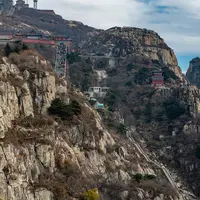
Mount Tai 泰山
China's most sacred peak, climbed by emperors and by night hikers chasing sunrise
-
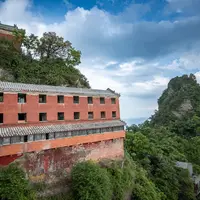
Wudang Mountains 武当山
Taoist palaces strung along forested ridges, and the legendary birthplace of tai chi
-
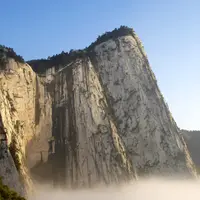
Mount Hua 华山
Sheer granite peaks, stairways cut into cliffs and a notorious plank walk
-
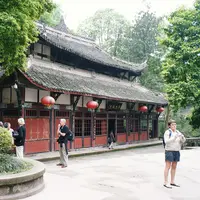
Dazu Rock Carvings 大足石刻
A cliffside storybook of Buddhist hells, mothers and thousand-armed Guanyin
-
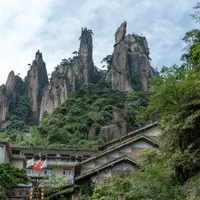
Mount Sanqing 三清山
Granite pillars in cloud and pine, and cliffside plank walks to a Taoist palace
-
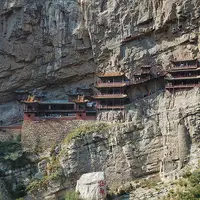
Hanging Temple 悬空寺
A wooden temple pinned to a sheer cliff, seemingly propped up on stilts
-

Mount Heng 南岳衡山
The Southern Peak of the Five Great Mountains, with Daoist and Buddhist temples
-
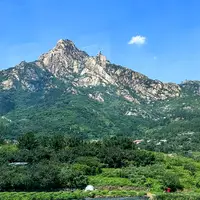
Mount Lao (Laoshan) 崂山
A granite Taoist mountain rising straight from the Yellow Sea, east of Qingdao
-
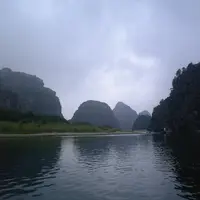
Mount Longhu 龙虎山
Red cliffs over a quiet river, the cradle of the Celestial Masters and Yue cliff coffins
-
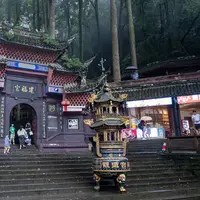
Mount Qingcheng 青城山
A cradle of Taoism, where forest stairways climb past temples and cave shrines
-
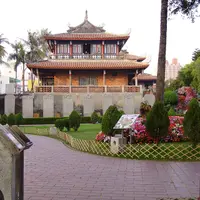
Tainan Old City and Anping 台南古城与安平
Dutch forts, old temples, lantern-lit lanes and a snack on every corner
-
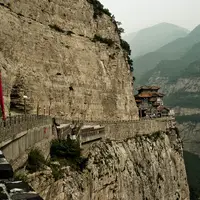
Mount Mian 绵山
Cliff temples, plank walkways and gorges on the mountain of the Cold Food legend
-
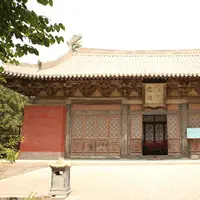
Yongle Palace 永乐宫
Yuan-dynasty Taoist murals in a temple moved piece by piece to make way for a reservoir
-
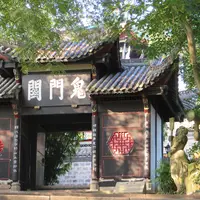
Fengdu Ghost City 丰都鬼城
A hill of temples where folk belief pictures the underworld court, above the Yangtze
-
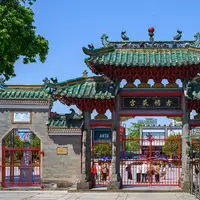
Foshan Ancestral Temple 佛山祖庙
A Song-dynasty Daoist temple in Foshan, with an old opera stage and kung fu halls
-
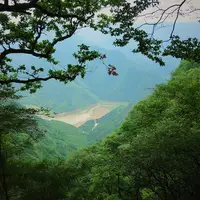
Kongtong Mountains 崆峒山
A sacred Taoist mountain of forested crags and Ming-era temples west of Pingliang
-
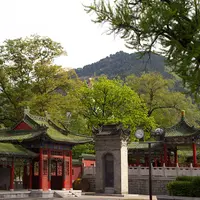
Louguantai 楼观台
Taoist courtyards climbing to the terrace where Laozi is said to have taught
-
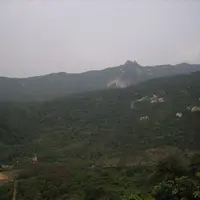
Mount Luofu 罗浮山
A Daoist grotto-heaven with 432 peaks, alchemist's relics and Su Dongpo's lychees
-
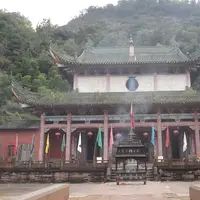
Mount Qiyun 齐云山
Red sandstone cliffs, cave shrines and over a thousand years of Taoist worship
-
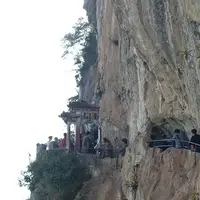
Western Hills & Dragon Gate 西山龙门
Taoist grottoes and a single-file ledge path cut into a cliff high above Dianchi Lake
-
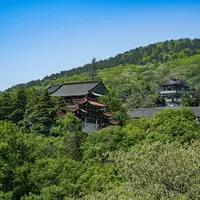
Mount Mao (Maoshan) 茅山
Birthplace of Shangqing Taoism, with a 33 m statue of Laozi among wooded hills
-
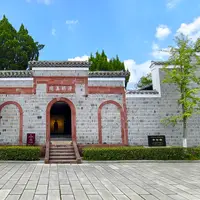
Qingyunpu (Bada Shanren Memorial Hall) 青云谱
A quiet Taoist courtyard where the painter Bada Shanren lived in seclusion
-
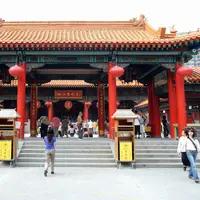
Wong Tai Sin Temple 黄大仙祠
Kowloon's busiest temple, where locals shake fortune sticks for luck
-
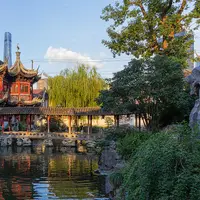
Yu Garden & City God Temple 豫园与城隍庙
A Ming-dynasty garden of rockeries and dragon walls beside a Taoist city temple
By region
Shanxi (57) · Henan (26) · Taiwan (16) · Hebei (15) · Shaanxi (15) · Hubei (13) · Gansu (12) · Sichuan (11) · Jiangxi (10) · Shandong (10) · Yunnan (9) · Beijing (6) · Jiangsu (6) · Hunan (6) · Guangxi (6) · Chongqing (6) · Liaoning (5) · Guangdong (5) · Fujian (4) · Anhui (3) · Ningxia (3) · Tianjin (2) · Hainan (2) · Guizhou (2) · Qinghai (2) · Jilin (1) · Heilongjiang (1) · Shanghai (1) · Zhejiang (1) · Hong Kong (1)
Shanxi 57 places
- Hanging Temple 悬空寺 4A scenic area · National heritage site
A wooden temple pinned to a sheer cliff, seemingly propped up on stilts - Mount Mian 绵山 5A scenic area · National heritage site
Cliff temples, plank walkways and gorges on the mountain of the Cold Food legend - Yongle Palace 永乐宫 4A scenic area · National heritage site
Yuan-dynasty Taoist murals in a temple moved piece by piece to make way for a reservoir - Baishan Dongyue Temple, Pu County 柏山东岳庙 4A scenic area · National heritage site
A large temple to the Lord of Mount Tai (Dongyue) on wooded Baishan hill east of Pu county town, with roots in the Tang and rebuilt in 1316–18 after the 1303 Pingyang earthquake. - Baolingshan Scenic Area 宝灵山 4A scenic area · on the map
A religious and forest-leisure scenic area at the foot of Longhu Mountain in Qinyuan County, built since 2002 by a local coal and coke group. - Beima Yuhuang Temple 北马玉皇庙 National heritage site · on the map
A village temple to the Jade Emperor in Beima village, Fucheng town, in a single courtyard of about 860 sq m. - Beiyicheng Yuhuang Temple 北义城玉皇庙 National heritage site · on the map
A village temple to the Jade Emperor whose main hall is an original Song-dynasty building, renovated in 1110. - Bucun Yuhuang Temple 布村玉皇庙 National heritage site · on the map
A Jade Emperor temple in Bucun village, Zhangzi County, with a front hall, an offering hall, a middle hall and a rear hall, and halls dating from the Song to the Qing. - Changchun Temple, Jiang County 长春观 National heritage site · on the map
A Taoist temple in Dongjingxia village, founded in 1320 and laid out as a single courtyard about 71 m long and 24.5 m wide. - Chunyang Palace, Taiyuan 纯阳宫 National heritage site
A Taoist temple dedicated to Lü Dongbin (Chunyang), called the largest and best preserved in Taiyuan by the city government, founded in the late Song or early Yuan and greatly enlarged in 1597 by the Princes of Jin. - City God Temple, Jiexiu 介休城隍庙 National heritage site · on the map
A temple on East Street built in 1370 and extensively repaired in 1495, whose gate, opera stage, bell and drum towers, main hall, side halls and galleries are all decorated with coloured glazed tile. - City God Temple, Pingyao 平遥城隍庙 National heritage site
A three-courtyard temple complex of about 7,300 sq m in which the City God temple stands on the main axis, with a Kitchen God temple and a God of Wealth temple to either side. - Dongyue Temple and Feiyun Tower, Wanrong 万荣东岳庙·飞云楼 4A scenic area · National heritage site · on the map
Dongyue Temple stands in the middle of Wanrong's county town, and its landmark is the Feiyun Tower at the front: a 23 m timber tower of three visible storeys under yellow, green and blue glazed-tile roofs, held up by four tall pillars that run its full height. - Dongyue Temple, Jiexiu 介休东岳庙 National heritage site · on the map
A temple to the Eastern Peak in Xiaojin village, rebuilt in 1270 under the Yuan dynasty after an earlier founding of unknown date. - Dongyue Temple, Xingdongyuan 兴东垣东岳庙 National heritage site · on the map
A village temple to the Dongyue (Eastern Peak) god at Xingdongyuan in Longjiao township, Shilou county, laid out on a north-west to south-east axis of about 35 by 65 m with a screen wall, gate, opera stage and main hall. - Duiyun Cave Taoist Temple, Xiaxian 堆云洞 4A scenic area · on the map
A Taoist temple complex founded in the early Yuan dynasty, built in terraces of courtyards and cave rooms in a loess gully at Shangniu village in Shuitou town. - Fawang Temple, Nanyang 南阳法王庙 National heritage site · on the map
A temple to Fang Yin, a Daoist adept known as the Dharma King, with buildings rebuilt in the Yuan and repaired in the Ming and Qing. - Fucheng Yuhuang Temple 府城玉皇庙 National heritage site · on the map
The Yuhuang (Jade Emperor) Temple at Fucheng is a Taoist temple of four courtyards climbing a hillside, founded in 1076 and rebuilt mainly in the Yuan dynasty, with halls from the Song to the Qing. - Houtu Temple, Jiexiu 介休后土庙 National heritage site
A large Taoist temple complex of about 9,000 square metres in the north-west corner of Jiexiu's old town, extended in 1516 and given its present layout in 1730. - Huixian Daoist Temple 会仙观 National heritage site · on the map
A Daoist temple in Jianzhang village, founded in 1229 under the Jin and covering 2,263 sq m. - Jingyun Palace Jade Emperor Hall 景云宫玉皇殿 National heritage site · on the map
The only building left of the Jingyun Palace, a Taoist complex founded in 634 that burned down in 1933 apart from this hall. - Jinlong Mountain Scenic Area 金龙山风景区 4A scenic area · on the map
A hillside complex of Buddhist and Daoist shrines at Xiatujing village, west of Xiaoyi, built around the site of an old Dragon King temple on the hilltop. - Laojun Cave, Fushan 老君洞 National heritage site · on the map
A small Daoist hall in Liang village, Zhangzhuang township, the only building left of a temple founded in 619. - Licheng City God Temple 黎城城隍庙 National heritage site · on the map
A City God temple in the centre of Licheng, moved to this site in 1025 with the county town and rebuilt in 1369 after a fire. - Longshan Grottoes and Tongzi Temple Site 龙山石窟·童子寺遗址 National heritage site
A small group of nine Taoist cave shrines on the summit of Mount Long, most of them cut from 1234 under the Quanzhen priest Song Defang, with Yuan-dynasty figures of the Three Pure Ones and the Seven Perfected. - Lu'an Prefecture City God Temple 潞安府城隍庙 National heritage site
A City God temple founded in 1285 under the Yuan dynasty, laid out in three courtyards along a north-south axis in central Changzhi and covering more than 7,000 sq m. - Mount Beiwudang 北武当山 4A scenic area
A mountain scenic area in Fangshan county, in the Lüliang range, which is a national-level scenic area and one of northern China's Daoist holy mountains. - Nanhan Dongyue Temple, Yicheng 南撖东岳庙 National heritage site · on the map
A village temple to the Lord of Mount Tai (Dongyue) at Nanhan, covering 2,660 sq m, with a stage, an offering hall and a main hall flanked by side halls and corridor rooms. - Niandui Jade Emperor Temple 埝堆玉皇庙 National heritage site · on the map
A small village temple in Niandui, covering about 480 square metres, with a stage and a main hall that were both built in the Yuan dynasty. - Qiaogoutou Jade Emperor Temple 乔沟头玉皇庙 National heritage site · on the map
A village temple to the Jade Emperor in Qiaogoutou, laid out around a main hall dated to the Yuan dynasty. - Qingmeng Daoist Temple, Gaoping 清梦观 National heritage site · on the map
A Daoist temple in Tielu village, recorded on its stelae as founded in 1261, with two courtyards on a north-south axis. - Qingxu Temple, Pingyao 清虚观 National heritage site
A Taoist temple complex just inside the east gate of Pingyao's town wall, traditionally founded in 657 in the Tang dynasty and given its present name in 1064. - Ruicheng City God Temple 芮城城隍庙 National heritage site
The city god temple of Ruicheng, known locally as the South Temple, a large group of old buildings in the middle of the county town. - Runcheng Dongyue Temple 润城东岳庙 National heritage site · on the map
Runcheng Dongyue Temple is a temple to the Dongyue god in Runcheng village, with Song-dynasty origins and a rebuilding of 1593 recorded on its steles. - Sanjiao Hall, Sirun 寺润三教堂 National heritage site · on the map
A small temple to the "three teachings" of Buddhism, Daoism and Confucianism in Sirun village, of which only the main hall survives. - Sanjiao Hall, Yihe 义合三教堂 National heritage site · on the map
Yihe Sanjiao Hall is a village temple whose name means Three Teachings Hall; Changzhi Daily describes it as a folk-deity temple that brings Confucianism, Buddhism and Daoism together. - Sanqing Temple Offering Hall, Dongxu 东许三清庙献殿 National heritage site · on the map
A Yuan-dynasty offering hall, the hall in front of the main shrine where offerings were made, belonging to the Sanqing Temple in Dongxu village, Gaoxian town. - Shicun Dongyue Temple 史村东岳庙 National heritage site · on the map
A village temple to the Dongyue god, the Eastern Peak deity of Mount Tai, in Shicun, Xiacun township. - Shizhang Yuhuang Temple 石掌玉皇庙 National heritage site · on the map
A village temple to the Jade Emperor in Shizhang village, Lingchuan County, listed as a national heritage unit in 2006. - Taifu Daoist Temple 太符观 National heritage site · on the map
A Daoist temple at Shangmiao village in Xinghuacun town, where inscriptions record the founding of the altar in 1200 in the Jin dynasty. - Tianzhen Daoist Temple 天贞观 National heritage site · on the map
A Daoist temple built into the slope of Fengshan, a hill on the northern edge of Lishi, in upper and lower courtyards. - Wangqu Dongyue Temple, Linfen 王曲东岳庙 National heritage site
A village temple to the Lord of Mount Tai (Dongyue) at Wangqu, north of Linfen, begun in the early Yuan and repaired in the Ming and Qing; its Yuan-dynasty stage and Qing main hall survive. - Wanshou Palace, Dongfeng 董峰万寿宫 National heritage site · on the map
A temple to the local holy woman Ma Xiangu, known as Shenggu, in Shang Dongfeng village, founded in 1284 according to an inscription. - Wulao Peak, Yongji 五老峰 4A scenic area · on the map
Wulao Peak is a mountain scenic area in the southern Zhongtiao Mountains, once known as Donghua Mountain and counted among the famous Taoist mountains of northern China. - Xianweng Temple, Bofang 仙翁庙 National heritage site · on the map
A Daoist temple in Bofang village dedicated to Zhang Guolao, one of the Eight Immortals, built as a single courtyard with a gate, a tower, an offering hall and the main hall. - Xuandi Temple, Fancun 玄帝庙 National heritage site · on the map
A Taoist temple to Xuandi (Zhenwu, the Perfected Warrior) in the north-east corner of Fancun village, begun in 1569 and finished at the start of the 17th century with the backing of officials that included a minister of war and a grand secretary. - Xuezhuang Yuhuang Temple 薛庄玉皇庙 National heritage site · on the map
A village temple to the Jade Emperor on the north-west side of Xuezhuang village, with buildings that range from the Yuan to the Qing dynasty. - Yinxi Dongyue Temple 尹西东岳庙 National heritage site · on the map
Yinxi Dongyue Temple is a village temple to the Dongyue god on the east side of Yinxi village, Beiyicheng township, listed as a national monument in 2013. - Yuci City God Temple 榆次城隍庙 National heritage site · on the map
A temple of about 6,000 square metres on East Street, founded in 1362 in the Yuan dynasty and moved to its present site in 1431, with its final layout in place by 1523. - Yuhuang Temple, Changchun 上党长春玉皇庙 National heritage site · on the map
A Jade Emperor temple in Changchun village, Yincheng town, on two courtyards covering about 2,800 sq m. - Yuhuang Temple, Hongtong 洪洞玉皇庙 National heritage site · on the map
A village temple founded in 1229 of which only the rear courtyard survives, with three halls of the Yuan period standing side by side: the Jade Emperor Hall, the Guan Gong Hall and the Erlang Hall. - Yuhuang Temple, Nansong 长治玉皇观 National heritage site · on the map
This temple to the Jade Emperor in Nansong village has a single courtyard on a south-facing axis, with a gate tower, an offering pavilion and the main hall at the back, and the gate tower and the east side hall date from the Yuan while the rest is Ming and Qing. - Yuhuang Temple, Nanzhuang 南庄玉皇庙 National heritage site · on the map
A temple to the Jade Emperor on a hill beside Nanzhuang village, built in an upper and a lower courtyard up the slope. - Yuncheng Museum 运城博物馆 First-grade museum · on the map
Founded in 1979, Yuncheng's city museum opened a new building on 1 July 2016, with a main display built around the theme 'east of the Yellow River'. - Yuquan Dongyue Temple 玉泉东岳庙 National heritage site · on the map
Yuquan Dongyue Temple is a single-courtyard temple of about 2,400 sq m on the east side of Yuquan village, laid out along one axis with a stage-gate building, a prayer hall and the main hall, flanked by side towers and rooms. - Yuxu Palace, Liulin 玉虚宫 National heritage site · on the map
A Daoist temple on the hillside of Baoning Hill at Qinglong, just east of Liulin county town, dedicated to the god Zhenwu (Xuantian Shangdi) and first built in 1600 under the Ming dynasty, with a repair in 1654. - Zhoucun Dongyue Temple 周村东岳庙 National heritage site · on the map
Zhoucun Dongyue Temple stands on a high platform on the north side of Zhoucun, with five halls in a row at the back joined by long covered corridors, and a stage building flanked by bell and drum towers facing the main hall across the courtyard.
Henan 26 places
- Anshan Forest Park 安山森林公园 4A scenic area · on the map
A provincial forest park on Anshan, a wooded hill in Quanhepu township in the east of Gushi County. - Bixia Palace, Xun County 碧霞宫 National heritage site
A Taoist temple complex on top of Fuqiu Hill at the south end of Xun County's old town, founded in 1542 for the goddess Bixia Yuanjun and enlarged through the Ming, Qing and Republican periods. - Chongfu Palace 崇福宫 National heritage site
A Taoist temple at the foot of Wansui Peak that grew from a shrine founded under Han Emperor Wu and under the Northern Song became a court-managed temple, whose superintendents included Fan Zhongyan, Sima Guang and the Cheng brothers. - Dasu Mountain National Forest Park 大苏山 4A scenic area · on the map
A national forest park of low wooded hills south-west of Guangshan town, set up in 2015 and taking in Dasu Mountain, Longshou Mountain and the Wangmu Daoist temple area. - Dengfeng City God Temple 登封城隍庙 National heritage site · on the map
A temple to the city god, the protector deity of the county seat, founded in the early Ming and laid out facing south in three courtyards on a site of about 8,200 m² in the old centre of Dengfeng. - Dongzhen Temple, Xin'an 洞真观 National heritage site · on the map
A Taoist temple on Lanke hill south of Tiemen town, next to the Wangqiao Cave, centred on a Hall of the Three Pure Ones with bracketed eaves. - Erxian Temple, Jiyuan 济源二仙庙 National heritage site · on the map
A Ming and Qing temple at Daxu village in Lilin, north-east of Jiyuan, dedicated to Wei Huacun, a Western Jin Taoist woman venerated as the Lady of the Purple Void. - Fengxian Taoist Temple 奉仙观 National heritage site
A Taoist temple in central Jiyuan founded in 685, whose Sanqing Hall, rebuilt in 1184 under the Jin dynasty, is one of the three oldest wooden buildings in Henan. - Fuchang Pavilion 福昌阁 National heritage site · on the map
A three-storey Taoist pavilion on a cliff top above the site of the old town of Fuchang, in an area where Emperor Yang of Sui once built a palace; the present building goes back to the Ming and was thoroughly repaired in 1819. - Hangu Pass 函谷关 4A scenic area
The site of the ancient pass that guarded the narrow corridor between the Central Plain and the Wei valley, fortified by the state of Qin in the Warring States period and fought over for centuries afterwards. - Hanshan Mountain, Lingbao 汉山 4A scenic area · on the map
A high, thickly wooded mountain in Guxian town, Lingbao, next to the Xiaoqinling nature reserve, whose Jinding summit rises to about 2,200 m. - Laojun Cave Scenic Area 老君洞 4A scenic area · on the map
A large forested mountain area at Erlangping in northern Xixia County, in the core of the Funiu Mountain Global Geopark, with more than a dozen peaks over 1,000 m, rivers and springs. - Laole Mountain 老乐山 4A scenic area · on the map
A forested range of nine linked peaks at the eastern end of the Funiu and Tongbai mountains, the mountain scenery nearest to Zhumadian city, rising to 813 m at Yuhuang Peak. - Lushi City God Temple 卢氏城隍庙 National heritage site · on the map
A temple to the city god, the town's protective deity, in the county town of Lushi. - Mount Laojun and Jiguan Cave 老君山·鸡冠洞 5A scenic area
One of the main peaks of the Funiu range, renamed in the Tang after the legend that Laozi retired here to cultivate the Way; Taoist temples have stood on it since the Northern Wei, and three cable-car lines and a long ridge walkway lead up towards the Golden Summit, a cluster of Taoist halls on the crest. - Mount Wangwu 王屋山 4A scenic area · National heritage site
A Taoist mountain north-west of Jiyuan, ranked first of the Ten Grotto-Heavens of Taoism and the setting of the fable of the Foolish Old Man who moved the mountains. - Taiqing Palace (Laozi's Birthplace), Luyi 太清宫 4A scenic area · National heritage site · on the map
The Taoist temple at the traditional birthplace of Laozi, recorded as a Laozi shrine since AD 165 and raised by the Tang emperors, who claimed Laozi as their ancestor, into the imperial Taiqing Palace in 743. - Tianbao Palace 天宝宫 National heritage site
A Taoist temple complex north-west of Xuchang, founded in 1240 as an abbey, raised to a 'palace' in 1269, destroyed at the end of the Yuan and rebuilt from the Ming onwards. - Tongshan Scenic Area 铜山 4A scenic area · on the map
A provincial scenic area in Biyang County made up of Tongshan mountain, the Tongshan Lake reservoir and Yunwu Peak, with forested hills, caves, waterfalls, temples and Taoist halls. - Wuduo Mountain 五朵山 4A scenic area · on the map
A Taoist mountain on the border of Nanzhao and Zhenping counties whose five rocky summits rise to 1,665 m; tradition links it with Yin Xi, some 2,500 years ago, and the Tang Taoist Wu Yun. - Yanqing Temple (Jade Emperor Pavilion) 延庆观 National heritage site
A Taoist temple of the Quanzhen school founded in 1233 where its founder Wang Chongyang died in 1170, renamed Yanqing Guan in 1373 and repeatedly destroyed by floods and war. - Yuanwu City God Temple 原武城隍庙 National heritage site
A small temple to the city god on East Street in the old town of Yuanwu, founded in 1369. - Yuxi Palace 玉溪宫 National heritage site
A village Taoist temple in Tuguan, Tangzhuang town, originally called Yuqi Palace, founded in the Ming and repaired in the Qing. - Yuxian Temple, Wen County 遇仙观 National heritage site
A Taoist temple of two courtyards below the Qin River dyke at Xubu village, about 12 km from Wen county town, founded under the Yuan as a river-god shrine and rebuilt in the Ming and Qing. - Zhangde Prefecture City God Temple 彰德府城隍庙 National heritage site · on the map
The city god temple of the old Zhangde prefecture in Anyang's walled town, restored in 1369 and again in 1454 under the Ming, with five courtyards and six main halls on its axis. - Zhengzhou City God Temple 郑州城隍庙 National heritage site
A Taoist temple founded in the early Ming and repaired many times since, dedicated to Ji Xin, the Han general venerated as Zhengzhou's city god.
Taiwan 16 places
- Tainan Old City and Anping 台南古城与安平
Dutch forts, old temples, lantern-lit lanes and a snack on every corner - Beiji Temple, Tainan 北极殿 on the map
A Taoist temple to Xuantian Shangdi, the Emperor of the North, in the old city of Tainan. - Chiayi City God Temple 嘉义城隍庙
A Daoist temple to the city god, first founded in 1715 and described as one of the oldest and most prominent in the region. - Dalongdong Baoan Temple 大龙峒保安宫 on the map
A Taoist folk temple in Dalongdong, begun in 1804 by settlers from Tong’an in Fujian to replace an earlier wooden shrine of 1742. - Fengshan Tiangong Temple 凤山天公庙 on the map
A Taoist temple in Fengshan dedicated to the Jade Emperor, first founded in 1798. - Hsinchu Chenghuang Temple 新竹都城隍庙 on the map
A city-listed temple on Zhongshan Road, founded in 1748 and dedicated to the City God. - Magong City God Temple 妈宫城隍庙 on the map
A temple to the city god, built in 1779 and rebuilt several times since; it is county-listed. - Shunze Temple, Puyan 埔盐顺泽宫
Shunze Temple in Puyan honours Xuanwu, the Taoist Dark Emperor, and is said to have been founded by Quanzhou settlers in the Qing period. - Songboling Shoutian Temple 松柏岭受天宫 on the map
A Taoist temple on the Bagua Plateau dedicated to Xuantian Shangdi, regarded as the pilgrimage centre of his worship in Taiwan, with thousands of affiliated temples. - Taiwan Prefecture City God Temple 台湾府城隍庙 on the map
A Taoist temple to the City God of the old prefectural capital, built in 1669 as the earliest City God temple built by the authorities in Taiwan. - Wuqi Zhenwu Temple 梧栖真武宫 on the map
A Taoist temple in Wuqi District dedicated to Xuantian Shangdi, built in the 1840s by water-trade merchants in front of the old Wuqi harbour. - Xia-Hai City God Temple 台北霞海城隍庙 on the map
A small temple on Dihua Street in Dadaocheng, founded in 1856 and dedicated to the City God. - Xizhi Gongbei Temple 拱北殿 on the map
A Taoist temple on Sanxiu Mountain in Xizhi, founded in 1906 and dedicated mainly to Lü Dongbin, with Sakyamuni and Confucius also enshrined. - Yuanbao Temple 元保宫 on the map
A temple in North District dedicated to the Taoist deity Baosheng Dadi, the physician Wu Tao (979–1036). - Yuanching Temple 元清观
Yuanching Temple is a Taoist temple to the Jade Emperor, built in 1763 and known locally as Tiangong Tan, the Altar of Heaven. - Zhinan Temple 指南宫 on the map
A Daoist temple on the slopes of Zhinan Mountain in Muzha, dedicated to Lü Dongbin, one of the Eight Immortals.
Hebei 15 places
- City God Temple, Chengde 承德城隍庙 National heritage site · on the map
A Qing-dynasty temple to the city god in the old Erdao Pailou quarter of Chengde, a short way west of the Mountain Resort, listed as a national heritage site in 2006. - Daodejing Pillar at Longxing Daoist Temple 龙兴观道德经幢 National heritage site
A Tang-dynasty octagonal stone pillar about 6 metres high, raised in 738 and carved with the Daodejing together with Emperor Xuanzong's commentary. - Gu Wudang Mountain 古武当山 4A scenic area · on the map
A mountain scenic area in the Taihang range north-west of Wu'an, whose main summit, the Golden Peak, rises above 1,400 m. - Huangliangmeng Lüxian Temple 黄粱梦吕仙祠 National heritage site
A Daoist temple complex north of Handan built around the Tang-dynasty tale of the Yellow Millet Dream, in which the scholar Lu Sheng naps on a pillow at an inn while millet steams and lives a whole career in his dream, only to wake before the meal is cooked. - Jade Emperor Hall of Dadao Temple, Dingzhou 大道观玉皇殿 National heritage site
Dadao Guan, a Daoist temple founded under the Yuan dynasty, once had a full axial layout but only its Jade Emperor Hall survives, in the built-up area of Dingzhou. - Jingzhong Mountain, Qianxi 景忠山 4A scenic area · on the map
A temple mountain about 610 m high in Qianxi, where Buddhist, Taoist and Confucian shrines stand in three clusters at the foot, middle and summit, joined by a stairway of 1,872 steps through pines more than 200 years old. - Laojun Temple, Shazipo 沙子坡老君观 National heritage site · on the map
A Ming-to-Qing Daoist temple, named for Laojun (the deified Laozi), on a mound at the north end of Nuanquan old town, with an opera stage, a mountain gate, a front hall and a rear hall. - Qinglong Mountain, Luanzhou 青龙山 4A scenic area · on the map
A forested mountain scenic area in the north-west of Luanzhou, a spur of the Yan Mountains, with Buddhist and Taoist temples and walking routes through pine and cypress woods. - Tao Te Ching Pillar, Xingtai 道德经幢 National heritage site
An eight-sided stone pillar 6.89 metres tall, carved with the text of the Tao Te Ching and the Tang emperor Xuanzong's commentary on it. - Tiangui Mountain 天桂山 4A scenic area · on the map
A mountain scenic area of steep peaks, caves and springs in the Taihang hills of Pingshan County, with a large Taoist temple complex, Qinglong Guan, that is said locally to have begun as a late-Ming imperial lodge. - Tianqi Temple, Yuxian 蔚县天齐庙 National heritage site · on the map
A Daoist temple to the Emperor of the Eastern Peak, built in 1599 and repaired in the Jiaqing reign, outside the east gate of Yuxian's old town. - Ximalin Yuhuang Pavilion 洗马林玉皇阁 National heritage site · on the map
A Jade Emperor (Yuhuang) pavilion built in 1575 on a 7 m brick platform in Ximalin village and repaired in 1861, which the heritage listing describes as a concentrated example of Ming timber architecture. - Yuzhou Yuhuang Pavilion 蔚州玉皇阁 National heritage site
A Ming gate-tower on the middle of Yuxian's north wall, completed in 1377 as the Jingbian ('border-pacifying') Tower and later used as a Jade Emperor temple. - Zhenwu Temple, Yuxian 蔚州真武庙 National heritage site · on the map
A Ming temple to Zhenwu, the Daoist Perfected Warrior whom the Ming court promoted as protector of the realm, standing in a small walled compound at the foot of the north-west city wall inside Yuxian's old town. - Zhifang Yuhuang Pavilion 纸坊玉皇阁 National heritage site
A Ming-period brick pavilion named for the Jade Emperor, standing in West Zhifang village on the north bank of the Fuyang River and also called the Beamless Pavilion because its brick structure has no timber beams.
Shaanxi 15 places
- Mount Hua 华山 5A scenic area
Sheer granite peaks, stairways cut into cliffs and a notorious plank walk - Louguantai 楼观台 4A scenic area
Taoist courtyards climbing to the terrace where Laozi is said to have taught - Baiyun Mountain Temples, Jiaxian 白云山 4A scenic area · National heritage site · on the map
A large Taoist temple complex on Baiyun Mountain above the west bank of the Yellow River just south of Jia County town, founded in 1605 and rebuilt and enlarged in 1724. - Chongyang Palace 重阳宫 National heritage site · on the map
Chongyang Palace in Zu'an town is one of the three ancestral temples of the Quanzhen school of Taoism, on the spot where its 12th-century founder Wang Chongyang practised and was buried. - Fufeng City God Temple (Fufeng County Museum) 扶风城隍庙 National heritage site · on the map
A City God temple in the centre of Fufeng town, founded in 1370 and enlarged and restored through the Ming and Qing, which now houses the Fufeng County Museum. - Guiguling (Yunwu Mountain) 鬼谷岭 4A scenic area · on the map
The highest mountain in Shiquan County, also called Yunwu Mountain and protected as a national forest park, where the Warring States strategist Guiguzi is said to have taught his disciples. - Jintai Taoist Temple 金台观 4A scenic area · National heritage site
A Taoist temple complex founded in the late Yuan or early Ming dynasty on the loess terrace above central Baoji, known through the tradition that Zhang Sanfeng, legendary founder of the Wudang school and of taijiquan, practised here. - Longmen Cave (Longmendong) 龙门洞 4A scenic area · on the map
A Taoist mountain sanctuary in Xinjichuan town north-west of Long County, where the Quanzhen master Qiu Chuji spent seven years in retreat in the late 12th century; the Longmen (Dragon Gate) school of Taoism, which honours him as its patriarch, takes its name from the place. - Sanqing Hall of Ziyun Temple 紫云观三清殿 National heritage site · on the map
The main hall of Ziyun Temple, a Taoist temple founded in 1270, which was moved in 2001–03 from a middle-school campus in Hancheng into the compound of Puzhao Temple in the old fortified village of Wucun. - Sanyuan City God Temple 三原城隍庙 National heritage site · on the map
A walled temple complex in Sanyuan town founded in 1375, whose mostly Ming-dynasty buildings line one axis of gates, carved timber and stone memorial archways, a Qing opera stage of 1757, twin bell and drum towers and a main hall with a large City God statue. - Shenlou of Chengcheng City God Temple 澄城城隍庙神楼 National heritage site · on the map
The only surviving building of Chengcheng's City God Temple: a Ming tower, also called the music tower, rebuilt in 1582 on a high terrace. - Tayun Mountain 塔云山 4A scenic area · on the map
A pagoda-shaped peak in Chaiping town, south-west of Zhen'an town, crowned by a group of Daoist temple buildings more than 500 years old. - Wugong City God Temple 武功城隍庙 National heritage site · on the map
A Ming-dynasty City God temple on East Street in Wugong town, the former county seat, repaired in the Qing and in modern times. - Xi'an City God Temple 西安都城隍庙 National heritage site
Founded in 1387 and moved to this site off West Street in 1433, this Taoist temple is the seat of the chief city god, held to rule over the city gods of the north-western provinces. - Yuhuang Houtu Temple, Hancheng 玉皇后土庙 National heritage site · on the map
A village temple at Xiyuan in Longmen town dedicated to the Jade Emperor and the earth goddess Houtu, founded in the Yuan dynasty and rebuilt in 1463 and 1820.
Hubei 13 places
- Wudang Mountains 武当山 5A scenic area · National heritage site · UNESCO World Heritage
Taoist palaces strung along forested ridges, and the legendary birthplace of tai chi - Dongfang Mountain 东方山 4A scenic area · on the map
A forested hill of about 475 m with three main peaks, described as the largest forest park in Huangshi's urban area and named for the Han writer Dongfang Shuo, who by local tradition studied and practised Daoism here. - Ezhou Guanyin Pavilion 鄂州观音阁 National heritage site
A small Buddhist–Daoist temple built on a rock reef in the Yangtze at Longpanji, first built in its present form in 1345 and rebuilt several times since. - Jingle Palace, Danjiangkou 静乐宫 4A scenic area · on the map
A Taoist palace complex on the north shore of Jingle Lake, at the north-eastern edge of Danjiangkou city. - Jiuzhen Mountain 九真山 4A scenic area · on the map
A wooded range of nine linked peaks in Caidian whose main summit, at 276 m, is billed as the highest point on the Jianghan Plain; forest covers more than 90% of the scenic area. - Mingfeng Mountain, Yuan'an 鸣凤山 4A scenic area · on the map
A red-sandstone hill 408 metres high, circled by water on three sides, with a Taoist temple complex that local tradition dates to the Liang dynasty and links to the Wudang Mountains. - Nanwudang (Southern Wudang) Scenic Area, Yingshan 大别山南武当 4A scenic area · on the map
A mountain scenic area in Wujiashan National Forest Park in the Dabie Mountains of northern Yingshan, promoted as 'Southern Wudang'. - Puyang Temple (Puyang Guan), Qichun 普阳观 4A scenic area · on the map
Puyang Guan is a Daoist temple on Fuhu Hill in Caohe, the county seat of Qichun, and the named core of the Li Shizhen Medical-Daoist Culture Tourism Area on the Hubei A-level list. - Three Taoist Temples of Jingzhou 荆州三观 National heritage site · on the map
The nationally listed Three Taoist Temples are Taihui Guan, Xuanmiao Guan and Kaiyuan Guan, all with Ming and Qing halls on older foundations. - Wudang Daming Peak 武当大明峰 4A scenic area · on the map
A mountain scenic area in Guanshan town, west of the Wudang Mountains' main peak, which Shiyan's tourism commission puts at about 1,316 m in height and roughly 39 sq km in area. - Wudang Happy Valley 武当山快乐谷 4A scenic area · on the map
A commercial adventure and amusement park in a wooded river valley in the Wudang Special Zone, about 5 km from the entrance of the Wudang Mountains scenic area and next to Taiji Lake. - Wudang South Pilgrim Path 武当山南神道 4A scenic area · on the map
A walking-oriented scenic area on the south-western flank of the Wudang Mountains in Guanshan town, on the old pilgrim route by which worshippers from Sichuan, Shaanxi and western Hubei once came to Wudang. - Yunlong Valley, Sai Wudang 赛武当云龙谷 4A scenic area · on the map
A large mountain-resort development in the Sai Wudang hills south of central Shiyan, in Maojian District, planned over about 24 km² in three phases with wellness, hot-spring, family-study, mountain-sports and folk-culture zones.
Gansu 12 places
- Kongtong Mountains 崆峒山 5A scenic area · National heritage site
A sacred Taoist mountain of forested crags and Ming-era temples west of Pingliang - Dong Laoye Shan (Xinglong Shan) Temples 东老爷山 National heritage site · on the map
A Daoist mountain, 1,774 m high, in north-eastern Huan County near the meeting point of Gansu, Shaanxi and Ningxia, also called Xinglong Shan and known for the saying that a cock's crow here carries into three provinces. - Fengshan Hill, Qin'an 凤山 4A scenic area · on the map
A hill on the eastern edge of Qin'an town covered by the Taishan Temple complex, 41 Ming and Qing halls, pavilions and cave shrines built on nine terraces, with Confucian, Buddhist and Taoist figures side by side. - Guanshan Lianhuatai Scenic Area 关山莲花台 4A scenic area · on the map
A forested mountain area in the Guanshan, the old Long Mountains on Huating's western border, rising to 2,748 m at Wutai Shan, with birch and pine forest over more than 90 percent of the land, meadows, rock pinnacles, waterfalls and old Buddhist and Taoist temples. - Jintian Taoist Temple 金天观 National heritage site · on the map
A Taoist temple complex founded in 1400 outside the old west gate of Lanzhou, whose surviving halls, mostly of Qing date, stand on three parallel axes. - Lanzhou Prefecture City God Temple 兰州府城隍庙 National heritage site
Lanzhou's City God temple, dedicated like Tianshui's to the Han general Ji Xin, dates back at least to the Song and took its present layout after a rebuilding in 1837. - Leitai Han Tomb 雷台汉墓 4A scenic area · National heritage site
A brick tomb of the late Eastern Han with front, middle and rear chambers, found in 1969 under Leitai, an earthen terrace topped by a Ming Taoist temple in northern Wuwei; it yielded more than 230 objects, among them a procession of bronze horses, chariots and figures and the Bronze Galloping Horse (Flying Horse of Gansu), later chosen as China's tourism emblem. - Shouyang Mountain, Weiyuan 首阳山 4A scenic area · on the map
Shouyang Mountain in Lianfeng town south of Weiyuan is one of several places claimed as the mountain where the brothers Bo Yi and Shu Qi, refusing to eat the grain of the Zhou, starved to death; its nine lotus-like peaks have had Buddhist, Daoist and Confucian cave temples and halls since the Han and Wei. - Yuelu Mountain, Lintao 岳麓山 4A scenic area · on the map
Yuelu Mountain is the wooded hill on the eastern edge of Lintao town, long a Daoist site and a meeting place for scholars. - Yunhua Mountain 云华山 4A scenic area · on the map
Yunhua Mountain, north-east of Xihe, is a steep danxia-type peak shaped like a jade tablet, which gave it the old name Guishan, with more than ten small Daoist temple halls, including one to the Xuanwu emperor, packed onto its narrow summit. - Yuquan Taoist Temple 玉泉观 4A scenic area · National heritage site
A Taoist temple complex climbing the foot of Tianjing Mountain on the north side of Tianshui's old city, founded in the Tang dynasty and rebuilt by Quanzhen Taoists from the Yuan onwards. - Zhang Guolao Scenic Area, Liangdang 张果老养生文化景区 4A scenic area · on the map
A rural scenic area of about 320 ha in the hills of Yangdian town, north-east of Liangdang, built around the Guolao Dengzhen Cave, which legend links with the Daoist immortal Zhang Guolao.
Sichuan 11 places
- Mount Qingcheng 青城山 5A scenic area · National heritage site · UNESCO World Heritage
A cradle of Taoism, where forest stairways climb past temples and cave shrines - Cuiping and Zhenwu Mountains 翠屏山与真武山 4A scenic area · National heritage site
Two linked wooded hills on the west side of central Yibin, south of the Min River, laid out as a large city forest park. - Feixiange Cliff Carvings 飞仙阁摩崖造像 National heritage site
One of the two protected groups of the Pujiang Grottoes, near Chaoyang Lake, with Buddhist and Taoist niches carved from the Tang to the Qing, the earliest dated 689. - Gaofeng Mountain 高峰山 4A scenic area · National heritage site
A hilltop Taoist complex 25 km north of Pengxi, first built in the Tang dynasty and by the late Ming and early Qing regarded as the largest Taoist centre in central, eastern and northern Sichuan, where Confucian and Buddhist worship were also practised. - Heming Mountain Taoist Carvings, Jiange 鹤鸣山道教造像 National heritage site
A hill about 1 km east of Pu'an, the old county town of Jiange, with 21 niches and 88 carved figures, mainly Taoist, made between the Northern Wei and the Republican era. - Jinhua Mountain & Chen Zi'ang Reading Terrace 金华山陈子昂读书台 4A scenic area · National heritage site
Jinhua Mountain rises above the Fu River north of Shehong, with a Taoist temple first built in the Southern Liang dynasty and the reading terrace of Chen Zi'ang, an early Tang poet who studied here as a young man. - Lifeng Taoist Temple 醴峰观 National heritage site
A Taoist temple on Datongluo Mountain in Daping town, western Nanbu County, whose main hall was built in 1307 under the Yuan dynasty and is the oldest building in Sichuan with a dated inscription. - Mount Douchuan and Yunyan Temple 窦圌山 4A scenic area · National heritage site
Mount Douchuan rises above the east bank of the Fu River north of Jiangyou, its bare rock summit peaks linked by suspended iron chains. - Qiqushan Temple 七曲山大庙 4A scenic area · National heritage site
A Taoist temple complex on Qiqu Mountain just north of Zitong, founded as a shrine to the local deity Zhang Yazi and rebuilt as a Wenchang Palace after he was honoured as Wenchang, god of literature, in the early Yuan dynasty. - Yuntai Taoist Temple 云台观 National heritage site
A large Taoist temple complex on Yuntai Mountain in southern Santai County, founded by a Taoist hermit early in the 13th century under the Southern Song. - Zhenfo Mountain Temples 真佛山 4A scenic area · National heritage site · on the map
Zhenfo Mountain, in Fushan town about 35 km from Dazhou city, is topped by a Qing-dynasty complex of temples, among them Dehua Temple and the Jade Emperor and Tianzi halls, where Confucian, Buddhist and Taoist worship share one hillside.
Jiangxi 10 places
- Mount Sanqing 三清山 5A scenic area · National heritage site · UNESCO World Heritage
Granite pillars in cloud and pine, and cliffside plank walks to a Taoist palace - Mount Longhu 龙虎山 5A scenic area · UNESCO World Heritage
Red cliffs over a quiet river, the cradle of the Celestial Masters and Yue cliff coffins - Qingyunpu (Bada Shanren Memorial Hall) 青云谱 4A scenic area · National heritage site · First-grade museum
A quiet Taoist courtyard where the painter Bada Shanren lived in seclusion - Gezao Mountain, Zhangshu 阁皂山 4A scenic area · National heritage site · on the map
A Daoist mountain south of Zhangshu, regarded as the ancestral mountain of the Lingbao school of Daoism and counted as the 36th of Daoism's blessed lands. - Magu Mountain 麻姑山 4A scenic area · on the map
Magu Mountain is a wooded mountain area west of Nancheng that Taoist tradition counts as the 28th of the 36 lesser cave-heavens, linked with the immortal Magu. - Mount Gexian 葛仙山 4A scenic area
Mount Gexian is a 1,096 m peak of the Wuyi range in Yanshan County, a Taoist mountain where legend holds that the Taoist Ge Xuan became an immortal. - Nan Wudang Mountain 南武当山 4A scenic area · on the map
A national scenic area of 13.5 sq km in Wudang town, near the Guangdong border, where 99 red-rock peaks rise from the valley beside National Road 105 to a main summit of 864 m. - Tianshi Mansion and Shangqing Palace 嗣汉天师府与大上清宫 National heritage site · on the map
The Tianshi Mansion in Shangqing town was the home and ritual seat of the Celestial Masters, the hereditary heads of the Zhengyi school of Daoism, and covers 42,000 square metres. - Wanshou Palace Historic Quarter 万寿宫历史文化街区 4A scenic area · on the map
A quarter of lanes and shops rebuilt in old style around the Tiezhu Wanshou Palace, the Taoist temple of the Xu Xun cult, which stood in Nanchang's old city from the fourth century until it was burned down in the Cultural Revolution; the quarter opened in February 2021. - Yulong Wanshou Palace 抚州玉隆万寿宫 National heritage site · on the map
Yulong Wanshou Palace is a temple complex of Ming origin, rebuilt in the Qing, laid out along an east-facing axis of forecourt, gate, opera tower, front hall, Jingyang Shrine and pavilion.
Shandong 10 places
- Mount Tai 泰山 5A scenic area · National heritage site · UNESCO World Heritage
China's most sacred peak, climbed by emperors and by night hikers chasing sunrise - Mount Lao (Laoshan) 崂山 5A scenic area · National heritage site
A granite Taoist mountain rising straight from the Yellow Sea, east of Qingdao - Chaoyang Cave, Taoshan 陶山朝阳洞石刻造像 National heritage site · on the map
A natural limestone cave on the north-west cliff of the main peak of Taoshan in Hutun town, in three chambers whose walls hold Buddhist and Daoist statues and more than 80 carvings and inscriptions from the Song dynasty to the Republic. - Dai Temple 岱庙 National heritage site
The principal temple of the god of Mount Tai, in the old town of Tai'an at the southern foot of the mountain, where emperors held sacrifices to the mountain. - Daji Mountain, Laizhou 大基山 4A scenic area · on the map
Daji Mountain is a forested valley and peak (478 m) on the south-east edge of Laizhou that has long been a Taoist retreat associated with the Quanzhen master Qiu Chuji, and temple halls around Daji Lake, including the Taiqing Palace, were rebuilt from the early 2000s. - Mount Kunyu 昆嵛山 4A scenic area
Mount Kunyu is a forested granite range at the eastern end of the Shandong peninsula, rising to 923 m at Taibo Peak and regarded as the birthplace of Quanzhen Daoism in the 12th century. - Qingshan Temple and Scenic Area, Jiaxiang 青山寺 4A scenic area · National heritage site
A hillside temple group on the western slope of Qingshan, south of Jiaxiang, which began as a shrine to the ruler of the Western Zhou state of Jiao and later became a joint Buddhist and Daoist temple. - Shengjingshan Cliff Inscriptions 圣经山摩崖 National heritage site · on the map
Shengjingshan is a wooded mountain in Gejia town, Wendeng District, where cliff inscriptions dating from the Jin to Yuan dynasties are protected as a national heritage unit. - Taixu Palace, Qixia 太虚宫 4A scenic area · on the map
Taixu Palace is a large Daoist temple complex on the shore of Changchun Lake, built on the former home of Qiu Chuji, the Daoist master born in Qixia who founded the Dragon Gate branch of Quanzhen Daoism. - Xianguding Hill Park 仙姑顶 4A scenic area · on the map
Xianguding is a Daoist-themed hill park on Huanshan Road, south of central Weihai, with a temple complex, statues and small lakes among the hills.
Yunnan 9 places
- Western Hills & Dragon Gate 西山龙门 4A scenic area · National heritage site
Taoist grottoes and a single-file ledge path cut into a cliff high above Dianchi Lake - Golden Temple (Taihe Palace) 太和宫金殿 4A scenic area · National heritage site
A Taoist temple complex on Mingfeng Hill whose centrepiece is a hall cast entirely of copper, 6.7 metres high, rebuilt here in 1671 by the general Wu Sangui with more than 250 tonnes of copper after the original of 1602–1604 had been moved to Jizu Mountain. - Guangzun Temple 光尊寺 National heritage site · on the map
Guangzun Temple, north-east of Baoshan, is a temple complex where Buddhist, Taoist and Confucian worship share one site. - Jade Emperor Pavilion, Baoshan 玉皇阁 National heritage site · on the map
The Yuhuang Ge is a Ming-dynasty pavilion dedicated to the Jade Emperor, the supreme deity of Chinese folk religion and Taoism. - Tianfeng Mountain Taoist Temples 天峰山 National heritage site
A large group of Taoist halls on the summit of Tianfeng Mountain in Pupeng, eastern Xiangyun County, and an important centre of the Zhengyi school of Taoism in western Yunnan. - Wenchang Palace, Qiluo 绮罗文昌宫 National heritage site · on the map
This temple complex in Xia Qiluo village honours Wenchang, the god of literature and examinations, and blends the layout of a Confucian temple with a Taoist shrine. - Wutai Temple, Midu 五台大寺 National heritage site
A temple complex in Dasi village, Juli, in south-eastern Midu County, founded in the Ming dynasty and repaired and extended under the Qing and in the early Republic. - Yuhuang Pavilion, Mengzi 蒙自玉皇阁 National heritage site
A temple group in central Mengzi whose main building, the triple-eaved Tongming Pavilion founded in 1578, stands about 20 m tall between matching east and west pavilions added in 1734. - Zhenqing Taoist Temple 真庆观 National heritage site
Regarded as the largest group of historic buildings in central Kunming, it covers about 2 hectares at the junction of Tuodong Road and Baita Road and dates from the Ming and Qing dynasties.
Beijing 6 places
- Beijing Dongyue Temple 东岳庙 National heritage site
A Taoist temple of the Zhengyi school founded in 1319 outside the old Chaoyang Gate and dedicated to the god of Mount Tai, the Great Deity of the Eastern Peak, then rebuilt and enlarged under the Ming and Qing. - Dagaoxuan Hall 大高玄殿 National heritage site · on the map
A Ming and Qing imperial Taoist temple just north-west of the Forbidden City, where emperors worshipped the Three Pure Ones and the Jade Emperor. - Fenghuangling 凤凰岭 4A scenic area
A scenic area of about 9.7 km² of rocky hills in north-west Haidian, named after a huge 'Fenghuangling' inscription carved on a cliff and nicknamed the 'Little Huangshan of western Beijing'. - Shenglian Mountain 圣莲山 4A scenic area · on the map
A steep limestone mountain in the upper Dashi River valley, part of the Fangshan UNESCO Global Geopark, with karst peaks, arches, caves and springs. - White Cloud Temple 白云观 National heritage site
The leading monastery of the Quanzhen school of Taoism, founded in the Tang dynasty and rebuilt around the tomb of the Quanzhen patriarch Qiu Chuji, who travelled to meet Genghis Khan in 1222. - Yaji Mountain 丫髻山 4A scenic area
A hill in Liujiadian town named after its two rocky summits, which resemble a girl's twin hair buns, and long a Taoist pilgrimage site whose temple fairs drew crowds from the capital and visits from Qing emperors.
Jiangsu 6 places
- Mount Mao (Maoshan) 茅山 5A scenic area
Birthplace of Shangqing Taoism, with a 33 m statue of Laozi among wooded hills - Chaotian Palace 朝天宫 4A scenic area · National heritage site · First-grade museum
Rebuilt from 1384 as Nanjing's leading Taoist temple, where the Ming court's Taoist registry sat and officials rehearsed court ceremonies, the complex on Yeshan hill was wrecked in the Taiping war and rebuilt in 1865–69 as the Confucian temple and school of Jiangning prefecture. - Kongwang Mountain 孔望山 4A scenic area · National heritage site · on the map
A small hill on the southern edge of Haizhou, Lianyungang's old town, named after the story that Confucius climbed it to look out to sea. - Oriental Salt Lake City (Dao Tianxia) 东方盐湖城·道天下 4A scenic area · on the map
A modern leisure resort at the foot of Maoshan, the Taoist holy mountain, themed on Taoist culture and on the area's hills, water, tea, salt, herbs and hot springs. - Taizhou City God Temple 泰州城隍庙 National heritage site · on the map
Taizhou's City God Temple was founded in the Tang, rebuilt in 1439 and restored in 1853, and is now used as a Taoist temple. - Xuanmiao Temple 玄妙观 National heritage site
A Taoist temple in the heart of Suzhou's old city, founded in 276 and facing the busy Guanqian Street shopping street.
Hunan 6 places
- Mount Heng 南岳衡山 5A scenic area · National heritage site
The Southern Peak of the Five Great Mountains, with Daoist and Buddhist temples - Baiyi Temple 白衣观 National heritage site · on the map
A Taoist temple of 1759 in Boyang town, western Tongdao, also called the Qianqiu White Pagoda and described as the only Taoist temple in the Dong region. - Dayunshan National Forest Park 大云山 4A scenic area · National heritage site · on the map
A forested mountain of 911 m on the border of Yueyang County and Linxiang, a national forest park since 1996 and an old Daoist and Buddhist pilgrimage hill whose restored temples draw worshippers from Hunan, Hubei and Jiangxi, above all at the fairs on the third day of the third lunar month and the ninth day of the ninth. - Feishan Mountain 飞山 4A scenic area · on the map
A 720 m mountain north-west of Jingzhou town whose summit temple honours Yang Zaisi (860–954), a local leader of the Five Dynasties period who styled himself Lord of Feishan and is revered across the Hunan–Guizhou–Guangxi borderlands. - Mufu Mountain (Tianyue Mufushan) 幕阜山 4A scenic area
The main peak of the Mufu range, about 1,600 m high, on Hunan's border with Hubei and Jiangxi in northern Pingjiang, a national forest park since 2005 that stays cool even in midsummer. - Xingzi Palace 星子宫 National heritage site · on the map
A Daoist temple complex on the summit of Xingzi Mountain in Reshi town, founded in 1370 by the Daoist Zhang Daohui as the Sanyuan Palace, renamed after the mountain and enlarged in the late Ming and early Qing and again in 1784, 1807 and 1829.
Guangxi 6 places
- Beidi Mountain 北帝山 4A scenic area · on the map
A forested mountain area on the southern flank of the Dayao Mountains in Dapeng township, Pingnan, rising to Beidi peak at about 1,300 m and covering some 22 km² of woods, gorges and waterfalls. - Danlu Mountain 丹炉山 4A scenic area · on the map
A wooded hill scenic area at Danlu hamlet in Wuai town, built around the remains of a Ming-dynasty alchemy site that the county describes as one of the most complete found in China, with karst caves and local Taoist, lantern-dance and tusi (chieftain) traditions. - Duqiao Mountain 都峤山 4A scenic area · on the map
A red-sandstone (Danxia) mountain south-east of Rong County town, a Taoist retreat since the Han dynasty and counted as the 20th Taoist grotto-heaven. - Goulou Cave 勾漏洞 4A scenic area · on the map
Four linked limestone caves, Baogui, Yuque, Baisha and Taoyuan, about 1 km long in all, at the foot of Goulou Hill 3 km north-east of Beiliu; old Taoist texts list the site as the 22nd of the 36 grotto-heavens. - Laojun Cave 老君洞 4A scenic area · on the map
A karst cave on the south-western edge of Rongshui town, also called Zhenxian Cave, through which the Lingshou stream flows for about 300 m past stalactites and cliff inscriptions. - Zhenwu Pavilion & Rongzhou Old Town 真武阁·容州古城 4A scenic area · National heritage site
The three-storey timber Zhenwu Pavilion was built in 1573 on the Jinglüe Terrace by the Xiu River, a platform said to date from the Tang dynasty, when the poet-official Yuan Jie drilled troops here.
Chongqing 6 places
- Dazu Rock Carvings 大足石刻 5A scenic area · National heritage site · UNESCO World Heritage
A cliffside storybook of Buddhist hells, mothers and thousand-armed Guanyin - Fengdu Ghost City 丰都鬼城 4A scenic area
A hill of temples where folk belief pictures the underworld court, above the Yangtze - Chen Tuan's Hometown (Chongkan Rapeseed Fields) 陈抟故里 4A scenic area · on the map
Farmland around Chongkan town, one of the places claimed as the birthplace of the 10th-century Daoist sage Chen Tuan, where the rapeseed fields along the Qiong River turn yellow every March and a taiji (yin-yang) pattern about 236 m across has been planted in the core area. - Nanshan Rock Carvings, Dazu 南山石刻 National heritage site · on the map
A small group of Daoist carvings at the Yuhuang Temple on the hilltop about 2 km south of Dazu town, cut mainly in the Southern Song (1131–1162) and one of the five Dazu groups on the World Heritage list. - Shimenshan Rock Carvings, Dazu 石门山石刻 National heritage site · on the map
A 72 m cliff of Buddhist and Daoist carvings at Shimen village, about 20 km east of Dazu town, cut between 1094 and 1151 and one of the five Dazu groups on the World Heritage list. - Wenfeng Scenic Area 文峰 4A scenic area · on the map
A mountain-top Taoist temple on the north bank at the western mouth of Wu Gorge, first built in the Ming dynasty as Lingyun Temple and rebuilt in 1786 for the Quanzhen Longmen school.
Liaoning 5 places
- Bijia Mountain 笔架山 4A scenic area
A small island of about 1 sq km in Liaodong Bay that a natural sand-and-gravel causeway about 1.6 km long links to the mainland; the tides expose it twice a day and cover it again. - Dahei Mountain 大黑山 4A scenic area · National heritage site
A 663-metre mountain and forest park in Jinzhou, with Buddhist and Taoist temples and rock canyons, and azaleas that bloom on the slopes in mid-April. - Shengshui Temple, Huludao 圣水寺 National heritage site · on the map
Shengshui Temple is a Qing-dynasty complex built in 1720 on the south slope of Zhenlianhua Mountain, combining Confucian, Buddhist and Taoist halls in one walled compound of about a hectare. - Tieshashan 铁刹山 4A scenic area · on the map
Tieshashan, also called Jiuding Tieshashan ("nine-peak" Tieshashan), is a Daoist mountain in Benxi Manchu Autonomous County that is regarded as the birthplace of the Longmen school of Daoism in north-east China. - Xuanzhen Temple, Gaizhou 玄贞观 National heritage site · on the map
Xuanzhen Temple, known locally as Shangdi Temple, is a Daoist temple in the old town of Gaizhou, founded in 1382 and dedicated to Xuanwu, the Daoist god of the north; of the original complex only the main hall, the gate and a few ancillary buildings remain.
Guangdong 5 places
- Foshan Ancestral Temple 佛山祖庙 4A scenic area · National heritage site · First-grade museum
A Song-dynasty Daoist temple in Foshan, with an old opera stage and kung fu halls - Mount Luofu 罗浮山 5A scenic area · National heritage site
A Daoist grotto-heaven with 432 peaks, alchemist's relics and Su Dongpo's lychees - Jieyang City God Temple 揭阳城隍庙 National heritage site
A City God temple in the old centre of Jieyang, founded in 1140 and rebuilt in 1369, with a main hall to the city god and a separate hall to his wife. - Temple of the Five Immortals 五仙观 National heritage site
This former Taoist temple honours the five immortals who, in the legend behind Guangzhou's nickname 'City of Rams', rode in on rams bearing ears of rice; it has stood on this site since 1377. - Xuanwu Mountain and Yuanshan Temple 玄武山 4A scenic area · National heritage site
A hill in the coastal town of Jieshi, Lufeng, crowned by Yuanshan Temple, dedicated to the Daoist god Xuantian Shangdi and founded in 1127.
Fujian 4 places
- Dongyue Temple, Jian'ou 建瓯东岳庙 National heritage site
A temple to the god of the Eastern Peak (Mount Tai) outside the old east gate of Jian'ou, facing the Jian River with Baihe Hill behind it. - Pinghe City God Temple, Jiufeng 平和城隍庙 National heritage site · on the map
This Qing-dynasty City God temple stands in Jiufeng, which was the seat of Pinghe County from its founding in 1518 until 1949 and is now listed as a national historic and cultural town. - Shizhu Mountain 石竹山 4A scenic area · on the map
A Taoist holy mountain west of Fuqing known for its long-standing custom of dream-seeking, in which pilgrims sleep overnight in a cave shrine hoping for a dream that answers their prayers. - Yuanmiao Temple 元妙观 National heritage site
Yuanmiao Guan in the old centre of Putian is a Taoist temple founded in 628 and rebuilt in 1015, whose Hall of the Three Purities is one of the rare Song-dynasty timber halls in southern China.
Anhui 3 places
- Mount Qiyun 齐云山 4A scenic area · National heritage site
Red sandstone cliffs, cave shrines and over a thousand years of Taoist worship - Dengfeng Bridge 登封桥 National heritage site
A nine-arch stone bridge 148 m long across the Heng River at the northern foot of Mount Qiyun, on the old walking route up the Taoist mountain. - Tianjing Palace 天静宫 4A scenic area · on the map
A Taoist temple at Zhengdian village on the northern outskirts of Guoyang, on the spot that local tradition, recorded in Yuan- and Ming-dynasty steles, names as the birthplace of Laozi, the founder of Taoism.
Ningxia 3 places
- Gao Temple, Zhongwei 中卫高庙 National heritage site
A temple complex in central Zhongwei that brings Buddhist, Taoist and Confucian halls together on terraces rising from the gate to a three-storey main tower 29 m high. - Yuhuang Pavilion, Pingluo 平罗玉皇阁 National heritage site · on the map
A Taoist temple complex on North Street in Pingluo county town, on the site of a Ming White Dragon temple that was rebuilt as a Jade Emperor pavilion in the late 19th century and enlarged in 1939. - Yuhuang Pavilion, Yinchuan 银川玉皇阁 National heritage site
A Taoist pavilion complex on an 8 m brick-faced platform in the old centre of Yinchuan, rebuilt as a Jade Emperor temple after the earthquake of 1739 on the site of a drum tower first built in the Yongle era of the Ming.
Tianjin 2 places
- Memorial Hall of the Boxer Uprising (Lüzutang) 义和团吕祖堂坛口遗址 National heritage site
A former Taoist temple, the Lüzutang, built as a village shrine in 1433 and made a Taoist temple in 1719, which became the main Boxer altar in Tianjin during the uprising of 1900. - Tianzun Pavilion (Taiyi Temple) 天尊阁 National heritage site · on the map
Tianzun Ge, also called Taiyi Temple, is a Daoist pavilion built in the Kangxi reign of the Qing dynasty in Fengtai town and counted among Tianjin's three Daoist pavilions.
Hainan 2 places
- Da Xiao Dongtian 大小洞天 5A scenic area · on the map
A coastal scenic area at the foot of Nanshan hill in Yazhou district, named Da Xiao Dongtian, or 'Great and Little Cave-Heavens' (a Daoist term for sacred grottoes), in the Song dynasty. - Wenbifeng Pangu Culture Park 文笔峰 4A scenic area · on the map
A Taoist and Pangu-legend complex of about 1,200 mu at the foot of Wenbi Peak near Nanli Lake, built in Southern Song style around the Yuchan Palace, a group of Taoist halls and shrines.
Guizhou 2 places
- Qinglongdong Ancient Architectural Complex 青龙洞 National heritage site
Qinglongdong (Qinglong Cave) is a group of Buddhist, Daoist and Confucian buildings built into a cliff of Zhonghe Mountain above the Wuyang River at the eastern end of Zhenyuan's old town, begun in 1388 and taking its present form by the early Qing. - Tiantaishan Wulong Temple 天台山伍龙寺 National heritage site
A temple-fortress on top of the 70 m Tiantai hill, begun in 1590 and combining a Buddhist temple, a Daoist hall and a military stronghold; its outer walls are built hard against the cliff, which drops away on three sides.
Qinghai 2 places
- Guide Confucian Temple and Yuhuang Pavilion 贵德文庙及玉皇阁 National heritage site
This is a cluster of temples in Guide's old town, begun in 1592 under the Ming and mostly rebuilt in the late 19th century under the Qing, with a Confucian temple, a literary courtyard, the Yuhuang (Jade Emperor) Pavilion, a Guan–Yue (war god) temple and a City God temple side by side. - Huangyuan City God Temple 湟源城隍庙 National heritage site · on the map
A palace-style temple built into the hillside in the heart of Dan'gar old town, begun in 1776, rebuilt in 1801 and repaired in 1911 and 1926.
Jilin 1 place
- Changbai Mountain History and Culture Park 长白山历史文化园 4A scenic area · on the map
A themed cultural park beside the road to Changbai Mountain in Sihe village, Songjiang town, laid out as 'four gardens and one zone' and presenting Confucian, Buddhist and Daoist themes.
Heilongjiang 1 place
- Songfengshan Scenic Area 松峰山 4A scenic area · on the map
A forested mountain south-east of Harbin, whose main peak, Chimney Peak, is 627 m, long used as a Daoist retreat.
Shanghai 1 place
- Yu Garden & City God Temple 豫园与城隍庙 4A scenic area · National heritage site
A Ming-dynasty garden of rockeries and dragon walls beside a Taoist city temple
Zhejiang 1 place
- Hangzhou Orient Culture Park 杭州东方文化园 4A scenic area · on the map
A large culture park opened in 2000 on the southern slopes of Yangqi Hill in Yiqiao, Xiaoshan, laid out on the eight trigrams and built around the three teachings of Confucianism, Buddhism and Daoism.
Hong Kong 1 place
- Wong Tai Sin Temple 黄大仙祠
Kowloon's busiest temple, where locals shake fortune sticks for luck
Who is in: Taoist temples and mountains on the atlas, from the 5A and 4A lists and the national heritage list. A first list was drawn up by rules on each place's name, description and official class, then checked by hand; updated 2026-11-05. More in belief and thought: Buddhist · Confucian · Islamic · Churches. All themes.
Cite this page
- APA
- Atlas of China. (2026, November 5). Taoist temples and mountains in China: 257 places on a map. https://www.atlasofchina.com/themes/taoism/
- MLA
- “Taoist temples and mountains in China: 257 places on a map.” Atlas of China, 5 Nov. 2026, www.atlasofchina.com/themes/taoism/.