
 An illustrated travel map
Porcelain, silk and other traditional crafts in China
Jingdezhen has made porcelain for a thousand years, and its old kilns still fire; elsewhere there are celadon kilns, silk and embroidery towns, woodblock printers, papermakers, lacquer workshops and the batik and silver of the south-west. These are the places where a craft was made, and where you can still watch it or see its history.
- Places
- 137
- Regions
- 27
- Featured
- 7
- Group
- Craft and taste
Show them on the interactive map
Every craft and folk art on China's national list of intangible cultural heritage, and the county that keeps it, is on the intangible heritage map, with the workshops and museums where you can see it made.
Featured places
-
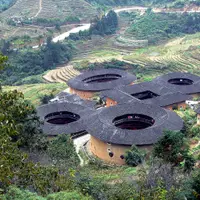
Fujian Tulou 福建土楼
Round earthen fortresses where whole clans lived behind a single gate
-
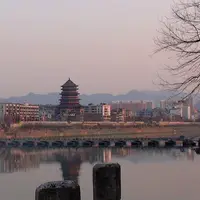
Jingdezhen, Porcelain Capital 景德镇
The city that fired porcelain for China's emperors, and still has clay on its hands
-
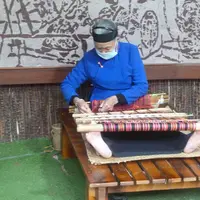
Binglanggu Li and Miao Cultural Tourism Zone 槟榔谷黎苗文化旅游区
Li brocade weaving, boat-shaped houses and Li dance in an areca-palm valley
-
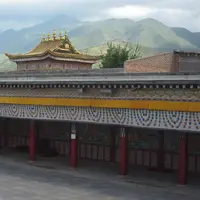
Rongwo Monastery and Rebgong Old Town 隆务寺
A working Gelug monastery and the painters' villages of the Rebgong valley
-
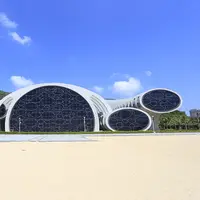
Maritime Silk Road Museum of Guangdong (Nanhai No. 1 Museum) 广东海上丝绸之路博物馆
A Song-dynasty merchant ship raised whole from the sea, on Hailing Island
-
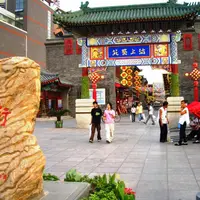
Ancient Culture Street & Tianhou Palace 古文化街与天后宫
Qing-style shop street around Tianjin's 14th-century sea-goddess temple
-
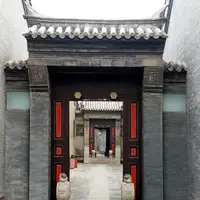
Shi Family Grand Courtyard (Yangliuqing Museum) 石家大院
A merchant's Qing-era mansion in Yangliuqing, with carved brickwork and a private theatre
By region
Zhejiang (20) · Jiangxi (18) · Hunan (11) · Henan (9) · Hebei (7) · Jiangsu (7) · Fujian (7) · Sichuan (7) · Guizhou (6) · Taiwan (6) · Shandong (5) · Yunnan (5) · Shaanxi (5) · Guangdong (3) · Xinjiang (3) · Tianjin (2) · Anhui (2) · Hubei (2) · Guangxi (2) · Chongqing (2) · Qinghai (2) · Beijing (1) · Inner Mongolia (1) · Heilongjiang (1) · Hainan (1) · Hong Kong (1) · Macau (1)
Zhejiang 20 places
- Baoxi and Xitou Village 宝溪 4A scenic area · on the map
A mountain township in western Longquan whose village of Xitou has made celadon for centuries and was named one of UN Tourism's Best Tourism Villages in 2024. - China Celadon Town and Piyun Celadon Culture Park 中国青瓷小镇·披云青瓷文化园 4A scenic area · on the map
Shangyang town is where modern Longquan celadon began: the state-owned Longquan Porcelain Factory was set up here in 1954, gathering leading craftsmen to revive the ware. - China National Silk Museum 中国丝绸博物馆 4A scenic area · First-grade museum
A national museum of silk and textiles south of West Lake at the foot of Yuhuang Hill, opened in 1992 and rebuilt and enlarged in 2015–16. - China Woodcarving Culture Expo City, Dongyang 中国木雕文化博览城 4A scenic area · on the map
A vast trade complex in Dongyang, a city known for its woodcarving tradition, where some 3,000 manufacturers sell carved woodwork, rosewood (hongmu) furniture and bamboo crafts from about 8,000 shops. - Dali Silk World, Xinchang 达利丝绸世界 4A scenic area · on the map
An industrial-tourism site at the works of Dali Silk, a silk textile and garment maker in Xinchang, which the company began developing around the theme of silk in 2007. - Dayao Longquan Kiln Sites 大窑龙泉窑遗址 National heritage site · on the map
The heartland of Longquan celadon, where 126 kiln sites lie in a 5.2 km² protected area around Dayao village. - Deqing Proto-porcelain Kiln Sites 德清原始瓷窑址 National heritage site · on the map
The low hills around Longsheng and Longshan villages, north-east of Deqing's county town, hold kiln sites that fired proto-porcelain from the Shang to the Warring States period, an early centre of Chinese porcelain-making named one of China's six major archaeological discoveries of 2010. - Fenghuangshan Kiln Sites 凤凰山窑址群 National heritage site · on the map
A group of kilns on the hill slopes behind Dashan village in Shangpu, Shangyu, which fired early celadon for daily use and for burials during only fifty or sixty years, from the late Three Kingdoms to the end of the Western Jin in the third and early fourth centuries. - Hangzhou Arts and Crafts Museum 杭州工艺美术博物馆 First-grade museum
A group of four museums under one roof, in converted cotton-mill, silk-weaving and warehouse buildings of the Qiaoxi historic quarter beside Gongchen Bridge on the Grand Canal. - Huangyan Museum 黄岩博物馆 4A scenic area · on the map
The district museum of Huangyan, founded in 1984, with more than 8,000 objects ranging from Western Zhou proto-celadon and Tang and Song celadon to Buddhist relics of the Song dynasty. - Huzhou Silk Town (Xishanyang) 湖州丝绸小镇 4A scenic area · on the map
A new silk-industry and leisure district in Huzhou's eastern new town, built around Xishanyang, a lake and wetland park that is the main attraction for visitors. - Qingtian Stone Carving Cultural Area 青田中国石雕文化旅游区 4A scenic area · on the map
Qingtian's showcase for its soft, many-coloured local stone, carved for at least 1,500 years into seals, figures and landscapes and listed as national intangible heritage in 2006. - Rulong Bridge 如龙桥 National heritage site
A timber-arch covered bridge in Yueshan village, rebuilt in 1625 according to an inscription on its ridge beam, which makes it the oldest known timber-arch covered bridge in China with a precisely dated rebuilding. - Sanqingkou Porcelain Workshops 三卿口制瓷作坊 National heritage site
A porcelain-making village in a small valley in Xiakou town, where the Huang family set up kilns in the Qianlong era of the Qing dynasty, using local kaolin, water-powered pounding mills and wood from the hills, and shipped blue-and-white wares along the Xianxia road. - Shanglin Lake Yue Kilns 上林湖越窑遗址 National heritage site
Nearly 200 kiln sites around Shanglin Lake and its neighbouring lakes made Yue ware celadon from the Eastern Han to the Southern Song, and the Housi'ao kiln, excavated in 2015–2017, is thought to have produced the 'secret-colour' celadon found at Famen Temple. - Southern Song Guan Kiln Museum 南宋官窑博物馆 National heritage site · on the map
A ceramics museum opened in 1992 over the Jiaotanxia kiln site at the southern foot of Yuhuang Hill, where the Southern Song court made its official 'Guan' ware. - Taishun Covered Bridge Culture Park (Xidong and Beijian Bridges) 泰顺廊桥文化园 4A scenic area · National heritage site
A heritage park in Sixi town built around Xidong Bridge (1745) and Beijian Bridge (1803), two timber covered bridges with woven-beam arches that stand close together over the streams of Xiaqiao village. - Wanyao Ancient Village 碗窑古村 4A scenic area · on the map
An old pottery village in a wooded valley above Yulong Lake in Qiaodun, founded in the early Ming, which preserves its old hand-worked bowl kilns and workshops. - Xiling Seal Engravers' Society 西泠印社 National heritage site
The hillside home on Gushan of a society of seal carvers founded in 1904 by a group of engravers, with the master carver Wu Changshuo as its first president, and nicknamed "the foremost society under heaven". - Zeya Scenic Area and Siliandui Paper Mills 泽雅 4A scenic area · National heritage site · on the map
A large mountain scenic area west of Wenzhou, nicknamed the 'West Yandang', with eight sections of waterfalls, pools and gorges such as the Qipujian (Seven Waterfalls) ravine and Jinkeng Gorge.
Jiangxi 18 places
- Jingdezhen, Porcelain Capital 景德镇 4A scenic area · National heritage site · First-grade museum
The city that fired porcelain for China's emperors, and still has clay on its hands - Ancient Kiln Folk Customs Museum, Jingdezhen 古窑民俗博览区 5A scenic area · National heritage site · on the map
An open-air museum complex built around the Zhen Kiln, a Qing-dynasty porcelain kiln that can fire dozens of kinds of ware at high and low temperatures and was lit again in June 2014. - Gaoling Kaolin Mine Site 高岭瓷土矿遗址 National heritage site · on the map
Gaoling ("High Ridge") is the hill village whose name gave the world the word kaolin: its white clay, mixed with local porcelain stone, made the thin white porcelain of Jingdezhen possible. - Hongzhou Kiln, Fengcheng 洪州窑遗址 National heritage site · on the map
Hongzhou celadon was fired around Fengcheng from the late Eastern Han onwards, and the kiln is counted among the six famous celadon kilns of the Tang; 44 kiln sites in 19 villages lie in six townships on both banks of the Gan River. - Hualin Papermaking Workshop Site, Gao'an 华林造纸作坊遗址 National heritage site · on the map
Remains of bamboo-paper workshops in the hills of the Hualin Mountain scenic area near Zhouling village, where archaeologists found the foundations of sixteen water-driven stamping mills along the streams and excavated workshops from the Southern Song to the Ming. - Huangyao Ceramics Park 皇窑 4A scenic area · on the map
A ceramics culture park of about 14 hectares (210 mu) in Xianghu town, laid out in grey-brick, dark-tiled buildings with workshop scenes of the Song, Yuan, Ming and Qing periods. - Hutian Kiln Site and Folk Kiln Museum 湖田古瓷窑址 National heritage site
Hutian was a large folk (non-imperial) kiln complex that fired from the Five Dynasties period into the Ming, best known for the pale blue-white qingbai porcelain of the Song dynasty. - Huwan Book-Printing Quarter 浒湾书坊建筑群 National heritage site · on the map
Huwan was a major commercial woodblock-printing centre in the Ming and Qing periods, and 14 historic buildings of its book trade are protected as one national heritage unit. - Ji'an Museum 吉安市博物馆 First-grade museum
Ji'an's city museum, founded in 1969, covering the area's history from the founding of Luling county under the Qin to the present in six themed halls: a short history of Ji'an, the Bronze Kingdom, the famous Jizhou kilns, Luling culture, the cradle of the revolution and contemporary Ji'an. - Jingdezhen China Ceramics Museum 景德镇中国陶瓷博物馆 First-grade museum · on the map
A museum of Jingdezhen's ceramic history, with a core exhibition on about 2,000 years of pottery, over 1,000 years of official kilns and 600 years serving the Ming and Qing courts. - Jizhou Kiln 吉州窑 4A scenic area · National heritage site · on the map
The site of a pottery town at Yonghe that made wares from the late Tang to the early Ming, best known for black-glazed tea bowls with leaf and paper-cut decoration. - Mingfangyuan Ceramics Park 名坊园 4A scenic area · on the map
A ceramics-craft park built in traditional style in the Changnan New District on the north-western edge of Jingdezhen, with a planned area of 1.3 square kilometres. - Mingfentang Opera Stage, Hu'an 名分堂戏台 National heritage site
The Mingfentang is the ancestral hall of the Cheng family of Hu'an village, begun in 1817, and its stage was added later and took three years to build. - Shuanglin Ramie Cloth Culture Tourism Area 双林夏布 4A scenic area · on the map
A culture-tourism area at Shuanglin town, in the heartland of Fenyi's ramie-cloth industry; Fenyi is known as the home of xiabu, 'summer cloth' woven by hand from ramie fibre. - Taoxichuan Creative Quarter 陶溪川文创街区 4A scenic area · on the map
A former state porcelain-factory district east of the old centre, redeveloped from the mid-2010s as a creative quarter. - Tongyuan Paper-Cutting Culture Park, Ruichang 铜源剪影文化园 4A scenic area · on the map
A culture park at Xiafan town, on both banks of the Nanyang River beside the Tongling mine site, built around Ruichang paper-cutting, a craft on China's national intangible heritage list. - Xi Garden, Wuyuan 熹园 4A scenic area · on the map
Xi Garden is a Huizhou-style garden complex on the edge of Wuyuan town, on the site of Zhujiazhuang, the village where Zhu Xi's second- and third-generation ancestors lived. - Yaoli Ancient Town 瑶里古镇 4A scenic area · National heritage site · on the map
A mountain town in northern Fuliang that made porcelain before the Ming and later supplied porcelain clay and tea to Jingdezhen; its old name was written with the character for "kiln".
Hunan 11 places
- Cai Lun Memorial Park 蔡伦纪念园 4A scenic area · National heritage site · on the map
A memorial park in central Leiyang, home town of Cai Lun, the Eastern Han court official credited with improving papermaking around AD 105. - Cailun Bamboo Sea 蔡伦竹海 4A scenic area · on the map
A large area of bamboo forest in Huangshi Town in south-eastern Leiyang, the home district of the papermaking pioneer Cai Lun. - Former Qunli Porcelain Factory 醴陵群力瓷厂旧址 National heritage site · on the map
The former Qunli Porcelain Factory in north-western Liling, founded in 1958 as the Liling Art Porcelain Factory with state funds to make fine underglaze-painted porcelain, which produced tableware for national leaders, the Great Hall of the People and the Diaoyutai State Guesthouse and so earned the nickname 'Red Official Kiln'. - Huxingshan Huayao Villages 虎形山花瑶 4A scenic area · on the map
A high mountain township in north-western Longhui, averaging about 1,350 m above sea level, that is home to the Huayao ('Flowery Yao'), a Yao group known for their cross-stitch embroidery and bright costumes. - Liling Kilns at Weishan 醴陵窑 National heritage site · on the map
The national listing for the Liling kilns, which fired ceramics from the Song to the Republican era, centres on Weishan village in the hills north of Liling, long the heart of the local porcelain industry and known mainly for blue-and-white bowls. - Liling Museum (Mao Zedong Hunan Peasant Movement Investigation Memorial Hall) 醴陵市博物馆 First-grade museum
Described as the only county-level national first-grade museum in Hunan, it works from two venues: the Liling Ceramics Museum in China Ceramics Valley, which traces the town's porcelain industry and shows an underglaze five-colour vase that won a gold medal at the 1915 Panama-Pacific Exposition, and the Mao Zedong Memorial Hall for the Hunan Peasant Movement Investigation. - Pingtan River Covered Bridges 坪坦风雨桥 National heritage site · on the map
Nine Dong covered bridges with long timber galleries span the Pingtan River in Pingtan township and Longcheng town; they were built between 1755 and 1853, and most were repaired in the 20th century. - Tongguan Kiln Archaeological Site Park 长沙铜官窑遗址 4A scenic area · National heritage site
The Changsha kilns, strung along the east bank of the Xiang River at Tongguan, made glazed stoneware from the Tang to the Five Dynasties and are seen as the birthplace of underglaze painted decoration, often with poems and proverbs, for markets as far away as Japan, Southeast Asia, West Asia and Africa. - Tongguan Kiln Guofeng Park 铜官窑国风乐园 4A scenic area · on the map
A large theme park and resort opened in 2018 beside the Tongguan kiln site, with streets in Tang-dynasty style, eight small museums including one on Changsha ware, performance venues, guesthouses and three hotels. - Yuezhou Kiln Site Museum 岳州窑遗址博物馆 National heritage site · on the map
Yuezhou ware, the celadon made along the lower Xiang River from the Han to the Tang, was ranked among the six best wares for tea bowls in Lu Yu's 8th-century Classic of Tea, and 26 kiln sites have been found on both banks around Xiangyin. - Zhuzhou Museum 株洲博物馆 First-grade museum · on the map
Founded in 1984, the museum now occupies a building of about 20,500 square metres modelled on an ancient pottery kiln, in the Shennong scenic area.
Henan 9 places
- China Jun Porcelain Culture Park 中国钧瓷文化园 4A scenic area · on the map
A themed park on the north side of Yuzhou devoted to Jun ware, one of the celebrated Song-dynasty ceramics, laid out as a palace-style garden around Tiancheng Pavilion, a building about 50 m tall. - Dangyangyu Kiln Site 当阳峪窑址 National heritage site
The site of a large Song-period folk kiln at the southern edge of Dangyangyu village, known for its varied wares, especially white-slipped carved stoneware and marbled 'jiaotai' porcelain; examples are in the Palace Museum in Beijing. - Miaoshang Village Sunken Courtyards 庙上村地坑窑院 National heritage site · on the map
A farming village on the loess tableland south of Sanmenxia whose homes are dug into the ground: each courtyard is a square pit with cave rooms cut into its walls, so the village stays hidden from view until the pit edges. - Qifeng Old Garden, Zhuxian 启封故园 4A scenic area · on the map
A modern scenic area in old-town style at Zhuxian, one of the four great trading towns of Qing China, with a lake, bridges, a gate tower, a teahouse and shops built in traditional style. - Qingliangsi Ru Kiln Site 清凉寺汝官窑遗址 National heritage site
The village site where archaeologists in 2000 confirmed the kilns of Ru ware, the rare duck-egg blue stoneware made for the Northern Song court around 1100, after surveys and excavations that began in 1987. - Ruzhou Confucian Temple 汝州文庙 National heritage site · on the map
The Confucian temple and prefectural school of Ruzhou, converted in 1370 from a Yuan shrine and enlarged in 1811. - Shanzhou Sunken Courtyard Scenic Area 陕州地坑院 4A scenic area · on the map
A village of sunken courtyard houses at Beiying, south of Sanmenxia, opened as a scenic area: square pits are dug into the loess and cave rooms cut into their walls, hiding the village below ground level, a building craft listed as national intangible heritage in 2011. - Shenhou Ancient Town 神垕古镇 4A scenic area
A pottery town in the hills south-west of Yuzhou where Jun ware has been made since the Tang and Song, and which is still full of working kilns, studios and showrooms. - Yuzhou Jun Kiln Site Museum 禹州钧官窑址博物馆 4A scenic area · National heritage site
A museum on the Juntai kiln site in Yuzhou, source of the 'official' Jun wares made for the imperial court, whose date (late Northern Song or early Ming) is still debated; the kilns were found in 1964 and excavated from 1974.
Hebei 7 places
- Cizhou Kiln Site 磁州窑遗址 National heritage site · on the map
The kilns around Pengcheng and Guantai made the white-slipped, black-painted stoneware known as Cizhou ware, from the late Northern Dynasties into the Republican period, and the site has been a national heritage unit since 1996. - Ding Kiln Site 定窑遗址 National heritage site · on the map
The main production site of Ding ware, the white porcelain of one of the Song dynasty's 'Five Great Kilns', on the edge of Jianci village. - Jingxing Kiln Site (Nanhengkou) 井陉窑遗址 National heritage site · on the map
The Jingxing kilns, founded in the Sui dynasty and at their height in the Song and Jin, were scattered through the mountains of Jingxing County, and the Nanhengkou site is the largest and best preserved of those found. - Kongshan Baiyun Cave 崆山白云洞 4A scenic area · on the map
A karst cave in the Taihang foothills of Lincheng, formed in the Cambrian period and found in 1988 by quarrymen, which opened to visitors in 1990. - Wuqiang New Year Picture Museum 武强年画博物馆 4A scenic area
A museum in Wuqiang, long known for woodblock New Year pictures (nianhua), which describes itself as the first museum in China devoted to the craft and was approved in 1985. - Xingyao Kiln Site 邢窑遗址 4A scenic area · National heritage site · on the map
The site museum in Neiqiu county town protects 11 kiln furnaces uncovered in 2012 in a dig named one of China's ten major archaeological discoveries of that year, and visitors look down on them from an elevated walkway. - Yuzhou Museum 蔚州博物馆 4A scenic area
Yuxian's county museum, ranked a national second-grade museum, which moved in 2016 from Shijia Temple into a purpose-built building of about 13,000 sq m.
Jiangsu 7 places
- China Embroidery Art Museum, Zhenhu 中国刺绣艺术馆 4A scenic area · on the map
A museum of embroidery in Zhenhu, a lakeside subdistrict west of Suzhou known for Su embroidery, where more than 8,000 local people work as embroiderers. - China Yixing Ceramics Museum 中国宜兴陶瓷博物馆 4A scenic area
One of China's earliest specialist ceramics museums, at the foot of Xianhe Hill in Dingshu, Yixing's pottery town, and since 2013 also designated the China Zisha Museum. - Jinling Scriptural Press 金陵刻经处 National heritage site
A Buddhist publishing house founded in 1866 by the lay scholar Yang Wenhui (Yang Renshan), often called the father of China's modern Buddhist revival, who taught figures such as the monk Taixu and the scholar Zhang Taiyan here. - Qianshu Dragon Kiln (Yixing Kiln Sites) 前墅龙窑 National heritage site · on the map
A Ming-dynasty 'dragon kiln' in Dingshu, a long, sloping, wood-fired tunnel kiln running up a hillside, which is still fired today and is the part of the Yixing Kiln Sites that visitors can see; the national listing groups it with five other old kiln sites around Yixing. - Suzhou Imperial Kiln Gold Brick Museum 御窑金砖博物馆 4A scenic area · on the map
A museum in Suzhou's Xiangcheng district beside the old Lumu imperial kilns, which in the Ming and Qing dynasties fired the fine clay floor tiles known as 'gold bricks' for the Forbidden City and the Summer Palace. - Suzhou Silk Museum 苏州丝绸博物馆 First-grade museum · on the map
Founded in 1991, this is described as the first Chinese museum devoted to silk, in a building next to the Beisi Pagoda in Suzhou's old town. - Yangzhou Museum & China Block Printing Museum 扬州博物馆 4A scenic area · First-grade museum
Yangzhou's main museum shares a modern building beside Mingyue Lake with the China Block Printing Museum, so the pair is known locally as the 'Double Museum'; both opened here in 2005.
Fujian 7 places
- Fujian Tulou 福建土楼 5A scenic area · National heritage site · UNESCO World Heritage
Round earthen fortresses where whole clans lived behind a single gate - Cizao Kiln Sites (Jinjiaoyi Hill) 磁灶窑址 National heritage site · on the map
The remains of Song–Yuan dragon kilns on Jinjiaoyi Hill in Cizao town, among more than two dozen kiln sites along the Meixi River that made pottery for export to Japan and South-East Asia from the 6th to the early 20th century. - Hua'an Tulou (Dadi Cluster) 华安土楼 4A scenic area · National heritage site
The Hua'an tulou tourist area centres on the Dadi cluster in Xiandu town: three large earthen houses, Eryi Lou, Nanyang Lou and Dongyang Lou, built by the Jiang family in the Qing dynasty and inscribed in 2008 as part of the Fujian Tulou World Heritage Site. - Huihe Stone Culture Park 惠和石文化园 4A scenic area · on the map
A park in Huli District devoted to stone carving, with a stone-culture gallery, a stone carving museum, a treasure gallery and a hall of 'stone shadow carving', a southern Fujian craft listed as intangible heritage, plus space for workshops and folk performances. - Putian Arts and Crafts City 莆田工艺美术城 4A scenic area · on the map
A trade and exhibition complex for Putian's craft industries, above all woodcarving and classical hardwood furniture, which with oil painting and gold and silver jewellery are among the city's traditional mainstays. - Qudougong Kiln Site (Dehua Kilns) 屈斗宫窑址 National heritage site · on the map
The excavated remains of a Song–Yuan kiln on the southern slope of Pozhai Hill at Dehua, the porcelain-making town of inland Quanzhou: a dragon kiln divided into chambers, a step towards the later stepped kiln. - Sibao Woodblock Printing Buildings 四堡书坊建筑 National heritage site · on the map
Sibao, in the hills of northern Liancheng, was one of China's four main centres of woodblock printing in the Ming and Qing dynasties, and many of its family printing and bookselling workshops survive in the villages of Wuge, Zhongnan, Siqiao and Tiancha.
Sichuan 7 places
- Chengdu International Intangible Cultural Heritage Park 成都国际非遗博览园 4A scenic area · on the map
A large event park of about 1,780 mu (119 hectares) in western Chengdu, built as the permanent home of the Chengdu International Intangible Cultural Heritage Festival, whose ninth edition opened here in May 2025. - Daoming Bamboo Village 道明竹艺村 4A scenic area · on the map
A rural hamlet in Daoming, Chongzhou, known for Daoming bamboo weaving, a local craft added to China's national intangible cultural heritage list in 2014. - Derge Parkhang 德格印经院 4A scenic area · National heritage site
The Derge Parkhang is a working Tibetan printing house founded in 1729 by Tenpa Tsering, king of Derge, and attached to the Sakya-school Gonchen Monastery. - Dongyunba Umbrella Village, Jiangyang 董允坝·伞乡 4A scenic area · on the map
A rural scenic area at Fenshuiling town, Jiangyang district, combining the Dongyunba national modern-agriculture demonstration park with Sanli ('umbrella village'), a new rural-community street of about 1.1 km built in old-street style and hung with oil-paper umbrellas. - Jinmen Silk Quarter, Xindu 锦门 4A scenic area · on the map
A recently developed cultural and commercial quarter in Sanhe, Xindu district, north of Chengdu, themed on Shu brocade and promoted as the starting point of the Southern Silk Road. - Mianzhu New Year Print Village 绵竹年画村 4A scenic area
Mianzhu woodblock New Year prints, printed from carved blocks and then coloured by hand, are one of China's four great New Year print traditions and have been national intangible cultural heritage since 2006. - Qiong Kiln Site, Shifangtang 邛窑遗址 National heritage site · on the map
The remains of a large folk pottery works at Shifangtang that fired ceramics from the Sui to the Song dynasties, the biggest known site of the Qiong ware tradition.
Guizhou 6 places
- Colourful Guizhou Fengjingyan Cultural Park 多彩贵州风景眼文创园 4A scenic area · on the map
A cultural park beside Guiyang's Longdongbao airport that showcases Guizhou's intangible cultural heritage, open since July 2015. - Danzhai Wanda Village 丹寨万达小镇 4A scenic area · on the map
Danzhai Wanda Village is a purpose-built tourism town beside Donghu lake in the middle of Danzhai county, built by the Wanda Group under a 2014 poverty-alleviation agreement with the county and opened in July 2017. - Diping Wind and Rain Bridge 地坪风雨桥 National heritage site · on the map
Diping Bridge crosses the Nanjiang River between the upper and lower Dong hamlets of Diping in the far south-east of Liping County, and was first built in 1882. - Jingou Wind and Rain Bridge 金勾风雨桥 National heritage site · on the map
Jingou Wind and Rain Bridge is a covered timber bridge over a small stream at Jingou hamlet, Zengying village, in Wangdong town, Congjiang County. - Yuping Dong Folk Village Park 玉屏侗乡风情园 4A scenic area · on the map
A purpose-built tourist complex in Tianping town that presents Dong culture in newly built timber architecture, including a drum tower and some thirty Dong-style houses. - Zengchong Drum Tower 增冲鼓楼 National heritage site · on the map
Zengchong Drum Tower stands at the centre of the Dong village of Zengchong in Wangdong town, Congjiang County, and dates from the early Qing dynasty, with stone tablets beside it, the earliest dated 1672.
Taiwan 6 places
- Glass Museum of Hsinchu City 玻璃工艺博物馆 on the map
A museum of glass art in Hsinchu Park, in a building put up in 1936 as the Hsinchu Prefecture's self-government hall. - National Science and Technology Museum 国立科学工艺博物馆 on the map
Taiwan's first museum of applied science, with a north and a south hall and an outdoor park that includes an armillary sphere. - New Taipei City Yingge Ceramics Museum 莺歌陶瓷博物馆 on the map
The first museum in Taiwan devoted to ceramics, in Yingge, the town long known for pottery. - Sanyi Wood Sculpture Museum 三义木雕博物馆 on the map
A public museum devoted to wood carving, opened in 1995, with a second building added in 2003. - Taichung Museum of Fiber Arts 台中纤维工艺博物馆 on the map
A museum in Dali District devoted to fibre and textile arts, which opened in 2016 on the site of an earlier museum with children's programmes. - Zhuputan and Keelung Ghost Festival Hall 主普坛
Zhuputan is the main site of Keelung's Ghost Festival, an annual summer rite listed as intangible cultural heritage.
Shandong 5 places
- Boshan Ceramics and Glass Art Centre 博山陶瓷琉璃艺术中心 4A scenic area · on the map
An arts complex on Yanshan Park North Road in central Boshan, the district long known for its pottery and glass. - World Kite Park, Anqiu 世界风筝公园 4A scenic area · on the map
A kite park in Anqiu, part of the Qilu Jiudi tourist area, which received the title 'World Kite Park' from the international kite federation in March 2024. - Yangjiabu Folk Art Grand View Garden 杨家埠民间艺术大观园 4A scenic area · on the map
A folk-art park in Hanting district, built on the site of the old Ming and Qing village of Yangjiabu, whose woodblock New Year prints and kites are both national intangible cultural heritage. - Zhongchenhao Kiln Site 中陈郝窑址 National heritage site · on the map
Zhongchenhao is a village in Zouwu town, Xuecheng District, where a long-running pottery kiln site is protected as a national heritage unit; the list dates the kilns from the Northern and Southern Dynasties to the Qing. - Zibo Ceramics and Glass Museum 淄博陶瓷琉璃博物馆 4A scenic area · First-grade museum · on the map
A large city museum in Zibo's cultural centre devoted to the ceramics and coloured glass (liuli) for which the city is known.
Yunnan 5 places
- Jianchuan Woodcarving Art Town 剑川木雕艺术小镇 4A scenic area · on the map
A woodcarving-themed town at Shihe village beside Jianhu Lake, built from 2017 and devoted to Jianchuan woodcarving, a Bai craft on China's national intangible cultural heritage list. - Mengjinglai Dai Village 勐景来 4A scenic area · on the map
A Dai village of stilt houses in Daluo town, Menghai county, run as a scenic area by the villagers together with a tourism company; it was listed as a Chinese Traditional Village in 2013. - Wanyao Pottery Village, Boshang 博尚碗窑 4A scenic area · on the map
A pottery village in Boshang town south of Lincang city, founded according to the county gazetteer in 1738 by three potters from Hunan who built dragon kilns to use the local clay. - Xinhua Village, Heqing 鹤庆新华村 4A scenic area
A Bai village on the edge of the Heqing plain whose families have long made silverware by hand, a craft that the county gazetteer traces back more than 500 years and that is on China's national intangible cultural heritage list. - Yuxi Kiln Site 玉溪窑址 National heritage site · on the map
The remains of kilns in Yuxi's Hongta district that made porcelain from the Yuan to the Ming dynasty, including blue-and-white and celadon wares.
Shaanxi 5 places
- Chenlu Ancient Town 陈炉古镇 4A scenic area · on the map
A hillside pottery town south-east of central Tongchuan, the one Yaozhou-ware kiln centre that kept making ceramics after the Song and Yuan dynasties, where by local tradition the kiln fires have never gone out. - Fuping Ceramic Art Village (FLICAM) 富平陶艺村 4A scenic area · on the map
A ceramics-themed village on the northern edge of Fuping town, built around the FuLe International Ceramic Art Museums (FLICAM). - Tomb and Temple of Cai Lun 蔡伦墓祠 National heritage site · on the map
The burial place of Cai Lun, the Eastern Han court official who presented an improved method of papermaking to the emperor in 105 and was later made Marquis of Longting, the town where his tomb lies. - Yaotou Kilns 尧头窑 4A scenic area · National heritage site · on the map
An old pottery village in Yaotou town whose folk kilns, traced by the Ming county gazetteer to the Tang dynasty and at their height under the Ming and Qing, made everyday black-glazed stoneware such as bowls, jars and basins, a craft potters still practise here. - Yaozhou Kiln Museum 耀州窑博物馆 4A scenic area · National heritage site · on the map
The site museum of the Yaozhou kilns at Huangbao, which from the Tang to the Yuan made what is generally regarded as the finest northern celadon, prized in the Northern Song for its olive-green glaze over carved and later moulded decoration.
Guangdong 3 places
- Maritime Silk Road Museum of Guangdong (Nanhai No. 1 Museum) 广东海上丝绸之路博物馆 First-grade museum
A Song-dynasty merchant ship raised whole from the sea, on Hailing Island - Nanfeng Kiln 南风古灶 4A scenic area · National heritage site
A Ming-dynasty dragon kiln in Shiwan, built on a slope in 1506–1521 and fired continuously for about 500 years, a record recognised by Guinness World Records. - Yangmei Jade Village 阳美玉都 4A scenic area · on the map
Yangmei village in Pandong, on the eastern edge of Jieyang city, is where the region's jadeite trade began and is still the core of a large carving and trading district, although no jade is mined locally.
Xinjiang 3 places
- Jiayi Village 加依村 4A scenic area · on the map
Jiayi is a village in Xinhe County known for making traditional Uyghur musical instruments, a craft it has practised for more than 300 years; nearly half of its roughly 290 households build instruments such as the dutar, ajek and rawap. - Karez Folk Custom Park 坎儿井民俗园 4A scenic area · on the map
A company-run park opened in 2000 on the West Gate karez, an old underground irrigation channel on the western edge of Turpan's old town. - Yarkand Old Town 莎车老城 4A scenic area · on the map
The historic quarter of Yarkand (Shache), once the capital of the Yarkand Khanate, rated as a 4A scenic area in 2022.
Tianjin 2 places
- Ancient Culture Street & Tianhou Palace 古文化街与天后宫 5A scenic area · National heritage site
Qing-style shop street around Tianjin's 14th-century sea-goddess temple - Shi Family Grand Courtyard (Yangliuqing Museum) 石家大院 4A scenic area · National heritage site
A merchant's Qing-era mansion in Yangliuqing, with carved brickwork and a private theatre
Anhui 2 places
- China Xuan Paper Culture Park 中国宣纸文化园 4A scenic area · on the map
Jing County is the home of Xuan paper, the absorbent paper prized for Chinese calligraphy and painting, whose hand-making craft is on the UNESCO intangible heritage list. - Fanchang Kiln Archaeological Park 繁昌窑遗址 National heritage site · on the map
A kiln site of the Five Dynasties and Northern Song on the northern slopes of Ruomaojian and Zhuizishan hills, just south of Fanchang town, which specialised in bluish-white qingbai porcelain fired one piece to a saggar.
Hubei 2 places
- Ezhou Museum 鄂州市博物馆 First-grade museum · on the map
The city museum holds about 80,000 objects, among them bronzes, pottery, ceramics and relics of the ancient Chu state and the Three Kingdoms. - Mianyang Town, Xiantao 沔阳小镇 4A scenic area · on the map
A newly built old-style town on the shore of Pai Lake in Xiantao, with Jingchu-style houses laid out beside the water.
Guangxi 2 places
- Jiuzhou Old Town, Jingxi 旧州 4A scenic area · on the map
A Zhuang town south of Jingxi, once home to the local chieftain family, known for its hand-made embroidered balls (xiuqiu), which hang along the main street; visitors can learn to cut and stitch one in the workshops. - Sanhuan Ceramics Town, Beiliu 三环陶瓷小镇 4A scenic area · on the map
An industrial and visitor complex built by Guangxi Sanhuan, one of China's leading makers of everyday porcelain, in Beiliu, a pottery centre since the Song dynasty.
Chongqing 2 places
- Antao Pottery Town 安陶小镇 4A scenic area · on the map
A pottery-themed tourist area in Anfu Subdistrict built around Rongchang pottery, a craft listed as national intangible cultural heritage, linking the Rongchang Pottery Museum, the old Taobao post road and craft-experience sites. - Rongchang Xiabu Town 夏布小镇 4A scenic area · on the map
A shopping and leisure quarter of 24 courtyard buildings in Ming and Qing style, completed in 2015 and named after xiabu, the ramie cloth whose weaving is one of Rongchang's national intangible heritage crafts.
Qinghai 2 places
- Rongwo Monastery and Rebgong Old Town 隆务寺 4A scenic area · National heritage site
A working Gelug monastery and the painters' villages of the Rebgong valley - Salar Homeland Folk Culture Park 撒拉尔故里民俗文化园 4A scenic area · on the map
A folk-culture park in Majia village, Jiezi town, set up to present the life of the Salar, a Muslim people whose ancestors, by tradition, migrated here from Central Asia and who live mainly in Xunhua.
Beijing 1 place
- China Red Sandalwood Museum 中国紫檀博物馆 4A scenic area · on the map
A private museum opened in 1999 by the entrepreneur Chen Lihua and devoted to zitan, a dense dark-red hardwood long used for fine Chinese furniture.
Inner Mongolia 1 place
- Moni Mountain Intangible Heritage Town 莫尼山非遗小镇 4A scenic area · on the map
Moni Mountain is a village-scale heritage tourism town on a hillside in the Daqing Mountains foothills north-west of Hohhot, where more than 80 intangible heritage items are shown and taught through master workshops, an art centre, a museum and practice bases.
Heilongjiang 1 place
- Xinsheng Oroqen Folk Village 新生鄂伦春民俗景区 4A scenic area · on the map
A folk-culture visitor area in Xinsheng, an Oroqen township; the Oroqen are a traditionally hunting people of the Khingan forests.
Hainan 1 place
- Binglanggu Li and Miao Cultural Tourism Zone 槟榔谷黎苗文化旅游区 5A scenic area
Li brocade weaving, boat-shaped houses and Li dance in an areca-palm valley
Hong Kong 1 place
- Fan Sin Temple and Wun Yiu Kilns 上碗窑樊仙宫及碗窑 Declared monument
Fan Sin Temple is the main temple of Sheung Wun Yiu and Ha Wun Yiu, villages that made blue-and-white porcelain from the Ming dynasty until the kilns closed in 1932.
Macau 1 place
- Exhibition Room of Master Lu Ban's Woodcraft Works 鲁班先师木工艺陈列馆 on the map
A small museum in the Carpenters' Guildhall, a building of about 1840 on Rua de Camilo Pessanha that was one of Macau's earliest professional associations.
Who is in: Kiln sites, craft towns, workshops and craft museums on the atlas, and places where a craft or folk art on China's national intangible heritage list is made or shown. A first list was drawn up by rules on each place's name, description and official class, then checked by hand; updated 2026-11-05. All themes.
Cite this page
- APA
- Atlas of China. (2026, November 5). Porcelain, silk and other traditional crafts in China: 137 places on a map. https://www.atlasofchina.com/themes/crafts/
- MLA
- “Porcelain, silk and other traditional crafts in China: 137 places on a map.” Atlas of China, 5 Nov. 2026, www.atlasofchina.com/themes/crafts/.