
 An illustrated travel map
Places of Chinese poetry and literature
Chinese poets wrote about the places they passed through, and many of those places are visited for the poems: the towers of Yellow Crane, Yueyang and Prince Teng, the cottage where Du Fu lived in Chengdu, the hills and lakes that Li Bai and Su Shi wrote about. There are also writers' homes and the settings of the classic novels.
- Places
- 110
- Regions
- 26
- Featured
- 33
- Group
- Arts and literature
Show them on the interactive map
Featured places
-
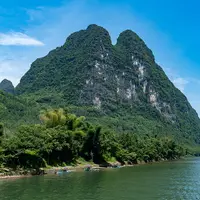
Li River & Yangshuo 漓江与阳朔
Limestone peaks, bamboo rafts and bike rides through rice paddies
-
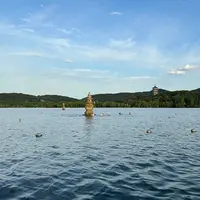
West Lake 西湖
The lake that taught China what a perfect landscape should look like
-
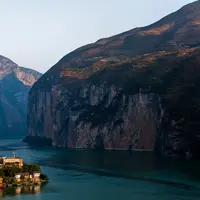
Yangtze Three Gorges 长江三峡
Cliffs closing in on the Yangtze along China's most storied river passage
-
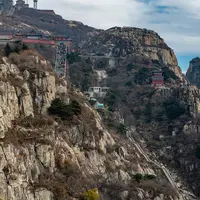
Mount Tai 泰山
China's most sacred peak, climbed by emperors and by night hikers chasing sunrise
-
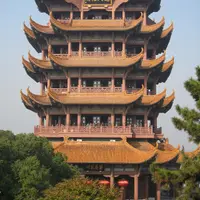
Yellow Crane Tower 黄鹤楼
A tower rebuilt many times over, made immortal by a single Tang poem
-
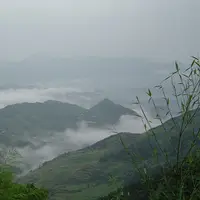
Mount Jiuhua 九华山
A Buddhist sacred mountain where 99 temples cling to granite peaks and mist
-
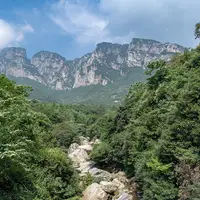
Mount Lushan 庐山
Misty peaks, waterfalls and a hill station of stone villas above the Yangtze
-
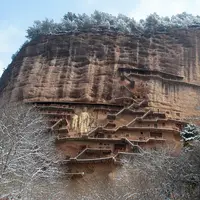
Maijishan Grottoes 麦积山石窟
Painted clay Buddhas in caves hung high on a haystack-shaped cliff
-
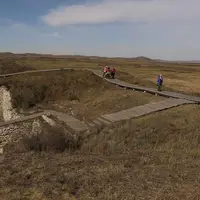
Shangdu (Xanadu) 元上都遗址
Kublai Khan's summer capital: Xanadu is now walls and palace mounds in open grassland
-
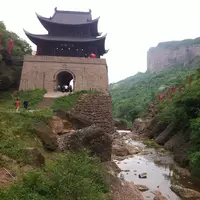
Jianmen Pass 剑门关
The cliff-walled gate on the old road to Shu that Li Bai said one man could hold
-
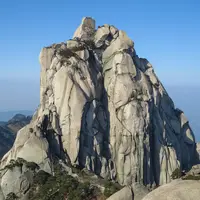
Mount Tianzhu 天柱山
A granite pillar among fifty peaks, with boulder caves and a mountain lake
-
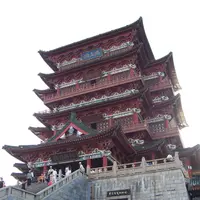
Pavilion of Prince Teng 滕王阁
Nanchang's nine-storey riverside tower, made famous by a Tang poet's preface
-
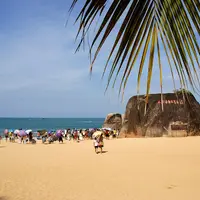
Tianya Haijiao 天涯海角
Boulders carved with 'edge of the sky, corner of the sea' on a Sanya beach
-
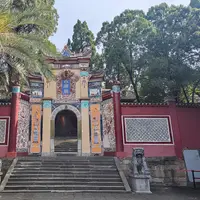
White Emperor City (Baidicheng) & Qutang Gorge 白帝城·瞿塘峡
A temple island of Three Kingdoms legend and Tang poetry at the gate of the Yangtze gorges
-
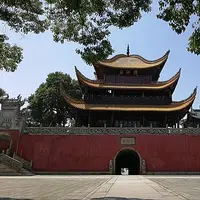
Yueyang Tower 岳阳楼
A helmet-roofed tower above Dongting Lake, famed for one 11th-century essay
-
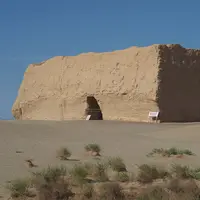
Yumen Pass 玉门关
The Jade Gate: a Han dynasty frontier fort and wall in the Gobi beyond Dunhuang
-
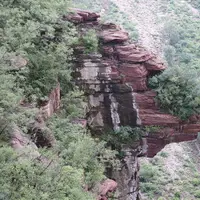
Yuntai Mountain 云台山
Red-rock gorges, pools and waterfalls on the southern Taihang
-
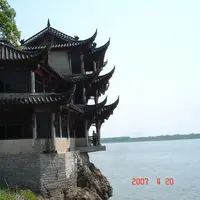
Caishi Rock 采石矶
A Yangtze cliff of battles, poets and the legend of Li Bai and the moon
-
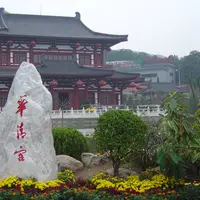
Huaqing Palace 华清宫
Hot springs at the foot of Mount Li where a Tang emperor wintered with Yang Guifei
-
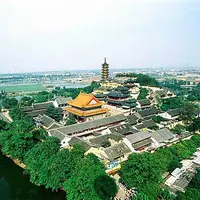
Jinshan, Jiaoshan and Beigushan 金山·焦山·北固山
Zhenjiang's three Yangtze hills: temples, pagodas and the White Snake legend
-
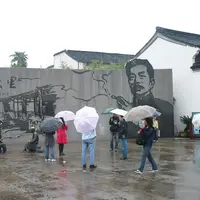
Lu Xun Native Place & Shen Garden 鲁迅故里·沈园
The old lanes where Lu Xun grew up, plus a Song-dynasty love-poem garden nearby
-
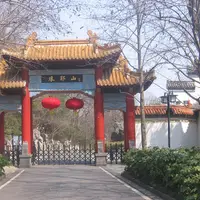
Mount Langya 琅琊山
The wooded hills behind Ouyang Xiu's Old Drunkard's Pavilion
-
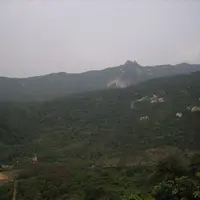
Mount Luofu 罗浮山
A Daoist grotto-heaven with 432 peaks, alchemist's relics and Su Dongpo's lychees
-
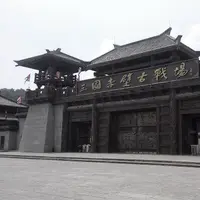
Red Cliff Ancient Battlefield, Chibi 三国赤壁古战场
A Yangtze cliff carved with 'Red Cliff', tied to the Three Kingdoms' great naval battle
-
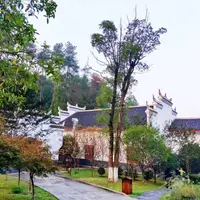
Taohuayuan (Peach Blossom Land) 桃花源
The valley long identified with Tao Yuanming's hidden paradise, ablaze with peach blossom
-
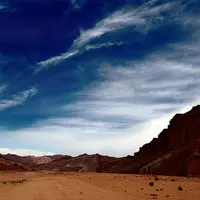
Tianshan Tomur Scenic Area 天山托木尔
Red-rock canyons below Tomur Peak, with a high village and Kyrgyz culture
-
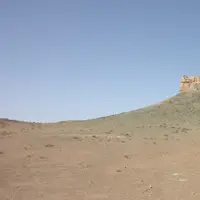
Yang Pass 阳关
The southern Han frontier gate, made a byword for farewell by a Tang poem
-
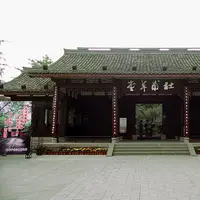
Du Fu Thatched Cottage 杜甫草堂
Bamboo groves and plum blossom where Du Fu, China's 'Poet-Sage', once lived
-
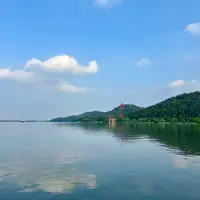
East Lake, Wuhan 东湖
A vast city lake with a greenway closed to cars, a Chu-culture hill and cherry blossom
-
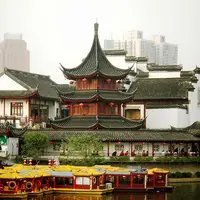
Fuzimiao and the Qinhuai River 夫子庙—秦淮风光带
Nanjing's lantern-lit Confucius Temple quarter, beside painted boats on the Qinhuai
-
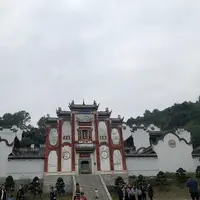
Qu Yuan's Hometown, Zigui 屈原故里
Relocated Qing buildings on a hill by the dam, honouring Qu Yuan of Dragon Boat fame
-
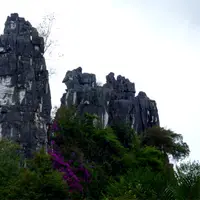
Seven Star Park 七星公园
Guilin's biggest park: a show cave, a Song bridge and cliffs of old carved inscriptions
-
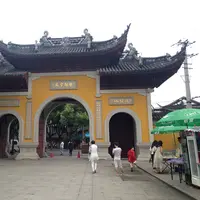
Hanshan Temple 寒山寺
The temple whose midnight bell a Tang poet made famous across East Asia
By region
Jiangsu (10) · Anhui (10) · Hubei (9) · Sichuan (9) · Zhejiang (8) · Jiangxi (8) · Shandong (7) · Henan (6) · Hunan (6) · Gansu (5) · Chongqing (4) · Shaanxi (4) · Guangxi (3) · Taiwan (3) · Macau (3) · Hebei (2) · Guangdong (2) · Hainan (2) · Guizhou (2) · Beijing (1) · Shanxi (1) · Inner Mongolia (1) · Shanghai (1) · Yunnan (1) · Ningxia (1) · Xinjiang (1)
Jiangsu 10 places
- Jinshan, Jiaoshan and Beigushan 金山·焦山·北固山 5A scenic area · National heritage site
Zhenjiang's three Yangtze hills: temples, pagodas and the White Snake legend - Fuzimiao and the Qinhuai River 夫子庙—秦淮风光带 5A scenic area
Nanjing's lantern-lit Confucius Temple quarter, beside painted boats on the Qinhuai - Hanshan Temple 寒山寺 4A scenic area
The temple whose midnight bell a Tang poet made famous across East Asia - Canglang Pavilion 沧浪亭 National heritage site
The oldest of Suzhou's surviving classical gardens, laid out in the mid-1040s by the Song poet Su Shunqin on the site of a Five Dynasties garden and named after a line in the Songs of Chu about the clear and muddy waters of the Canglang. - Former Residence of Liu Yazi 柳亚子旧居 National heritage site
A Qing mansion in Lili old town, Cifu Hall, built for Zhou Yuanli, a Minister of Works under the Qianlong Emperor; the poet and political activist Liu Yazi (1887–1958) rented two of its six ranges from 1922. - Former Residence of Qu Qiubai 瞿秋白故居 National heritage site · on the map
The Qu family ancestral hall on Yanling West Road, where Qu Qiubai, an early leader of the Chinese Communist Party and a writer and translator, lived with his family from 1912 to 1916. - Former Residence of Wu Cheng'en 吴承恩故居 4A scenic area
Wu Cheng'en, the Ming writer credited with the novel Journey to the West, lived in this courtyard house in the Hexia quarter of Huai'an; it was restored in 1982 and is a city-level protected site. - Langshan (Wolf Hill) 狼山 4A scenic area · National heritage site
Langshan is a low hill on the Yangtze shore south of Nantong, the highest of five small hills grouped as a scenic area and counted among China's eight lesser Buddhist mountains. - Wenyou Terrace, Gaoyou 文游台 4A scenic area
A group of halls in the north of Gaoyou that began in 976 as a temple to the god of Mount Tai. - Xijindu Ancient Street 西津渡 4A scenic area · National heritage site · on the map
A stepped lane climbing Yuntai Hill in western Zhenjiang to the old Xijin ferry crossing on the Yangtze, where poets such as Li Bai, Wang Anshi and Su Shi waited for boats.
Anhui 10 places
- Mount Jiuhua 九华山 5A scenic area
A Buddhist sacred mountain where 99 temples cling to granite peaks and mist - Mount Tianzhu 天柱山 5A scenic area
A granite pillar among fifty peaks, with boulder caves and a mountain lake - Caishi Rock 采石矶 5A scenic area · National heritage site
A Yangtze cliff of battles, poets and the legend of Li Bai and the moon - Mount Langya 琅琊山 5A scenic area · National heritage site
The wooded hills behind Ouyang Xiu's Old Drunkard's Pavilion - Jingting Mountain 敬亭山 4A scenic area · on the map
Jingting Mountain is a range of low wooded hills on Xuancheng's northern edge, rising to 324 m at Cuiyun Peak, and is known as the 'poetry mountain' of the south. - Qiupu River Scenic Area 秋浦河 4A scenic area · on the map
A stretch of the Qiupu River near Shitai, the 'river of poems' where Li Bai stayed on five occasions and wrote his seventeen 'Songs of Qiupu'. - Shangu Liuquan Cliff Inscriptions 山谷流泉 4A scenic area · National heritage site · on the map
A stream gully at the southern foot of Mount Tianzhu, beside Sanzu Temple, whose boulders and rock walls carry several hundred inscriptions from the Tang dynasty to the Republican era, most of them along a stretch of under 300 metres. - Taohuatan (Peach Blossom Pool) 桃花潭 4A scenic area · on the map
Taohuatan is a deep pool on the river 40 km west of Jing county town, famous from Li Bai's poem 'To Wang Lun', written when his friend saw him off here. - Tomb of Li Bai 李白墓 4A scenic area · National heritage site
The Tang poet Li Bai, who died in Dangtu in 762, was reburied in 817 at the western foot of Qingshan (Green Hill), where his grave mound lies in a memorial garden with the Taibai Shrine. - Xinghua Village (Apricot Blossom Village) 杏花村 4A scenic area · on the map
A landscaped park on the western edge of Chizhou on the site that local tradition links to the 'apricot blossom village' of 'Qingming', the poem Du Mu wrote while prefect of Chizhou in the Tang dynasty; a Qing gazetteer of the village was included in the imperial Siku Quanshu collection.
Hubei 9 places
- Yellow Crane Tower 黄鹤楼 5A scenic area · National heritage site
A tower rebuilt many times over, made immortal by a single Tang poem - Red Cliff Ancient Battlefield, Chibi 三国赤壁古战场 5A scenic area · National heritage site
A Yangtze cliff carved with 'Red Cliff', tied to the Three Kingdoms' great naval battle - East Lake, Wuhan 东湖 5A scenic area
A vast city lake with a greenway closed to cars, a Chu-culture hill and cherry blossom - Qu Yuan's Hometown, Zigui 屈原故里 5A scenic area · National heritage site
Relocated Qing buildings on a hill by the dam, honouring Qu Yuan of Dragon Boat fame - Baizhao Mountain (Li Bai Cultural Area), Anlu 白兆山 4A scenic area · on the map
A mountain scenic area in Yandian town, Anlu, linked to the Tang poet Li Bai, who local tradition says lived in the Baizhao Mountain area for about ten years and married a local woman. - Dongpo Chibi 东坡赤壁 4A scenic area · National heritage site
Dongpo Chibi is a complex of pavilions and halls on a reddish-brown rock bluff in the north-west of Huangzhou, which once stood on the north bank of the Yangtze before silt left it several hundred metres from the river. - Lumen Mountain, Xiangyang 鹿门山 4A scenic area · on the map
A wooded hill south-east of Xiangyang, once called Suling Mountain, whose present name comes from a shrine said to have been founded in the Eastern Han with a pair of stone deer beside its path. - Three Travellers' Cave 三游洞 4A scenic area · National heritage site
A limestone cave in a cliff above the Yangtze at the mouth of Xiling Gorge, named for two literary meetings: the poets Bai Juyi, his brother Bai Xingjian and Yuan Zhen explored it in 819, and Su Xun and his sons Su Shi and Su Zhe followed in 1056. - Xishan Scenic Area, Ezhou 西山风景区 4A scenic area · on the map
A wooded hill park in the west of Ezhou, once called Fanshan, that preserves traces of the Wu state of the Three Kingdoms, whose ruler Sun Quan is said to have built a palace here.
Sichuan 9 places
- Jianmen Pass 剑门关 5A scenic area · National heritage site
The cliff-walled gate on the old road to Shu that Li Bai said one man could hold - Du Fu Thatched Cottage 杜甫草堂 4A scenic area · National heritage site · First-grade museum
Bamboo groves and plum blossom where Du Fu, China's 'Poet-Sage', once lived - Danjing Mountain 丹景山 4A scenic area · on the map
A wooded mountain in Pengzhou known for tree peonies since at least the Song dynasty, when the poet Lu You wrote that Tianpeng (Pengzhou) peonies were the finest in Sichuan. - Jinhua Mountain & Chen Zi'ang Reading Terrace 金华山陈子昂读书台 4A scenic area · National heritage site
Jinhua Mountain rises above the Fu River north of Shehong, with a Taoist temple first built in the Southern Liang dynasty and the reading terrace of Chen Zi'ang, an early Tang poet who studied here as a young man. - Li Bai Memorial Hall 李白纪念馆 4A scenic area · on the map
A museum and Tang-style garden beside the Changming River in Jiangyou, dedicated to the Tang poet Li Bai, who grew up nearby. - Liubeichi Park 流杯池公园 4A scenic area · National heritage site · on the map
A small park on the north bank of the Min River in Yibin, built around the rock channel where the Song poet and calligrapher Huang Tingjian, exiled here from 1098 to 1100, is said to have floated wine cups during poetry gatherings. - Wangjianglou Park 望江楼 National heritage site
A riverside park on the Jin River honouring the Tang poet Xue Tao, who is said to have drawn water from a well here to make her coloured letter paper. - Yanhua Pond 罨画池 National heritage site
A garden in the centre of Chongzhou that began as a Tang-dynasty official's garden and took its form in the Song, when the magistrate Zhao Bian dug the pond and the poet Lu You, who held office here, wrote about it. - Yuewang Tower 越王楼 4A scenic area
The first Yuewang Tower was built on Gui Hill in 656 by Li Zhen, Prince of Yue and a son of Emperor Taizong, and was praised by poets including Du Fu before being destroyed and rebuilt several times.
Zhejiang 8 places
- West Lake 西湖 5A scenic area · National heritage site · UNESCO World Heritage
The lake that taught China what a perfect landscape should look like - Lu Xun Native Place & Shen Garden 鲁迅故里·沈园 5A scenic area · National heritage site
The old lanes where Lu Xun grew up, plus a Song-dynasty love-poem garden nearby - Chaoshan Scenic Area 超山 4A scenic area
A low hill on the plain north-east of Hangzhou, famous for centuries for its plum trees and made popular by poets and artists in the late Qing and early Republican years. - Jiangxin Islet 江心屿 4A scenic area · National heritage site
A long islet in the Ou River opposite central Wenzhou and long the city's emblem, with Jiangxin Temple, founded in 1137 when monks filled the channel between two islets, the East and West Pagodas, a shrine to the Song loyalist Wen Tianxiang, and buildings recalling the poets Xie Lingyun and Meng Haoran. - Orchid Pavilion (Lanting) 兰亭 4A scenic area · National heritage site
The garden at the foot of Lanzhu hill where, in 353, the calligrapher Wang Xizhi and more than forty friends held a spring gathering, floating cups of wine down a winding stream and writing poems, for which he wrote the Preface to the Orchid Pavilion Poems, the most celebrated work of Chinese running script. - Qingteng Studio (Xu Wei's Former Residence) 青藤书屋 National heritage site · on the map
The birthplace and study of Xu Wei (1521–1593), the Ming painter, calligrapher, poet and playwright whose free ink painting gave rise to the Qingteng school, named after one of his art names; the late Ming painter Chen Hongshou later lived here too. - Qiu Jin's Former Residence 秋瑾故居 National heritage site · on the map
The family home of the revolutionary and writer Qiu Jin at Hechangtang, on the south-west foot of Pagoda Hill, where she spent her girlhood and lived again from her return from Japan in 1906 until her execution in 1907. - Yan Ziling's Fishing Terrace 严子陵钓台 4A scenic area
A riverside hill on the Fuchun River south of Tonglu, honouring Yan Guang (Yan Ziling), a first-century scholar who refused office from his old schoolfellow Emperor Guangwu of Han and retired here to fish.
Jiangxi 8 places
- Mount Lushan 庐山 5A scenic area · National heritage site · UNESCO World Heritage
Misty peaks, waterfalls and a hill station of stone villas above the Yangtze - Pavilion of Prince Teng 滕王阁 5A scenic area
Nanchang's nine-storey riverside tower, made famous by a Tang poet's preface - Huang Tingjian's Hometown, Shuangjing 黄庭坚故里 4A scenic area · on the map
The village of Shuangjing on the Xiu River, birthplace of the Northern Song poet and calligrapher Huang Tingjian, laid out as a scenic area since 2017 so that the whole village forms the attraction. - Lingu Peak 灵谷峰 4A scenic area · on the map
Lingu Peak is a wooded hill of a little over 300 m on the eastern outskirts of Fuzhou (Jiangxi), laid out with footpaths and listed as a 4A scenic area in 2018. - Pipa Pavilion and Xunyang River Park 浔阳江琵琶亭 4A scenic area · on the map
A riverside park on the Yangtze bank in eastern Jiujiang, built around the rebuilt Pipa Pavilion, which takes its name from the Tang poet Bai Juyi's poem Song of the Pipa. - Shizhongshan (Stone Bell Mountain) 石钟山 4A scenic area · National heritage site
A small hill on the Yangtze where Poyang Lake flows into the river, named for the bell-like booming of waves in the caves under its cliffs, a sound the Song poet Su Shi investigated by boat and described in his essay on the mountain. - Xiufeng Scenic Area 秀峰 4A scenic area · National heritage site
A scenic area at the southern foot of Mount Lushan, centred on Longtan pool and the site of Xiufeng Temple, which was founded under the Southern Tang. - Yang Wanli's Hometown, Bantang 杨万里故里 4A scenic area · on the map
Bantang village in Huangqiao town was the home of the Southern Song poet Yang Wanli (1127–1206), and the county presents it as the Yang Wanli Poetry and Painting Town.
Shandong 7 places
- Mount Tai 泰山 5A scenic area · National heritage site · UNESCO World Heritage
China's most sacred peak, climbed by emperors and by night hikers chasing sunrise - Baimai Springs 百脉泉公园 4A scenic area
A public park in the centre of Mingshui, Zhangqiu, built around the Baimai group of artesian karst springs, one of Jinan's 'seventy-two famous springs'. - Changshan Culture Museum Park 常山文化博物苑 4A scenic area · on the map
This museum park lies on the northern slope of Changshan, the hill south of Zhucheng where the Song poet Su Shi came to pray for rain in 1075 while serving as the local magistrate. - Nanchi Garden, Jining 南池 4A scenic area · on the map
A garden park in the south of Jining, themed on the city's Grand Canal heritage, the poets Li Bai and Du Fu, and the Queen Mother of the West. - Shimen Mountain, Qufu 石门山 4A scenic area · on the map
A wooded hill once called Longmen Mountain and renamed for two facing peaks that look like a stone gate; the main peak, Shenghan, is 406 m high. - Tomb of Cao Zhi, Yushan 鱼山曹植风景区 4A scenic area · National heritage site · on the map
This scenic area on Yushan hill beside the Yellow River holds the tomb of Cao Zhi, the poet-prince of the Three Kingdoms period; it was begun in 233 AD, opened by archaeologists in 1951 and has had its chamber sealed since. - Wang Yuyang's Hometown, Huantai 王渔洋故里 4A scenic area · National heritage site · on the map
The hometown of Wang Yuyang (Wang Shizhen, 1634–1711), a Qing-dynasty poet who rose to be Minister of Justice, in the old town of Xincheng, Huantai.
Henan 6 places
- Yuntai Mountain 云台山 5A scenic area
Red-rock gorges, pools and waterfalls on the southern Taihang - Du Fu's Birthplace 杜甫故里 4A scenic area · on the map
A memorial park below Bijia Hill in Nanyaowan village, Zhanjie town, Gongyi, at the place traditionally held to be where the Tang poet Du Fu (712–770) was born and spent his childhood. - Huiluan Stele 回銮碑 National heritage site · on the map
A Northern Song stele carved in 1055 by order of Emperor Renzong with the poem 'The Khitans Leave the Border', written in his own hand by Emperor Zhenzong after the Chanyuan peace with the Liao. - Shihao Section of the Xiaohan Ancient Road 崤函古道石壕段 National heritage site · on the map
A surviving stretch of the Xiaohan road, the ancient route between Chang'an and Luoyang through the Xiao Mountains and the Hangu pass, where a limestone road surface and roadside water-storage features can still be seen on the hillside. - Three Su Tombs, Jia County 三苏园 4A scenic area · National heritage site
The burial ground of the Song dynasty writer Su Shi (Su Dongpo) and his brother Su Zhe, with a cenotaph for their father Su Xun added in the Yuan dynasty, at the foot of Xiao Emei hill. - Tomb of Han Yu 韩愈墓 National heritage site
The tomb of Han Yu (768–824), the Tang essayist, poet and Confucian thinker counted first of the Eight Great Prose Masters of the Tang and Song, on a hillside at Hanzhuang village west of Mengzhou.
Hunan 6 places
- Yueyang Tower 岳阳楼 5A scenic area · National heritage site
A helmet-roofed tower above Dongting Lake, famed for one 11th-century essay - Taohuayuan (Peach Blossom Land) 桃花源 5A scenic area · National heritage site
The valley long identified with Tao Yuanming's hidden paradise, ablaze with peach blossom - Chaoyang Rock 朝阳岩 National heritage site · on the map
A riverside cliff and cave on the west bank of the Xiao River in Lingling, named 'Facing the Morning Sun' in 765 by the Tang poet-official Yuan Jie, who wrote an inscription and a poem for it, and one of the classic Eight Views of Yongzhou. - Quzi Cultural Park and Qu Yuan Temple 屈子文化园 4A scenic area · National heritage site
The memorial temple of Qu Yuan, the Warring States poet whose drowning in the Miluo River is remembered at the Dragon Boat Festival, stands at the foot of Yusi Hill by the river: its brick-and-timber halls around three courtyards were moved here in 1754 after floods, the triple gate carries 13 reliefs of his life, and a stele forest of 356 carved inscriptions was added in 1995. - Tian Han Culture Park 田汉文化园 4A scenic area · on the map
A culture park in Guoyuan town, Changsha County, built around the birthplace of Tian Han (1898–1968), the playwright and poet who wrote the lyrics of 'March of the Volunteers', now China's national anthem. - Wuxi Cliff Inscriptions (Wuxi Stele Forest) 浯溪碑林 4A scenic area · National heritage site · on the map
Cliffs on the west bank of the Xiang River where the Wuxi stream flows in, about 2 km west of Qiyang, carved since the Tang dynasty with around 500 poems, records and pieces of calligraphy by figures including Yan Zhenqing, Huang Tingjian and Mi Fu.
Gansu 5 places
- Maijishan Grottoes 麦积山石窟 5A scenic area · National heritage site · UNESCO World Heritage
Painted clay Buddhas in caves hung high on a haystack-shaped cliff - Yumen Pass 玉门关 National heritage site · UNESCO World Heritage
The Jade Gate: a Han dynasty frontier fort and wall in the Gobi beyond Dunhuang - Yang Pass 阳关 4A scenic area
The southern Han frontier gate, made a byword for farewell by a Tang poem - Du Fu Thatched Cottage, Chengxian 杜公祠 4A scenic area · on the map
The Du Gong Shrine at the mouth of Feilong Gorge, south-east of Chengxian, commemorates the poet Du Fu, who stayed briefly at Tonggu, as the town was then called, in 759 before moving on to Chengdu; it is promoted as the earliest of China's many Du Fu 'thatched cottages'. - Nanguo Temple (Nanshan Scenic Area) 南郭寺 4A scenic area
A Buddhist temple in a fold of the hills about 2 km south of central Tianshui, already a sizeable monastery in the Tang dynasty and visited by the poet Du Fu in 759, who wrote verses about it.
Chongqing 4 places
- Yangtze Three Gorges 长江三峡
Cliffs closing in on the Yangtze along China's most storied river passage - White Emperor City (Baidicheng) & Qutang Gorge 白帝城·瞿塘峡 5A scenic area · National heritage site
A temple island of Three Kingdoms legend and Tang poetry at the gate of the Yangtze gorges - Baigong Temple & the Han Que Pillar-Gates 白公祠 4A scenic area · National heritage site · on the map
A memorial temple to the Tang poet Bai Juyi, who served as prefect of Zhongzhou, first built in 1630 and rebuilt in 1986, now a museum park in the Zhong County town. - Zhang Fei Temple 张飞庙 4A scenic area · National heritage site
A temple to Zhang Fei, the Three Kingdoms general whose head, by tradition, was buried here; founded in the late Shu Han period, it stood for centuries on the south bank of the Yangtze opposite the old Yunyang town.
Shaanxi 4 places
- Huaqing Palace 华清宫 5A scenic area · National heritage site
Hot springs at the foot of Mount Li where a Tang emperor wintered with Yang Guifei - East Lake, Fengxiang 凤翔东湖 4A scenic area · on the map
A lake garden on the south-east edge of Fengxiang town that grew from an old pond called Yinfeng Chi ('Phoenix Drinking Pool'). - Northern Scenery (Beiguo Fengguang) Scenic Area 北国风光 4A scenic area · on the map
A red-tourism scenic area on the Gaojiawa plateau above the Yellow River, named after the opening words of Mao Zedong's poem 'Snow' (Qinyuanchun · Xue). - Wuhou Temple, Mian County 勉县武侯祠 4A scenic area · National heritage site
The oldest of China's many temples to Zhuge Liang, founded in 263 on the order of the last Shu Han emperor, Liu Shan, near the strategist's burial place below Mount Dingjun.
Guangxi 3 places
- Li River & Yangshuo 漓江与阳朔 5A scenic area · 4A scenic area
Limestone peaks, bamboo rafts and bike rides through rice paddies - Seven Star Park 七星公园 4A scenic area · National heritage site
Guilin's biggest park: a show cave, a Song bridge and cliffs of old carved inscriptions - Liuhou Park and Liu Zongyuan Shrine 柳侯公园 4A scenic area · National heritage site
A city-centre park laid out from 1906 around the shrine to Liu Zongyuan, the Tang poet and essayist who governed Liuzhou and died here in 819.
Taiwan 3 places
- Jhen Wen Academy 振文书院 on the map
An academy and temple to the god of literature in Xiluo, built in 1797 and the only one of Yunlin's four great academies still standing. - Taipei Botanical Garden 台北植物园
A botanical garden of about 8 hectares founded in 1896, with more than 2,000 plant species arranged in themed areas such as a lotus pond, ferns, palms, succulents and plants from classical poetry. - Xujiang Xiaowo Stone Inscriptions 虚江啸卧碣群
This is a group of poems and inscriptions carved into boulders at the foot of Nanpan Mountain, south of Jincheng's old town, by scholars and officers of the Ming and Qing dynasties.
Macau 3 places
- Camões Square 白鸽巢前地
A small square at the northern edge of the old city, beside Luís de Camões Garden, Casa Garden and the Old Protestant Cemetery. - Casa Garden 东方基金会会址 Classified heritage
A mansion of 1770 whose first known owner was a wealthy Portuguese merchant, later rented to the British East India Company, whose senior staff lived here. - Luís de Camões Garden and Old Protestant Cemetery 白鸽巢公园及基督教坟场 Classified heritage
A hillside public garden (Jardim de Luís de Camões) with benches shaded by banyan trees, a grotto sheltering a bronze bust of the Portuguese poet Luís de Camões, and a wooded hill where local people play Chinese chess, exercise and walk caged birds.
Hebei 2 places
- Book of Songs Culture Park, Jize 诗经文化园 4A scenic area · on the map
A landscaped culture park in Jize county town named for the Book of Songs, the ancient poetry anthology whose surviving text is the version annotated by Mao Heng and Mao Chang, scholars that the Jize gazetteer counts as locals. - Huangliangmeng Lüxian Temple 黄粱梦吕仙祠 National heritage site
A Daoist temple complex north of Handan built around the Tang-dynasty tale of the Yellow Millet Dream, in which the scholar Lu Sheng naps on a pillow at an inn while millet steams and lives a whole career in his dream, only to wake before the meal is cooked.
Guangdong 2 places
- Mount Luofu 罗浮山 5A scenic area · National heritage site
A Daoist grotto-heaven with 432 peaks, alchemist's relics and Su Dongpo's lychees - Former Residence of Huang Zunxian 黄遵宪故居 National heritage site · on the map
The home of Huang Zunxian (1848–1905), the late-Qing poet and diplomat whose Treatise on Japan argued for reform, beside the Zhouxi stream on the eastern side of Meizhou city.
Hainan 2 places
- Tianya Haijiao 天涯海角 5A scenic area
Boulders carved with 'edge of the sky, corner of the sea' on a Sanya beach - Dongpo Academy 东坡书院 4A scenic area · National heritage site
The site where the poet and official Su Dongpo (Su Shi), exiled to Hainan in the late 1090s, lived and taught in Danzhou; the academy that grew up around his Zaijiu Hall was rebuilt in the Ming and Qing dynasties, destroyed in the Cultural Revolution and restored in 1982.
Guizhou 2 places
- Loushan Pass 娄山关 4A scenic area · on the map
A steep gateway pass through the Daloushan range between Zunyi and Tongzi, long a strategic crossing between Guizhou and Sichuan. - Shuangmen Gorge 双门峡 4A scenic area · on the map
Shuangmen Gorge is a river-gorge scenic area in Fenghua town, Suiyang county, promoted as "China's Poetry Valley" and officially recognised as a national water-conservancy scenic area.
Beijing 1 place
- Guo Moruo Residence 郭沫若故居 National heritage site
The courtyard home where the writer, historian and senior cultural official Guo Moruo lived from 1963 until his death in 1978, on a site that once belonged to Prince Gong's Mansion and later served as the Mongolian embassy and as a residence of Soong Ching-ling.
Shanxi 1 place
- Stork Tower 鹳雀楼 4A scenic area
The Stork Tower is a modern reconstruction of a tower on the Yellow River bank made famous by a short poem of the Tang poet Wang Zhihuan, and it is counted as one of China's Four Great Towers.
Inner Mongolia 1 place
- Shangdu (Xanadu) 元上都遗址 4A scenic area · National heritage site · UNESCO World Heritage
Kublai Khan's summer capital: Xanadu is now walls and palace mounds in open grassland
Shanghai 1 place
- Zuibaichi Garden 醉白池 4A scenic area
One of Shanghai's five classical gardens, rebuilt in the mid-17th century by Gu Dashen, who named it 'Drunken Bai Pond' in homage to the Tang poet Bai Juyi.
Yunnan 1 place
- Wenquan Cliff Inscriptions, Anning 温泉摩崖石刻群 National heritage site
A 200-metre stretch of cliff above the Tanglang River at Anning's hot-spring town of Wenquan, carved with more than 160 inscriptions, mostly poems and descriptions of the springs by Ming and Qing visitors.
Ningxia 1 place
- Liupan Mountain Long March Memorial 六盘山红军长征纪念馆 5A scenic area · on the map
A memorial complex on the pass over the Liupan Mountains, the last high range the Red Army crossed on the Long March in October 1935, a crossing Mao Zedong marked in his poem 'Mount Liupan'.
Xinjiang 1 place
- Tianshan Tomur Scenic Area 天山托木尔 5A scenic area
Red-rock canyons below Tomur Peak, with a high village and Kyrgyz culture
Who is in: Places on the atlas whose own description ties them to a poet, a poem or a writer. A first list was drawn up by rules on each place's name, description and official class, then checked by hand; updated 2026-11-05. All themes.
Cite this page
- APA
- Atlas of China. (2026, November 5). Places of Chinese poetry and literature: 110 places on a map. https://www.atlasofchina.com/themes/poetry-literature/
- MLA
- “Places of Chinese poetry and literature: 110 places on a map.” Atlas of China, 5 Nov. 2026, www.atlasofchina.com/themes/poetry-literature/.