
 An illustrated travel map
Archaeological sites, ruins and imperial tombs in China
China's past is still coming out of the ground: Neolithic villages, the walled capitals of the Shang and Zhou, Han and Tang palace foundations, and the burial mounds of emperors and kings. Many of these sites now have a museum or an archaeological park on the spot, where the finds are shown beside the trenches they came from.
- Places
- 585
- Regions
- 34
- Featured
- 40
- Group
- History
Show them on the interactive map
Featured places
-
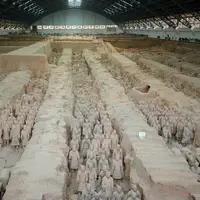
Terracotta Army 兵马俑
Thousands of life-size clay soldiers standing guard for China's first emperor
-
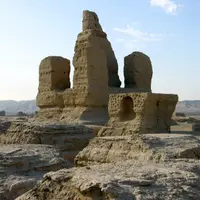
Turpan & Jiaohe Ruins 吐鲁番交河故城
A 2,000-year-old city carved out of a river island, in China's hottest basin
-
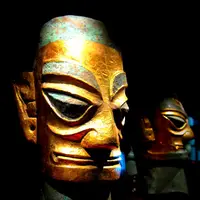
Sanxingdui Museum 三星堆博物馆
Goggle-eyed bronze masks and a towering bronze tree from a lost Bronze Age kingdom
-
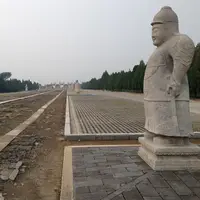
Eastern Qing Tombs 清东陵
Five Qing emperors in the hills, with underground palaces you can walk into
-
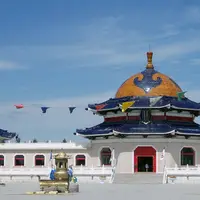
Mausoleum of Genghis Khan 成吉思汗陵
A 1950s memorial to the Khan, where hereditary Darkhad guardians still keep the rites
-
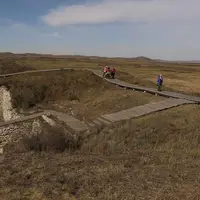
Shangdu (Xanadu) 元上都遗址
Kublai Khan's summer capital: Xanadu is now walls and palace mounds in open grassland
-
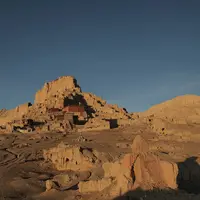
Tsaparang (Guge Kingdom Ruins) 古格王国遗址
A ruined mud-brick citadel and a 10th-century monastery in the badlands of the Sutlej
-
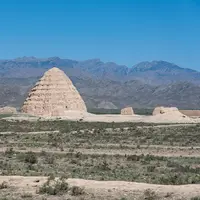
Western Xia Mausoleums 西夏陵
Earthen mounds of a vanished Tangut empire, beneath the Helan Mountains
-
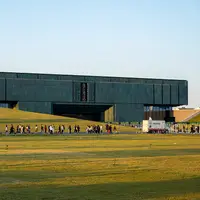
Yinxu 殷墟
The last Shang capital, where China's earliest writing and Fu Hao's tomb came to light
-
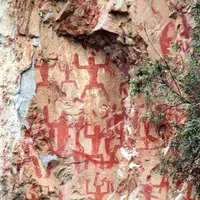
Zuojiang Huashan Rock Art 花山岩画
About 1,900 red figures painted on a sheer cliff above the Ming River
-
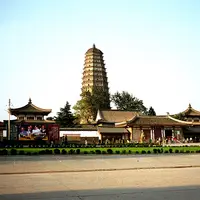
Famen Temple 法门寺
A Tang relic temple, the treasures of its sealed crypt and a 148-metre modern stupa
-
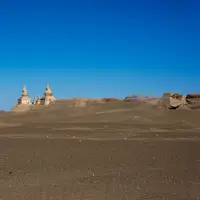
Khara-Khoto (Heicheng) 黑城遗址
A Silk Road fortress city of rammed earth, abandoned in the Gobi for 600 years
-
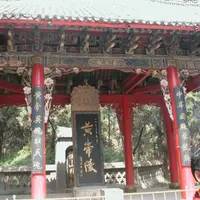
Mausoleum of the Yellow Emperor 黄帝陵
Ancient cypresses, an ancestral temple and the tomb mound of the legendary Yellow Emperor
-
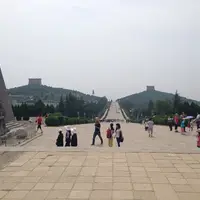
Qianling Mausoleum 乾陵
A spirit way of stone guardians climbing to the joint tomb of Gaozong and Wu Zetian
-
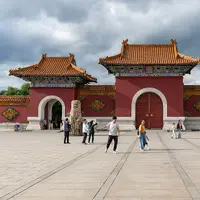
Shenyang Imperial Tombs: Zhaoling & Fuling 清昭陵与福陵
Two Qing founders' tombs in Shenyang parks, reached by stone-lined sacred ways
-
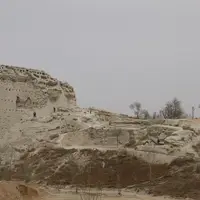
Tongwancheng Ruins 统万城遗址
Pale rammed-earth walls of a 5th-century Xiongnu capital at the edge of the Mu Us Desert
-
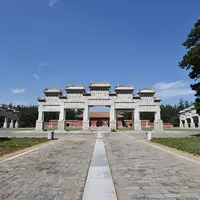
Western Qing Tombs 清西陵
Four emperors among old pines, and the last imperial tomb in China
-
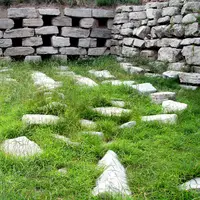
Ancient Linzi and the Qi Culture Museum 临淄齐国故城
Qi's capital: city ruins, a chariot-and-horse burial pit and cuju history
-
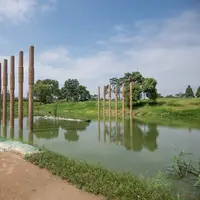
Archaeological Ruins of Liangzhu City 良渚古城遗址
China's 5,000-year-old walled city of jade and rice, now a World Heritage Site
-
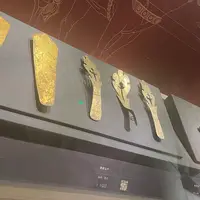
Haihun Marquisate Archaeological Park 海昏侯国遗址公园
A Han-dynasty marquis's tomb garden and a museum of gold, jade and bamboo slips
-
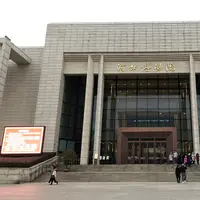
Hebei Museum 河北博物院
A gold-thread jade burial suit and the famous Changxin Palace lantern
-
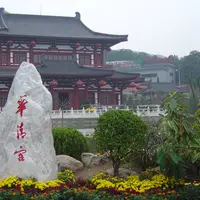
Huaqing Palace 华清宫
Hot springs at the foot of Mount Li where a Tang emperor wintered with Yang Guifei
-
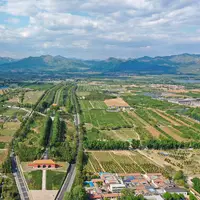
Ming Tombs 明十三陵
Stone guardians on the Sacred Way and an emperor's underground palace to walk through
-
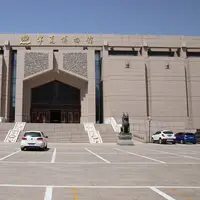
Ningxia Museum 宁夏回族自治区博物馆
Western Xia relics, Hui culture and rock art in one Yinchuan museum
-
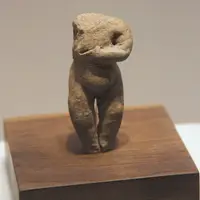
Niuheliang 牛河梁遗址
A 5,500-year-old Hongshan goddess temple, altar and stone tombs on a ridge
-
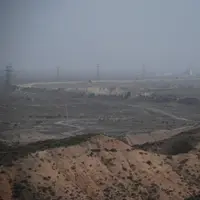
Shuidonggou 水洞沟
A Palaeolithic site beside a Ming Great Wall and a frontier fort
-
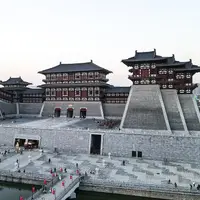
Sui–Tang Luoyang City Site (Yingtian Gate and Mingtang) 隋唐洛阳城
Where Wu Zetian ruled: a rebuilt Tang palace gate and the foundations of her halls
-
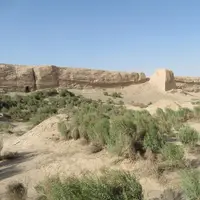
Suoyang City 锁阳城遗址
A ruined Tang garrison city of earthen walls in the Gobi, on the Silk Roads list
-
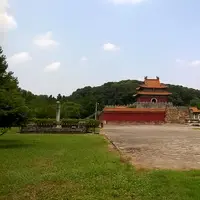
Xianling Tomb of the Ming Dynasty 明显陵
A Ming imperial tomb with a winding spirit way, a nine-bend stream and two burial mounds
-
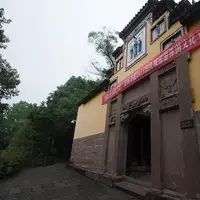
Diaoyu Fortress 钓鱼城
A Song hill fortress that held out against the Mongol armies for 36 years
-
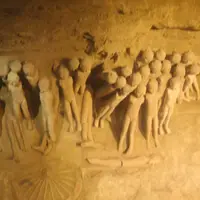
Han Yangling Mausoleum 汉阳陵
Walk on glass above burial pits full of armless clay figures at a Han emperor's tomb
-
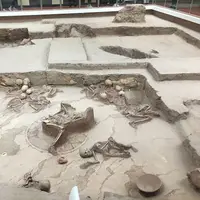
Lajia Archaeological Site 喇家遗址
A 4,000-year-old village frozen by disaster, and the oldest known noodles
-
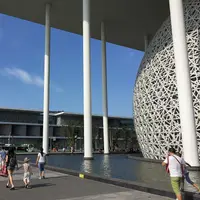
Liaoning Provincial Museum 辽宁省博物馆
Tang and Song court paintings, Hongshan jades and Liao ceramics under one roof
-
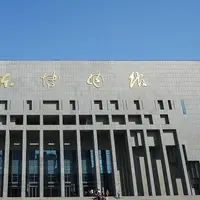
Shandong Museum 山东博物馆
The province's big museum: Confucius, Han reliefs, Buddhist statues and dinosaurs
-
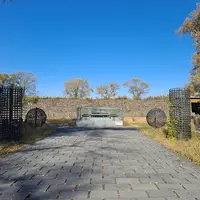
Shangjing Longquanfu 渤海国上京龙泉府遗址
The ruins of a Tang-style capital of the Bohai kingdom, laid out on the plan of Chang'an
-
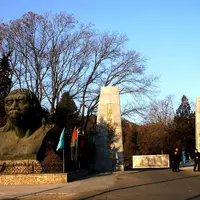
Zhoukoudian Peking Man Site 周口店北京人遗址
Limestone caves on Dragon Bone Hill where the fossils of Peking Man were found
-
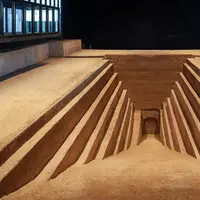
Cao Cao Mausoleum 曹操高陵
The excavated tomb of Cao Cao, now under a museum hall opened in 2023
-
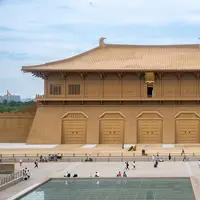
Daming Palace National Heritage Park 大明宫国家遗址公园
Earthen terraces and a rebuilt gatehouse marking out the lost palace of the Tang emperors
-
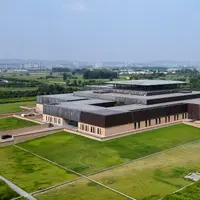
Erlitou Site Museum of the Xia Capital 二里头夏都遗址博物馆
Bronze Age finds from Erlitou, a candidate for China's earliest capital
-
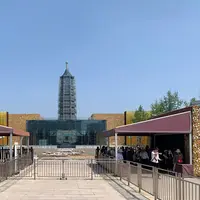
Great Bao'en Temple Heritage Park 大报恩寺遗址公园
The site of the lost Porcelain Tower, under a modern glass pagoda over the ruins
By region
Henan (67) · Xinjiang (46) · Shandong (39) · Shaanxi (35) · Hebei (33) · Inner Mongolia (32) · Zhejiang (31) · Shanxi (29) · Hubei (28) · Liaoning (22) · Jiangsu (22) · Jiangxi (20) · Hunan (18) · Anhui (17) · Sichuan (16) · Gansu (15) · Fujian (13) · Beijing (11) · Yunnan (10) · Ningxia (10) · Jilin (8) · Heilongjiang (8) · Shanghai (7) · Guangxi (7) · Qinghai (7) · Tibet (6) · Guizhou (5) · Taiwan (5) · Guangdong (4) · Hainan (4) · Chongqing (4) · Hong Kong (3) · Macau (2) · Tianjin (1)
Henan 67 places
- Yinxu 殷墟 5A scenic area · National heritage site · UNESCO World Heritage
The last Shang capital, where China's earliest writing and Fu Hao's tomb came to light - Sui–Tang Luoyang City Site (Yingtian Gate and Mingtang) 隋唐洛阳城 4A scenic area · National heritage site · UNESCO World Heritage
Where Wu Zetian ruled: a rebuilt Tang palace gate and the foundations of her halls - Cao Cao Mausoleum 曹操高陵 4A scenic area · National heritage site
The excavated tomb of Cao Cao, now under a museum hall opened in 2023 - Erlitou Site Museum of the Xia Capital 二里头夏都遗址博物馆 4A scenic area · National heritage site · First-grade museum
Bronze Age finds from Erlitou, a candidate for China's earliest capital - Ancient City of the Huang State 黄国故城 National heritage site · on the map
The capital of the Zhou-dynasty state of Huang, north-west of Huangchuan town: a rectangular enclosure of rammed-earth walls, still several metres high in places, with a moat outside the east wall. - Ancient City of the Jiang State 蒋国故城 National heritage site · on the map
The remains of a walled city at Qisi, linked by ancient texts to the Zhou-dynasty state of Jiang and later the Chu town of Qisi and a Han county seat. - Ancient City of the Yu State 邘国故城 National heritage site
The site of Yu, a walled town of the Western Zhou state granted to a son of King Wu, later a Han marquisate, south-east of Yutai village north of Qinyang. - Ancient City of Zhi 轵国故城 National heritage site · on the map
The walled town of Zhi, founded in the Spring and Autumn period and later the seat of Han and Northern dynasties lords, whose rammed-earth ramparts enclose the modern town of Zhicheng south of Jiyuan. - Cai State Capital Ruins 蔡国故城 National heritage site · on the map
The capital of the Zhou-dynasty state of Cai, first granted to King Wu's brother Shu Du and the seat of its rulers for about 500 years, around present-day Shangcai county town. - Cangjie Mausoleum, Nanle 仓颉陵 4A scenic area · National heritage site · on the map
A round earth mound 3 m high at Shiguan village, honoured as the grave of Cangjie, the legendary inventor of Chinese writing, with Ming-dynasty stone figures, lions, columns and a stone gateway in front and a Cangjie temple beside it. - Chengyang City Site Archaeological Park 城阳城址 4A scenic area · National heritage site · on the map
The site of Chengyang, an Eastern Zhou walled town that was a military stronghold of the state of Chu, surrounded by Chu tombs. - Dahecun Site and Museum 大河村遗址 National heritage site
A Neolithic settlement on the northern edge of Zhengzhou, lived in mainly during the Yangshao period and later in the Longshan, Erlitou and Shang periods, where excavations since 1972 have found house foundations, burials and much painted pottery. - Dahuting Han Tombs 打虎亭汉墓 National heritage site
Two large Eastern Han tombs under earth mounds at Dahuting village, Niudian town, west of Xinmi, attributed to Zhang Boya, a commandery governor, and his wife. - Dangyangyu Kiln Site 当阳峪窑址 National heritage site
The site of a large Song-period folk kiln at the southern edge of Dangyangyu village, known for its varied wares, especially white-slipped carved stoneware and marbled 'jiaotai' porcelain; examples are in the Palace Museum in Beijing. - Dongqiao Site (Leizu's Hometown) 董桥遗址 National heritage site · on the map
A Neolithic settlement site of about 48 ha at Dongqiao village, mainly of the Yangshao culture with later Longshan, Erlitou, Zhou and Han layers, which local tradition identifies with the Xiling clan of Leizu, the Yellow Emperor's consort credited with inventing silk-making. - Eastern Zhou Royal Horse and Chariot Museum 天子驾六博物馆 National heritage site
A museum opened in 2003 over excavated burials of the Eastern Zhou royal city, from which the Zhou kings ruled for some five centuries after 770 BC and whose remains lie under central Luoyang on both banks of the Jian River. - Forts of Liu Bang and Xiang Yu 汉霸二王城 National heritage site
The remains of two forts built facing each other across the Honggou ravine by Liu Bang and Xiang Yu in the Chu–Han war at the end of the Qin, a stand-off remembered as the origin of the river dividing the board in Chinese chess. - Fucheng Shang City Site 府城遗址 National heritage site · on the map
An early Shang walled town of about 3,600 years ago, a square of roughly 300 m a side on a terrace at Fucheng village on the western side of Jiaozuo. - Gongcheng City Site 共城城址 National heritage site · on the map
The site of Gong, the Zhou-period city whose ruler Gong Bo He is traditionally said to have governed during the Gonghe Regency that began in 841 BC, the first precisely dated year in Chinese history. - Gongling Mausoleum of the Tang 恭陵 National heritage site · on the map
The imperial-style tomb of Li Hong, fifth son of Emperor Gaozong and eldest son of Wu Zetian, on Hutuo ridge north-east of Goushi town. - Guchengzhai Walled Site 古城寨城址 National heritage site
A walled town of the late Neolithic Longshan culture in Guchengzhai village, Quliang town, east of Xinmi, whose rammed-earth walls still stand 5–16 m high on the south, north and east sides, with gaps marking two gates and traces of the moat. - Guo State Museum 虢国博物馆 4A scenic area · National heritage site
A museum built over the cemetery of the Western Zhou state of Guo on Shangcunling in northern Sanmenxia, where hundreds of burials, chariot pits and sacrificial pits were excavated from 1956 onwards. - Han Hangu Pass, Xin'an 汉函谷关 National heritage site · on the map
The Han-dynasty Hangu Pass on the road between Luoyang and Chang'an, distinct from the older Qin pass of the same name at Lingbao, and since 2014 a component of the Silk Roads World Heritage site. - Huayang Ancient City 华阳故城 National heritage site · on the map
A walled town of the Zhou period, said to have been the capital of the small state of Hua before it passed to Zheng and then Han; near it Qin defeated the allied Zhao and Wei armies in 273 BC. - Huiluo and Hanjia Granaries (Grand Canal) 回洛仓·含嘉仓遗址 National heritage site
Two walled state granaries founded in 605 under Emperor Yang of Sui to hold grain shipped to Luoyang along the Grand Canal, inscribed in 2014 as part of the Grand Canal World Heritage Site. - Jiahu Site and Museum 贾湖遗址 4A scenic area · National heritage site
The Neolithic settlement of Jiahu, lived in from about 9,000 to 7,500 years ago, yielded bone flutes made from the wing bones of red-crowned cranes that can still be played, along with signs carved on tortoise shells, early rice and traces of fermented drink. - Jing Ancient City 京城古城址 National heritage site
The walled town of Jing, the first capital of the state of Zheng after its move east and the fief of Duan, the rebellious brother of Duke Zhuang of Zheng in a famous episode of the Zuo Zhuan chronicle. - Jiudian Iron Works Site 酒店冶铁遗址 National heritage site · on the map
An ironworking site of the Warring States to Jin periods on both sides of the Tanshan reservoir south of Chushan town, linked in ancient texts with the famous Tangxi and Longquan swords. - Later Zhou Imperial Tombs 后周皇陵 National heritage site
The tombs of the rulers of the Later Zhou, the last of the Five Dynasties, near Guodian town: Songling of the founder Guo Wei, Qingling of Emperor Shizong (Chai Rong) and Shunling of the last emperor, Chai Zongxun. - Lingjing Xuchang Man Site 灵井“许昌人”遗址 National heritage site
The spring-side site where two skull caps of 'Xuchang Man', an archaic human who lived here roughly 100,000 to 130,000 years ago, were dug up in 2007 and 2014, together with stone and bone tools and animal fossils; the finds were published in Science in 2017. - Luoyang Ancient Tombs Museum 洛阳古墓博物馆 National heritage site · First-grade museum · on the map
The most accessible part of the Mangshan Tombs, the imperial and noble cemeteries of six dynasties spread over the loess hills north of Luoyang: a museum opened in 1987 and upgraded in 2022, where 25 excavated tombs from the Western Han to the Song and Jin have been moved and rebuilt underground. - Mausoleum of the Prince of Lu 潞王陵 4A scenic area · National heritage site
The tombs of Zhu Yiliu, Prince Jian of Lu and a younger brother of the Wanli Emperor, and of his secondary consort Zhao, laid out side by side on the southern slope of Fenghuang Mountain on the model of the emperor's own Dingling tomb near Beijing. - Mausoleum of Zhu Su, Prince Ding of Zhou 周定王陵 National heritage site
The hillside tomb of Zhu Su (1361–1425), fifth son of the founding Ming emperor, who as Prince of Zhou compiled the Jiuhuang bencao, a pioneering guide to wild plants that can be eaten in times of famine. - Miaodigou Archaeological Site Park and Museum 庙底沟考古遗址公园 4A scenic area · National heritage site · on the map
The site of a Neolithic village of the Yangshao culture's Miaodigou phase (about 4000–3500 BC), with a later Miaodigou II layer, excavated in 1956–57 ahead of the Sanmenxia Dam and again in 2002. - Nandun Ancient City Site 南顿故城 National heritage site · on the map
The site of Nandun, capital of the small state of Dun after it was pushed south by Chen, until Chu conquered it in 496 BC, with remains from the Xia and Shang to the end of the Han. - Northern Song Imperial Tombs 宋陵 National heritage site
The burial ground of the Northern Song emperors, spread over some 30 km² around Gongyi, where seven emperors and the father of the dynasty's founder lie with their empresses and hundreds of courtiers. - Old City of Luoyang (Han–Wei Luoyang) 汉魏洛阳故城 National heritage site
The ruins of the capital of the Eastern Han, Cao Wei, Western Jin and Northern Wei, about 15 km east of modern Luoyang, abandoned after the Sui built a new city to the west in 605; it is part of the Silk Roads World Heritage Site. - Pingliangtai Ancient City Site 平粮台古城遗址 National heritage site · on the map
A walled town of the Longshan culture, built more than 4,000 years ago, with square rammed-earth walls about 185 m along each side; it is described as the earliest square-planned town found in China. - Qicheng Ruins Park 戚城遗址 4A scenic area · National heritage site · on the map
A heritage park in Puyang city on the site of Qi, a Spring and Autumn town of the state of Wey where, according to the Chunqiu and Zuozhuan, the feudal lords met seven times; some place the death of Confucius's disciple Zilu here in 480 BC. - Qingliangsi Ru Kiln Site 清凉寺汝官窑遗址 National heritage site
The village site where archaeologists in 2000 confirmed the kilns of Ru ware, the rare duck-egg blue stoneware made for the Northern Song court around 1100, after surveys and excavations that began in 1987. - Sanyangzhuang 三杨庄遗址 National heritage site · on the map
A Han-dynasty farming village buried by a Yellow River flood about 2,000 years ago and found in 2003 while a Yellow River diversion channel was being dug at Sanyangzhuang. - Shamen City Site 沙门城址 National heritage site · on the map
The sand-covered remains of a walled town and ferry crossing on an old course of the Yellow River, known locally as Wuqi City, with layers from the Warring States and Han periods beneath Song and Jin–Yuan remains. - Shanling Mausoleum of Emperor Xian of Han 汉献帝禅陵 National heritage site
The tomb of Liu Xie, Emperor Xian, the last emperor of the Han dynasty, who abdicated in favour of Cao Pi in 220 and died in 234 as Duke of Shanyang; his empress Cao Jie, a daughter of Cao Cao, was buried with him in 260. - Shanyang Ancient City Site 山阳故城 National heritage site
The site of Shanyang, a walled town from the Eastern Zhou to the Northern Qi whose county became the fief of the deposed Emperor Xian of Han in 220. - Shi'erliancheng Eastern Zhou Walls 十二连城 National heritage site · on the map
Broken stretches of rammed-earth wall winding through the fields north-west of Laocheng in Changge, dated by archaeologists to the Eastern Zhou and thought to be a defensive long wall built by the state of Wei. - Shihao Section of the Xiaohan Ancient Road 崤函古道石壕段 National heritage site · on the map
A surviving stretch of the Xiaohan road, the ancient route between Chang'an and Luoyang through the Xiao Mountains and the Hangu pass, where a limestone road surface and roadside water-storage features can still be seen on the hillside. - Site of Ancient Xingyang and Guxing Ironworks Museum 荥阳故城 National heritage site · on the map
The ruins of the Han-dynasty city of Xingyang at Guxing town, north-west of Zhengzhou, a stronghold fought over by Liu Bang and Xiang Yu, whose rammed-earth walls still stand up to 20 m high on three sides. - Site of Dongjing, the Northern Song Capital 北宋东京城遗址 National heritage site
The remains of Dongjing, capital of the Northern Song from 960 to 1127, lie buried under modern Kaifeng beneath the silt of later Yellow River floods. - Song Mausoleums Quarry 宋陵采石场 National heritage site · on the map
The valley on the east side of Niuxin hill where stone was cut and roughed out for the Northern Song imperial tombs at Gongyi, about 25 km away. - Taihao Fuxi Mausoleum 太昊陵 5A scenic area · National heritage site
A vast temple-and-tomb complex to Fuxi (Taihao), the legendary first of China's Three Sovereigns, honoured here since at least the Tang and laid out in its present form by the Ming and Qing along an axis of about 750 m through nine courtyards and a succession of gates. - Tomb of Fan Zhongyan 范仲淹墓 National heritage site · on the map
The family cemetery of Fan Zhongyan (989–1052), the Northern Song statesman and writer, known locally as the Fan Garden; it is laid out in front and rear sections planted with cypresses, with the tombs of his mother and his sons near his own. - Tomb of Han Yu 韩愈墓 National heritage site
The tomb of Han Yu (768–824), the Tang essayist, poet and Confucian thinker counted first of the Eight Great Prose Masters of the Tang and Song, on a hillside at Hanzhuang village west of Mengzhou. - Tomb of Ouyang Xiu 欧阳修墓 National heritage site
The family cemetery of the Northern Song statesman, historian and essayist Ouyang Xiu, who died in 1072 and was buried here in 1075 with his wife, sons and grandsons nearby. - Tomb of Zhang Heng 张衡墓 National heritage site · on the map
The tomb of Zhang Heng (78–139), the Eastern Han astronomer, mathematician and poet who presented the first known seismoscope to the court in 132, at Shiqiao in his home district of Xi'e. - Wey State Capital Ruins 卫国故城 National heritage site · on the map
The rammed-earth walls of Zhaoge, capital of the Zhou state of Wey and traditionally also the last capital of the Shang, which enclosed a rectangular city around today's Qi County town until it was abandoned in the Western Han. - Xudu Han–Wei City Site 汉魏许都故城 National heritage site
The site of Xu, where Cao Cao brought the last Han emperor in 196 and where the court stayed until the Wei capital moved to Luoyang in the 220s. - Yangshao Village Site and Yangshao Culture Museum 仰韶村遗址 4A scenic area · National heritage site · on the map
The village where the Swedish geologist Johan Gunnar Andersson found Neolithic painted pottery in 1921, giving its name to the Yangshao culture; the site was settled roughly 7,000 to 6,000 years ago and also has Longshan remains. - Yanshi Shang City Site 偃师商城遗址 National heritage site · on the map
The walled city at Yanshi, found in 1983 and identified by many archaeologists as Xibo, an early capital of the Shang dynasty, was enclosed by three rings of rammed-earth walls around a palace city. - Yeyi Ancient City Ruins 叶邑故城 National heritage site · on the map
The remains of a walled town of the Spring and Autumn and Warring States periods at Jiuxian village, once a capital of the small state of Xu and the fief of Shen Zhuliang, Lord of She under the state of Chu. - Yiyang Ancient City of the State of Han 宜阳韩都故城 National heritage site · on the map
The walled city of Yiyang, a western stronghold of the Warring States kingdom of Han, unrelated to the later Han dynasty, which Qin troops captured in 307 BC; the city stayed in use into the early Han dynasty. - Youli City 羑里城 4A scenic area · National heritage site
The site north of Tangyin held by tradition to be Youli, where the last Shang king imprisoned Ji Chang, later King Wen of Zhou, who is said to have worked out the 64 hexagrams of the Book of Changes (Yijing) here. - Yuanling Ancient City 苑陵故城 National heritage site
The walls of Yuanling, a fortified town of the Zheng and Han states that became a county seat under the Qin in 230 BC and lost that status in the early Tang. - Yuzhou Jun Kiln Site Museum 禹州钧官窑址博物馆 4A scenic area · National heritage site
A museum on the Juntai kiln site in Yuzhou, source of the 'official' Jun wares made for the imperial court, whose date (late Northern Song or early Ming) is still debated; the kilns were found in 1964 and excavated from 1974. - Zhecheng Ancient City Site 柘城故城 National heritage site · on the map
The site of Zhecheng's county town from the Warring States period to the Ming, abandoned in the 16th century when Yellow River silt built up outside its walls and left the interior lower than the land around, so that it became a lake. - Zheng–Han Ancient City 郑韩故城 National heritage site
The capital of the state of Zheng in the Spring and Autumn period and then of the state of Han, whose irregular rammed-earth walls, about 19 km round, survive in long stretches in and around modern Xinzheng where the Shuangji and Huangshui rivers meet. - Zhengzhou Shang City 郑州商都古城 4A scenic area · National heritage site
The visitor area on the remains of Zhengzhou's early Shang-dynasty capital, a national heritage site whose rammed-earth inner wall ran for about 7 km round what is now the heart of the city. - Zhijidong Cave Site 织机洞遗址 National heritage site · on the map
A cave on the western slope of Dalu Mountain whose deposits, up to 24 m deep in 23 layers, yielded more than 6,500 stone artefacts and many animal fossils in excavations between 1990 and 1995, from the Palaeolithic to the Neolithic.
Xinjiang 46 places
- Turpan & Jiaohe Ruins 吐鲁番交河故城 4A scenic area · National heritage site · UNESCO World Heritage
A 2,000-year-old city carved out of a river island, in China's hottest basin - Adunqiaolu Site 阿敦乔鲁遗址 National heritage site · on the map
A national heritage site in the upper Bortala valley of Wenquan County, protected for its tombs set in stone enclosures and its groups of rock art, and named among China's top ten new archaeological discoveries. - Aibifu Aijiemu Mazar, Upper Artux 艾比甫·艾洁木麻扎 National heritage site · on the map
A domed shrine-tomb in Upper Artux, rebuilt between 1889 and 1899 by local merchant brothers on a site venerated since the Karakhanid period; local tradition says it honours a merchant from Persia who cancelled the villagers' debts. - Ancient Kucha City Ruins 龟兹故城 National heritage site · on the map
These are the remains of the walled capital of the ancient Kucha kingdom, identified as Yancheng of the Han dynasty and Yiluolu of the Tang, within today's Kuqa city. - Arixiate Stone-Figure Tombs 阿日夏特石人墓 National heritage site · on the map
Tombs of the Sui and Tang period on the Arixiate grasslands of Wenquan County, north-west of Harbuhu town and marked by standing carved stone figures, listed as a national heritage site in 2006. - Astana Cemetery 阿斯塔那古墓群 National heritage site
Astana was the main burial ground of the people of Gaochang from about the 4th to the 8th century, laid out in family plots on the gravel plain a few kilometres from the old city. - Baiyanggou Buddhist Temple Ruins 白杨沟佛寺遗址 National heritage site · on the map
These are the ruins of a large Tang-dynasty Buddhist monastery strung for more than 10 km along both banks of the Baiyang River west of Hami. - Beacon Towers of Changji 昌吉州境内烽燧群 National heritage site · on the map
A protected group of Tang to Qing beacon towers, Qing post stations and a stretch of Tang road along the northern route of the Silk Road through seven counties and county-level cities of Changji, from Manas in the west to Mori in the east. - Beiting Ancient City (Beshbalik) 北庭故城遗址 4A scenic area · National heritage site
The earthen ruins of Beiting (Beshbalik), seat of the Tang Beiting Protectorate and later the summer capital of the Uyghur kingdom of Qocho, which was the leading city on the northern side of the Tianshan for some 700 years until its destruction in the 15th century. - Chemurchek Stone Figures and Stone-Cist Tombs 切木尔切克石人及石棺墓群 National heritage site
A Bronze Age burial ground of the Chemurchek culture, of about 2700–1800 BC, spread over some 44 km² of steppe around Chemurchek town west of Altay city, with large stone-walled grave enclosures, cairns ringed with stones and stone cists. - Dahe Tang City Ruins, Barkol 大河古城 National heritage site · on the map
Dahe is a Tang-dynasty town site of two adjoining walled enclosures on the flat floor of the Barkol basin. - Dalete Ancient City Ruins 达勒特古城遗址 National heritage site · on the map
The ruins of a large walled town, probably the medieval city of Bolad (孛罗) on the Silk Road north of the Tian Shan, occupied from the Kara-Khanid period around the 9th century until it was abandoned in the 14th. - Damagou Buddhist Temple Ruins 达玛沟佛寺遗址 4A scenic area · National heritage site · on the map
A group of Buddhist temples of the Khotan kingdom found in 2000 in the scrub desert of Toplukdong, Damagou township, now shown in a heritage park. - Dorben Oirat Ancient City Ruins 道尔本厄鲁特森木古城遗址 National heritage site · on the map
The earthen ruins of a walled town built in the 1640s by the Dzungar Oirats, whose Mongolian name means 'temple of the Four Oirats', and which served for a time as a political, economic and religious centre of the Dzungars. - Gaochang Ruins 高昌故城 4A scenic area · National heritage site
Gaochang, also known as Qocho, was the leading city of the Turpan basin for some 1,400 years: capital of the Gaochang kingdom, a Tang county seat and then capital of the Uyghur Qocho kingdom, until war destroyed it in the 14th century. - Grassland Stone City and Tongtiandong Cave 草原石城 4A scenic area · National heritage site · on the map
A 59 km² stretch of the Saur Mountain foothills south-east of Jeminay where weathering has shaped the granite into rounded boulders, stacks, basins, hollows and caves rising out of grassland, with more than 200 kinds of wild flowers in spring and early summer. - Hami Kings' Mausoleum 哈密回王墓 4A scenic area · National heritage site · on the map
For more than two centuries Hami was ruled under the Qing by a line of nine local Uyghur princes, and their burial ground in the south of the city mixes Islamic, Chinese and Mongol architecture. - Jirzankal Cemetery 吉尔赞喀勒墓地 National heritage site · on the map
A cemetery of around 500 BC on terraces above the Tashkurgan River, where low round burial mounds lie beside long stripes of alternating black and white pebbles laid across the gravel ground. - Kangjiashimenzi Rock Carvings 康家石门子岩画 National heritage site · on the map
A Bronze Age rock-carving panel under an overhang of a south-facing red cliff in the danxia hills of south-western Hutubi County, with hundreds of carved human and animal figures. - Kesiletage Buddhist Temple Ruins 克斯勒塔格佛寺遗址 National heritage site · on the map
The ruins of a Kucha-style Buddhist monastery of the Northern Dynasties to Tang period, built in terraces up a bare hill near Kalpin, with a main hall, monks' rooms and a stupa base. - Kizilgaha Beacon Tower 克孜尔尕哈烽燧 4A scenic area · National heritage site · on the map
A Han-dynasty beacon tower of rammed earth laid in layers with reeds and branches, still about 16 m high, standing on gravel desert north-west of Kuqa. - Lafuqueke Ancient City Ruins 拉甫却克古城遗址 National heritage site · on the map
Lafuqueke is a Tang-dynasty walled town on the east bank of the Baiyang River at Wubao, split into northern and southern halves by flood erosion. - Liuzhong Ancient City Ruins 柳中古城遗址 National heritage site · on the map
Liuzhong, today's Lukqun, was a garrison town from the Eastern Han dynasty, when Ban Yong based his Western Regions headquarters here in AD 123, and later a Tang county seat. - Manas Ancient City Ruins 玛纳斯古城遗址 National heritage site · on the map
The earthen walls of a Tang-dynasty garrison town, locally called Pochengzi, on the plain north-east of Manas town; it is the westernmost Tang city site on the northern foot of the Tianshan and stayed in use until about the Western Liao or Yuan period. - Mausoleum of Sultan Vais Khan 速檀·歪思汗麻扎 National heritage site · on the map
The tomb of Vais Khan, a 15th-century ruler of the Eastern Chagatai Khanate (Moghulistan), on the north side of the Abrel hills in Yining County. - Miran 米兰古城 4A scenic area · National heritage site
The ruins of a Silk Road oasis town where the Lop desert meets the Altun Mountains, once part of the Shanshan (Loulan) kingdom, with a large rectangular fort built under Tibetan rule in the 8th–9th centuries, Buddhist temple and stupa ruins and traces of an ancient irrigation system. - Molana Arshidin Mazar 默拉纳额什丁麻扎 National heritage site · on the map
The shrine complex of Arshidin, the 14th-century Sufi teacher credited with bringing the Moghul khan Tughlugh Timur to Islam, lies between Kuqa's old and new towns. - Mor Buddhist Temple Ruins 莫尔寺遗址 National heritage site · on the map
The ruins of the largest known Buddhist monastery around Kashgar, where two mud-brick stupas, one round with a domed top and one stepped and square, still stand on a gravel terrace. - Niya ruins 尼雅遗址 National heritage site
The ruins of Jingjue (Cadota), an oasis kingdom on the southern Silk Road that flourished from the Western Han to the Western Jin, scattered along the dried lower course of the Niya River deep in the Taklamakan. - Nulasai Ancient Copper Mine 奴拉赛铜矿遗址 National heritage site · on the map
Remains of a copper mine and smelting site in the Nulasai ravine of the Abrel hills south of Nilka, dated by radiocarbon from mine timbers to about 2,400 years ago, around the early Warring States period. - Qing-dynasty Karun Sites of Ili 伊犁清代卡伦遗址 National heritage site · on the map
Sixteen surviving guard posts (karun, from the Manchu and Xibe word for a watch post) of the late Qing defence system around Ili, once manned by Manchu, Han and Xibe troops. - Rawak Stupa 热瓦克佛寺遗址 National heritage site
The ruins of a Buddhist temple of the ancient Khotan kingdom on the sandy edge of the Taklamakan north-east of Hotan, centred on a large domed stupa on a cross-shaped base inside a walled courtyard. - Sandaohaizi Stone Mounds and Deer Stones 三道海子 4A scenic area · National heritage site · on the map
A high basin of three lakes, Bianhaizi, Zhonghaizi and Huahaizi, at about 2,700 m on the Altai watershed near the Mongolian border, where summer pastures hold a Bronze Age landscape of giant stone mounds, tombs and deer stones. - Shikshin Temple 七个星佛寺遗址 4A scenic area · National heritage site
The largest Buddhist site of the ancient kingdom of Karasahr (Yanqi), founded in the Jin period and abandoned only when Islam reached the area around the 15th century. - Subashi Temple Ruins 苏巴什佛寺遗址 National heritage site
Subashi ('head of the water' in Uyghur), recorded in Chinese sources as the Zhaohuli monastery, was the largest Buddhist monastery of the Kucha kingdom in the Wei-Jin period, at the foot of the Qoltag hills north-east of Kuqa. - Taizang Pagoda Ruins 台藏塔遗址 National heritage site
Taizang Pagoda is the ruin of a large Buddhist temple-stupa from the Tang and Uyghur Qocho periods, a square mud-brick and rammed-earth mass that still rises in stepped tiers lined with niches, some with traces of paint. - Tangchaodun Ancient City 唐朝墩古城遗址 National heritage site · on the map
The ruins of Pulei, a county town founded under the Tang in 640 and used by the Uyghur kingdom of Qocho, the Western Liao and the Mongols until it was abandoned in the 15th century, now on the north-eastern edge of Qitai town. - Tomb of Mahmud al-Kashgari 麻赫穆德·喀什噶里墓 National heritage site · on the map
The tomb of Mahmud al-Kashgari, the 11th-century scholar who compiled the Dīwān Lughāt al-Turk, a dictionary of the Turkic languages, in Baghdad in the 1070s; local tradition holds that he was born at Opal and returned there to teach. - Tonggusibashi City Ruins 通古斯巴西城址 National heritage site · on the map
The walls of a Tang-dynasty town, about 250 by 230 m and up to 7 m high with bastions and corner towers, stand on the alluvial plain of the Weigan River in southern Xinhe County. - Tughlugh Timur Mausoleum 吐虎鲁克·铁木尔汗麻扎 National heritage site
The tomb of Tughlugh Timur, a descendant of Chinggis Khan's son Chagatai and the first Mongol khan in the region to adopt Islam, built between 1363 and 1369 north-east of Huocheng. - Wulabo Ancient City 乌拉泊古城 National heritage site · on the map
The oldest and best-preserved walled town in the Ürümqi area, a rammed-earth enclosure of about 25 hectares whose walls, 2–7 m high, keep bastions, barbicans at the gates and three inner compounds; scholars variously identify it with the Tang town of Luntai or earlier Han-era settlements. - Wushitu'er and Xiahetu'er Ruins 乌什吐尔和夏合吐尔遗址 National heritage site · on the map
Two ruined walled sites face each other across the mouth of the Weigan (Muzat) River just south of the Kumtura Caves, with remains mainly of the Wei-Jin to Tang periods. - Xiaohongnahai Stone Figure 小洪纳海石人墓 National heritage site · on the map
A warrior statue of reddish granite, about 1.8 m tall above ground, standing on a low earthen platform and carved for the tomb enclosure of a ruler of the Western Turkic Khaganate around 600 AD, most likely Nili Khagan. - Xiata Ancient City Ruins 夏塔古城遗址 National heritage site · on the map
Ruins of a walled town of the Tang to Yuan periods in Kuositobie village, Xiate township, on the approach to the Xiata ancient road over the Tianshan. - Yarkand Khanate Royal Tombs 叶尔羌汗国王陵 National heritage site
The burial ground of the khans of the Yarkand Khanate, which ruled from Yarkand in the 16th and 17th centuries, lying behind the Altyn Mosque in the old town. - Youyi Road Tombs, Kuqa 库车友谊路墓群 National heritage site · on the map
A cemetery of the Jin and Sixteen Kingdoms period (3rd–5th centuries) found in 2007 during building work on Youyi Road in Kuqa, where Han-style brick-chambered tombs matching those of the central plains and the Hexi Corridor in form were found for the first time in Xinjiang.
Shandong 39 places
- Ancient Linzi and the Qi Culture Museum 临淄齐国故城 4A scenic area · National heritage site · First-grade museum
Qi's capital: city ruins, a chariot-and-horse burial pit and cuju history - Shandong Museum 山东博物馆 First-grade museum
The province's big museum: Confucius, Han reliefs, Buddhist statues and dinosaurs - Ancient City of the Zhu State, Zoucheng 邾国故城 National heritage site · on the map
Remains of the capital of Zhu (later Zou), a small state of the Zhou period, which moved here in 614 BC and held the city for over three centuries. - Biyang Ancient City Site 偪阳故城 National heritage site · on the map
These are the earthen walls of Biyang, a small Zhou-period state that a coalition of rival states destroyed in 563 BC. - Chengziya Site 城子崖遗址 National heritage site
The type site of China's Longshan culture, where the black-pottery culture of some 4,000 years ago was first identified in 1928 and excavated in 1930 and 1931. - Chenzhuang–Tangkou Site and Gaoqing Western Zhou Museum 陈庄—唐口遗址 National heritage site · on the map
A small site museum at Chenzhuang village in Huagou town, Gaoqing, beside the Chenzhuang–Tangkou archaeological site, which is listed nationally with dates from the Western Zhou to the Warring States. - China Ancient Cart Museum 中国古车博物馆 4A scenic area · National heritage site
This museum on the east bank of the Zi River stands on the Neolithic Houli site, where a pit of buried Spring and Autumn period chariots and horses was uncovered in 1990 during construction of the Jinan–Qingdao expressway. - Dawenkou Site 大汶口遗址 National heritage site
The type site of the Neolithic Dawenkou culture, beside the Dawen River in Daiyue District. - Daxinzhuang Site 大辛庄遗址 National heritage site
A large Shang-period settlement on the north-eastern edge of Jinan that became an urban centre in the early 13th century BCE and grew into one of the biggest Shang sites outside the Central Plains. - Dongjiazhuang Han Pictorial Stone Tomb, Anqiu 安丘董家庄汉画像石墓 National heritage site · on the map
A large Eastern Han tomb built from 224 stone blocks, 103 of them carved, found in 1959 and later re-erected in Anqiu town. - Fushan Xihuang Temple Site 凫山羲皇庙遗址 National heritage site · on the map
The ruins of a large temple to Fuxi and Nüwa on the west slope of Fushan in Guoli town, first recorded on a stele of 931. - Han Family Cemetery, Shen County 韩氏家族墓地 National heritage site · on the map
This Tang-dynasty cemetery belongs to a family of military officials that included a governor of the Weibo region, and it preserves the stone figures that lined the tomb avenues: a carved horse, a groom, a warrior, a kneeling sheep and tiger, tomb markers and a spirit-way stele over 6 m tall topped with coiled dragons. - Jinan Museum 济南市博物馆 First-grade museum
Jinan's city museum, founded in 1958, has stood at the western foot of Qianfo Mountain since 1997. - Jining Museum 济宁市博物馆 First-grade museum · on the map
Jining's city museum opened a new building at the Jining Cultural Center in 2019, designed by the Swiss architect Mario Botta. - Juye Museum 巨野县博物馆 First-grade museum · on the map
Juye's county museum moved in 2018 from the old Confucian temple to a five-storey building beside the People's Square, with eight galleries. - Langyatai 琅琊台 4A scenic area · National heritage site
A coastal hill in the south of the West Coast New Area where, according to the Records of the Grand Historian, Qin Shi Huang stayed for three months in 219 BC and had a terrace built. - Linyi Museum 临沂市博物馆 First-grade museum · on the map
Linyi's city museum moved into its present building, designed to look like a stack of four books, in 2012. - Linzi Tombs (Eastern Zhou Horse Pit) 临淄墓群(东周殉马坑) National heritage site · on the map
The Linzi tombs are more than 150 aristocratic burials from the Zhou to Han dynasties scattered around the Qi capital, many of them marked by earth mounds. - Liucun Stone Tombs 留村石墓群 National heritage site · on the map
Liucun Stone Tombs are a group of Yuan-dynasty tombs faced in granite blocks, in fields west of Liucun village in Rongcheng's Ningjin sub-district, built for the Cheng family who moved here from Luoyang. - Longxing Temple Site, Qingzhou 青州龙兴寺遗址 National heritage site
Longxing Temple was a Buddhist temple in Qingzhou, founded in the Northern and Southern Dynasties period and later lost. - Lu State Ancient City Archaeological Park, Qufu 曲阜鲁国故城 National heritage site · on the map
The capital of the state of Lu for some 870 years from the early Western Zhou, the city covered about 10 sq km and occupied the eastern and northern parts of present-day Qufu. - Mausoleum of Shaohao 少昊陵 National heritage site
The tomb of Shaohao, one of the legendary Five Emperors, in Jiuxian village east of Qufu, a large earthen mound inside an enclosure of old trees with a sacrificial hall built in 1738. - Nanwang Hub of the Grand Canal 大运河南旺枢纽 National heritage site · on the map
Nanwang, in Wenshang County, is the summit of the Grand Canal, about 38.5 m above sea level, where Ming engineers in the Yongle years built a stone-faced diversion at the junction with the Xiaowen River so that its water could be shared between the northward and southward channels. - Old Capital of the Tan State, Tancheng 郯国故城 National heritage site · on the map
These are the remains of the capital of the small Zhou-period state of Tan, on the north side of Tancheng, which stayed a county and commandery seat from the Qin and Han to the Northern and Southern Dynasties. - Qingdao Mountain Fort and World War I Site Museum 青岛山炮台遗址展览馆 First-grade museum
Qingdao Mountain Fort was a German-built heavy battery of 1904–1907 with four 280 mm howitzers, whose underground bunker has three floors and more than 40 rooms and a 160-tonne armoured observation tower that can still be turned. - Shandong University Museum 山东大学博物馆 First-grade museum · on the map
The university museum opened in 1995 and has been in the Zhixin Building on the Central Campus since 2011. - Tengzhou Museum 滕州市博物馆 First-grade museum · on the map
Tengzhou's county museum opened a large Han-and-Tang-style building in 2020, covering the story of the area from the Beixin culture of around 5400 BC to the 1940s. - Tianshang Wangcheng (Royal City in the Sky) 天上王城 4A scenic area · National heritage site · on the map
Tianshang Wangcheng occupies the flat top of Jiwang Gu, a cliff-edged mesa of about 577 m with a ring of stone walls and old foundations from the Spring and Autumn period. - Tomb of Cao Zhi, Yushan 鱼山曹植风景区 4A scenic area · National heritage site · on the map
This scenic area on Yushan hill beside the Yellow River holds the tomb of Cao Zhi, the poet-prince of the Three Kingdoms period; it was begun in 233 AD, opened by archaeologists in 1951 and has had its chamber sealed since. - Tomb of Prince Huang of Lu, Zoucheng 明鲁王陵 4A scenic area · National heritage site · on the map
The tomb of Zhu Tan (1370–1390), tenth son of the Ming founder, the Hongwu Emperor, and the first Prince of Lu, at the southern foot of Jiulong Mountain. - Tomb of the Sultan of Sulu 苏禄王墓 National heritage site
In 1417 the Eastern King of Sulu, from an old Southeast Asian kingdom in what is now the Philippines, led a delegation of about 340 people to the Ming court and died at Dezhou on the way home, where he was buried; his wife and two sons were later laid beside him. - Tuqiao Lock Remains 土桥闸遗址 National heritage site · on the map
Tuqiao Lock is a Ming-dynasty canal lock, first built in 1471 on the Grand Canal and excavated in 2010–11 as the first lock on the canal to be fully uncovered. - Xiaocheng City Ruins, Guan County 萧城遗址 National heritage site · on the map
Xiaocheng is the earthen-walled site of a Song-period military town in Guan County, traditionally attributed to the Liao Empress Dowager Xiao in 1004; county officials call it the best-preserved Song–Liao fortress site south of the Great Wall. - Yantai Museum 烟台市博物馆 First-grade museum
Yantai's city museum, set up in 1958, has a modern building at the western end of Yantai Culture Square. - Yaowangcheng Site 尧王城遗址 National heritage site · on the map
Yaowangcheng is a settlement of the Longshan culture, among the largest known in Shandong, where excavations since 1934 have found triple city walls, house foundations, burials and sacrificial platforms, and more than 10,000 objects. - Yinan Han Tombs (Beizhai) 沂南北寨汉墓 National heritage site · on the map
A museum built over an Eastern Han tomb group at Beizhai village, near Yinan county town, which opened in 1996. - Zhangqiu District Museum 济南市章丘区博物馆 First-grade museum · on the map
The museum has been in the Zhangqiu Cultural and Museum Centre since January 2016 and holds more than 26,000 objects. - Zhongchenhao Kiln Site 中陈郝窑址 National heritage site · on the map
Zhongchenhao is a village in Zouwu town, Xuecheng District, where a long-running pottery kiln site is protected as a national heritage unit; the list dates the kilns from the Northern and Southern Dynasties to the Qing. - Zoucheng Museum 邹城博物馆 First-grade museum · on the map
The museum of Mencius' hometown has two floors devoted to Mencius, his ideas and his later influence, and more than 120,000 objects in all.
Shaanxi 35 places
- Terracotta Army 兵马俑 5A scenic area · National heritage site · First-grade museum · UNESCO World Heritage
Thousands of life-size clay soldiers standing guard for China's first emperor - Famen Temple 法门寺 5A scenic area · National heritage site · First-grade museum
A Tang relic temple, the treasures of its sealed crypt and a 148-metre modern stupa - Mausoleum of the Yellow Emperor 黄帝陵 5A scenic area · National heritage site
Ancient cypresses, an ancestral temple and the tomb mound of the legendary Yellow Emperor - Qianling Mausoleum 乾陵 5A scenic area · National heritage site
A spirit way of stone guardians climbing to the joint tomb of Gaozong and Wu Zetian - Tongwancheng Ruins 统万城遗址 4A scenic area · National heritage site
Pale rammed-earth walls of a 5th-century Xiongnu capital at the edge of the Mu Us Desert - Huaqing Palace 华清宫 5A scenic area · National heritage site
Hot springs at the foot of Mount Li where a Tang emperor wintered with Yang Guifei - Han Yangling Mausoleum 汉阳陵 4A scenic area · National heritage site · First-grade museum
Walk on glass above burial pits full of armless clay figures at a Han emperor's tomb - Daming Palace National Heritage Park 大明宫国家遗址公园 5A scenic area · National heritage site · UNESCO World Heritage
Earthen terraces and a rebuilt gatehouse marking out the lost palace of the Tang emperors - Banpo Museum 半坡博物馆 4A scenic area · National heritage site · First-grade museum
The excavated site of a Neolithic village of the Yangshao culture, lived in roughly 6,800 to 5,300 years ago, on the east bank of the Chan River in eastern Xi'an. - Beishouling Neolithic Site 北首岭遗址 National heritage site
A Neolithic village site of about 6 ha on a terrace on the west bank of the Jinling River in northern Baoji, occupied from about 5100 to 3790 BC. - Duling, Tomb of Emperor Xuan of Han 杜陵 National heritage site
The mausoleum of the Western Han emperor Xuan, begun in 65 BC on the plateau south-east of Xi'an and used for his burial in 48 BC: a flat-topped pyramid of rammed earth about 29 m high, with the smaller mound of Empress Wang some 575 m to the south-east. - Epang Palace 阿房宫遗址 National heritage site
The site of the palace that Qin Shi Huang began in 212 BC and never finished: what survives is the rammed-earth platform of its front hall, more than 1 km long, about 400 m deep and 7–9 m high. - Fenghao Site and Western Zhou Chariot Pits 丰镐遗址 National heritage site · on the map
The remains of Feng and Hao, the twin capitals of the Western Zhou dynasty on either bank of the Feng River until 771 BC, which now lie under farmland and villages south-west of Xi'an. - Han Chang'an City and Weiyang Palace Site 汉长安城未央宫遗址 National heritage site
The site of Chang'an, capital of the Western Han dynasty, whose walled city of about 36 km² lies on the north-western edge of modern Xi'an. - Lantian Man Site, Gongwangling 蓝田猿人遗址 National heritage site
At Gongwangling in Lantian County a partial skull of Homo erectus was recovered from the loess in 1964; known as Lantian Man, it was dated in 2015 to about 1.6 million years ago, which would make it the oldest firmly dated Homo erectus fossil in East Asia. - Liangdai Village Rui State Site Museum 梁带村芮国遗址博物馆 4A scenic area · National heritage site · on the map
The site museum of the cemetery of Rui, a small Zhou-dynasty state on the Yellow River conquered by Qin in the 7th century BC, where excavations from 2004 found more than 1,300 tombs and 64 chariot-and-horse pits. - Linzhou Ancient City (Yangjiacheng) 麟州故城 National heritage site · on the map
The earthen ruins of Linzhou, a frontier prefectural city of the Tang to Ming dynasties on Yangcheng Hill north of Shenmu, known locally as Yangjiacheng ('Yang family city') because the family of the Northern Song general Yang Ye held it. - Maoling 茂陵 4A scenic area · National heritage site
Maoling is the tomb of Emperor Wu of Han (157–87 BC), the largest of the Western Han imperial mausoleums, whose great flat-topped mound rises on the loess plateau between Xianyang and Xingping. - Palace of Nine Perfections (Jiucheng Palace) 九成宫 4A scenic area · National heritage site
Remains of a Sui and Tang summer palace in Linyou town: Emperor Wen of Sui built the Renshou Palace here in 593–595, Tang Taizong rebuilt it as the Jiucheng (Nine Perfections) Palace in 631, and a flood destroyed it in 836. - Qianling Museum (Princess Yongtai's Tomb) 乾陵博物馆 First-grade museum
The museum grew around the excavated tomb of Princess Yongtai, one of the satellite tombs of the Tang imperial mausoleum Qianling, and took its present name in 1978; the tomb's underground chamber was opened to visitors in 1963. - Qiaoling Mausoleum 桥陵 4A scenic area · National heritage site
The mausoleum of the Tang emperor Ruizong (Li Dan), whose burial chamber was cut into Feng Mountain north-west of Pucheng, with a walled precinct built around the hill. - Shahe Ancient Bridge Site 沙河古桥遗址 National heritage site · on the map
Remains of ancient bridges of the Qin and Han periods across the Sha River in Fengxi New City, which carried one of the main routes linking the capital Chang'an with the outside world. - Shimao 石峁遗址 4A scenic area · National heritage site
The ruins of a stone-walled city built around 2300 BC and abandoned around 1800 BC, the largest known walled settlement of China's late Neolithic, with inner and outer stone walls enclosing more than 400 ha around a terraced palace platform called Huangchengtai. - Shunling Mausoleum 顺陵 National heritage site · on the map
The tomb of Lady Yang (died 670), mother of Wu Zetian, which Wu raised to an imperial mausoleum and named Shunling in 690 after she proclaimed herself emperor. - Site of Qin Xianyang 秦咸阳城遗址 National heritage site
Remains of the palace district of Xianyang, capital of the state of Qin from 350 BC and of the First Emperor's empire until it was burned in 206 BC, on the terrace north of the Wei River. - Tailing Mausoleum 唐泰陵 National heritage site · on the map
The mausoleum of the Tang emperor Xuanzong (Li Longji), who chose the site himself and was buried here in 763 with Empress Yuanxian, its burial chamber cut into Jinsu Mountain north-east of Pucheng. - Tang Altar of Heaven (Tiantan Heritage Park) 唐天坛 National heritage site
This round earthen altar of four tiers, finished in white lime plaster and climbed by twelve evenly spaced stairways on each tier, is where the emperors of the Sui and Tang dynasties made sacrifices to Heaven south of their capital, Chang'an. - Tiebiancheng Ruins 铁边城遗址 National heritage site · on the map
The remains of a walled frontier town of the Northern Song period at Tiebiancheng in the far west of Wuqi County, listed as a national heritage site in 2013. - Tomb of Li Maozhen, Prince of Qin 大唐秦王陵 National heritage site · on the map
The tombs of Li Maozhen (856–924), a late-Tang warlord who ruled the state of Qi from Fengxiang and was made Prince of Qin in the year he died, and of his wife Lady Liu: two separate tombs in one precinct, excavated in 1999 and 2001. - Tomb of Zhang Qian 张骞墓 4A scenic area · National heritage site · on the map
The tomb of Zhang Qian, the Han envoy whose journeys to Central Asia in the 2nd century BC opened the routes later called the Silk Road, and since 2014 part of the UNESCO World Heritage site 'Silk Roads: the Routes Network of Chang'an-Tianshan Corridor'. - Tomb of Zhuge Liang 武侯墓 4A scenic area · National heritage site
The tomb of Zhuge Liang, chancellor of the Shu Han kingdom in the Three Kingdoms period, who asked to be buried below Mount Dingjun after he died on campaign in 234. - Yaozhou Kiln Museum 耀州窑博物馆 4A scenic area · National heritage site · on the map
The site museum of the Yaozhou kilns at Huangbao, which from the Tang to the Yuan made what is generally regarded as the finest northern celadon, prized in the Northern Song for its olive-green glaze over carved and later moulded decoration. - Yongcheng Site and Tomb of Duke Jing of Qin 秦雍城遗址 National heritage site · on the map
Yongcheng, in present-day Fengxiang, was the capital of the state of Qin for more than two centuries from 677 BC; its walled city, palace and temple sites and the cemetery of the Qin dukes lie mostly beneath farmland. - Zhao Mausoleum 昭陵 4A scenic area · National heritage site
Zhaoling, on Jiuzong Mountain in Liquan County, is the mausoleum of Emperor Taizong of Tang (died 649) and the largest of the Tang imperial tombs; begun in 636, it was the first Tang imperial tomb cut into a mountain, and its many satellite tombs hold princes, princesses and ministers such as Wei Zheng and Li Jing. - Zhouyuan Site and Baoji Zhouyuan Museum 周原遗址 National heritage site · on the map
The Zhouyuan plain at the foot of Mount Qi was the homeland and early capital of the Zhou people and remained a political and ritual centre through the Western Zhou; the site covers about 30 km² across Fufeng and Qishan counties.
Hebei 33 places
- Eastern Qing Tombs 清东陵 5A scenic area · National heritage site · UNESCO World Heritage
Five Qing emperors in the hills, with underground palaces you can walk into - Western Qing Tombs 清西陵 5A scenic area · National heritage site · UNESCO World Heritage
Four emperors among old pines, and the last imperial tomb in China - Hebei Museum 河北博物院 First-grade museum
A gold-thread jade burial suit and the famous Changxin Palace lantern - Banchangyu Brick Kiln Sites 板厂峪窑址群遗址 National heritage site · on the map
Remains of Ming kilns beside Banchangyu village, where bricks were fired for the Great Wall. - Cishan Site 磁山遗址 National heritage site · on the map
The type site of the Cishan culture, an early Neolithic farming culture, found in 1972 during irrigation work on the north bank of the Nanming river; its earliest layers have been dated to about 8,000 years ago. - Cixian Northern Dynasties Tombs 磁县北朝墓群 National heritage site · on the map
A cluster of 134 burial mounds of Eastern Wei and Northern Qi rulers, nobles and officials, spread over the countryside south and south-west of Cixian town; 19 have been excavated, among them the tombs of Gao Run, of a Rouran princess and of the Wanzhang village tomb numbered 106. - Cizhou Kiln Site 磁州窑遗址 National heritage site · on the map
The kilns around Pengcheng and Guantai made the white-slipped, black-painted stoneware known as Cizhou ware, from the late Northern Dynasties into the Republican period, and the site has been a national heritage unit since 1996. - Ding Kiln Site 定窑遗址 National heritage site · on the map
The main production site of Ding ware, the white porcelain of one of the Song dynasty's 'Five Great Kilns', on the edge of Jianci village. - Fuxi Terrace 伏羲台遗址 National heritage site
A three-tiered, irregularly octagonal rammed-earth terrace about 9 m high on the plain at Xinle, traditionally linked with the mythical ancestor Fuxi, with remains from the Neolithic to the Han dynasty in the ground around it. - Haifengzhen Ruins and Site Museum 海丰镇遗址 National heritage site · on the map
The site of Haifengzhen, a salt-trading port town of the Jin and Yuan dynasties, spread over about 228 hectares of farmland east of Huanghua and excavated since 2000. - Han Tombs in Xian County 献县汉墓群 National heritage site · on the map
A group of Han-dynasty burials east of Xian County town, the best known being the tomb of Liu De, Prince Xian of Hejian, a son of Emperor Jing remembered for reviving Confucian scholarship, with the tombs of later Han princes of Hejian nearby. - Handan Municipal Museum 邯郸市博物馆 First-grade museum · on the map
Handan's city museum, whose new building opened on 13 November 2020, replacing the former hall of 1968. - Huangdi City Ruins (Zhuolu Old City) 黄帝城遗址 4A scenic area · on the map
The remains of a rammed-earth walled town at Sanbao village, Fanshan town, which local tradition calls Huangdi City after the legendary Yellow Emperor. - Jingxing Kiln Site (Nanhengkou) 井陉窑遗址 National heritage site · on the map
The Jingxing kilns, founded in the Sui dynasty and at their height in the Song and Jin, were scattered through the mountains of Jingxing County, and the Nanhengkou site is the largest and best preserved of those found. - Jizhou Ancient City Ruins 冀州古城遗址 National heritage site · on the map
The surviving walls and moat of old Jizhou, a city that dates back to 201 BC, when it was founded under the name Xindu, on the south-western shore of Hengshui Lake. - Liulingzui Distillery Site, Xushui 刘伶醉烧锅遗址 4A scenic area · National heritage site · on the map
Liulingzui is a liquor distillery in Xushui whose old works preserve a distillery site of the Jin and Yuan dynasties: two rows of 16 fermentation pits that archaeologists say have been in continuous use ever since, and an underground 'wine sea' of Ming and Qing wooden and wicker storage vats. - Nanyang Site, Xiong'an 南阳遗址 National heritage site · on the map
Nanyang Site is a Warring States site in the Xiong'an New Area where archaeologists have found two city sites with south and west gates, connecting roads and tombs, along with finds in the style of the Yan culture. - Nihewan Archaeological Park 泥河湾遗址 4A scenic area · National heritage site
A basin in the Sanggan River valley where more than 80 early-human sites have been found, among them some of the oldest known traces of people in East Asia, with stone tools more than 1.5 million years old. - Qin Travelling Palace Site, Beidaihe 北戴河秦行宫遗址 National heritage site · on the map
Foundations of a Qin-dynasty palace at Jinshanzui on the Beidaihe shore, excavated from 1986 to 1991 over about 15,800 square metres and made up of four building groups and fourteen units. - Shuzhuanglou Yuan Tombs 梳妆楼元墓 National heritage site · on the map
A Mongol-era tomb group on the grassland east of Guyuan, named for its best-preserved tomb: a square brick tower about 9 m tall with a domed interior, long wrongly said to be the dressing tower of the Liao empress dowager Xiao. - Site of Damingfu Old City 大名府故城 National heritage site · on the map
The site of Daming Prefecture, which the Northern Song made its northern capital in 1042, centred on the villages of Dajie, Yuying and Shuangtai north-east of today's Daming. - Taizicheng Site (Jin Dynasty Palace) 太子城遗址 National heritage site · on the map
The site of a Jin-dynasty imperial summer palace, identified as the Taihe Palace of Emperor Zhangzong and occupied for about two decades from around 1190, excavated from 2017 when the 2022 Winter Olympic village was planned beside it; the Games plans were changed so that the site could be kept. - Tang Ancestors Mausoleum, Longyao 隆尧唐祖陵 National heritage site · on the map
Two joined tombs, the Jianchu and Qiyun mausolea, mark the burial place of two ancestors of Li Yuan, founder of the Tang dynasty, to whom he gave imperial titles after taking the throne in 618. - Tomb of Ji Xiaolan 纪晓岚墓地 National heritage site · on the map
The shared grave of Ji Yun (1724–1805), better known as Ji Xiaolan, the Qing scholar who was chief editor of the Siku Quanshu, and his wife; it is an earth mound with a stele granted by the Jiaqing Emperor. - Tomb of Prince Yi, Laishui 怡贤亲王墓 National heritage site · on the map
The tomb of Yinxiang, thirteenth son of the Kangxi Emperor, who was made Prince Yi under the Yongzheng Emperor, was built in 1730 beside Dongyingfang village in Laishui County. - Tomb of Zhang Rou 张柔墓 National heritage site · on the map
The family cemetery of Zhang Rou (1189–1268), a general who served the Jin and then the Yuan dynasty, laid out in 1269 on about 17 hectares in the countryside near Gangtou village. - Wangdu Han Tombs 望都汉墓 National heritage site · on the map
Two Eastern Han brick tombs about 30 metres apart on the east side of Wangdu town, whose chambers hold over 100 square metres of wall paintings showing officials, attendants and heavenly signs. - Xiabali Liao Tombs 下八里墓群 National heritage site · on the map
A cemetery of Liao-dynasty (916–1125) brick tombs in Xiabali village, north-west of Xuanhua, mostly the family graves of the Han Chinese Zhang clan, with more than ten tombs found since 1972. - Xingyao Kiln Site 邢窑遗址 4A scenic area · National heritage site · on the map
The site museum in Neiqiu county town protects 11 kiln furnaces uncovered in 2012 in a dig named one of China's ten major archaeological discoveries of that year, and visitors look down on them from an elevated walkway. - Ye City Site 邺城遗址 National heritage site · on the map
Ye was the capital of Cao Cao's Wei state and later of the Later Zhao, Ran Wei, Former Yan, Eastern Wei and Northern Qi, until it was burned in 580. - Yuan Zhongdu (Middle Capital of the Yuan) 元中都遗址 4A scenic area · National heritage site
The earthen remains of Yuan Zhongdu, the 'Middle Capital' that Emperor Wuzong began building on the grassland north of Zhangbei in 1307; work was halted in 1311 and the palace was burned in 1358 during the Red Turban uprising. - Zhao Royal City, Handan 赵邯郸故城 National heritage site
The remains of Handan, capital of the state of Zhao from 386 to 228 BC, in the south-west of the modern city, of which the visitable part is the Zhao Royal City, the palace quarter. - Zhongshan Ancient City Site 中山古城遗址 National heritage site · on the map
The remains of Lingshou, the later capital of Zhongshan, a Warring States kingdom founded by the Xianyu, a northern Di people, which lies mostly in Sanji township in Pingshan County.
Inner Mongolia 32 places
- Mausoleum of Genghis Khan 成吉思汗陵 5A scenic area · National heritage site
A 1950s memorial to the Khan, where hereditary Darkhad guardians still keep the rites - Shangdu (Xanadu) 元上都遗址 4A scenic area · National heritage site · UNESCO World Heritage
Kublai Khan's summer capital: Xanadu is now walls and palace mounds in open grassland - Khara-Khoto (Heicheng) 黑城遗址 4A scenic area · National heritage site
A Silk Road fortress city of rammed earth, abandoned in the Gobi for 600 years - Aolunsumu City Ruins 敖伦苏木城遗址 National heritage site · on the map
Aolunsumu, also written Olon Süme, is a ruined walled city in the steppe of Damao Banner, identified since the 1930s as a possible northern capital of the Ongud, a Turkic-speaking people allied to the Mongol rulers and prominent under the Yuan dynasty. - Baoshan and Hansumu Tombs 宝山、罕苏木墓群 National heritage site · on the map
Baoshan is an early Liao cemetery of Khitan nobles on a gentle slope, enclosed by earth walls about 200 m long on the east and west sides, with gates and barbicans on the east and south, and the tombs lie in three rows in the middle and northern part. - Bayanwula City Ruins 巴彦乌拉城址 National heritage site · on the map
The ramparts of a large square walled town of the Yuan period stand in open steppe in the south of the Ewenki Autonomous Banner. - Chaganhaote Ruins (White City) 查干浩特城址 National heritage site · on the map
Chaganhaote, or the White City, is the ruined capital that scholars identify with Ligdan Khan, the last Great Khan of the Mongols, and it is among the best-preserved earthen city sites in Inner Mongolia. - Chengchuan City Ruins 城川城址 National heritage site · on the map
Chengchuan City Ruins are the remains of a walled city north-east of Chengchuan town, which the Otog Front Banner government identifies as Jianing in Youzhou, a prefecture set up in 738 to settle Turkic and Sogdian groups from the Six Hu Prefectures. - Chengzishan Site 城子山遗址 National heritage site · on the map
Chengzishan is a hilltop site of the Lower Xiajiadian culture, about 4,000 years old, whose central area on the summit covers about 150,000 square metres. - Dayao Site 大窑遗址 National heritage site · on the map
Dayao is a Palaeolithic stone-tool workshop on the south hill above Dayao village, found in 1973, where people quarried flint and made tools from roughly 500,000 to 10,000 years ago; it gave its name to the Dayao culture. - Erdaojingzi Site and Museum 二道井子遗址 National heritage site · on the map
Erdaojingzi is a settlement of the Lower Xiajiadian culture, about 4,000 years old, found in 2009 during construction of the Chifeng–Chaoyang expressway and named one of China's top ten archaeological discoveries of that year. - Gaxian Cave and Tuoba Xianbei Park 嘎仙洞 4A scenic area · National heritage site · on the map
Gaxian Cave is a granite cave in the forests of the northern Greater Khingan range whose west wall carries a 201-character inscription cut in 443 on the orders of the Northern Wei emperor Tuoba Tao, recording a prayer at the Tuoba Xianbei ancestral home; archaeologists identified it in 1980. - Hamin Archaeological Site Park 哈民考古遗址公园 4A scenic area · National heritage site · on the map
Hamin Archaeological Site Park protects a Neolithic village of semi-subterranean houses, dated to about 5,500 to 5,000 years ago, found in the Horqin sandy ground in 2010 after looters disturbed it. - Han Kuangsi Family Cemetery 韩匡嗣家族墓地 National heritage site · on the map
The cemetery of Han Kuangsi, a Liao-dynasty official, and his family lies on the south slope of Baiyinhan Mountain in Bairin Left Banner. - Haotetaohai City Ruins 浩特陶海城址 National heritage site · on the map
The earthen ramparts of a rectangular walled town of the Liao period stand on open grassland at the edge of a village in Chen Barag Banner. - Heicheng Han City Site 黑城城址 National heritage site · on the map
Heicheng is the site of a walled city of the Han dynasty beside Heicheng village in Youbeiping town, identified in Chinese sources as Pinggang, the Western Han seat of Youbeiping commandery. - Heishantou City Ruins 黑山头城址 National heritage site · on the map
The earthen ramparts of a walled town of the Jin and Yuan periods survive on a terrace in the grassland near Heishantou, a large enclosure with a smaller walled compound at its centre. - Hongshan Sites 红山遗址群 National heritage site · on the map
Hongshan, a reddish hill on the north-east edge of Chifeng that gave the city its name, is the type site of the Hongshan culture (about 4700 to 2900 BC), first recorded there in 1908 by the Japanese archaeologist Torii Ryūzō. - Hulunbuir Museum 呼伦贝尔博物院 First-grade museum · on the map
The Hulunbuir Museum is a group of museums in Hailar: a history museum, a nationalities museum and a natural-history museum, with a museum of Mongol origins under construction. - Kelimeng City Site 克里孟城址 National heritage site · on the map
Kelimeng is the site of a walled town occupied from the Han dynasty to the Northern and Southern Dynasties, in Chahar Right Rear Banner. - Liao Middle Capital (Zhongjing) Site 辽中京遗址 National heritage site · on the map
Zhongjing was the Middle Capital of the Liao dynasty, walled in 1007 and laid out in three nested enclosures on the model of the Northern Song capital Kaifeng. - Liao Shangjing Site 辽上京遗址 National heritage site
Shangjing, founded in 918, was the first capital of the Khitan-built Liao dynasty, and its ruins beside the Shali River form a national archaeological site park. - Machi Ancient City and Zhaowan Tombs 麻池城址和召湾墓群 National heritage site · on the map
Machi is the site of Jiuyuan, a frontier city founded by the state of Zhao in the Warring States period and kept as the seat of Jiuyuan Commandery under the Qin and of Wuyuan Commandery under the Han. - Nanbaoligaotu Site 南宝力皋吐遗址 National heritage site · on the map
Nanbaoligaotu is a late Neolithic settlement and cemetery in Jarud Banner, dated to about 4,500 to 5,000 years ago. - Qin Great Wall, Guyang 固阳秦长城遗址 National heritage site · on the map
This stretch of the Great Wall was built under the First Emperor of Qin more than 2,200 years ago and runs for about 120 km through the hills of Guyang County, north of Baotou, as a defence against the Xiongnu. - Salawusu Site 萨拉乌苏遗址 4A scenic area · National heritage site · on the map
Salawusu is a Palaeolithic site along a 39 km canyon of the Salawusu River in the Mu Us Sandy Land, where Émile Licent found fossils in 1922 and excavated with Pierre Teilhard de Chardin in 1923; a human tooth from the finds became the emblem of 'Hetao Man'. - Shajing Zongguanfu City Site 砂井路总管府故城 National heritage site · on the map
The Shajing city site is the ruin of the Yuan-dynasty seat of the Shajing zongguanfu, an administrative unit set up in 1316 in the lands of the Ongud people, north of the Jingzhou circuit. - Tuchengzi Archaeological Park (Shengle Ancient City) 土城子考古遗址公园 4A scenic area · National heritage site · on the map
Tuchengzi is regarded as the largest ancient city site on the north bank of the Yellow River's great bend, a walled city used from the Spring and Autumn period to the Yuan dynasty and identified with Shengle, the first capital of the Northern Wei. - Wu'anzhou Site and White Pagoda 武安州遗址 National heritage site · on the map
A Liao-dynasty brick pagoda stands on a rise at the west edge of Baitazi village and is the standing monument of the Wu'anzhou site, a town of the Liao, Jin and Yuan periods that was listed nationally in 2013. - Zhaizigedan Site 寨子圪旦遗址 National heritage site · on the map
A Neolithic stone-walled settlement on a hilltop above the Yellow River in Jungar Banner, dating to about 5,000 years ago, between the Yangshao and Longshan cultures. - Zhang Yingrui Family Cemetery 张应瑞家族墓地 National heritage site · on the map
Zhang Yingrui was a Yuan-dynasty official who served the Khongirad princes, and his family cemetery lies at Guogongfu village in Wutonghua town.
Zhejiang 31 places
- Archaeological Ruins of Liangzhu City 良渚古城遗址 4A scenic area · National heritage site · First-grade museum · UNESCO World Heritage
China's 5,000-year-old walled city of jade and rice, now a World Heritage Site - Anji Ancient City Site 安吉古城遗址 National heritage site · on the map
The square earthen enclosure of an ancient walled town at Gucheng village, north of Anji, occupied from the Spring and Autumn period to the Southern Dynasties and identified with Guzhang, where the Qin later based its Zhang commandery; its rammed-earth walls still rise above the fields. - Caowanshan Site Museum 曹湾山遗址 National heritage site · on the map
A Neolithic hilltop settlement on Caowan Hill in Tengqiao town, more than 4,000 years old and belonging to the Haochuan culture, with a living area of stone footings and a cemetery of 35 graves. - Dayao Longquan Kiln Sites 大窑龙泉窑遗址 National heritage site · on the map
The heartland of Longquan celadon, where 126 kiln sites lie in a 5.2 km² protected area around Dayao village. - Deqing Proto-porcelain Kiln Sites 德清原始瓷窑址 National heritage site · on the map
The low hills around Longsheng and Longshan villages, north-east of Deqing's county town, hold kiln sites that fired proto-porcelain from the Shang to the Warring States period, an early centre of Chinese porcelain-making named one of China's six major archaeological discoveries of 2010. - Fenghuangshan Kiln Sites 凤凰山窑址群 National heritage site · on the map
A group of kilns on the hill slopes behind Dashan village in Shangpu, Shangyu, which fired early celadon for daily use and for burials during only fifty or sixty years, from the late Three Kingdoms to the end of the Western Jin in the third and early fourth centuries. - Haochuan Site 好川遗址 National heritage site · on the map
A late Neolithic cemetery of about 4,300 to 3,700 years ago on a low hilltop in Haochuan village, where 80 graves were excavated, the richer burials at the centre and poorer ones on the slopes. - Hemudu Site and Museum 河姆渡遗址 National heritage site
The type site of the Hemudu culture, a Neolithic rice-growing culture of about 5000–3000 BC, found in 1973 on the north bank of the Yao River; its waterlogged layers preserved timber pile-houses joined with mortise and tenon, cultivated rice, black pottery and carved ivory. - Hua'ao Barracks Site 花岙兵营遗址 National heritage site
Dry-stone army camps built from 1646 on remote Hua'ao Island by the Ming loyalist commanders Zhang Huangyan and Zhang Mingzhen during their resistance to the Qing, the best preserved of their island bases. - Jiaxing Museum 嘉兴博物馆 First-grade museum
Jiaxing's city museum, begun in 1958 and in its present 22,000 m² building since October 2003, was graded a national first-grade museum in 2024. - Laohuling Dam Site Park 老虎岭遗址公园 National heritage site · on the map
A small site park at one of the high dams of the Liangzhu water-control system, built about 5,000 years ago in the hills north-west of the Liangzhu ancient city and part of the same World Heritage Site. - Luojiajiao Site Park 罗家角遗址 National heritage site · on the map
An early Majiabang-culture settlement of about 12 ha beside the old course of the Grand Canal at Shimen, where excavations in 1979–80 found four Neolithic layers and 794 objects, with charred reeds dated to about 7,000 years ago. - Majiabang Site and Museum 马家浜遗址 National heritage site · on the map
The site, found in 1959 where three streams meet south-west of Jiaxing, gave its name to the Majiabang culture, the Neolithic farming culture of the plain north of Hangzhou Bay; the settlement here dates from about 6000 to 5500 years ago and yielded over thirty burials, a house and pottery, stone, jade and bone objects. - Mausoleum of Yu the Great 大禹陵 4A scenic area · National heritage site
The traditional burial place of Yu the Great, the legendary tamer of floods and founder of the Xia dynasty, at the foot of Kuaiji Mountain south-east of Shaoxing. - Qianshanyang Site 钱山漾遗址 National heritage site · on the map
A late Neolithic village site on the east bank of the former Qianshanyang lake, south-east of Huzhou, where excavations in the 1950s found fragments of silk fabric, silk thread and ribbon some 4,700 years old, among the oldest silk textiles known; in 2014 its remains were defined as a distinct Qianshanyang culture. - Shanglin Lake Yue Kilns 上林湖越窑遗址 National heritage site
Nearly 200 kiln sites around Shanglin Lake and its neighbouring lakes made Yue ware celadon from the Eastern Han to the Southern Song, and the Housi'ao kiln, excavated in 2015–2017, is thought to have produced the 'secret-colour' celadon found at Famen Temple. - Shangshan Archaeological Site Park 上山遗址 National heritage site
The site in Huangzhai town, Pujiang, that gave its name to the Shangshan culture, a group of early Neolithic settlements in the Jinhua–Quzhou basin about 10,000 years old. - Shaoxing Museum 绍兴博物馆 First-grade museum
Shaoxing's main museum opened in 1993 and now occupies a building at the southern foot of Fu Hill whose form is based on a bronze model house found at Shaoxing. - Southern Song Capital Lin'an & Deshou Palace Museum 临安城遗址 National heritage site
Remains of Lin'an, capital of the Southern Song from 1138 to 1276, lie buried beneath central Hangzhou, the palace area on Phoenix Hill more than 3 m down, with an imperial street that ran north through the city. - Southern Song Guan Kiln Museum 南宋官窑博物馆 National heritage site · on the map
A ceramics museum opened in 1992 over the Jiaotanxia kiln site at the southern foot of Yuhuang Hill, where the Southern Song court made its official 'Guan' ware. - Tashan Neolithic Site 塔山遗址 National heritage site
A hillside settlement and cemetery in Xiangshan's county town, occupied from about 4000 to 500 BC, where excavations in 1990, 1993 and 2007–2008 found more than 60 Neolithic burials with pottery and jade. - Tianluoshan Site 田螺山遗址 National heritage site
A Hemudu-culture village site at Xiang'ao village in Sanqishi, inhabited about 7,000 to 5,500 years ago, found in 2001 and excavated from 2004, whose waterlogged layers kept timber pile-house remains, the layout of a village, rice, food remains and what are thought to be the roots of cultivated tea plants. - Tomb of Qian Liu (Wuyue Royal Mausoleums) 钱王陵 National heritage site · on the map
The tomb of Qian Liu (852–932), founder of the Wuyue kingdom that ruled Hangzhou and the lower Yangtze in the tenth century, on the southern slope of Taimiao Hill in Lin'an: an earth mound 9 m high and about 50 m square in a memorial park with a spirit way, gate towers, an archway and the Qian Wang Shrine. - Tomb of Wu Zhen and Plum Blossom Hermitage 吴镇墓 National heritage site · on the map
The tomb of Wu Zhen (1280–1354), one of the Four Masters of Yuan painting, best known for landscapes, bamboo and pictures of fishermen, lies on a spot he chose himself in his home town of Weitang. - Tomb of Yu Qian 于谦墓 National heritage site
The tomb of Yu Qian (1398–1457), the Ming minister of war who led the defence of Beijing after the emperor was captured by the Mongols in the Tumu crisis, and who was executed when that emperor regained the throne. - Tomb of Zhao Mengfu 赵孟頫墓 National heritage site
The joint tomb of Zhao Mengfu (1254–1322), the leading painter and calligrapher of the Yuan dynasty, and his wife Guan Daosheng, herself a noted painter, on a hillside at Dongheng village in Luoshe, northern Deqing. - Xiagucheng Ancient City Site 下菰城遗址 National heritage site · on the map
The rammed-earth ramparts of Gucheng, regarded as the forerunner of Huzhou: the Chu lord Chunshen made it the seat of Gucheng county in the late Warring States, and under the Qin it was the seat of Wucheng county until the town moved north to the present city site. - Xianghu Lake and Kuahuqiao Site Museum 湘湖·跨湖桥 4A scenic area · National heritage site · First-grade museum
A lake in Xiaoshan south of the Qiantang River, first dammed as an irrigation reservoir in 1112 and later largely filled in by brickworks, which was dredged and landscaped in stages between 2006 and 2016 as a lakeside park and resort area. - Yinshan Royal Tomb of Yue 印山越国王陵 National heritage site
The tomb of a king of the Spring and Autumn state of Yue, possibly Yunchang, father of King Goujian, cut into the top of Yin hill and ringed by a moat; excavated in 1996–98 after tomb robbers struck, it was the first Yue royal tomb found in China. - Yongfeng Warehouse Site 永丰库遗址 National heritage site
The site of a large state warehouse used from the Southern Song to the Ming, best known as the Yongfeng storehouse of the Yuan dynasty, excavated in 2001–2002 beside the Drum Tower. - Yunhe Silver Mine Site 云和银矿遗址 National heritage site · on the map
Remains of the Ming-dynasty silver mines whose working helped prompt the founding of Yunhe county in 1452, centred on Huangjiashe, a village at about 980 m reached through the Yunhe terraces.
Shanxi 29 places
- Dingcun 丁村 National heritage site · on the map
Dingcun is a village on the east bank of the Fen River whose Ming and Qing courtyard houses are run as a folk museum, with more than 30 courtyards; the earliest dates from 1593. - Donglongguan Tombs 东龙观墓群 National heritage site · on the map
A cemetery of Song and Jin dynasty tombs at Donglongguan village in Yangcheng town, about 300 m long, where 27 tombs were excavated in 2008 ahead of road building: 16 with brick chambers and 11 cut into the earth, in hexagonal, octagonal and square plans. - Guangwu Han Tombs 广武汉墓群 National heritage site · on the map
A large Han-dynasty cemetery on open ground north of the villages of Old and New Guangwu, where several hundred earth burial mounds still stand above ground. - Guchengbao Han Tombs 古城堡墓群 National heritage site · on the map
A cemetery of 58 Han-dynasty mounds scattered over about 19 km² around Gucheng town in Yanggao County, the mounds about 4–6 m high and still well preserved. - Houma Jin Capital Site 侯马晋国遗址 National heritage site · on the map
The remains of Xintian, the capital of the state of Jin from 585 BCE, lie where the Fen and Kuai rivers meet at Houma and include walled-town sites, ancestral-temple foundations, bronze-foundry and sacrificial areas and cemeteries. - Jin Museum (Qucun–Tianma Site) 晋国博物馆 4A scenic area · National heritage site · on the map
A site museum on the Qucun–Tianma site, where archaeologists found the early capital and royal cemetery of the Western Zhou state of Jin, in use between about 1000 and 800 BC. - Jinyang Ancient City Site 晋阳古城遗址 National heritage site · on the map
The site of Jinyang, a walled city founded in the late Spring and Autumn period that later became a northern capital under the Tang and the Five Dynasties, until Song forces burned and flooded it in 979. - Linfen Museum 临汾博物馆 First-grade museum · on the map
Linfen's main city museum moved into a large new building in September 2018; its rounded form is meant to echo the Taosi observatory. - Longshan Grottoes and Tongzi Temple Site 龙山石窟·童子寺遗址 National heritage site
A small group of nine Taoist cave shrines on the summit of Mount Long, most of them cut from 1234 under the Quanzhen priest Song Defang, with Yuan-dynasty figures of the Three Pure Ones and the Seven Perfected. - Loufan Ancient City Ruins 娄烦古城遗址 National heritage site · on the map
The earthen ruins of a walled city of the Loufan people, a northern herding state of the Spring and Autumn and Warring States periods that was conquered by the state of Zhao under King Wuling. - Macun Brick-carved Tombs 马村砖雕墓 National heritage site · on the map
A family cemetery of the Duan clan dating from 1118 to 1181, under the Song and Jin, of which nine of the fourteen tombs have been excavated. - Nancun City Site (Zuoguocheng) 南村城址 National heritage site · on the map
The ruins of a walled hill city on the ridge east of Nancun village in Yukou town, identified by the county government as Zuoguocheng, the base of the Xiongnu leader Liu Yuan, and dated by the national list from the Warring States period to the Jin dynasty. - Pingcheng Site (Northern Wei capital) 平城遗址 National heritage site · on the map
Pingcheng was the capital of the Northern Wei dynasty from 398 to 494, and almost all of it now lies under modern Datong. - Pujin Ferry and Puzhou Ancient City 蒲津渡与蒲州故城 National heritage site · on the map
The site of the ancient Pujin crossing of the Yellow River, where the Tang rebuilt a pontoon bridge in 724 and anchored it with iron oxen on both banks. - Quhui Temple Stone Sculptures 曲回寺石像冢 National heritage site · on the map
A mound-like heap of stone blocks beside the ruined Quhui Temple, carved with Buddha figures in the style of the late Tang and partly covered by sand and gravel, in the village of Quhuisi on the Duyu river. - Shaliangpo Han Tombs 沙梁坡墓群 National heritage site · on the map
A cemetery of Han-dynasty frontier garrison soldiers on the slopes south of Tianzhen, known locally as Huangliangdui. - Shitie Tombs 什贴墓群 National heritage site · on the map
A group of six earth-mounded tombs of the Northern Qi grand marshal Han Gui and his family, listed as a national heritage unit. - Taosi 陶寺遗址 National heritage site · on the map
Taosi is the site of a walled town of the Longshan period (about 2300 to 1900 BC), where excavations found a rammed-earth enclosure of about 280 hectares, palace foundations, a large elite cemetery and an observatory platform. - Tomb of Li Yumei 栗毓美墓 National heritage site
The walled tomb park of Li Yumei (1778–1840), a Hunyuan-born Qing river-control official remembered for his brick-dam method of flood protection, built by imperial order after his death. - Western Zhou Tombs of the Marquises of Li 西周黎侯墓群 National heritage site · on the map
The cemetery of the marquises of Li, a small Zhou-period state in the Licheng area, lies beside Tapo Reservoir at Xiguan village; the national list dates the tombs from the Western Zhou to the Spring and Autumn period. - Xihoudu 西侯度遗址 National heritage site · on the map
A Palaeolithic site on a terrace above a bend of the Yellow River, found in 1959 and excavated in 1961, 1962 and 2005, which produced stone tools, fossils of 22 vertebrate species and burnt animal bones that are taken as China's earliest evidence of human use of fire. - Xu Xianxiu Tomb and Northern Qi Fresco Museum 徐显秀墓 National heritage site · on the map
A museum built over the Northern Qi tomb of Xu Xianxiu, a senior Northern Qi minister and prince whose 326 sq m of wall paintings were uncovered in 2000–02 and named among China's ten major archaeological finds of 2002. - Yandi Mausoleum, Gaoping 炎帝陵 4A scenic area · on the map
The Yandi Mausoleum at Zhuangli village is one of four places in China that hold a tomb of Yandi, the legendary Emperor Yan or Shennong, remembered as the teacher of farming and herbal medicine. - Yao Mausoleum 尧帝陵 4A scenic area · National heritage site · on the map
The tomb of Yao, one of the legendary Five Emperors, stands in the hills east of Linfen on the north bank of the Lao River. - Yellow River Plank Road Remains, Pinglu 黄河栈道遗址 National heritage site · on the map
A cliffside plank road and towpath ran along the north bank of the Yellow River in Pinglu County between Sanmen township and Laoyashi and was in use from the Han to the Qing dynasties; remains survive in more than 20 places, adding up to over 3 km. - Yonggu Mausoleum 方山永固陵 National heritage site · on the map
The tomb of Empress Dowager Feng (Wenming), the Northern Wei regent who died in 490, begun in 481 on the southern part of the Fangshan hill north of Datong. - Yuban Ancient Salt Road 虞坂古盐道 National heritage site · on the map
An old salt-carrying road about 8 km long through the Zhongtiao hills, linking Zhangdian town in Pinglu County with the Yuncheng Salt Lake basin. - Yubi City Ruins 玉壁城遗址 National heritage site · on the map
The remains of Yubi, a Northern Dynasties fortress built on a loess plateau with cliffs on three sides, now lying among farmland and houses in Jishan County. - Yuwangcheng Ruins 禹王城遗址 National heritage site · on the map
The remains of Anyi, an early capital of the Wei state in the Warring States period and later a Han-dynasty county seat.
Hubei 28 places
- Xianling Tomb of the Ming Dynasty 明显陵 5A scenic area · National heritage site · UNESCO World Heritage
A Ming imperial tomb with a winding spirit way, a nine-bend stream and two burial mounds - Balingshan Tombs 八岭山古墓群 National heritage site · on the map
A large field of earth-mounded tombs scattered over the wooded hills of Balingshan National Forest Park north-west of Jingzhou, with nearly 500 mounds recorded and burials ranging from the Eastern Zhou to the Ming dynasty. - Changyang Man Site 长阳人遗址 National heritage site · on the map
A limestone cave known as Longdong, or dragon cave, at Zhongjiawan village, where a fossil upper jaw and teeth of an early modern human were found in 1956. - Chuwang Chariot and Horse Pits (Xiongjiazhong) 楚王车马阵 4A scenic area · on the map
Xiongjiazhong is an Eastern Zhou burial ground of the Chu state, with a main earth mound 16 m high, a companion tomb about half its size and 40 chariot-and-horse pits. - Ezhou Museum 鄂州市博物馆 First-grade museum · on the map
The city museum holds about 80,000 objects, among them bronzes, pottery, ceramics and relics of the ancient Chu state and the Three Kingdoms. - Fenghuangzui Site, Xiangyang 凤凰咀遗址 National heritage site · on the map
A Neolithic walled settlement at Longwang town, north-west of Xiangyang, dated by the provincial culture and tourism department to roughly 5,200 to 3,900 years ago and described as the largest and highest-ranking central settlement found so far in the Nanyang–Xiangyang Basin. - Guanling (Guan Yu's Tomb), Dangyang 关陵 National heritage site · on the map
The tomb and temple complex where, by local tradition, the body of the Three Kingdoms general Guan Yu was buried, while his head is traditionally said to lie at Luoyang. - Jinan City of Chu 楚纪南故城 National heritage site · on the map
Jinan was a capital of the Chu state in the Warring States period, a walled city of about 16 km², measuring 4.5 km by 3.5 km, just north of Jingzhou. - Leigudun Tombs 擂鼓墩古墓群 National heritage site
The cemetery of the rulers of the state of Zeng in the Warring States period, spread over a low rise on the north-western edge of Suizhou as eight burial grounds covering about 116 hectares. - Li Laiheng's Anti-Qing Fortress Sites 李来亨抗清遗址 National heritage site · on the map
Remains of the mountain strongholds of Li Laiheng, a commander of the former Shun rebel army who kept resisting the Qing in these hills until 1664. - Longwan Archaeological Site Park 龙湾国家考古遗址公园 4A scenic area · National heritage site · on the map
The park preserves the Longwan site, the remains of a Chu detached palace-and-garden complex of the Eastern Zhou period that archaeologists think may be the Zhanghua Terrace, centred on the Fangyingtai mound. - Museum of Enshi Tujia and Miao Autonomous Prefecture 恩施土家族苗族自治州博物馆 First-grade museum · on the map
The prefecture's museum holds more than 80,000 objects and has three permanent displays: 'Footsteps of Wuling' on prehistory and early history, 'Memory of Enshi' on local resistance from the First Opium War to 1949, and 'Ecology of Enshi' on the region's natural resources. - Nanzhang Mountain Strongholds 南漳山寨群 4A scenic area · National heritage site · on the map
Nanzhang County has more than a thousand old stone mountain strongholds, and six built by local communities as refuges in the Ming and Qing dynasties make up the national listing. - Panlongcheng 盘龙城遗址 4A scenic area · National heritage site
The remains of a walled Shang-dynasty city of about 1500-1300 BCE on the north bank of the Yangtze, uncovered by a flood in 1954 and described by the Wuhan government as the highest-ranking and largest early Shang site known in the Yangtze valley. - Pingshan Canyon and Rongmei Tusi Site 屏山·容美土司遗址 4A scenic area · National heritage site · on the map
A village inside a cliff-ringed canyon, the site of the Jue Fu, the main seat of the Rongmei tusi (hereditary chieftains of the Tian family), built from the late Ming dynasty and abandoned after the Qing ended the tusi system in 1735. - Qujialing Site and Archaeological Park 屈家岭遗址 4A scenic area · National heritage site · on the map
The type site of the Qujialing culture, a Neolithic farming culture of the middle Yangtze, where a village some 5,000 years old yielded carbonised rice and painted pottery cups of eggshell thinness. - Shijiahe Site 石家河遗址 National heritage site · on the map
A Neolithic walled settlement of about 8 square kilometres, occupied from about 3900 to 1800 BC and described in state media as the largest, best preserved and longest-lived prehistoric walled settlement found in the middle Yangtze; it is the type site of the Shijiahe culture. - Shizhou Old City Walls, Enshi 施州城址 National heritage site · on the map
The surviving walls and gates of Shizhou, the old walled city of Enshi, in the Liujiaoting area of the present city. - Sujialong Tombs and Site Park 苏家垄墓群 National heritage site · on the map
A cemetery, settlement and bronze-working site of the Zeng state, a vassal of the Zhou dynasty, excavated in the 2010s, with inscribed bronzes, chariot-and-horse pits and the remains of a bronze-smelting workshop. - Tangya Tusi Fortress 唐崖土司城址 National heritage site · on the map
The remains of the seat of the Qin family, hereditary Tujia chiefs (some scholars say Mongol in origin) of Tangya, who ruled the district under the Yuan, Ming and Qing dynasties until the Qing replaced hereditary chiefs with appointed officials in 1735. - Tomb of Bi Sheng 毕昇墓 4A scenic area · National heritage site · on the map
Bi Sheng (died 1051), a Song-dynasty artisan, is credited with inventing the world's first movable type, made of fired clay. - Tomb of Li Shizhen, Qichun 李时珍墓 National heritage site · on the map
The burial place of Li Shizhen (1518–1593), the Ming-dynasty physician and naturalist who compiled the Bencao Gangmu (Compendium of Materia Medica). - Tomb of Li Zicheng 李自成墓 National heritage site · on the map
A memorial park on the western side of the Jiugong Mountains with a Qing-period tomb mound that has been identified since the 1950s as the grave of Li Zicheng, the rebel leader who set up the short-lived Shun regime and is said to have died near here in 1645. - Tombs of the Ming Princes of Chu 明楚王墓 National heritage site
The burial ground of nine Ming-dynasty princes of Chu on Longquan Mountain in Jiangxia District, a line that began when the Hongwu Emperor's sixth son, Zhu Zhen, was enfeoffed at Wuchang in 1370. - Tonglüshan Ancient Copper Mine 铜绿山古铜矿遗址 4A scenic area · National heritage site
An ancient copper-mining and smelting site that was worked from at least the Spring and Autumn period, and probably earlier, until the Han dynasty. - Wuwang City Ruins, Ezhou 吴王城遗址 National heritage site · on the map
The site of the city that Sun Quan founded in 221 and named Wuchang, capital of the Wu kingdom of the Three Kingdoms period. - Xiangfan Wharves, Xiangyang 襄樊码头遗址 National heritage site · on the map
The surviving river landings on both banks of the Han River at Xiangyang's old city and across the river at Fancheng, 26 of which make up this national heritage unit; they recall the city's old role as a crossing of boat and road routes, summed up as 'southern boats, northern horses', and belong to the Wanli Tea Road World Heritage nomination. - Zoumaling Neolithic City Site 走马岭遗址 National heritage site · on the map
Zoumaling is a late Neolithic walled settlement of the Qujialing culture beside Shangjin Lake, with an earth-banked enclosure about 370 m by 300 m, three gates in its east and west walls and traces of houses inside.
Liaoning 22 places
- Shenyang Imperial Tombs: Zhaoling & Fuling 清昭陵与福陵 4A scenic area · National heritage site · UNESCO World Heritage
Two Qing founders' tombs in Shenyang parks, reached by stone-lined sacred ways - Niuheliang 牛河梁遗址 4A scenic area · National heritage site
A 5,500-year-old Hongshan goddess temple, altar and stone tombs on a ridge - Liaoning Provincial Museum 辽宁省博物馆 First-grade museum
Tang and Song court paintings, Hongshan jades and Liao ceramics under one roof - Chahai Neolithic Site and Museum 查海遗址 National heritage site · on the map
A Neolithic settlement about 8,000 years old (radiocarbon-dated), excavated in seven seasons between 1986 and 1994 over nearly 7,800 sq m, which revealed house foundations, storage pits, a ritual pit and a dragon-shaped arrangement of stones about 20 m long. - Chengzishan Mountain Fortress 城子山山城 4A scenic area · National heritage site · on the map
A large stone-walled mountain fortress on Chengzishan in Liangquan town, which the provincial heritage department dates to the early Tang dynasty and describes as a major city of the late Goguryeo kingdom; the national list gives Tang to Liao–Jin. - Delisi Mountain Fortress 得利寺山城 National heritage site · on the map
A Goguryeo-period stone hill fortress on Longtan Mountain, with a wall of about 2.5 km round the ridge, east and west gates, and a stone-lined pool inside that gives the mountain its name. - Dongjing City Site, Liaoyang 东京城城址 National heritage site · on the map
Dongjing was the capital of the Later Jin state under Nurhaci in the early 1620s, built on the east bank of the Taizi River with a diamond-shaped wall and eight gates until the court moved to Shenyang in 1625. - Dongjing Mausoleums 东京陵 National heritage site · on the map
The Dongjing Mausoleums were built on Yanglu hill from 1624 to hold Nurhaci's relatives, moved from Hetu Ala, and three walled compounds survive: those of his brother Shurhaci, with a stele pavilion, of his brother Murhaci and nephew Darcha, with three stone steles, and of his eldest son Cuyen, with a gateway and walls about 4 m high. - Dongshanzui Site 东山嘴遗址 National heritage site · on the map
Dongshanzui is a ritual site of the late Hongshan culture, more than 5,000 years old, on a terrace above the west bank of the Daling River; it has a square stone-walled platform with standing stones and a small round altar paved with pebbles. - Gaolicheng Mountain Fortress 高丽城山城 National heritage site · on the map
Gaolicheng, also known as Qingshiling Mountain Fortress, is a Goguryeo-period hill fortress with a wall circuit of about 6.5 km on the hills north-east of Gaizhou, identified with Jian'an, a fortress fought over in the Tang–Goguryeo wars of the seventh century. - Jiangnüshi Site 姜女石遗址 National heritage site
Jiangnüshi is a coastal complex of Qin and early Western Han palace remains on the Zhimao Bay shore, found in 1982 and excavated from 1984 to 2002; it was the first Qin-era travelling palace found outside the Guanzhong region. - Jinniushan Site 金牛山遗址 National heritage site · on the map
Jinniushan is a low, isolated hill of about 69 m in Yong'an town, where excavations from the 1970s found Palaeolithic stone tools and fossils of 42 mammal species. - Shaguotun Cave Site 沙锅屯遗址 National heritage site · on the map
Shaguotun is a small cave on a wooded hillside that the Swedish scholar Johan Gunnar Andersson and the Canadian scholar Davidson Black dug in June 1921, in what is regarded as the first formal archaeological excavation in China. - Shipenggou Dolmen 石棚沟石棚 National heritage site · on the map
A Bronze Age stone burial chamber on a low hill east of Shipengtun hamlet, one of six dolmens that once stood here. - Shipengshan Dolmen 石棚山石棚 National heritage site · on the map
Shipengshan Dolmen is a Bronze Age stone chamber more than 3,000 years old, standing on a low mound in farmland near the village of Dashipeng. - Tombs of the Princes of Kharachin Right Banner 喀喇沁右翼旗蒙古王陵 National heritage site · on the map
This is the burial ground of the Qing-era princes (zasag) of the Kharachin Right Banner, a Mongol banner, set in a pine grove at the foot of Longdan Mountain in Sanjia township. - Wolongshan Mountain Fortress 卧龙山山城遗址 National heritage site · on the map
A hill fortress of the late Goguryeo period, in the Sui and Tang era, which the provincial heritage page calls the largest and reasonably well preserved of several such forts in Xiuyan county; it was formerly known as Niangniang Cheng. - Ximucheng Dolmen 析木城石棚 National heritage site · on the map
A Bronze Age dolmen about 3,000 years old: six granite slabs form a chamber 2.8 m high under a capstone of about 6 m by 5 m, standing on a high terrace at the foot of a hill. - Xinle Site Museum 新乐遗址博物馆 National heritage site
A museum on the site of a Neolithic village of the Xinle culture, found in 1973 on a terrace of the old Hun River course in the north of Shenyang and dated to more than 7,000 years ago. - Yanzhou Mountain Fortress 燕州城山城 National heritage site
Yanzhou, once called Baiyan City, is a Goguryeo mountain fortress begun in 403 on Shicheng Hill above the Taizi River, which the Tang army took in 645. - Yingchengzi Han Tombs 营城子汉墓群 National heritage site · on the map
The provincial heritage department describes this as the largest Han-dynasty cemetery found in north-east China, with nearly 300 tombs excavated since the 1930s. - Yongling Tomb, Xinbin 清永陵 National heritage site
Yongling is the burial ground of Nurhaci's forebears: his father Taksi, grandfather Giocangga, great-grandfather Fuman and the earlier ancestor Mengtemu, together with two of his uncles.
Jiangsu 22 places
- Great Bao'en Temple Heritage Park 大报恩寺遗址公园 4A scenic area · National heritage site · First-grade museum
The site of the lost Porcelain Tower, under a modern glass pagoda over the ruins - Caoxieshan Archaeological Site Park 草鞋山遗址 National heritage site
A Neolithic settlement near Yangcheng Lake, first inhabited about 6,000 years ago, whose deep layers record the Majiabang, Songze and Liangzhu cultures in one continuous sequence. - Dayao Road Kiln Sites (Wuxi Kiln Ruins Museum) 大窑路窑群遗址 National heritage site
A line of old brick and tile kilns along Dayao Road on the east bank of the old Grand Canal, where kilns fired building bricks from the Ming dynasty onwards and are recorded as having made 'gold bricks' for the imperial palace; dozens of the kilns still stand along the street. - Han Guangling Tomb Museum (Hanling Yuan) 汉陵苑 4A scenic area · on the map
A museum on the Shugang hills built around the tomb of Liu Xu, the first Prince of Guangling in the Western Han, and the tomb of his consort, both excavated at Tianshan in Gaoyou from 1979 and later moved here. - Helü City Ruins and Museum 阖闾城遗址博物馆 4A scenic area · National heritage site · on the map
A museum opened in 2014 beside the remains of Helü City, a walled settlement on the Wuxi–Changzhou border that archaeologists identified in 2008 as a capital of the Spring and Autumn state of Wu under King Helü in the late 6th century BC, although the location of his capital is still debated. - Hongshan Site Museum (China Wu Culture Museum) 鸿山遗址博物馆 4A scenic area · National heritage site · on the map
A site museum in Wuxi's Hongshan area built over a cemetery of tombs of Yue-state nobles, whose excavation was named one of China's top ten archaeological discoveries of 2004. - Jiangyin Museum 江阴市博物馆 First-grade museum
Founded in 1988 and moved in 2005 into the Tianhua Cultural Centre, Jiangyin's museum was graded a national first-grade museum in 2024. - Longjiang Treasure Shipyard Site 龙江宝船厂遗址 National heritage site · on the map
The dockyard by the Yangtze in north-western Nanjing where the great 'treasure ships' of Zheng He's early-15th-century voyages are believed to have been built, listed as the site of the Ming Longjiang shipyard. - Longqiuzhuang Neolithic Site 龙虬庄遗址 National heritage site · on the map
A Neolithic settlement dated to about 7,000–5,000 years ago, found in the 1970s and excavated in 1993–95, when 402 burials and a house site were uncovered; it gave its name to the Longqiuzhuang culture of the Jianghuai region east of the Grand Canal. - Ming Ancestors Mausoleum 明祖陵 4A scenic area · National heritage site
The first imperial tomb of the Ming dynasty, built from 1386 to about 1413 by the Hongwu Emperor and his son the Yongle Emperor beside Hongze Lake for the founder's grandfather, great-grandfather and great-great-grandfather; only the grandfather is actually buried here. - Ming Palace Ruins 明故宫遗址 National heritage site
The ruins of the early Ming imperial palace, the model for Beijing's Forbidden City, which decayed after the court moved to Beijing in the 1420s and was later cut in two by an airfield and by Zhongshan East Road in the 1920s. - Qingdun Neolithic Site 青墩遗址 National heritage site
Villagers digging a canal in 1973 found this settlement of about 5,000 years ago, and three seasons of excavation in the late 1970s followed; the city calls it the best-preserved Neolithic site in the eastern Jianghuai plain. - Qingliangang Neolithic Site 青莲岗遗址 National heritage site · on the map
The site that gave its name to the Qingliangang culture, a Neolithic culture of the Huai River region, lies in Qinglian village north-east of Huai'an District and was first investigated in the early 1950s; new excavations in 2016–19 opened nearly a hectare. - Ruins of the Ancient City of Xiapi 下邳故城遗址 National heritage site · on the map
The buried remains of Xiapi at Gupi in northern Suining County, a walled city for well over a thousand years and the place where the warlord Lü Bu was captured and put to death at the end of the 2nd century, an episode retold in Romance of the Three Kingdoms. - Song Jiacheng Archaeological Park (Yangzhou City Ruins) 宋夹城 4A scenic area · National heritage site
The Jiacheng was a walled enclosure the Southern Song built between Yangzhou's main city and the fortress on the Shugang hills; its earthen walls, about 2.6 km round and still 1–3 m above the surrounding ground, are ringed by water and now form a park with paths and the excavated north gate. - Suzhou Wu Culture Museum (Wuzhong Museum) 苏州吴文化博物馆 First-grade museum · on the map
Opened in June 2020 on the shore of Dantai Lake in Wuzhong district, this is the district museum and also presents itself as Suzhou's museum of Wu culture. - Taohuajian and the General Cliff Petroglyphs 桃花涧·将军崖岩画 4A scenic area · National heritage site
A wooded valley on the southern slopes of Jinping Mountain, south-west of Haizhou, with a stream, pools and paths up to a summit viewpoint; its western part holds the General Cliff petroglyphs. - Tianmushan Site 天目山遗址 National heritage site · on the map
The Tianmushan site is the remains of a walled settlement of the Western Zhou, flourishing about 3,100 years ago where the New Tongyang Canal meets the Jiangqin River on Jiangyan's northern edge. - Tomb of Emperor Yang of Sui 隋炀帝墓 National heritage site · on the map
The tombs of Emperor Yang of Sui, who was killed in a mutiny at his Jiangdu palace in Yangzhou in 618, and of his empress Xiao, found on a building site at Caozhuang in 2012 and identified the next year by an epitaph naming 'the late Emperor Yang of Sui'. - Tomb of Puhaddin 普哈丁墓 National heritage site
The walled cemetery of Puhaddin, an Arab missionary said to be a 16th-generation descendant of the Prophet Muhammad, who came to Yangzhou in the late Southern Song and died in 1275. - Tomb of the King of Boni 浡泥国王墓 National heritage site
The tomb of Maharaja Karna (Abdul Majid Hassan), ruler of Boni, a state on Borneo sometimes considered a forerunner of modern Brunei, who came to the Ming court in Nanjing in 1408 and died there that autumn at the age of 28. - Two Mausoleums of the Southern Tang 南唐二陵 National heritage site
The underground tombs of the first two rulers of the Southern Tang, a 10th-century kingdom based in Nanjing, at the southern foot of Zutang Hill: the Qinling of the founder Li Bian and the Shunling of his son Li Jing.
Jiangxi 20 places
- Haihun Marquisate Archaeological Park 海昏侯国遗址公园 4A scenic area · National heritage site · First-grade museum
A Han-dynasty marquis's tomb garden and a museum of gold, jade and bamboo slips - Baikou City Site, Taihe 白口城址 National heritage site · on the map
The earthen walls and moat of a walled town of the Han to Jin periods on the south bank of the Gan River at Taihe, covering about 25 hectares in an inverted-trapezoid plan with a smaller inner town in the north. - Gaoling Kaolin Mine Site 高岭瓷土矿遗址 National heritage site · on the map
Gaoling ("High Ridge") is the hill village whose name gave the world the word kaolin: its white clay, mixed with local porcelain stone, made the thin white porcelain of Jingdezhen possible. - Hongzhou Kiln, Fengcheng 洪州窑遗址 National heritage site · on the map
Hongzhou celadon was fired around Fengcheng from the late Eastern Han onwards, and the kiln is counted among the six famous celadon kilns of the Tang; 44 kiln sites in 19 villages lie in six townships on both banks of the Gan River. - Hualin Papermaking Workshop Site, Gao'an 华林造纸作坊遗址 National heritage site · on the map
Remains of bamboo-paper workshops in the hills of the Hualin Mountain scenic area near Zhouling village, where archaeologists found the foundations of sixteen water-driven stamping mills along the streams and excavated workshops from the Southern Song to the Ming. - Hutian Kiln Site and Folk Kiln Museum 湖田古瓷窑址 National heritage site
Hutian was a large folk (non-imperial) kiln complex that fired from the Five Dynasties period into the Ming, best known for the pale blue-white qingbai porcelain of the Song dynasty. - Jingdezhen China Ceramics Museum 景德镇中国陶瓷博物馆 First-grade museum · on the map
A museum of Jingdezhen's ceramic history, with a core exhibition on about 2,000 years of pottery, over 1,000 years of official kilns and 600 years serving the Ming and Qing courts. - Jishui Eastern Wu Tomb 吉水东吴墓 National heritage site · on the map
A large Three Kingdoms brick tomb with a pyramid-shaped domed chamber and a surrounding corridor, found in 1991 during railway construction and dating from the late Eastern Wu period. - Jiujiang Museum 九江市博物馆 First-grade museum · on the map
Jiujiang's city museum, tracing back to 1978 and now in the Culture and Museum Zone of the Bailihu (Eight-Mile Lake) new area, with more than 10,000 objects. - Jizhou Kiln 吉州窑 4A scenic area · National heritage site · on the map
The site of a pottery town at Yonghe that made wares from the late Tang to the early Ming, best known for black-glazed tea bowls with leaf and paper-cut decoration. - Lidu Distillery Site 李渡烧酒作坊遗址 4A scenic area · National heritage site · on the map
This is a distillery site of the Yuan to Qing dynasties, found in 2002 when an old workshop of the Lidu liquor works was being rebuilt, and named one of China's top ten archaeological discoveries of that year. - Lizhou'ao Eastern Zhou Tomb Museum, Jing'an 李洲坳东周墓葬 National heritage site · on the map
A museum at the site of a large Eastern Zhou tomb in Shuikou township, excavated in 2007 after looters broke into it, where a mound about 12 m high covered a pit with 47 coffins, a main burial and 46 accompanying ones. - Mengshan Silver Mine Site 蒙山银矿遗址 National heritage site · on the map
Remains of a silver-mining district on Mount Meng that worked from the Southern Song to the Ming, about 160 years in all, around the Taizi cliff. - Tomb of Tan Lun 谭纶墓 National heritage site · on the map
The tomb of Tan Lun, the Ming minister of war who fought the wokou pirates, was built in 1579 and covers about 3,000 sq m in Lianqian village, near Erdu town. - Tomb of Wen Tianxiang 文天祥墓 National heritage site
The tomb of Wen Tianxiang, the Southern Song chancellor executed in Dadu (now Beijing) in 1283 under the Yuan, who was reburied in his home district the next year. - Tomb of Zhu Shi, Gao'an 朱轼墓 National heritage site · on the map
The tomb of Zhu Shi (1665-1736), a Gao'an man who served three Qing emperors, as governor of Zhejiang and later as Minister of Personnel and grand secretary. - Tongling Copper Mine Site 铜岭铜矿遗址 National heritage site · on the map
The site of an ancient copper mine near Tongling village, worked from the middle Shang dynasty, about 3,300 years ago, until the Warring States period, and named one of China's ten major archaeological discoveries of 1991. - Xianrendong and Diaotonghuan Caves 仙人洞、吊桶环遗址 National heritage site
Xianrendong is a limestone cave in Dayuan basin, and Diaotonghuan a rock shelter on a hillside about 800 m away; together they hold deposits from roughly 35,000 to 9,000 years ago. - Xianshuiyan Cliff Tombs 仙水岩崖墓群 National heritage site · on the map
The cliffs above the Luxi River hold more than seventy natural caves, some 30 to 50 metres above the water, in which people of the ancient Yue culture placed coffins and grave goods about 2,600 years ago, in the Spring and Autumn and Warring States periods. - Zhuweicheng Site, Zhangshu 筑卫城遗址 National heritage site · on the map
A settlement enclosure on the north slope of Dagu Hill, named for the earth walls that encircle it and measuring about 410 by 360 m.
Hunan 18 places
- Chaling Ancient City Wall 茶陵古城墙 National heritage site · on the map
The Southern Song city wall of Chaling, built of stone in 1231–32 along the Mi River, of which about 1.5 km survives with two gates and their barbicans (Yingxiang and Yingxun), a ramp and more than 700 m of riverside embankment. - Chengtoushan Archaeological Site Park 城头山遗址 4A scenic area · National heritage site
Chengtoushan, on the Liyang plain north-west of Li County town, is a round Neolithic town about 325 m across inside a rammed-earth wall and moat that were first built in the Daxi culture more than 6,000 years ago and enlarged several times before the town was abandoned around 4,000 years ago. - Gaomiao Archaeological Site 高庙遗址 National heritage site · on the map
A Neolithic shell-midden site on a terrace of the Yuan River opposite Anjiang town, whose lower layers of about 7,800 to 6,600 years ago define the Gaomiao culture, known for white pottery stamped with phoenix-bird, fanged beast-face and eight-pointed star designs and for large ritual remains. - Guizailing Ritual Site 鬼崽岭遗址 National heritage site · on the map
A low hill in the south of Dao County scattered with thousands of small carved stone figures, mostly between about 30 cm and 1 m tall and including officials, soldiers and pregnant women, at a site usually described as a place of ritual. - Han Changsha Kingdom Royal Tombs 汉代长沙王陵墓群 National heritage site · on the map
The kings and queens of the Western Han vassal kingdom of Changsha were buried in the hills along the west bank of the Xiang, in a belt of some 30 km² from Tianma Hill in the south to Fengpanling in Wangcheng in the north, where more than 20 tombs of kings and members of the royal family have been identified. - Laosicheng 老司城 4A scenic area · National heritage site
The ruined capital of the Peng clan, the Tujia chieftains (tusi) who ruled the Yongshun area from the 10th century until the Qing ended their rule in the 1720s; the walled city by the Lingxi River was their seat from the Southern Song onwards. - Liling Kilns at Weishan 醴陵窑 National heritage site · on the map
The national listing for the Liling kilns, which fired ceramics from the Song to the Republican era, centres on Weishan village in the hills north of Liling, long the heart of the local porcelain industry and known mainly for blue-and-white bowls. - Liye Ancient Town 里耶古城 4A scenic area · National heritage site · on the map
A town on the You River in southern Longshan County, where excavations in 2002 uncovered a walled town of the Warring States period and, in one of its wells, more than 36,000 inscribed Qin-dynasty slips. - Mausoleum of Emperor Shun, Jiuyi Mountain 九嶷山舜帝陵 4A scenic area · National heritage site · on the map
The temple-mausoleum of Shun, the legendary sage-king whom the Records of the Grand Historian say died on a tour of the south and was buried at Jiuyi, set below Shunyuan Peak in the Jiuyi Mountains. - Mausoleum of Emperor Yi 义帝陵 National heritage site · on the map
The tomb of Xiong Xin, Emperor Yi of Chu (died 206 BC), the figurehead ruler of the rebels against the Qin, whom Xiang Yu sent away to Chen County (today's Chenzhou) and had murdered; the people of Chen buried him here, in what is now the middle of the city. - Mausoleum of the Yan Emperor 炎帝陵 5A scenic area · National heritage site
One of four places in China honoured as the tomb of the Yan Emperor (Shennong), the legendary ancestor credited with farming and herbal medicine, at Luyuanpo in Luyuan town, Yanling County, beside the Mi River. - Mawangdui Han Tombs 马王堆汉墓 National heritage site
The site in eastern Changsha where the tombs of Li Cang, chancellor of the Changsha Kingdom and Marquis of Dai, his wife Xin Zhui and a son were excavated in 1972–74, yielding Xin Zhui's remarkably preserved body, silk paintings, lacquerware and silk manuscripts that include early versions of the Laozi and the Book of Changes. - Nanchanwan Jin Tombs (Tomb of Liu Hong) 南禅湾晋墓群 National heritage site · on the map
A group of Warring States settlement remains, Jin-to-Tang kilns and tombs in Huangshantou Forest Park, best known for the tomb of Liu Hong, the Western Jin general and governor of Jingzhou, excavated in 1991. - Tanheli Site 炭河里遗址 National heritage site
A Western Zhou walled town with palace foundations on a terrace where the Duanxi stream meets the Wei River in Huangcai, western Ningxiang, in an area that has yielded hundreds of Shang and Zhou bronzes, among them the Four-Goat Square Zun and the Da He square ding with a human face. - Tomb of Zeng Guofan 曾国藩墓 National heritage site
The tomb of Zeng Guofan (1811–1872), the Qing statesman who raised the Xiang Army against the Taiping Rebellion, and his wife, on Fulong Hill in Pingtang, south-west Changsha, where he was reburied in 1873. - Tongguan Kiln Archaeological Site Park 长沙铜官窑遗址 4A scenic area · National heritage site
The Changsha kilns, strung along the east bank of the Xiang River at Tongguan, made glazed stoneware from the Tang to the Five Dynasties and are seen as the birthplace of underglaze painted decoration, often with poems and proverbs, for markets as far away as Japan, Southeast Asia, West Asia and Africa. - Yuchanyan 玉蟾岩遗址 National heritage site · on the map
A small limestone cave at Baishizhai in Shouyan town, Dao County, known locally as Toad Cave, where excavations in 1993–1995 and 2004–2005 found pottery dated to about 18,000 years ago, among the oldest known anywhere, and rice grains that Chinese archaeologists regard as some of the earliest cultivated rice. - Yuezhou Kiln Site Museum 岳州窑遗址博物馆 National heritage site · on the map
Yuezhou ware, the celadon made along the lower Xiang River from the Han to the Tang, was ranked among the six best wares for tea bowls in Lu Yu's 8th-century Classic of Tea, and 26 kiln sites have been found on both banks around Xiangyin.
Anhui 17 places
- Cao Clan Tombs 曹氏家族墓群 National heritage site · on the map
The burial ground of Cao Cao's family on the southern side of Bozhou, a scatter of Eastern Han tombs that includes those of his father Cao Song and his grandfather Cao Teng. - Fanchang Kiln Archaeological Park 繁昌窑遗址 National heritage site · on the map
A kiln site of the Five Dynasties and Northern Song on the northern slopes of Ruomaojian and Zhuizishan hills, just south of Fanchang town, which specialised in bluish-white qingbai porcelain fired one piece to a saggar. - Gaixia Site 垓下遗址 4A scenic area · National heritage site · on the map
An earth-walled settlement on the south bank of the Tuo River, known locally as Bawang Cheng (the Hegemon-King's City); excavations since 2007 have dated its walls to about 4,600 years ago, in the Dawenkou culture, and the county presents it as the oldest walled town found in Anhui. - Gujing Gongjiu Brewing Site and Liquor Culture Park 古井贡酒酿造遗址 4A scenic area · National heritage site · on the map
The historic core of the Gujing Gongjiu distillery in Gujing town, where a Song-dynasty well, a Ming well and a set of fermentation pits in use since at least 1515, the date on a boundary brick found among them, are protected with the excavated remains of a Ming–Qing brewery. - Hualong Cave 华龙洞 National heritage site
A Palaeolithic cave site on the southern slope of Meiyuan Hill where excavations since 2006 have recovered human fossils about 300,000 years old, including the skull known as 'Dongzhi Man', together with stone tools and the bones of giant pandas, stegodons and other animals. - Jinniudong Ancient Copper Mine 金牛洞古采矿遗址 National heritage site · on the map
Tongling has been called China's 'ancient copper capital', and the Dagongshan–Fenghuangshan mines straddling the Nanling–Tongling border were worked from the Western Zhou to the Song. - Lingjiatan Site 凌家滩遗址 4A scenic area · National heritage site · on the map
Lingjiatan, on the north bank of the Yuxi River, was a large late-Neolithic settlement of about 3800–3300 BC with double moats, a ritual altar platform and a cemetery rich in jade. - Liuzi Grand Canal Site 柳孜运河遗址 National heritage site
Liuzi village lies on the Tongji Canal section of the Sui–Tang Grand Canal, and excavations here in 1999 and 2012–13 confirmed the canal's route and uncovered Tang boats, Song stone bridge piers and pottery from more than 20 kilns. - Ming Imperial Mausoleum (Huangling), Fengyang 明皇陵 4A scenic area · National heritage site · on the map
The tomb that Zhu Yuanzhang, founder of the Ming dynasty, built between 1366 and 1379 for his parents, about 7 km south of Fengyang town, in the county where he grew up in a poor family. - Renzidong Palaeolithic Site 人字洞遗址 National heritage site · on the map
A fossil-bearing cave site on the southern slope of Laili Hill in Suncun town, Fanchang, discovered in 1998 and dated to the early Pleistocene, about 2.2–2.56 million years ago. - Shuangdun Site 双墩遗址 National heritage site · on the map
A Neolithic settlement of more than 7,000 years ago in Xiaobengbu town north of the Huai River, type site of the Shuangdun culture, whose pottery bears over 600 incised signs showing animals, plants and daily life. - Three Kingdoms Xincheng Site Park 三国新城遗址公园 4A scenic area · National heritage site
The ruins of Hefei's Xincheng ('New City'), a fortress the Wei general Man Chong built in 233 west of old Hefei to hold off the state of Wu, which besieged it several times without taking it. - Tianjing Palace 天静宫 4A scenic area · on the map
A Taoist temple at Zhengdian village on the northern outskirts of Guoyang, on the spot that local tradition, recorded in Yuan- and Ming-dynasty steles, names as the birthplace of Laozi, the founder of Taoism. - Tomb of Li Bai 李白墓 4A scenic area · National heritage site
The Tang poet Li Bai, who died in Dangtu in 762, was reburied in 817 at the western foot of Qingshan (Green Hill), where his grave mound lies in a memorial garden with the Taibai Shrine. - Tomb of Zhu Ran 朱然墓 National heritage site · on the map
This is the family burial ground of Zhu Ran (182–249), a general of the Eastern Wu state in the Three Kingdoms period, whose brick tomb, found in 1984, was the highest-ranking Wu burial excavated up to 2013. - Xuejiagang Site 薛家岗遗址 National heritage site · on the map
A Neolithic settlement and cemetery on a narrow mound near where the Qian and Wan rivers meet, south-east of Qianshan city, which gave its name to the Xuejiagang culture of the middle and lower Yangtze. - Yuhui Village Site 禹会村遗址 National heritage site · on the map
A Longshan-culture site of 4,400–4,100 years ago at the southern foot of Mount Tu, on the east bank of the Huai River, named after the tradition that Yu the Great gathered the lords at Tushan.
Sichuan 16 places
- Sanxingdui Museum 三星堆博物馆 4A scenic area · National heritage site · First-grade museum
Goggle-eyed bronze masks and a towering bronze tree from a lost Bronze Age kingdom - Baodun Site 宝墩遗址 National heritage site · on the map
Earthen ramparts of a walled town of the Baodun culture, some 4,500 years old, the largest of six prehistoric walled towns on the Chengdu Plain protected under one listing. - Jiangkou Cliff Tombs 江口崖墓 National heritage site · on the map
More than 4,500 Han-dynasty tombs cut into the cliffs and hillsides around Jiangkou, spread over some 30 km² beside the Min River. - Jiangweicheng Site, Weizhou 姜维城遗址 National heritage site
On a ridge above the Min River at Weizhou, Wenchuan's county town, are the remains of a walled hilltop fortress traditionally linked to the Three Kingdoms general Jiang Wei, though historians doubt he built it. - Jinsha Site Museum 金沙遗址博物馆 4A scenic area · National heritage site · First-grade museum
The museum stands on the Jinsha site in western Chengdu, a centre of the ancient Shu culture discovered in 2001 and dated to roughly 1250–650 BC. - Luocheng Ruins and Fanghu Park 雒城遗址(房湖公园) National heritage site · on the map
Guanghan stands on the site of Luo, the Han-dynasty county town that Liu Bei besieged in 214, the campaign in which his adviser Pang Tong was killed. - Mahao Cliff Tombs 麻浩崖墓 National heritage site
A cemetery of rock-cut tombs dug into the sandstone of Lingyun Hill beside the Leshan Giant Buddha; a 1985 survey counted 330 tombs along more than 300 metres of cliff, most from the Eastern Han dynasty. - Ming Tombs of the Princes of Shu 明蜀王陵 National heritage site
A group of more than ten tombs of Ming-dynasty Princes of Shu and their consorts, spread over the low hills of Shiling in eastern Chengdu. - Nanguang River Cliff Tombs, Kejiu 南广河流域崖墓群 National heritage site · on the map
Rows of rock-cut tomb chambers in the red cliffs of Hongyan Mountain near Kejiu in Gao County, part of a group of cliff tombs and carvings along the Nanguang River that is listed as a national heritage site. - Qijiang Cliff Tombs 郪江崖墓群 National heritage site
The hills around Qijiang, an old town in southern Santai County on the site of the ancient state of Qi, hold a large group of Han-dynasty tombs cut into the cliffs, with more than 1,600 recorded. - Qiong Kiln Site, Shifangtang 邛窑遗址 National heritage site · on the map
The remains of a large folk pottery works at Shifangtang that fired ceramics from the Sui to the Song dynasties, the biggest known site of the Qiong ware tradition. - Sichuan Museum 四川博物院 First-grade museum
The provincial museum, founded in 1941 and housed since 2009 in a large complex beside Huanhuaxi Park, with more than 360,000 objects including over 1,300 first-grade relics. - Sichuan University Museum 四川大学博物馆 First-grade museum
A university museum on the Wangjiang campus whose roots go back to 1914, when the West China Union University set up an antiquities museum; it is regarded as the earliest museum in south-west China. - Tomb of Wang Jian 王建墓(永陵) National heritage site
The burial mound of Wang Jian (847–918), founding emperor of the Former Shu kingdom, excavated in the 1940s and now the Yongling Museum. - Yibin Museum 宜宾市博物院 First-grade museum · on the map
The city museum of Yibin, at the head of the Yangtze, holding about 12,000 relics from Neolithic pottery and bronzes to Ming and Qing paintings and calligraphy. - Zhongzipu Microlith Archaeology Museum 中子铺细石器考古博物馆 National heritage site · on the map
A museum opened in October 2024 in Zhongzi town for the Zhongzipu site, where excavations in 1990 and 1991 recovered about 20,000 finds, among them microliths (tiny flaked stone tools) from a layer dated to roughly 7,000 to 6,000 years ago.
Gansu 15 places
- Suoyang City 锁阳城遗址 4A scenic area · National heritage site · UNESCO World Heritage
A ruined Tang garrison city of earthen walls in the Gobi, on the Silk Roads list - Chengji Ancient City Site 成纪故城遗址 National heritage site · on the map
Remains of Chengji, a county town founded under the Western Han on a terrace where the Nan and Lidian rivers meet; after an earthquake in 734 the county moved to present-day Qin'an, and a fort was rebuilt here in 1067. - Dabuzishan Qin Royal Cemetery 大堡子山遗址 National heritage site
On the hills above the Western Han River east of Li County town lies the Dabuzishan cemetery of the early Qin lords at Xichui, the Qin people's first centre, with the earliest tombs of Qin rulers yet excavated. - Dadiwan Site 大地湾遗址 National heritage site · on the map
One of the key Neolithic sites of the Yellow River basin, occupied from about 7,800 to 4,800 years ago, where excavations from 1978 uncovered more than 700 features, among them house foundations, hearths, kilns and graves, and nearly ten thousand artefacts. - Heishuiguo Ruins 黑水国遗址 National heritage site · on the map
The 'Black Water Kingdom' is a 16 km² spread of ruins in the sands north-west of Zhangye, where the eroded rammed-earth walls of a southern and a northern town still stand among dunes, with Han bricks, Han–Jin tombs and prehistoric finds scattered around them. - Jianshui Jinguan and Diwan Fort (Juyan Han Frontier Sites) 肩水金关遗址 National heritage site · on the map
The Gansu part of the Juyan frontier sites: Han dynasty forts and a checkpoint on the east bank of the Ejin (Hei) River in northern Jinta county, part of the Han defences that run on into Inner Mongolia. - Leitai Han Tomb 雷台汉墓 4A scenic area · National heritage site
A brick tomb of the late Eastern Han with front, middle and rear chambers, found in 1969 under Leitai, an earthen terrace topped by a Ming Taoist temple in northern Wuwei; it yielded more than 230 objects, among them a procession of bronze horses, chariots and figures and the Bronze Galloping Horse (Flying Horse of Gansu), later chosen as China's tourism emblem. - Linjia Neolithic Site and Painted Pottery Centre 林家遗址 National heritage site · on the map
A Neolithic settlement of the Majiayao culture on the loess tableland at Linjia village in Dongyuan township, excavated in 1978, where a small bronze knife of about 3000 BC, promoted locally as the earliest in China, came to light. - Luotuocheng Ruins 骆驼城遗址 National heritage site · on the map
The rammed-earth walls of one of the largest Han–Tang town sites in the Hexi Corridor stand in farmland west of Gaotai: built here after an earthquake destroyed the earlier county town in AD 180, it became the seat of Jiankang commandery under the Former Liang and, in 397, the first capital of the Northern Liang. - Majiayuan Site and Chariot Museum 马家塬遗址 National heritage site · on the map
Majiayuan, in the hills north of Zhangjiachuan town, is a Warring States cemetery of Western Rong chieftains, a people drawn into the state of Qin, whose tombs held richly decorated chariots and gold and silver ornaments in a style linked to the steppe cultures further west. - Niujiaogou Palaeolithic Site 牛角沟遗址 National heritage site · on the map
The gully at Baijia village in eastern Jingchuan where a human fossil about 50,000 years old, known as 'Jingchuan Man', was found in 1974, the first early human fossil from Gansu. - Qijiaping Site (Qijia Culture) 齐家坪遗址 National heritage site · on the map
The type site of the Qijia culture (about 2300–1500 BC), one of China's earliest Bronze Age cultures, found in 1924 by the Swedish geologist Johan Gunnar Andersson on a terrace of the Tao River at Yuanziping village in Qijia town; it is described locally as the only site to have yielded all five kinds of early artefact, in stone, bone, pottery, jade and bronze. - Wei–Jin Tombs, Jiayuguan 嘉峪关魏晋墓 National heritage site · on the map
A large cemetery of brick tombs from the Wei and Jin periods (3rd–5th centuries) in the Gobi between Jiayuguan and Jiuquan, known as the 'underground gallery' for its painted bricks. - Xuanquan Post Station Site 悬泉置遗址 National heritage site
A Han dynasty relay station on the Silk Road between Dunhuang and Guazhou, in use from about 111 BC until the Wei–Jin period to lodge envoys, officials and foreign guests. - Zhouzu Mausoleum 周祖陵 4A scenic area · on the map
A forest park on the East Hill above Qingcheng, named after the tomb traditionally held to be that of Buzhu, the Xia-period ancestor of the Zhou royal house, who is said to have brought his people here and taught them farming.
Fujian 13 places
- Baofeng Silver Mine Site 宝丰银矿遗址 National heritage site · on the map
Remains of a state silver mine worked from the 1080s until it was finally closed in 1510, at its height among the largest silver mines of Song China, around Shengyinlou Mountain in south-western Zhouning. - Beiyuan Imperial Tea Works Site 北苑御焙遗址 National heritage site · on the map
The site of the imperial tea works at Beiyuan, which sent tribute tea to the court from the 10th century until the early Ming dynasty and is best known for the pressed 'dragon and phoenix' tea cakes of the Song. - Chengcun Han City Site (Minyue King City) 城村汉城遗址 National heritage site
On the hills south-west of Chengcun village lie the ruins of an early Han-dynasty walled city, regarded as the largest and best-preserved of its period in southern China and often attributed to the Minyue kingdom that the Han conquered in 110 BC. - Cizao Kiln Sites (Jinjiaoyi Hill) 磁灶窑址 National heritage site · on the map
The remains of Song–Yuan dragon kilns on Jinjiaoyi Hill in Cizao town, among more than two dozen kiln sites along the Meixi River that made pottery for export to Japan and South-East Asia from the 6th to the early 20th century. - Haitan Strait Underwater Sites 海坛海峡水下遗址 National heritage site · on the map
The Haitan Strait between Pingtan Island and the mainland holds shipwrecks and lost cargo from the Five Dynasties to the Qing, among them the Wanjiao No. 1 wreck, whose excavation is described as the first large-scale underwater excavation China carried out entirely on its own. - Keqiutou Site Museum 壳丘头遗址 National heritage site · on the map
A group of Neolithic to Shang-period settlement sites in northern Pingtan Island, about 7,500 to 3,000 years old, studied as possible early links in the spread of Austronesian-speaking peoples to Taiwan and across the Pacific. - Min–Gan Ancient Post Road, Wuyishan 武夷山闽赣古驿道 National heritage site · on the map
A paved mountain road across the Fujian–Jiangxi border, first built in the Tang and Five Dynasties period, that climbs from Lingyang village in Langu township to the pass at Guanding on the provincial boundary. - Qudougong Kiln Site (Dehua Kilns) 屈斗宫窑址 National heritage site · on the map
The excavated remains of a Song–Yuan kiln on the southern slope of Pozhai Hill at Dehua, the porcelain-making town of inland Quanzhou: a dragon kiln divided into chambers, a step towards the later stepped kiln. - Tanshishan Site Museum 昙石山遗址 National heritage site · on the map
A Neolithic to Bronze Age settlement mound on the north bank of the lower Min River, about 5,500 to 2,700 years old, that gave its name to the Tanshishan culture, the first archaeological culture identified in Fujian. - Tomb of Koxinga (Zheng Chenggong) 郑成功墓 National heritage site
The hillside family tomb of Zheng Chenggong (Koxinga), the Ming loyalist commander who defeated the Dutch East India Company on Taiwan at the siege of Fort Zeelandia in 1662 and died suddenly the same year. - Tomb of Zhu Xi 朱熹墓 National heritage site · on the map
The grave of Zhu Xi (1130–1200), the Southern Song philosopher whose commentaries on the Confucian classics shaped Neo-Confucianism and the imperial examinations for six centuries. - Tombs of Qing Soldiers Who Served in Taiwan, Min'an 闽安戍台将士墓群 National heritage site · on the map
A hillside cemetery on Hutou Hill at Min'an, the old garrison town on the lower Min River, where 135 men of the Qing navy's Min'an garrison are buried, each under a headstone giving his name and home town. - Wanshouyan Site 万寿岩遗址 4A scenic area · National heritage site · on the map
A small, isolated limestone hill at Yanqian, west of Sanming, whose caves hold the oldest known traces of people in Fujian: stone tools from Lingfeng Cave have been dated to about 185,000 years ago, and Chuanfan Cave preserves a stone-paved floor and drainage channel some 30,000–20,000 years old.
Beijing 11 places
- Ming Tombs 明十三陵 5A scenic area · National heritage site · UNESCO World Heritage
Stone guardians on the Sacred Way and an emperor's underground palace to walk through - Zhoukoudian Peking Man Site 周口店北京人遗址 4A scenic area · National heritage site · First-grade museum · UNESCO World Heritage
Limestone caves on Dragon Bone Hill where the fossils of Peking Man were found - China Agricultural Museum 中国农业博物馆 First-grade museum
China's national agricultural museum, opened in 1986 and housed in the National Agriculture Exhibition Centre. - Cross Temple 十字寺遗址 National heritage site
The ruins of a hillside temple that was Buddhist for most of its history but was used by Christians of the Church of the East during the Yuan dynasty, one of very few such places of worship known in China. - Jin Dynasty Imperial Tombs 金陵 National heritage site
The burial ground of the Jin dynasty emperors, laid out below Jiulong Mountain after the Jurchen court moved its capital to Zhongdu (Beijing) in the 1150s, and the earliest imperial cemetery in the Beijing area. - Jin Zhongdu Water Gate Site 金中都水关遗址 National heritage site · on the map
The excavated foundations of a water gate that let a river pass under the southern wall of Zhongdu, the Jin dynasty capital that stood in what is now south-western Beijing. - Liulihe Yan Capital Site 琉璃河遗址 National heritage site
The site of the capital of Yan, a vassal state of the Western Zhou dynasty, founded about 3,000 years ago and the earliest known city in the Beijing area. - Ming City Wall Relics Park 明城墙遗址公园 4A scenic area · National heritage site
The longest surviving stretch of Beijing's Ming-dynasty inner city wall, about 1.5 km of rampart running east from Chongwenmen, ends at the Southeast Corner Tower, completed in 1439 and described as the largest and oldest city-wall corner tower surviving in China. - Shangzhai Culture Museum 上宅文化陈列馆 National heritage site · on the map
A site museum for the Shangzhai culture, a Neolithic culture of about 7,500 to 6,000 years ago excavated at Shangzhai village in 1985–1987 and the earliest Neolithic culture found in the Beijing area with signs of early farming. - Yuan Dadu City Wall Ruins Park 元大都城垣遗址公园 National heritage site
A narrow park about 9 km long that follows the surviving earth ramparts of the western and northern walls of Dadu, the Yuan dynasty capital built between 1267 and 1276, known locally as Tucheng ('earth wall'). - Zhalan Cemetery (Tomb of Matteo Ricci) 利玛窦和外国传教士墓地 National heritage site
Regarded as the oldest Christian cemetery in China, it was granted by the Wanli Emperor in 1610–11 for the burial of the Italian Jesuit Matteo Ricci, and later Jesuit scholars of the imperial court were also laid to rest here.
Yunnan 10 places
- Deyuan City Ruins 德源古城遗址 National heritage site
A hilltop fortress above Dengchuan, at the northern end of the Erhai plain, that was the seat of Dengdan, one of the six chiefdoms the Nanzhao kingdom absorbed in 738, and then guarded Nanzhao's northern approaches. - Hanzhuang City Site 汉庄城址 National heritage site
These are the rammed-earth walls of a town of the Eastern Han dynasty, linked to Yongchang commandery, which the Han set up in this area in AD 69. - Lijiashan Bronze Museum 李家山青铜器博物馆 National heritage site · on the map
The museum for the Lijiashan tombs, a Warring States to Han cemetery of the ancient Yunnan bronze culture at the north-western corner of Xingyun Lake, named one of China's ten major archaeological discoveries of 1992. - Shizhaishan Archaeological Site Park 石寨山考古遗址公园 National heritage site
Shizhaishan, a low hill near the south-eastern shore of Dian Lake, was the burial ground of the rulers of the ancient Dian kingdom; excavations from the 1950s onwards yielded the 'Seal of the King of Dian' and bronze cowrie containers topped with scenes of sacrifice and oath-taking. - Taihe City Ruins and Nanzhao Dehua Stele 太和城遗址与南诏德化碑 National heritage site
The site of Taihe, capital of the Nanzhao kingdom from 739 to 779, on the slope between the Cangshan range and Erhai Lake. - Tomb of Sayyid Ajjal Shams al-Din 赛典赤·赡思丁墓 National heritage site
The tomb of Sayyid Ajjal Shams al-Din Omar (1211–1279), a Muslim official from Bukhara whom Kublai Khan sent to Yunnan in 1274 as the Yuan dynasty's first provincial governor; he founded a new city on the site of modern Kunming, where he had a Confucian temple, a Buddhist temple and mosques built, and the admiral Zheng He was descended from him. - Washi Hanging Coffins 瓦石悬棺 National heritage site · on the map
Wooden coffins placed in a cliff face at Washi village in Weixin county, one of several hanging-coffin sites in north-eastern Yunnan. - Yingpan Village Tombs 营盘村墓群 National heritage site
On a hillside above Yingpan village in Liude township, the Taliu, a Yi subgroup living around Taliu Mountain, built some 7,000 stone-faced tombs between the late Ming and the Republican era, most of them in the late 17th and 18th centuries. - Yuanmou Man Site 元谋猿人遗址 National heritage site
Two fossil human incisors found here on 1 May 1965 belong to Yuanmou Man, an early Homo erectus usually dated to about 1.7 million years ago, though the dating has been disputed. - Yuxi Kiln Site 玉溪窑址 National heritage site · on the map
The remains of kilns in Yuxi's Hongta district that made porcelain from the Yuan to the Ming dynasty, including blue-and-white and celadon wares.
Ningxia 10 places
- Western Xia Mausoleums 西夏陵 4A scenic area · National heritage site · First-grade museum · UNESCO World Heritage
Earthen mounds of a vanished Tangut empire, beneath the Helan Mountains - Ningxia Museum 宁夏回族自治区博物馆 First-grade museum
Western Xia relics, Hui culture and rock art in one Yinchuan museum - Shuidonggou 水洞沟 5A scenic area · National heritage site
A Palaeolithic site beside a Ming Great Wall and a frontier fort - Daying Ancient City 大营城址 National heritage site · on the map
The rammed-earth walls of a frontier town built in the Song dynasty, when it was known as Yangmacheng ('horse-rearing town'), and used under the Ming from 1406 as a state horse-breeding station. - Guyuan Ancient City Walls 固原古城遗址 National heritage site · on the map
Surviving sections of the walls of Guyuan, founded in 114 BC as the seat of Anding commandery and rebuilt many times as a frontier stronghold; under the Ming it was one of the Nine Border Garrisons and seat of the governor-general of the three Shaanxi frontiers, and its outer wall was faced with brick in 1575. - Kaicheng Site (Palace of the Prince of Anxi) 开城遗址 National heritage site · on the map
Remains of the palace of Manggala, Prince of Anxi and third son of Kublai Khan, built from 1272 at Kaicheng in the northern Liupan Mountains and used as a Yuan imperial summer retreat until an earthquake wrecked it in 1306. - Liuzhou City Ruins (Tiandu Fort) 柳州城址 National heritage site · on the map
The rammed-earth walls of Tiandu, a Northern Song frontier fort later taken by the Western Xia, who are thought to have based their Tiandu military command here; it was abandoned in 1749, when a new town was built a few kilometres to the east on the site of present-day Haiyuan. - Qiying Beizui City Ruins 七营北嘴城址 National heritage site · on the map
The rammed-earth walls of a frontier town founded in the Sui dynasty, made the seat of Xiaoguan county under the Tang and garrisoned until the late Ming, at Beizui village near Qiying. - Xingwuying Ming Garrison Town 兴武营城址 National heritage site · on the map
The walls of a Ming garrison town founded in 1444 where two lines of the Ming Great Wall meet, a rough rectangle about 600 by 475 m with barbican gates on its south and west sides. - Zhangjiachang Ancient City Site 张家场城址 National heritage site · on the map
The site of a walled town used from the late Qin to the early Eastern Han, which archaeologists believe was the seat of Xuyan county; its low rammed-earth walls are now mostly buried under drifting sand.
Jilin 8 places
- Ancient Tombs at Longtou Mountain 龙头山古墓群 National heritage site · on the map
A cemetery of the Bohai kingdom on the east side of Longtou Mountain in Toudao town, where more than ten tombs in three burial zones have been found since 1980. - Baliancheng, Bohai Eastern Capital Site 八连城遗址 National heritage site · on the map
Baliancheng is the site of Dongjing Longyuanfu, the 'Eastern Capital' of the Bohai kingdom, founded around 785 and abandoned about 928. - Bohai Zhongjing Site (Xigucheng) 渤海中京城遗址 National heritage site
Xigucheng is the site of Zhongjing, the 'Middle Capital' of the Bohai kingdom (698–926), a city built around 742 in what is now Helong. - Changbai Mountain Temple Site (Baomacheng) 长白山神庙遗址 National heritage site · on the map
The Changbai Mountain Temple site, long known locally as Baomacheng, is the remains of a Jin-dynasty (1115–1234) imperial temple on a raised terrace in the forest north-west of Erdaobaihe, where the court made sacrifices to Changbai Mountain. - Dongtuanshan Site 东团山遗址 National heritage site · on the map
Dongtuanshan is an archaeological site on the east bank of the Songhua River in Jilin city, linked to the Buyeo (Fuyu) kingdom that ruled the area from the Western Han period. - Family Cemetery of Wanyan Xiyin 完颜希尹家族墓地 National heritage site · on the map
A Jin-dynasty family cemetery in a wooded valley south-east of Shulan, the burial place of Wanyan Xiyin, a founding minister of the Jurchen Jin state credited with devising the Jurchen script, and of his relatives. - Xituanshan Site 西团山遗址 National heritage site · on the map
A low granite hill on the western edge of Jilin where Bronze Age stone-slab cist graves were excavated in 1948–50, giving its name to the Xituanshan culture of the Songhua valley. - Zi'an Mountain Fortress, Tonghua 自安山城 National heritage site · on the map
The ruins of a large hilltop fortress on a flat-topped hill where the Hani River meets the Hun River, on Tonghua's north-eastern edge.
Heilongjiang 8 places
- Shangjing Longquanfu 渤海国上京龙泉府遗址 4A scenic area · National heritage site
The ruins of a Tang-style capital of the Bohai kingdom, laid out on the plan of Chang'an - Aihui History Museum 瑷珲历史陈列馆 4A scenic area · National heritage site · First-grade museum
A museum on the site of New Aihui, a Qing-era walled town dating from the 1680s that served as the seat of the Heilongjiang General and is now a national heritage unit. - Ang'angxi Sites and Site Museum 昂昂溪遗址 National heritage site
The Ang'angxi sites are a group of Neolithic fishing-and-hunting settlements on the Nen River plain, which gave their name to the Ang'angxi culture first dug by the archaeologist Liang Siyong in 1930. - Guokuishan Mountain Fort 锅盔山山城遗址 National heritage site · on the map
The remains of a hill fort on the summit of Guokuishan in Yong'an town, Jidong county, mainly of the Bohai-kingdom period (the national list gives the Tang era). - Oroqen Divine Spring Altar Site 鄂伦春神泉祭坛遗址 National heritage site · on the map
A Qing-period ritual site of the Oroqen, a people of forest hunters, set beside a 'divine spring' in the forests of Xunke County and covering about 1.5 hectares. - Shangjing Huiningfu, Jin Dynasty Capital 金上京会宁府遗址 National heritage site · on the map
The first capital of the Jurchen-led Jin dynasty, used from 1115 until the court moved to Yanjing (Beijing) in 1153. - Tazicheng Walled City Site 塔子城址 National heritage site · on the map
Tazicheng is the walled city of the Liao and Jin dynasties, once the seat of Taizhou prefecture, whose square circuit of about 4.5 km still shows in the landscape even though most of the wall and its gate-forts have worn down. - Xiaonanshan Site and Raohe Museum 小南山遗址 National heritage site · on the map
A saddle-shaped hill beside the Ussuri River at Raohe, where excavations between 2015 and 2021 found Neolithic and Bronze Age remains and burials and more than 200 jade objects, dated to about 9,000 years ago; it was named one of China's top ten archaeological discoveries of 2019.
Shanghai 7 places
- Fengxian Museum 奉贤博物馆 First-grade museum
Fengxian's district museum opened its new building on the shore of Jinhai Lake on 16 May 2019, designed by the Japanese architect Sou Fujimoto, with about 36,000 square metres of floor area. - Fuquanshan Site 福泉山遗址 National heritage site
A 7.5-metre man-made mound in Chonggu town, raised by people of the Neolithic Liangzhu culture as a high-status cemetery on top of an older Songze settlement and nicknamed the 'Eastern Pyramid'. - Guangfulin Culture Park 广富林文化遗址 4A scenic area · National heritage site
A culture park opened in 2018 on the Guangfulin archaeological site, where excavations since 1999 have uncovered remains from the late Neolithic to the Eastern Zhou, including those of the Guangfulin culture, named in 2006. - Qinglong Town Site and Qinglong Pagoda 青龙镇遗址 National heritage site · on the map
The remains of Qinglong Town, a port founded in 746 that was Shanghai's main harbour for overseas trade in the Tang and Song dynasties until its river silted up. - Songze Site 崧泽遗址 National heritage site
The Neolithic site that gave its name to the Songze culture, with layers going back about 6,000 years, excavated repeatedly from 1960 and now covered by a small site museum opened in 2014 as a branch of the Shanghai History Museum. - Tomb of Xu Guangqi 徐光启墓 National heritage site
The grave of Xu Guangqi (1562–1633), the late-Ming official and scholar who translated Euclid's Elements into Chinese with the Jesuit Matteo Ricci and was a leading figure among the Chinese Catholics of his time, buried here with members of his family in 1641. - Yuan Dynasty Water Gate Museum 上海元代水闸遗址博物馆 National heritage site
A museum built over a Yuan-dynasty stone sluice gate found during building work at Zhidan Road in the early 2000s, one of six gates built around 1325 under the hydraulic engineer and painter Ren Renfa to control the silting Wusong River.
Guangxi 7 places
- Zuojiang Huashan Rock Art 花山岩画 5A scenic area · National heritage site · UNESCO World Heritage
About 1,900 red figures painted on a sheer cliff above the Ming River - Caoxiecun Site Park 草鞋村遗址 National heritage site · on the map
The excavated remains of a Han-dynasty town beside the Ximen River on the western edge of Lianzhou, which researchers working on Hepu's Maritime Silk Road heritage bid believe was the seat of the Hepu commandery. - Dingsishan Neolithic Site 顶蛳山遗址 4A scenic area · National heritage site · on the map
A freshwater shell-midden site on a terrace where the Bachi River meets a stream, lived on from about 10,000 to 6,000 years ago and excavated between 1997 and 2000, when 331 burials, many of them tightly flexed, were found; it gave its name to the Dingsishan culture, the first Neolithic culture defined in Guangxi. - Hepu Han Tombs Park & Han Dynasty Culture Museum 合浦汉墓群·汉代文化博物馆 4A scenic area · National heritage site · on the map
Hepu was a Han-dynasty starting port of the Maritime Silk Road, and in this heritage park on the edge of Lianzhou the grassy mounds across the lawns are barrows over 476 tombs of the Han to Wei–Jin period, with a visitor centre and an archaeology display area completed in 2021. - Zengpiyan National Archaeological Site Park 甑皮岩遗址 National heritage site · on the map
A Neolithic cave site at the foot of Dushan hill in southern Guilin, lived in roughly 12,000 to 7,000 years ago, whose excavations in 1973 and 2001 yielded very early pottery, stone, bone and shell tools, and crouched burials. - Zhen'an Park and Gantuo Cave Site, Napo 镇安公园·感驮岩 4A scenic area · National heritage site · on the map
A town park at the foot of Houlong Hill on the north side of Napo, around Gantuo Cave, where excavations in 1997–2000 found burials and more than a thousand pottery, stone, bone, shell and iron objects from the late Neolithic to the Iron Age, including a ritual zhang blade, the first found in Guangxi. - Zhicheng Tang City Site 智城城址 National heritage site · on the map
Remains of Zhicheng, a fortified seat of local chiefs under the Tang dynasty, in a narrow valley in Shanglin County where steep hillsides serve as ramparts and stretches of wall close the valley mouth and divide it into an inner and an outer town.
Qinghai 7 places
- Lajia Archaeological Site 喇家遗址 4A scenic area · National heritage site
A 4,000-year-old village frozen by disaster, and the oldest known noodles - Fusi City Site (Tuyuhun Capital) 伏俟城遗址 National heritage site · on the map
Fusi (also written Fuqi) was the capital of the Tuyuhun kingdom, a Xianbei-founded realm that held the Qinghai Lake region and the Qaidam Basin until it fell to the Tibetan Empire in 663. - Jiezi Gongbei 街子拱北 National heritage site · on the map
A Muslim tomb shrine (gongbei) in Jiezi town, Xunhua, listed nationally in 2013 as a Qing-period tomb. - Liuwan Cemetery and Painted Pottery Museum 柳湾遗址 National heritage site · on the map
Liuwan is a Neolithic to Bronze Age cemetery found in 1974, where about 1,700 graves of the Majiayao, Qijia and Xindian cultures, dating from roughly 4,600 to 3,600 years ago, were excavated. - Nanliang Hutai Site 虎台遗址 National heritage site
A rammed-earth mound of the Sixteen Kingdoms period, said to be what remains of a nine-tier reviewing platform built by Tufa Hutai, crown prince of Southern Liang, with room below for 100,000 troops according to the records. - Reshui Tombs 热水墓群 National heritage site · on the map
Reshui is a large cemetery of the Tuyuhun kingdom under Tibetan Empire rule (7th–8th centuries) on both banks of the Chahanwusu River, with hundreds of earth-covered mounds on the grassland. - Zongri Site 宗日遗址 National heritage site · on the map
Zongri is a Neolithic settlement and cemetery on a Yellow River terrace at Tuanjie village, which gave its name to the Zongri culture of about 5,000 years ago, known for painted pottery with dancing-figure and two-people-carrying designs.
Tibet 6 places
- Tsaparang (Guge Kingdom Ruins) 古格王国遗址 4A scenic area · National heritage site
A ruined mud-brick citadel and a 10th-century monastery in the badlands of the Sutlej - Jiedunzhu Dzong Ruins 杰顿珠宗遗址 National heritage site · on the map
The ruins of a Yuan–Ming period dzong, or fortress, stand on a cliff at about 3,300 metres south-west of Jiemai village in Painba township. - Karuo Neolithic Site 卡若遗址 National heritage site · on the map
Karuo, on a ridge where the Karuo river meets the Lancang (Mekong), is the type site of the Karuo culture, a farming village of some 4,000–5,000 years ago first excavated in 1978–79. - Lhagyari Palace Ruins 拉加里王宫遗址 National heritage site · on the map
The palace of the Lhagyari kings, a line descended from the Tibetan imperial family who kept their title through the Sakya and Phagmodrupa periods, stands on the south side of Qusum town. - Piyang and Dungkar Cave Temples 皮央·东嘎遗址 National heritage site · on the map
The largest Buddhist cave site found so far in Tibet, spread across the cliffs above the villages of Piyang and Dungkar north of Zanda, with nearly a thousand caves once used for worship, meditation, living and storage. - Valley of the Kings, Chonggye 藏王墓 National heritage site · on the map
The burial ground of the kings of the Tibetan Empire from the 7th to 9th centuries, a group of large flat-topped mounds of rammed earth and stone on and below Mura Hill at Chonggye.
Guizhou 5 places
- Dadong Site 大洞遗址 National heritage site · on the map
Dadong is a karst cave in Panzhou where excavations in 1992 and 1993 found Palaeolithic stone tools and large numbers of animal fossils; the city tourism page counts more than 2,000 stone artefacts and nearly 10,000 fossils to date, and published age estimates range from about 100,000 to 300,000 years. - Guanyindong Palaeolithic Site 黔西观音洞遗址 National heritage site · on the map
Guanyindong is a cave in Guanyindong village, Qianxi, where excavations from the 1960s uncovered more than 3,000 stone tools and the bones of 23 mammal species, among them giant panda and rhinoceros. - Tomb of the Eighteen Scholars, Anlong 明十八先生墓 National heritage site · on the map
The tombs and memorial shrine of eighteen Southern Ming court officials killed in 1654, after they objected to the domination of the court at Anlong by Sun Kewang, leader of the Daxi army. - Xiaochong Tombs, Panzhou 小冲墓群 National heritage site · on the map
Xiaochong is a hillside burial ground of the Zhang and Deng families behind Huatun in Hanlin Subdistrict, Panzhou, with more than 130 graves dating from the Qing dynasty onwards. - Yang Family Tusi Tombs (Yang Can Tomb) 杨氏土司墓群 National heritage site · on the map
Tombs of the Yang family, the hereditary tusi (local chiefs) who ruled the Bozhou region around Zunyi for centuries.
Taiwan 5 places
- Dulan Site 都兰遗址
An archaeological site about 1 km north-west of Dulan village, thought to be about 3,000 years old and representative of the megalithic culture of Taiwan's east coast. - National Museum of Prehistory 国立台湾史前文化博物馆
The museum grew out of the discovery of the Beinan archaeological site in 1980 and also runs the Beinan Site Park. - Niumatou Site 牛骂头遗址 on the map
An archaeological site on Aofeng Hill in Qingshui District that gave its name to the mid-Neolithic Niumatou culture of central Taiwan, about 4,000 years old. - Remains of the 13 Levels 水湳洞十三层遗址 on the map
The ruins of a smelter at Shuinandong that was the largest ore-refining plant in the Shuinandong, Jinguashi and Jiufen mining district, with a flue about 2 km long climbing the hill. - Shihsanhang Museum of Archaeology 十三行博物馆 on the map
The first archaeological museum run by a city government in Taiwan, built to protect and present the Shihsanhang prehistoric site on the Bali coast.
Guangdong 4 places
- Haogang Midden Site Museum 蚝岗遗址博物馆 National heritage site · on the map
A Neolithic shell-midden site in Nancheng, where an early settlement left heaps of oyster shells along with pottery and stone tools. - Maba Man and Shixia Site 马坝人—石峡遗址 National heritage site
Shizi Yan, a pair of limestone hills near Maba, is where in 1958 farmers found in a cave the skull of 'Maba Man', an archaic human intermediate between Homo erectus and Homo sapiens, and where a Neolithic settlement and cemetery, the type site of the Shixia culture, was excavated from 1973. - Southern Han Mausoleums Museum 南汉二陵 National heritage site
The tombs of two rulers of the Southern Han, a tenth-century kingdom based in Guangzhou, were found in 2003 while the Higher Education Mega Center was being built on Xiaoguwei Island: the Kangling of Liu Yan, buried in 942, and the Deling attributed to Liu Yin. - Xianxian Mosque and Tomb of Sa'd ibn Abi Waqqas 清真先贤古墓 National heritage site
Chinese Muslim tradition holds that this walled cemetery contains the tomb of Sa'd ibn Abi Waqqas, a companion of the Prophet said to have come to China to spread Islam in the seventh century, and it has long been a place of pilgrimage.
Hainan 4 places
- Ancient City of Danzhou 儋州故城 National heritage site · on the map
The old walled seat of Danzhou prefecture, founded in the early Tang dynasty and used through the Song, Yuan, Ming and Qing, which now forms the core of Zhonghe town. - Luobi Cave 落笔洞遗址 National heritage site · on the map
A limestone cave under Luobi Peak, the southernmost prehistoric cave site found in China so far. - Tomb of Hai Rui 海瑞墓 4A scenic area · National heritage site
The tomb of Hai Rui (1514–87), the Ming official remembered for his incorruptibility, was completed in 1589 as a granite mound reached along a spirit way of stone archways and carved animals and officials. - Zhuyaling City Site 珠崖岭城址 National heritage site · on the map
The earthen walls of a small walled town survive on a rise beside the Nandu River, enclosing about 2.9 hectares, with a gap in the south wall that marks the gate.
Chongqing 4 places
- Diaoyu Fortress 钓鱼城 4A scenic area · National heritage site
A Song hill fortress that held out against the Mongol armies for 36 years - Daning Saltworks Site, Ningchang 大宁盐场遗址 National heritage site · on the map
Ningchang, a narrow valley town north of Wuxi county town, was a major salt-producing centre of south-west China, and this national heritage site at the foot of Baoyuan Mountain covers the remains of its saltworks from the Song dynasty to the Republican era. - Huanghuacheng Island City 皇华城 4A scenic area · on the map
An island in the Yangtze that held a walled city of the late Southern Song, the seat of Xianchun Prefecture, and one of the best-preserved Song and Yuan town sites in the reservoir area. - Jingzhuba Cliff Coffins 荆竹坝岩棺群 National heritage site · on the map
Coffins placed in natural recesses high in a cliff at Jingzhuba, in the valley north of Wuxi county town, dated to the Han dynasty or earlier.
Hong Kong 3 places
- Kowloon Walled City Park 九龙寨城公园 Declared monument
Kowloon Walled City Park stands on the site of the Kowloon Walled City, a garrison town built by the Qing government in 1847 that later became a densely built-up enclave before it was cleared and turned into a park. - Rock Carving at Shek Pik 石壁石刻 Declared monument
The Rock Carving at Shek Pik shows geometric patterns of spiral squares and circles that closely resemble those on Bronze Age objects, and the Antiquities and Monuments Office dates it to about 3,000 years ago. - Stone Circle at Fan Lau 分流石圆环 Declared monument
The Stone Circle at Fan Lau is an oval setting of unhewn stones measuring 2.7 m by 1.7 m, laid out deliberately on the Fan Lau peninsula.
Macau 2 places
- Archaeological Pit Display Area, Rua de D. Belchior Carneiro 高园街大坑遗迹 Classified heritage · on the map
A display area at the northern foot of Mount Hill marking a circular shaft about 9.9 metres deep, cut into the bedrock on the east side of the former St Paul's College. - St. Paul's College Walls, Pátio do Espinho 圣保禄学院围墙遗迹(茨林围) Classified heritage · on the map
Sections of the rammed-earth wall that enclosed St Paul's College, the Jesuit college founded in 1594, together with excavated remains of its buildings.
Tianjin 1 place
- Ruins of Tianfei Palace (Dazhigu Mazu Temple) 天妃宫遗址 National heritage site
The site of a temple to the sea goddess Mazu founded in the Yuan dynasty beside the Hai River, the oldest temple site in Tianjin's urban area and the 'East Temple' to the Tianhou Palace's 'West Temple'.
Who is in: National heritage sites in the official classes of ancient sites (古遗址) and ancient tombs (古墓葬), with other excavated sites on the atlas. A first list was drawn up by rules on each place's name, description and official class, then checked by hand; updated 2026-11-05. More in history: Great Wall and passes · Old towns and villages · Museums. All themes.
Cite this page
- APA
- Atlas of China. (2026, November 5). Archaeological sites, ruins and imperial tombs in China: 585 places on a map. https://www.atlasofchina.com/themes/archaeology/
- MLA
- “Archaeological sites, ruins and imperial tombs in China: 585 places on a map.” Atlas of China, 5 Nov. 2026, www.atlasofchina.com/themes/archaeology/.